How to resolve AdBlock issue?
News
A report from California Highway Patrol Officer Adam Garcia said the collision took place at 6:30 p.m. Tuesday.
Michael Green, 51, of Kelseyville was riding his Honda ATV four-wheeler southbound on Live Oak Drive north of Cole Creek Road when he drove straight as the road curves right, according to Garcia's report.
Green traveled down a dirt and brush embankment before coming to rest approximately 100 feet down the hill, Garcia reported.
Garcia said Green was not wearing a helmet.
REACH air ambulance transported Green to Santa Rosa Memorial Hospital by REACH, Garcia reported.
Alcohol is believed to be a factor in this collision, according to Garcia, and consequently Green was
arrested for suspicion of driving under the influence.
Due to the extent of his injuries, Green was released to the care of the hospital, according to Garcia.
Officer Dallas Richey is investigating the incident, Garcia said.
E-mail Elizabeth Larson at
{mos_sb_discuss:2}
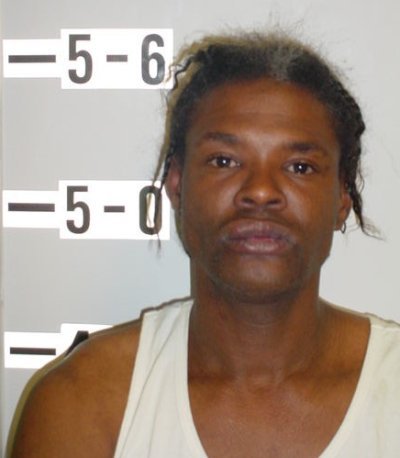
LAKEPORT – As John McCoy lay dying from eight stab wounds in the early morning hours of May 4, he reportedly identified his attacker to Clearlake Police, who said they found the suspect at the scene, the bloody knife still in his hands.
After listening to testimony that included eyewitness accounts of the attack on McCoy, a jury on Wednesday morning found Andre Lafayette Stevens, 43, guilty of first-degree murder.
Deliberations weren't quick, however; Stevens' attorney, Jason Webster, said Tuesday that the jury went into deliberations on Thursday, but had Friday and Monday off before resuming Tuesday. At one point the jury asked for some testimony to be read back as it considered the case.
Attempts to reach Webster on Wednesday for comment on the guilty verdict were unsuccessful.
Deputy District Attorney John Langan reported that the jury handed down the first-degree murder verdict, with special allegations, at about 10 a.m. Tuesday.
Stevens had pleaded not guilty to the murder charge and the special allegation of using a knife in a June court appearance, despite having admitted during interviews with police that he stabbed McCoy, as Lake County News previously reported. Since his arrest he has remained in Lake County Jail on $1 million bail.
Langan said all of his testimony came from eyewitnesses, included the neighbors in the apartment complex who were calling police while McCoy was being stabbed.
Stevens' motive for the brutal crime appeared to be jealousy, according to Langan.
Two weeks before the stabbing, Stevens' girlfriend broke off their relationship and returned to the Midwest.
Not only did Stevens lose a relationship, Langan said he also lost a steady form of income. That's because his ex-girlfriend was an In-Home Supportive Services client, and he was her IHSS care provider.
Langan said the prosecution's theory was that Stevens stabbed 42-year-old John Rayford McCoy Jr. believing that McCoy and Stevens' ex-girlfriend had been in a romantic relationship.
The two men weren't unknown to each other, said Langan. McCoy, who police reported had only been in the Clearlake area about a month, had stayed at Stevens' home a few times before the murder, said Langan.
Early on May 4, the prosecution alleged that Stevens took a 12-inch military knife and stabbed McCoy eight times, twice in the heart, said Langan.
Witnesses testified that after stabbing McCoy, Stevens continued his assault, kicking McCoy as he died.
"It was just a brutal, brutal killing," said Langan.
Langan credited the neighbors at the apartment complex for their efforts to save McCoy by calling police to report the attack. Their testimony proved key to the trial, he added.
Police arrived within a minute of the 911 call being placed, said Langan. They were on scene so quickly, he said, that the neighbors were still on the phone with the 911 operator.
"The police got there with Mr. Stevens still holding the knife in his hands," said Langan.
McCoy, who was mortally wounded, died within minutes of Clearlake Police's arrival, said Langan. There was nothing officers could do because of the extent of his injuries.
Langan said Stevens waived time throughout the proceedings, which led to a very quick trial – it's been just over four months since McCoy's murder.
Stevens will return to court at 8:30 a.m. Oct. 5, when Judge Robert Crone – who is sitting in for Judge David Herrick – will pass sentence, said Langan.
The first-degree murder conviction carries a sentence of 25 years to life, said Langan.
Additional time will be added for three special allegations the jury found to be true, said Langan, including the fact that he used a knife in committing the murder of McCoy, which added another year to the sentence.
The second special allegation involved Stevens' conviction of a previous “strike” under California's Three Strikes Law for a 1990 robbery in Santa Clara County. That strike doubles Stevens' sentence to 50 years to life, said Langan.
Stevens also had previously been convicted of two counts of felony battery on a police officer in 1999, also in Santa Clara County, said Langan.
Although that conviction didn't count as a strike, it did provide another special allegation against Stevens. Langan said Stevens had been released from prison in August 2005 and, because he committed another crime within five years of the conclusion of a prison term, another year will be added to his sentence, Langan explained.
"What it means is Mr. Stevens will likely have to serve 52 years until he's eligible for parole," said Langan.
Based on the sentencing guidelines, Stevens would be 95 years old before he would become eligible for parole.
E-mail Elizabeth Larson at
{mos_sb_discuss:2}
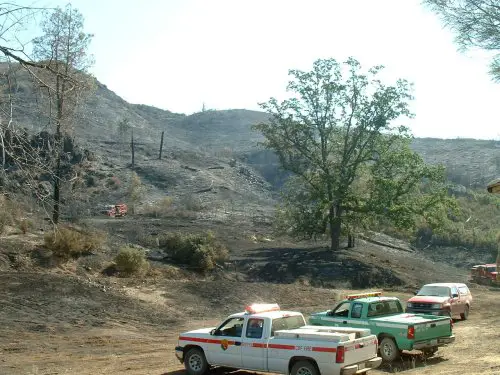
BARTLETT SPRINGS – In yet another blow to Lake County's historical buildings, a Tuesday fire claimed the Bartlett Springs Resort gazebo and another building on the remote site of the once-famed resort.
Mendocino National Forest officials reported Wednesday that the buildings were destroyed in a 50-acre wildland fire that broke out on private property.
Forest spokesperson Phebe Brown reported that the fire was located on Forest Service Road M-16/Bartlett Springs Road, about 15 miles north of Highway 20 and six miles east of Clearlake by air.
Brown said firefighters worked quickly on the fire, containing it in about six hours.
Smoke was first reported about 4:15 p.m. Tuesday, said Brown. Air and ground firefighting resources from the Forest Service and Cal Fire quickly began suppression actions, with air tankers and helicopters dropping water and retardant, and ground crews and equipment fighting the fire directly.
Firefighters contained the fire at 10:30 p.m., Brown reported.
The gazebo and a shop building that burned were located on the 1,990-acre property owned by Nestle. Brown said firefighters saved a house and five other structures, also on private property that the fire threatened.
The fire, according to Brown's report, began on private land and spread to the National Forest lands.
She added that the fire is believed to be human caused, and is still under investigation.
On Wednesday firefighters continued mopping up smoldering debris, reinforcing the existing fire line and looking for areas where the fire could flare up again.
This is the second time in less than two months that fire has destroyed buildings with ties to the historic Bartlett Springs Resort, founded in the 1870s, as Lake County News previously reported.
On July 28 a fire attributed to arson burned the lodge that resort caretaker Zane Gray had completely rebuilt in 1989, after the second lodge building to be located on the site was knocked down in a windstorm the previous year.
In the July fire, Gray said he found what he believed to be an ignition device in the lodge remains, which had been extensively vandalized in recent years despite his efforts to protect the buildings.
The July fire burned right up to the gazebo and stopped, Gray said.
Gray also had rebuilt the gazebo in 1985 in order to restore it to its early 20th-century look.
His efforts to care for the resort grounds saved all of the buildings during the 1996 Forks Fire, which destroyed numerous structures and burned 83,000 acres.
E-mail Elizabeth Larson at
{mos_sb_discuss:2}

After two hours of deliberations, a jury found Bruce Emerson Wells, 19, guilty of involuntary manslaughter in the death of 54-year-old Vietnam veteran Samuel Shull, reported Wells' attorney, Roy Miller of Santa Rosa.
Wells, who was a few months shy of turning 18 when the stabbing took place, was tried as an adult in the case, after a fitness hearing last year found him unfit to be tried as a juvenile, according to Deputy District Attorney David McKillop.
The confrontation that led to Shull's death took place on a Friday night – March 24, 2006 – outside of Shull's 33rd Avenue home, according to the police reports.
Wells and six other minors ranging in age from 14 to 19 were at the Shull home for a party, said Miller.
At the party was a half-gallon of brandy and 48 beers. Miller said several witnesses testified that Shull and his stepson, Jacob Rines, brought the liquor there. McKillop said testimony conflicted on just who actually did bring the alcohol, whether it was Shull or another adult named “Herb.”
The alcohol proved to be a critical factor in how the evening unfolded.
Wells and the other teens, who had known each other for some time and were friends, were drinking and partying in the home's living room, said Miller, while a number of adults were in another area of the home.
“The testimony at trial revealed that most of the kids were drinking heavily,” said Miller, a statement with which McKillop concurred.
A quarrel started after a teen at the party, Joshua Carter, playfully “goosed” Wells while trying to walk around him, Miller said.
Eventually the argument died down but Samuel Shull's wife, Linda, asked Wells to leave, said Miller.
Confrontation and death
Miller contends Wells did leave, although both he and McKillop reported testimony from witnesses that Wells stayed outside the home, yelling and pacing before throwing a softball-sized rock at the home's front door.
Wells then began walking down 33rd Avenue in the direction of his home, said Miller, followed by Shull, who went out into the rainy night wearing a pair of jeans and bedroom slippers but no shirt.
Why Shull followed Wells isn't clear, but both sides agreed that the two had a confrontation down the street, which no one heard.
The result, said Miller, was that Wells stabbed Shull once with a three-and-a-half-inch long fixed blade knife.
Said McMcKillop, “Our feeling is, that there was good, strong evidence that he (Wells) drew the victim out and stuck him.”
Shull then walked to the corner of his property and collapsed, said Miller.
Witnesses testified that they began screaming at Wells, who came back to the front yard. There, Shull's stepson, Jacob Rines, hit him more than once over the head with a 5-foot-long walking stick, which Miller said caused a significant head injury.
Both Shull and Wells were transported to Redbud Hospital, said Miller, where Shull was pronounced dead on arrival in the early morning hours of March 25, 2006.
Wells, who had bleeding into his brain from the blows to the head, was transported to Santa Rosa Memorial Hospital for treatment, said Miller.
McKillop and Miller both reported that Shull's autopsy revealed he had a blood alcohol level of .30, while Wells had a blood alcohol level of .19 coupled with marijuana.
Investigation and trial
The witnesses in the case weren't interviewed until three days afterward, both sides reported.
“You have to interview people as soon as possible,” said Miller. “They didn't.”
McKillop defended Clearlake Police's actions. “That night the scene was very chaotic and it was pouring down rain, so they wanted to preserve the physical evidence,” he said.
Police tried to set up interviews at the hospital after everyone had been checked out, but by the time police arrived at the hospital, everyone had left, said McKillop. Police found many of the teen witnesses at school the following Monday.
In a murder case, the degree isn't charged, said McKillop, although the jury can choose a degree in making a conviction. He said the District Attorney's Office felt the case was close – between second-degree murder and manslaughter – but they were looking for the higher murder charge.
For murder, McKillop explained, “You have to be able to form a certain intent, and being intoxicated can make it tougher to form that intent.”
Miller said Wells' consistent testimony was that he did not remember the confrontation with Shull, or for that matter anything after the argument with Carter. He said he presented testimony at court about how head injuries can cause that type of memory loss.
Wells, said Miller, “had no history of violence like this.”
McKillop and Miller both confirmed that Wells had contact with police as a juvenile, but those records are sealed and could not be used in this case.
Miller said he believed the conflicting, sometimes changing testimony of some of the witnesses led the jury to their verdict.
In particular, he pointed to the testimony of Jacob Rines and his sister, LeeAnn, who he said made statements on the stand that didn't match what they told police. Jurors pointed out that testimony to him as problematic, said Miller.
Miller accused Jacob Rines of witness tampering for having admitted that he told other witnesses what to say and, in particular, that they should say it was Wells who brought alcohol to the party.
Miller said he presented information to the District Attorney's Office in February regarding his allegations against Rines for witness tampering, which his investigator, Gary Hill, unearthed.
The District Attorney's Office declined to take any action, said McKillop, because it was neither dramatic nor pertinent information.
The jury's decision Tuesday, said McKillop, means that they found no malice in Well's actions.
Miller said he was thrilled with the verdict in the case, which is a tragic one.
“It's tragic that Sam died, but it's also equally tragic that he forced the confrontation,” said Miller.
Alcohol at the root of the incident
Both McKillop and Miller agreed that the case illustrates one vital point – teenagers shouldn't drink.
McKillop, who specializes in alcohol-related cases, particular those involving drinking and driving, said teens don't have the physical ability to handle alcohol, nor the life experience and judgment to make good decisions about alcohol use.
“What happened that night happened because of alcohol on both sides,” said Miller. “No parent should be allowing kids to drink in their home. It's insane.”
When Wells returns to Superior Court's Department 3 for sentencing at 8:15 a.m. Monday, Oct. 15, Judge Arthur Mann will have sentencing options ranging from probation to a maximum of five years in prison, said Miller.
The case now goes to the Probation Department, which will interview Wells and make a suggestion on how he should be sentenced, Miller added.
Because he's now 19, and he was tried as an adult, Wells would serve time in an adult facility, McKillop said.
E-mail Elizabeth Larson at
{mos_sb_discuss:2}
A report from the Willows California Highway Patrol Office explained that the accident last Wednesday involved Sheila A. Rangel, 34; Phyllis Burrows, 49; and 13-year-old Vivian Fred.
The incident took place at 8:55 p.m. Sept. 5, as Rangel was driving her 1995 Dodge Neon northbound on County Road 306 north of Highway 162 at approximately 55 to 60 miles per hour, the report stated.
Due to unsafe speed, the CHP reported that Rangel failed to slow or stop her vehicle before hitting a cow standing in the northbound lane.
After colliding with the cow, the CHP reported that Rangel's Neon went off the roadway and into the west dirt shoulder, where it hit a dirt embankment and rolled over onto its roof.
The Neon continued skidding northbound on its roof in the southbound lane, according to the CHP, before it came to stop on the west shoulder.
Though the cow reportedly didn't survive the collision, Rangel, Burrows and Fred came out much better off, despite the rollover.
CHP reported that Rangel had cuts and Fred was uninjured. Burrows was transported to Enloe Hospital in Chico with cuts to her arms.
All three were wearing their seat belts, the CHP reported.
E-mail Elizabeth Larson at
{mos_sb_discuss:2}
LAKE COUNTY – The county faces losing a source of grant funding for addressing impacts of local casinos due to a budget cut made by Gov. Arnold Schwarzenegger, and time is running out for legislators to restore the funding. {sidebar id=4}
In 2003, California's Legislature passed Senate Bill 621 which was signed into law that October. The legislation established criteria for allocating Indian Gaming Special Distribution Funds, established in the 1999 Tribal Compacts, to local governments in order to address impacts of tribal casinos on local communities.
The State Legislature's final budget for this year included $30,283,000 in grants to local governments from California Gambling Control Commission funds.
However, Schwarzenegger cut $30 million, leaving only $283,000 for Del Norte County, which is for funds not disbursed to the county from 2003 to 2006.
In carrying out the line-item veto, Schwarzenegger cited a Bureau of State Audits report. “ ... There is great concern regarding whether these funds are being used solely for their intended purpose, which is to mitigate the impacts of having tribal casinos in their communities. I will support legislation that includes an appropriation for mitigation funds if the process is reformed.”
“Basically, what the governor did with his veto was what is referred to as a 'set aside veto,'” H.D. Palmer, deputy director of California's Department of Finance, told Lake County News.
“It's our hope and belief that we can get a bill down from the Legislature that addresses some of the concerns that were raised in the audit,” said Palmer.
Funding has helped county buy ambulances, fix roads
County Administrative Analyst Jennifer Hammond sits on the county's local commission that disburses the funds, which is chaired by Supervisor Rob Brown.
Other commission members include Supervisor Jeff Smith, Robinson Tribal Chair Tracey Avila, Big Valley Tribal Chair Anthony Jack, Chief Deputy County Administrative Officer Matt Perry and representatives from the City of Lakeport, said Hammond.
Last year the county received $856,575, its largest amount so far, she added.
“Every year we've gotten funding, it's increased,” Hammond explained.
Middletown's Twin Pine Casino is too small so it doesn't pay into the fund, she said. Robinson Rancheria and Big Valley are the two local casinos paying in. The county withholds 2 percent to pay for administration related to the funds, Hammond added.
The funds must be used for services relating to the public and offsetting the casinos' effects on an area, which Hammond said is why a large portion of the funding has gone for roads and law enforcement.
The money has been used for city and county road repairs, staffing for District Attorney's Office positions, domestic violence prevention programs through the Department of Social Services, improvements to the Middletown swimming pool and park improvements, Hammond said.
One of the most important uses for the funds has been for safety equipment for local fire protection districts, she added.
The money has supplied a new ladder truck for Lakeport Fire Protection District, and new medical and training equipment for South Lake County Fire, she added. Many of the new ambulances at fire districts around the lake have been funded by the commission.
“This has been millions of dollars for the county,” said Hammond.
Brown, who has chaired the local funding committee since it started, said the county was able to buy a grinder for doing road work last year , and this year were planning to apply for funds to purchase a paving machine and create a cultural center on the Northshore.
Right now, Hammond said, the program has simply stopped.
If the money goes away, so does the program, she said. “There's no way our general fund can support that.”
Brown said the fact that the grant money was so easy to cut off is “an example of why that money shouldn't be used for positions.”
For several years, said Brown, the state has been trying to find ways to get the money back for its own uses, rather than the counties'. “I think every year they try to do it, but they hadn't been successful 'til now.”
The money, he added, is “just going to go to the state.”
“This is a really good source of funding,” he said. “It's money that goes directly to a project without paying for a lot of bureaucracy.”
Compact requires tribes to pay into fund
The 61 tribes who signed the Tribal-State Compacts in 1999 – including Lake County's Big Valley Rancheria, Elem, Middletown and Robinson Rancheria – are required to pay into the special distribution fund as a compact requirement. However, Elem has no casino in operation and Middletown is too small to be required to pay, said Hammond.
Also covered in the 1999 compact are other North Coast tribes including Hopland Band of Pomo Indians (Sho-Ka-Wah Casino) and the Rumsey Indian Rancheria (Cache Creek Casino).
As originally established, the Legislature can use the distribution fund for grants to address support state and local government agencies impacted by tribal government gaming – which SB 621 specially focuses on – as well as gambling addiction, compensation for regulatory costs incurred by the State Gaming Agency and the state Department of Justice in connection with the implementation and administration of the compact; among other uses.
The compact states that tribes will be consulted in the process of identifying grants to local governments.
The State Controller's Office reports show that 41 casinos in 25 counties currently pay into the fund.
State Deputy Finance Director H.D. Palmer said that, despite the program being currently in limbo, tribes must continue to pay into the state fund if their compact includes that requirement.
There's been no communication between the state and Robinson Rancheria about the possible impact of the veto, said Tribal Chair Tracey Avila of Robinson Rancheria.
“We have not been notified of any change yet,” she said.
A call to Big Valley Tribal Chair Anthony Jack was not returned.
Senator plans effort to save funding
There's still a possibility that the funding to counties might be recovered, but time for that effort is growing short.
State Sen. Jim Battin (R-La Quinta) began work last past week to get a bill to recover the funding through the State Legislature by the end of this session, Mark Reeder – Battin's Capitol office director – told Lake County News.
Battin has succeeded before in preserving the funding; Reeder said Schwarzenegger had taken $20 million out of the program last year due, again, to his concerns about how the money was being spent. Still, at that time the governor left $30 million in the program.
In March 2006, Schwarzenegger signed a Battin bill requiring counties to follow extra reporting requirements and follow specific deadlines when filing reports on the grant funding to the State Gaming Control Commission and Department of Finance, said Reeder.
The counties had been confused about what was expected of them in filing those reports, said Reeder. “We just cleared that up.”
That bill also restored the $20 million Schwarzenegger originally cut.
The special distribution fund, said Reeder, currently contains $120 million.
Reeder said the audit of the grant funding did not actually say the counties weren't spending the money correctly. They are meeting the statutory requirements, but the concern is that those requirements aren't specific enough.
Battin is now working on SB 493 to restore the $30 million cut by Schwarzenegger in this budget, said Reeder.
SB 493 is going through what Reeder called a “good old-fashioned gut and amend,” changing it from its original intent, relating to county purchasing agents and independent contractors, to address the funding cuts. Reeder said Battin received the go-ahed from the bill's original author, Sen. David Cogdill (R-Modesto).
The reworked SB 493, said Reeder, includes adopting the auditor's recommendations to clarify how the funds may be spent.
However, time is running out. According to Reeder, Battin now has less than 24 hours to get the bill amendments added and to put it to a vote on the Assembly floor before the legislative session ends. Assembly leaders have indicated they want to adjourn by Tuesday night.
“We'll have to wait until January if we don't,” said Reeder. “We'd prefer not to wait until January.”
And Reeder said Monday Battin had run into a wall with Assembly Democrats, led by Assemblyman Alberto Torrico (D-Newark), who chairs the Committee on Governmental Organization.
Reeder reported that Torrico indicated that he wants to wait until next year to review the entire formula of how funds are distributed, and that Assembly Democrats won't let a vote take place to move the bill forward.
Nor is Battin's effort getting any support out of Schwarzenegger's office, said Reeder.
“We've been trying to get traction and we're running out of time,” said Reeder.
He added, “I'm concerned about any mitigation funds getting out at all this fiscal year.”
E-mail Elizabeth Larson at
{mos_sb_discuss:3}