 How to resolve AdBlock issue?
 Lakeport Police logs: Saturday, Jan. 10
Saturday, Jan. 10, 2026
00:00 EXTRA PATROL 2601100001
Occurred at Lake County Law Library on 3D....

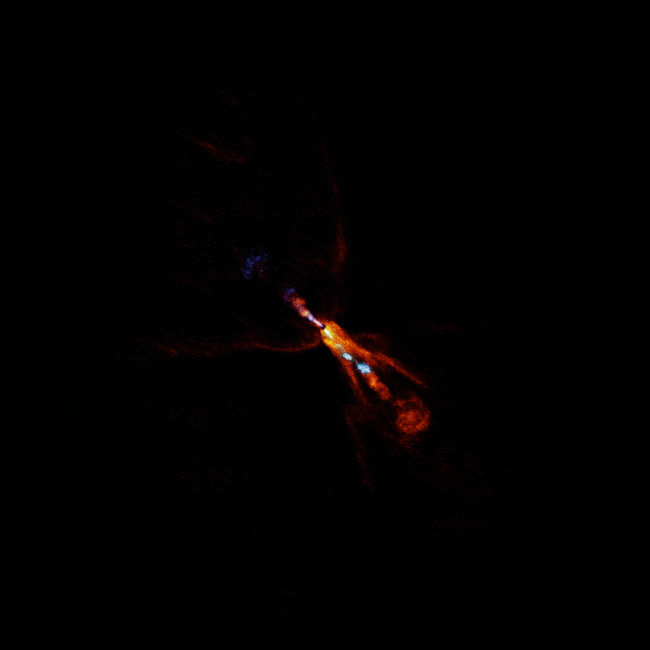
International researchers have, for the first time, pinpointed the moment when planets began to form around a star beyond the Sun.
Using the ALMA telescope, in which the European Southern Observatory, or ESO, is a partner, and the James Webb Space Telescope, they have observed the creation of the first specks of planet-forming material — hot minerals just beginning to solidify.
This finding marks the first time a planetary system has been identified at such an early stage in its formation and opens a window to the past of our own Solar System.
"For the first time, we have identified the earliest moment when planet formation is initiated around a star other than our Sun,” said Melissa McClure, a professor at Leiden University in the Netherlands and lead author of the new study, published today in Nature.
Co-author Merel van ‘t Hoff, a professor at Purdue University, USA, compares their findings to "a picture of the baby Solar System,” saying that “we're seeing a system that looks like what our Solar System looked like when it was just beginning to form.”
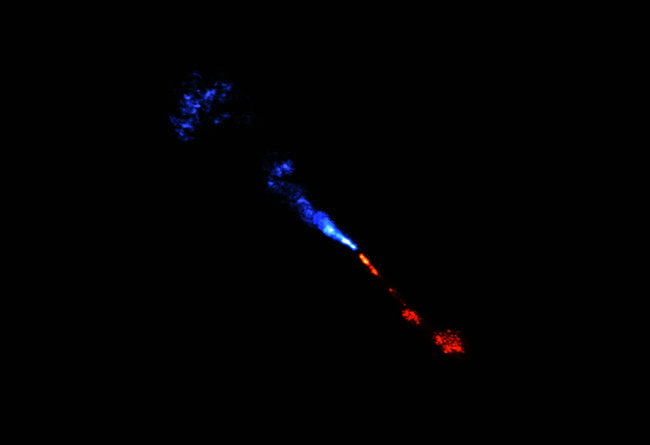
This newborn planetary system is emerging around HOPS-315, a ‘proto’ or baby star that sits some 1300 light-years away from us and is an analogue of the nascent Sun. Around such baby stars, astronomers often see discs of gas and dust known as ‘protoplanetary discs’, which are the birthplaces of new planets.
While astronomers have previously seen young discs that contain newborn, massive, Jupiter-like planets, McClure says, “we've always known that the first solid parts of planets, or ‘planetesimals’, must form further back in time, at earlier stages.”
In our Solar System, the very first solid material to condense near Earth’s present location around the Sun is found trapped within ancient meteorites.
Astronomers age-date these primordial rocks to determine when the clock started on our Solar System’s formation. Such meteorites are packed full of crystalline minerals that contain silicon monoxide, or SiO, and can condense at the extremely high temperatures present in young planetary discs.
Over time, these newly condensed solids bind together, sowing the seeds for planet formation as they gain both size and mass. The first kilometre-sized planetesimals in the Solar System, which grew to become planets such as Earth or Jupiter’s core, formed just after the condensation of these crystalline minerals.
With their new discovery, astronomers have found evidence of these hot minerals beginning to condense in the disc around HOPS-315. Their results show that SiO is present around the baby star in its gaseous state, as well as within these crystalline minerals, suggesting it is only just beginning to solidify.
"This process has never been seen before in a protoplanetary disc — or anywhere outside our Solar System," said co-author Edwin Bergin, a professor at the University of Michigan, USA.
These minerals were first identified using the James Webb Space Telescope, a joint project of the US, European and Canadian space agencies.
To find out where exactly the signals were coming from, the team observed the system with ALMA, the Atacama Large Millimeter/submillimeter Array, which is operated by ESO together with international partners in Chile’s Atacama Desert.
With these data, the team determined that the chemical signals were coming from a small region of the disc around the star equivalent to the orbit of the asteroid belt around the Sun. “We're really seeing these minerals at the same location in this extrasolar system as where we see them in asteroids in the Solar System,“ says co-author Logan Francis, a postdoctoral researcher at Leiden University.
Because of this, the disc of HOPS-315 provides a wonderful analogue for studying our own cosmic history. As van ‘t Hoff says, “this system is one of the best that we know to actually probe some of the processes that happened in our Solar System." It also provides astronomers with a new opportunity to study early planet formation, by standing in as a substitute for newborn solar systems across the galaxy.
ESO astronomer and European ALMA Programme Manager Elizabeth Humphreys, who did not take part in the study, says: “I was really impressed by this study, which reveals a very early stage of planet formation. It suggests that HOPS-315 can be used to understand how our own Solar System formed. This result highlights the combined strength of JWST and ALMA for exploring protoplanetary discs.”
This research was presented in the paper “Refractory solid condensation detected in an embedded protoplanetary disk” (doi:10.1038/s41586-025-09163-z) to appear in Nature.
The team is composed of M. K. McClure (Leiden Observatory, Leiden University, The Netherlands [Leiden]), M. van ’t Hoff (Department of Astronomy, The University of Michigan, Michigan, USA [Michigan] and Purdue University, Department of Physics and Astronomy, Indiana, USA), L. Francis (Leiden), Edwin Bergin (Michigan), W.R. M. Rocha (Leiden), J. A. Sturm (Leiden), D. Harsono (Institute of Astronomy, Department of Physics, National Tsing Hua University, Taiwan), E. F. van Dishoeck (Leiden), J. H. Black (Chalmers University of Technology, Department of Space, Earth and Environment, Onsala Space Observatory, Sweden), J. A. Noble (Physique des Interactions Ioniques et Moléculaires, CNRS, Aix Marseille Université, France), D. Qasim (Southwest Research Institute, Texas, USA), E. Dartois (Institut des Sciences Moléculaires d’Orsay, CNRS, Université Paris-Saclay, France.)
The Atacama Large Millimeter/submillimeter Array, or ALMA, an international astronomy facility, is a partnership of ESO, the U.S. National Science Foundation and the National Institutes of Natural Sciences of Japan in cooperation with the Republic of Chile. ALMA is funded by ESO on behalf of its Member States, by NSF in cooperation with the National Research Council of Canada and the National Science and Technology Council in Taiwan and by NINS in cooperation with the Academia Sinica in Taiwan and the Korea Astronomy and Space Science Institute.
The European Southern Observatory (ESO) enables scientists worldwide to discover the secrets of the Universe for the benefit of all.
LAKE COUNTY, Calif. — A major injury vehicle crash on Friday evening sent three people to hospitals in Lake County and elsewhere around the region.
The crash occurred shortly before 8:30 p.m. at Highway 53 and 29 in Lower Lake, according to radio reports and the California Highway Patrol’s online reports.
The vehicles involved were reported to be a Honda and a Ford Mustang.
The CHP and officials at the scene reported that three people were injured, with at least two of them suffering from head injuries.
One was transported by ground ambulance to Adventist Health Clear Lake Hospital in Clearlake, while the other two were taken by air ambulance to Kaiser Permanente Vacaville Medical Center and Queen of the Valley Medical Center in Napa County, the CHP reported.
Information on the condition of the patients and the cause of the crash were not immediately available on Friday night.
Email Elizabeth Larson at
LAKE COUNTY, Calif. — The Lake County Library and its Literacy Program has been approved to offer Career Online High School, an educational program offered by Smart Horizons Career Online Education, which gives adults 19 years of age or older the opportunity to earn a high school diploma and credentialed career certificate at the same time.
The library can award scholarships to successful students on an as-needed basis.
The fully online high school program provides a 24/7 online classroom, personal academic coaches, and real-world career training.
“Libraries offer a safe, supportive environment to foster learning and community. Our online education program for adults is a natural extension of library services that empower adults to learn and grow,” said Smart Horizons District Superintendent Dr. Howard Liebman. “COHS students receive support from Lake County Library staff as well as from our academic coaches. Together, they help students achieve their goals.”
In addition to an accredited diploma, COHS students graduate with a certificate in their chosen career path, plus a resume, cover letter, and other tools to start or advance their careers.
The latest available data estimates that about 12% or 4,500,000 of California’s population over 18 years of age has not attained a high school diploma.
Among the 50 states, California has the lowest graduation rate with only about 83% of adults 25 years or older graduating with a high school diploma or high school equivalency.
A fully online program accredited by Cognia/SACS/NCA/NWAC, COHS has partnered with more than 1,800 library locations across the country.
To learn more about the program and take a short online survey to see if Career Online High School is right for you, go to https://ca.careeronlinehs.org/.
Contact the Lake County Library Literacy Program with questions at 707-263-7633 or
Access to Career Online High School is provided by the California State Library.
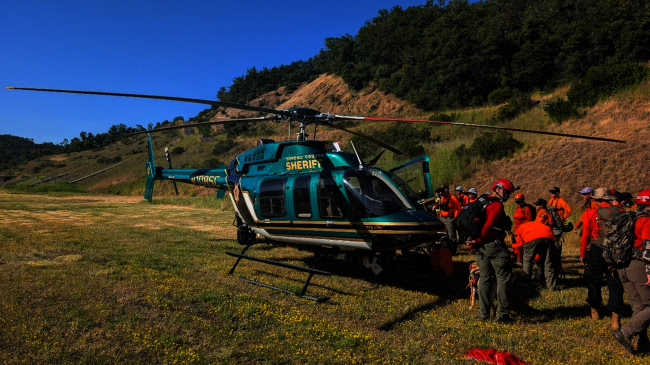
NORTH COAST, Calif. — Search and rescue teams from around Northern California participated in a multi-day helicopter training earlier this summer at Lake Mendocino.
The Mendocino County Sheriff’s Office Search and Rescue Team reported that it led the advanced helicopter awareness training May 30 to June 1.
Officials said Mendocino’s team completed the specialized helicopter awareness training exercise with the assistance of search and rescue teams in Napa and Marin, and California Search and Rescue.
The exercise was designed to enhance emergency response capabilities in challenging terrain.
The joint training operation, conducted in collaboration with regional aviation partners, focused on loading / unloading operations, hoist procedures, and rapid deployment of SAR personnel into remote and rugged areas.
The exercise took place at the Lake Mendocino Emergency Spillway, allowing for multiple training areas, simulating real-world scenarios that often require helicopter support during critical rescue missions.
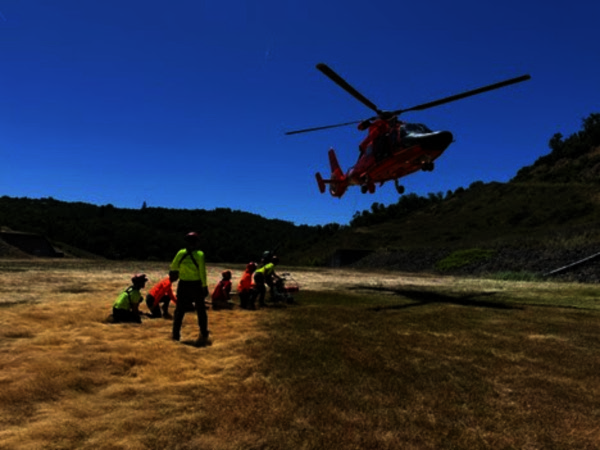
The training included both seasoned volunteers and new recruits, all of whom trained under the guidance of certified flight crews and search and rescue coordinators. Emphasis was placed on communication, safety protocols, and coordination between ground and air units.
The Mendocino County Sheriff’s Office Search and Rescue Team thanked the search and rescue teams from Alameda, Contra Costa, Glenn, Humboldt, Lake, Marin, Napa, Nevada, Placer, San Mateo, Santa Clara, Solano and Sonoma counties, and Bay Area Mountain Rescue Unit, California Rescue Dog Association and California Search and Rescue Team for their participation and assistance in making the training possible.
Mendocino County’s team extended its sincere gratitude to the U.S. Army Corps of Engineers for providing access to the training location, and to Silva Septic, The Party Pros, Taqueria Michoacan, My California Food Truck, Ocean Fresh LLC, Slam Dunk Pizza, Starbucks Coffee and the Ukiah Natural Foods Co-Op for their generous logistical support.
“These community partnerships were instrumental in the success of the training weekend,” the team said.
The team also thanked CalFire, REACH Air Medical Services, Sonoma County Sheriff’s Office Henry-1 and the United States Coast Guard for providing their helicopters and helicopter crews for this training event.

Saturday, Jan. 10, 2026
00:00 EXTRA PATROL 2601100001
Occurred at Lake County Law Library on 3D....
Friday, Jan. 9, 2026
00:00 EXTRA PATROL 2601090001
Occurred at Lake County Law Library on 3D....