 How to resolve AdBlock issue?
Opinion
- Details
- Written by: Todd Metcalf
Over the last few years, our county has seen more than its fair share of devastation – both natural and man-made – leaving many of us wondering how we would bounce back.
Studies have shown that resilience is not a natural trait; it includes learned behaviors, actions and thoughts that anyone can develop.
That said, we have an ongoing opportunity within our own community to build and strengthen resilience among people around us in order to live healthier and happier lives.
Mental health is an essential facet of wellness; however, unlike the flu or a broken bone, mental illness can be difficult to recognize. Additionally, folks can be hesitant to share their symptoms due to worrying about being targeted and/or stigmatized.
Many do not realize how common mental illness is. In any given year, about one in every five people in the U.S. experiences a mental health condition, according to recent studies conducted by the National Institute of Mental Health.
Anxiety disorders tend to be the most common, with nearly 40 million Americans suffering from some type of anxiety disorder.
However, only 13 million of those individuals receive treatment, despite the fact that anxiety disorders are highly and easily treatable.
Depressive disorders are also high on the list, with more than 16 million Americans suffering from depression.
Ignoring this can lead to tragic results, with local suicide rates in Lake County continuing to be among the highest in the state.
Know how to recognize the signs of anxiety disorder:
· Becoming easily annoyed or irritable;
· Muscle tension;
· Insomnia;
· Restlessness;
· Feeling afraid, as if something terrible may happen;
· Excessive worry.
And those of depressive disorder:
· Feelings of hopelessness;
· Feelings of guilt, helplessness, worthlessness;
· Persistent empty, anxious or sad mood;
· Decreased energy;
· Loss of interest in activities that were once enjoyed.
This May, Lake County Behavioral Health Services encourages our community to seek out the commonalities we have, fortify the road ahead and collectively continue to build the foundation of resiliency!
Todd Metcalf is the Administrator of Lake County Behavioral Health Services.
- Details
- Written by: Dave McQueen
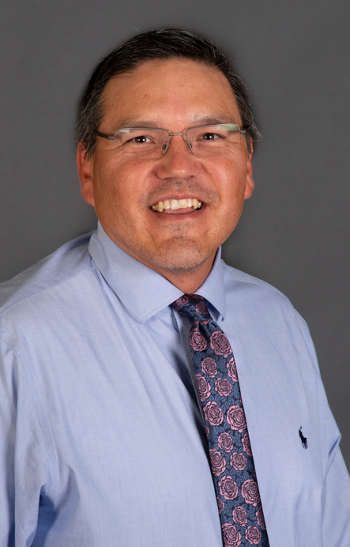
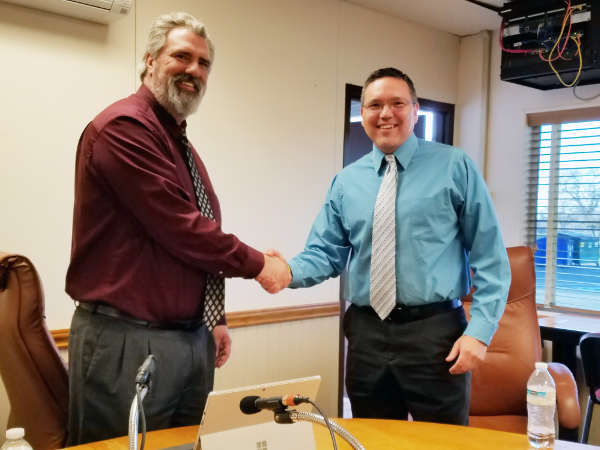
KELSEYVILLE, Calif. – On Thursday, March 21, the Kelseyville School Board appointed Beniakem “Beni” Cromwell to replace outgoing board member John DeChaine who is moving out of the area.
Beni (pronounced “ben-eye”) is the proud father of three Kelseyville High School graduates and is fully engaged in helping students reach their potential.
His background includes being a social worker at Lake County Tribal Health and facilitating youth groups at various schools around the county, volunteering for youth soccer, and being a tribal councilmember at Robinson Rancheria, where he still serves.
When the Kelseyville School Board position came open, he said it seemed like a good way for him to move from “boots-on-the-ground volunteering to decision-making” where he could make a bigger impact.
He believes public schools are under attack in the current political climate, and by joining the school board he can better support them. Public schools, he said, provide our communities and our nation with common ground, common learning, and common understanding – they help everyone.
Beni is also passionate about helping native youth successfully navigate their two worlds – fully embracing their indigenous culture and values while also being a part of public education to learn skills for their future. His message is one of inclusion and hope, and he lets kids know they can create their own path.
I’m so glad Beni put his hat in the ring for the vacant school board position. He brings a unique and really important perspective to the board, and he can serve as a bridge between Kelseyville Unified School District and local tribal members who may feel more comfortable sharing their ideas and concerns with someone who shares their background and history.
Beni grew up in Sacramento for the first 10 years of his life; then he moved to Robinson Rancheria, his mother’s home, and graduated from Upper Lake High School.
During his time in Sacramento, he said he went to public school, played sports, and had friends from all walks of life. His family lived in an urban setting and did not participate in tribal ceremonies or learn the songs and dances of his people.
But when he returned to Lake County, he became more familiar with his heritage. After high school, he attended Cosumnes River College in Sacramento and then Arizona State University, where he received a bachelor’s degree in sociology.
“When I started going to college, I wanted to study communications so I could be a TV or radio announcer for baseball. But then I was introduced to sociology, and it gave me a way to understand and communicate about different cultures. It put me on a new path,” he said.
In 2012, after living in Arizona for several years, he returned home and began immersing himself in learning how to help other tribal members overcome not only the challenges of current trauma such as living with poverty, violence, and substance abuse, but also the generational trauma of having a culture torn away. He is especially interested in helping youth.
He said he has always been inspired by the quote, “Be the person you needed when you were younger.”
He said he did not have the best male role models as a child, so he strives to be one for his nieces and nephews, for the students in the youth groups he facilitates, and for native youth.
He does his best to live up to his own high standards, to finish what he starts, to set goals and achieve them so he can show these children that they can accomplish whatever they choose to accomplish.
To that end, he was honored to be a part of changing State Bill 164 to incorporate low-income tribal students enrolled in the Temporary Assistance for Needy Families program, so they could join other low-income students in receiving priority registration in public post-secondary education.
Having gone to college and learned the language of academia, he can communicate the needs of his tribe to lawmakers and other influential groups. He has also developed a curriculum to share.
He is also part of a committee that has brought trauma-informed curriculum to three of the five local school districts during their instructional day. This committee has brought the needs and concerns of local tribal members so people can build common ground as a foundation of trust.
Beni will serve the rest of John DeChaine’s term, and so will be up for re-election in 2020.
Please join me in welcoming Beni to the board when you get the chance.
Dave McQueen is superintendent of Kelseyville Unified School District.
- Details
- Written by: Greg Dill
If you get injured or have surgery, your doctor may prescribe opioids, a class of drugs used to treat pain.
Although opioids can be an important part of treatment, they carry serious risks of addiction, abuse, and overdose, especially if used continuously. This is true even for seniors and other people with Medicare coverage.
While illicit use is part of the opioid epidemic, prescription opioids provided by physicians can also be a problem when not used carefully. Since Medicare pays for a significant amount of prescription opioids, we strive to ensure appropriate stewardship of these medications that can provide a medical benefit but also pose risks.
That’s why Medicare has developed new policies for Medicare prescription drug (Part D) plans, doctors, and pharmacists to help you use opioids safely. Medicare is also using new drug-management programs to look for potentially high-risk opioid use.
The new policies aren’t “one size fits all.” Instead, they’re tailored for different types of Medicare prescription opioid users. These policies don’t apply to people living in hospices or long-term care facilities, receiving palliative or end-of-life care, or being treated for active cancer-related pain.
When a prescription is filled, Medicare drug plans perform additional safety checks and may send pharmacies an alert to monitor the safe use of opioids and certain other medications.
Safety checks may cover situations like:
· Possible unsafe amounts of opioids. The pharmacist or Medicare drug plan may need to more closely review a prescription with the prescribing doctor if a patient has one or more opioid prescriptions that total more than a certain amount.
· First prescription fills for opioids. These may be limited to a 7-day supply or less for acute pain if a patient hasn’t recently taken opioids (like within the past 60 days). This safety check applies only to new users of prescription opioids.
· Use of opioids with benzodiazepines. Benzodiazepines are a class of drugs commonly used for anxiety and sleeplessness, which can be dangerous when taken in combination.
If a prescription can’t be filled as written, the pharmacist will provide a notice explaining how the patient or doctor can contact the Medicare drug plan to ask for a coverage determination (the first coverage decision made by the Medicare drug plan). The patient or doctor also can ask the plan for an exception to its rules before the patient goes to the pharmacy, so they know whether or not the prescription will be covered.
If a beneficiary gets opioids from multiple doctors or pharmacies, the beneficiary may need to receive their medications from specific doctors or pharmacies to ensure appropriate care coordination. The plan will send the beneficiary a letter if it will limit their access to these medications under its drug management program. If so, the beneficiary and his or her doctor have the right to appeal.
Medicare’s new opioid policies encourage collaboration and care coordination among Medicare Part D drug plans, pharmacies, prescribers, and patients in order to improve opioid management, prevent misuse, and promote safer prescribing practices.
Medicare is committed to addressing the opioid crisis and helping our beneficiaries use prescription opioid pain medications safely. More information about safety checks and drug management programs is available on Medicare.gov at Medicare drug plan coverage rules.
Greg Dill is Medicare’s regional administrator for Arizona, California, Nevada, Hawaii and the Pacific Territories. You can get answers to your Medicare questions by visiting www.Medicare.gov or calling 1-800-MEDICARE (1-800-633-4227).
- Details
- Written by: Greg Dill
Did you know that Medicare has an ombudsman to help you resolve complaints you may have about your healthcare?
Congress created the job of Medicare Beneficiary Ombudsman to assist people with Medicare with their inquiries, complaints, grievances, appeals, and requests for information.
The Medicare Beneficiary Ombudsman also shares information with Congress, the Secretary of Health and Human Services, and other organizations about what works well and what doesn’t work well to improve the quality of the care you get through Medicare.
If you need help with a Medicare-related inquiry, there are several ways you can get help.
1. Call your plan. If your inquiry is related to your Medicare Advantage (Part C) plan or Medicare Prescription Drug (Part D) plan, contact your plan first using the phone number on your plan member ID card. Your plan is the best resource to resolve plan-related issues.
2. Call 1-800-MEDICARE (1-800-633-4227). TTY users should call 1-877-486-2048. If your concern is related to Original Medicare, or if your plan was unable to resolve your inquiry, contact 1-800-MEDICARE for help.
3. Contact the SHIP. The State Health Insurance Assistance Programs, or SHIPs, provide free, high-quality counseling to people with Medicare regarding their benefits, coverage, appeals, and complaints. SHIP counselors are volunteers who often have Medicare themselves, so they know the issues and they’re not trying to sell you anything. Find your local SHIP at https://www.shiptacenter.org/.
4. Contact the Medicare Beneficiary Ombudsman. If you have been unable to resolve your concern with your plan or 1-800-MEDICARE, ask a 1-800-MEDICARE representative to submit your complaint or inquiry to the Medicare Beneficiary Ombudsman. The Ombudsman will help to ensure that your inquiry is resolved appropriately.
No matter how you get your Medicare, you have certain rights and protections. As a person with Medicare, you’re entitled to:
– Be treated with dignity and respect at all times.
– Be protected from discrimination. Every company or agency that works with Medicare must obey the law. They can't treat you differently because of your race, color, national origin, disability, age, religion, or sex.
– Have your personal and health information kept private.
– Get information in a way you understand from Medicare, health care providers, and, under certain circumstances, contractors.
– Get understandable information about Medicare to help you make health care decisions, including: what’s covered, what Medicare pays, how much you have to pay, what to do if you want to file a complaint or appeal.
– Have your questions about Medicare answered.
– Have access to doctors, specialists, and hospitals.
– Learn about your treatment choices in clear language that you can understand, and participate in treatment decisions.
– Get healthcare services in a language you understand and in a culturally-sensitive way.
– Get Medicare-covered services in an emergency.
– Get a decision about healthcare payment, coverage of services, or prescription drug coverage. When a claim is filed, you get a notice letting you know what will and won’t be covered. The notice comes from one of these: Medicare; your Medicare Advantage plan (Part C); Your Medicare prescription drug plan (Part D); your other Medicare health plan. If you disagree with the decision on your claim, you have the right to file an appeal.
– Request a review (appeal) of certain decisions about healthcare payment, coverage of services, or prescription drug coverage. If you disagree with a decision about your claims or services, you have the right to appeal.
– File complaints (sometimes called "grievances"), including complaints about the quality of your care.
You can find more information at https://www.medicare.gov/claims-appeals/your-medicare-rights/get-help-with-your-rights-protections.
Greg Dill is Medicare’s regional administrator for Arizona, California, Nevada, Hawaii, and the Pacific Territories. You can get answers to your Medicare questions by visiting www.Medicare.gov or calling 1-800-MEDICARE (1-800-633-4227).