 How to resolve AdBlock issue?
Opinion
- Details
- Written by: Philip Murphy
We were recently paid for this year’s crop and the returns were pretty grim, good quality conventionally grown Chandler variety walnuts only yielded $1 per pound after deductions for the walnut marketing board, walnut commission, hulling, drying, shelling, sorting, grading, etc.
The only thing growers don’t pay for is putting them in a bag and sending them to the store, two fairly simple steps in the overall process of getting nuts to you, the consumer. So where did the rest of that $6 to $13 dollar per-pound shelf price go?
Look at any reference source for supermarket profit margins and you will see the same thing: typical rates are 1 to 3 percent. It seems unlikely this is the case with walnuts, because that would mean the distributor is getting on average over $8 per pound, I suspect they are making a good profit but that supermarkets are the ones taking the lion's share of the proceeds when it comes to nuts.
In Lake County walnuts are grown more sustainably than anywhere else in California, about half of our acreage is dry-farmed and few if any pesticides and herbicides are used, unlike in the Central Valley where they have more pest issues due to the warmer winter climate.
Walnuts are one of the healthiest foods on earth, with high levels of protein and Omega 3 fatty acids, so if high costs keep them off the consumer’s table we give people one less healthy food option. The bottom line is if you can’t afford nutritious food you are are likely going to be less healthy – more is at stake here than just what they cost or who gets the money.
One dollar per pound is an unprofitable rate for growers, it means old orchards will not be replanted as they reach the end of their lifespan, and there won’t be new orchards planted either – without a change in the dynamics the end of commercial walnut growing here is in sight.
This year’s impacts of tariffs as high as 120 percent on walnut exports didn’t help, but consumers saw little or no sign of the glut of nuts on the prices at the market, a glut which was created primarily by obvious profiteering and not by a faltering export market.
Returns have been bad for the last three years and there is no sign of an end in sight, 2018 was not an anomaly year or part of a cycle, it is the new “normal.” It was so bad that one processor advised growers to consider not hiring tree shakers or harvest crews, as clearly there would be no profits to pay them.
It seems likely if there was a similar situation in the local wine grape industry there would be a swift alarm raised by politicians at the state, federal and local level, but even our walnut grower state Assemblywoman Cecilia Aguiar-Curry has been strangely quiet on the subject.
Are the people who are reaping huge profits off of the hard work of others while destroying what's left of family farming in America at the same time buying the silence of our politicians? Or is this an organic dysfunction?
Is it OK for family farming to die off in our lifetimes due to sheer greed and manipulation of the markets? Is it OK for consumers to be given the choice of being gouged for nutritious food or being less healthy?
Is it good for the country if even more of the wealth is in the hands of fewer and fewer people who do the least amount of work and take the least amount of risk?
Is this the new American way?
Phil Murphy lives in Lakeport, Calif.
- Details
- Written by: Dave McQueen
KELSEYVILLE, Calif. – Regular classroom schooling is the best way for most students to get a great education, but it doesn’t work for everyone.
At Kelseyville Unified School District, we offer lots of options so all students have access to the kind of education that will help them be successful.
Sometimes students need an alternative to regular school because their personalities or emotional dispositions work better with smaller class sizes or even one-on-one instruction.
Other students who would usually thrive in a classroom setting can’t make it to school often enough because of outside commitments – competitive sports, careers in the arts, and things like that.
Finally, some students have family situations that make a regular classroom schedule all but impossible.
Alternative Education Director Tim Gill said, “Our goal is to help every student find a path that works for them. Sometimes, students and their families seek out alternative education opportunities; other times, behavioral issues or poor academic performance require us to make a change for a while.”
Kelseyville Learning Academy
One of the most exciting alternative education options is Kelseyville Learning Academy, or KLA, a homeschooling and independent study program available to students from kindergarten through high school.
At KLA, we work with families to create a tailored schedule and curriculum for each student that can be completed online or via a home-classroom environment – or a blend of the two.
KLA high-school students who want to participate in extracurricular activities or select classes at Kelseyville High School are free to do so, including sports, career technical education, band and more.
The element that sets KLA apart is that parents agree to take on the primary responsibility for developing the curriculum and teaching their students.
We provide support, of course, but KLA is primarily a home-schooling program. Our goal is to assure that the students’ course of study meets California state standards, so KLA students can graduate and either pursue higher education or the career of their choice.
Long-term independent study
Another popular option is long-term independent study. This is typically for middle- and high-school students, but is occasionally done with younger students.
In the long-term independent study program, a teacher and student work together to determine a course of study for a period of time (weeks, months or even the whole school year). The student then checks in with the teacher every couple weeks for support and guidance.
Every winter, between 50 to 100 students take advantage of this program when they travel to Mexico to visit extended family for a month or two.
In this case, the independent study teacher is in Michoacán near the towns where most students’ families live. Supporting students while they are away is a win-win: they stay up-to-date on their studies and we are able to keep them enrolled in school.
Community Day School
Sometimes, students need extra support, either academically or socially and emotionally. Every California school district is required to offer a community day school for students who fall behind on credits, are chronically absent, and/or who have been suspended or expelled.
When students are referred to the Community Day School, we work with them to create an individualized educational plan, or IEP. This includes a course of study done primarily online through a program called Odysseywear with a full-time teacher and full-time aide available for extra help.
The Community Day School offers coursework through the eleventh grade and is intended to be a place where students can get their feet back under them. It’s a place to get caught up and reset.
Before students return to the regular classroom, they must complete a rehabilitation plan created specifically to address whatever sent them to the Community Day School in the first place.
Rehabilitation plans include things like attending school 95 percent of the time, undergoing drug and/or alcohol counseling, receiving social-emotional support, participating in anger management classes, and things of that nature.
Once the student completes the plan, we review their progress and meet with them and their family to see if the student is ready to go back to regular school.
Ed Donaldson Education Center (continuation high school and adult school)
Students who are 16 years of age or older can either pursue a high school diploma from Kelseyville High School or, if family circumstances dictate, they can attend the Ed Donaldson Continuation High School.
Here, students attend school in the mornings and then go to work or take care of other responsibilities in the afternoons. They complete credits online via Odysseywear.
The Ed Donaldson Education Center also houses an adult school for those 18 years old and older. Anyone in the county can register for the Kelseyville Adult School to pursue their diploma or general education development, or GED, certificate.
Our adult school is part of a consortium through Mendocino College called Mendo-Lake Adult and Career Education or “ACE” (www.mendolakeace.org) with locations all over Lake and Mendocino Counties.
This wonderful program is designed for working adults, offering online coursework and weekly meetings with an instructor on Mondays from 4 to 7 p.m.
Through ACE, adults of all ages can earn a diploma or GED certificate and continue their educations from there. Last year, we had a 57-year-old student graduate.
It’s really heartwarming to see people fulfill their lifelong goal of earning a high school diploma. If you want to come and applaud our graduates, mark your calendars for June 10 at 7 p.m. at the Kelseyville High School Student Center.
Blending programs
And just to provide a few more options for students in grades ninth through 12th, those attending KLA, independent study or Ed Donaldson are welcome to take career tech and arts courses at Kelseyville High School.
Our CTE and arts program at Kelseyville High is fantastic and we invite kids at alternative schools to come to the high school and take advantage of all we have to offer.
When it comes down to it, we just want to make sure every student can succeed according to their own definition of success. If you think your student would benefit from an alternative education, call us here at the district and ask for Tim Gill, our alternative education director at 707-279-1511.
We’ll work with you to help your student thrive.
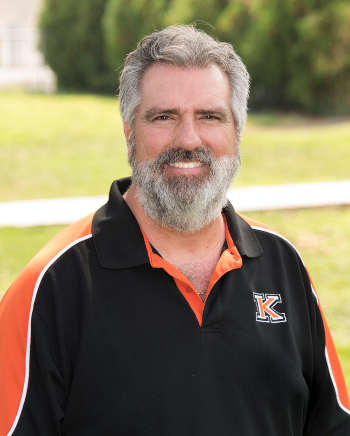
Dave McQueen is superintendent for the Kelseyville Unified School District.
- Details
- Written by: Greg Dill
Most doctors accept Medicare as full payment for their services. But some accept it only for certain services, and others don’t accept it at all.
What does this mean for you?
If you have Original Medicare, it means you should try to use doctors, hospitals, medical equipment suppliers, and other healthcare providers that participate or “accept assignment” in Medicare. Such providers have signed agreements to take Medicare as payment in full for their services.
If your doctor or other provider accepts assignment:
Your out-of-pocket costs may be less.
– The provider agrees to charge you only the Medicare deductible and coinsurance amount, and usually waits for Medicare to pay its share before asking you to pay your share.
– The provider has to submit your claim directly to Medicare and can't charge you for submitting the claim.
– Some doctors and other providers haven't signed an agreement to accept assignment for all Medicare-covered services, but they can still choose to accept assignment for some services. – These providers are called "non-participating" providers.
If your doctor or other provider doesn't accept assignment:
– You may have to pay the entire bill at the time of service. Your provider is supposed to submit a claim to Medicare for any Medicare-covered services they provide to you.
– The provider can't charge you for submitting a claim. If they don't submit the Medicare claim once you ask them to, call 1‑800‑MEDICARE.
– In some cases, you might have to submit your own claim to Medicare using Form CMS-1490S to get paid back.
– The provider can charge you more than the Medicare-approved amount, but there's a limit. Non-participating providers are paid 95% of the Medicare-approved amount. They can only charge you up to 15% over the amount that non-participating providers are paid.
– The 15 percent limit applies only to certain Medicare-covered services and doesn't apply to some medical supplies and durable medical equipment.
Some doctors and other providers don’t want to enroll in the Medicare program at all. You can still visit these “opt out” providers, but they must enter into a private contract with you (unless you’re in need of emergency or urgently needed care).
A private contract is a written agreement between you and a doctor or other provider who has decided not to provide services to anyone through Medicare. The private contract only applies to services you get from the provider who asked you to sign it.
If you sign a private contract with an opt-out doctor or other provider, keep in mind that Medicare won't pay any amount for the services you get from that provider, even Medicare-covered services.
– You'll have to pay the full amount this provider charges you. You and your provider will set up your own payment terms through the contract.
– If you have a Medicare Supplement Insurance (Medigap) policy, it won't pay anything for the services you get. Call your insurance company before you get the service if you have questions.
– Your provider must tell you if Medicare would pay for the service if you got it from another provider who accepts Medicare.
– Your provider must tell you if he or she has been excluded from Medicare.
– You can't be asked to sign a private contract for emergency or urgent care.
– You're always free to get services not covered by Medicare if you choose to pay for them yourself.
– You don't have to sign a private contract. You can always go to another provider who participates (accepts assignment) in Medicare.
Be sure to ask your physician or other provider if they are participating, non-participating, or opt-out. You can also check by calling 1-800-MEDICARE or by using Medicare’s Physician Compare tool on www.medicare.gov .
You may want to contact your State Health Insurance Assistance Program (SHIP) to get free help before signing a private contract with any doctor or other health care provider.
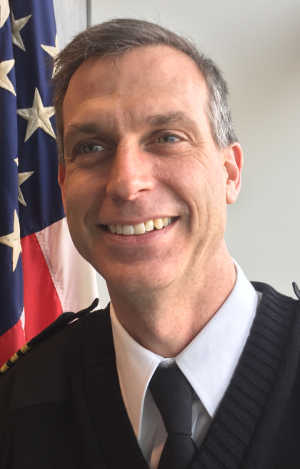
Greg Dill is Medicare’s regional administrator for Arizona, California, Nevada, Hawaii and the Pacific Territories. You can always get answers to your Medicare questions by calling 1-800-MEDICARE (1-800-633-4227).
- Details
- Written by: Pastor Chris DelCol
Jesus’ baptism was an epiphany event, a manifestation, a light and a revelation of God’s presence in this world.
In baptism, we too become God’s chosen ones. In the pouring of the water and in the saying of the words, we become God’s children. We are chosen by God. He acts, He comes to us through the water and the Word to make us His.
The baby or adult being baptized will have no active part, that is because God is the one who acts. God comes to the person and claims them for His own. God does all the action in baptism. God claims the person’s life for eternity.
A pastor stood by the grave side of a young mother with her husband and three children. The husband looked into the eyes of the pastor and demanded, "Now tell me what you really believe, Pastor, is this the end of everything, the way God meant it to be?"
The pastor said, "It’s not what I believe that matters, you have the answer in your heart. You know deep in your heart, this is not the end. You haven’t stopped loving your wife. Do you think God has? You know that life with God is eternal. God gave you that faith. All YOU have to do is believe what your heart already knows."
Yes, the claim upon us in baptism is for eternity. In our baptism, we are also anointed with the Spirit. A sign of the cross is made to seal the covenant agreement made through the water and the word.
Our sins are forgiven as it says in Titus 3:5, “He saved us not on the basis of deeds which we have done in righteousness, but according to His mercy, by the washing of regeneration and renewing by the HoIy Spirit.”
Our sins are forgiven, and at the same time, we agree to fight against sin and to confess our sins daily to God so He will drown them and raise out of the waters of our Baptism a new person.
Baptism is not a magical rite, but in baptism an agreement is made between us and God. This agreement is for a lifetime.
We ask God to cleanse us and renew us each day in the waters of our Baptism. That is not to say we need to be baptized each day, but each day we relive our baptism in that God drowns our sinful selves and raises up a new person.
So, baptism happens once, but we must live in it daily. And if we don’t keep our part of the agreement, to confess our sins, to seek God’s forgiveness, then the promise of baptism means nothing, because in our forsaken selves, we also turn away from God’s action of forgiveness.
Please join us this Sunday, Jan. 13, to hear more about Jesus’ baptism and how this sacrament is a promise of eternal life to all who believe.
Worship is at 11 a.m., followed by lunch. All are welcome so please come as you are.
Chris DelCol is pastor of First Lutheran Church in Lucerne, Calif. The church is located at 3863 Country Club Drive, telephone 707-274-5572. Email Pastor Chris at