 How to resolve AdBlock issue?
Opinion
- Details
- Written by: Philip Murphy
For decades we have been told the centerpiece to our economic salvation was the South Main Street project in Lakeport, but even though politicians repeat this mantra again and again no actual work has been done on it, and this sad fact is likely to be the case for the foreseeable future.
The city of Lakeport was supposed to annex the area, and wants to extend its water lines that end adjacent to the project, but the county has its own plan that involves running a line from the Finley/Kelseyville system at an estimated cost of $5.5 million that they hope to fund with a USDA grant. The rest of the money for the project has been sitting in the bank for over a decade, over $10 million, much of which was paid by people who either didn’t or won’t live long enough to see the project started let alone finished.
The county has for years refused to meet with the Lakeport City Council to resolve this dilemma, and doesn’t seem to care that a lot of federal money is planned to be used to lay miles of transfer pipeline, instead of the city’s far simpler plan of simply extending Lakeport’s system.
Maybe the county thinks the USDA is so dumb they won’t see the absurd wastefulness of their plan, and District 4 Supervisor Tina Scott has boldly predicted that the project will be done in the summer of 2020 in spite of the fact that they have not even applied for the money let alone had it approved.
Another absurd aspect of this is the county’s negotiation team was supposed to do just that – negotiate with the city over the exact terms of the annexation, but has decided to ignore their stated purpose and has instead gone trolling for grant money to fund their own project, with the annexation goal now forgotten.
Meanwhile, the wretched pavement gets worse and the area looks like it is stuck in a time-warp circa 1967 with little sign of economic vitality, with serious visual blight and no long-promised wider/new pavement, underground phone and power lines, bike lanes, sidewalks, fire hydrants or streetlights.
While the city has done a number of things that could be considered unhelpful in this process, the bulk of the blame can be placed directly at the feet of the county Board of Supervisors, whose members are apparently unwilling to try to resolve the issues like property and sales tax revenue sharing that along with the water and sewer systems have kept the two sides apart.
In a bit of irony, negotiation team member Supervisor Tina Scott campaigned on the issue of economic development in the city of Lakeport, but signs of her assistance are hard if not impossible to find and she now seems to be more of an impediment to progress than a facilitator of it.
So we have two government entities working on the same project with two quite different plans for doing it and no sign of any willingness to compromise or cooperate, and the only thing clear at this point is it won’t be anytime soon before we see the improvements that have already long ago been paid for.
The economic dysfunction of Lake County begins right at the top, and the people we have turned to for leadership are taking us in the wrong direction – again.
Philip Murphy lives in Lakeport, Calif.
- Details
- Written by: Dave McQueen
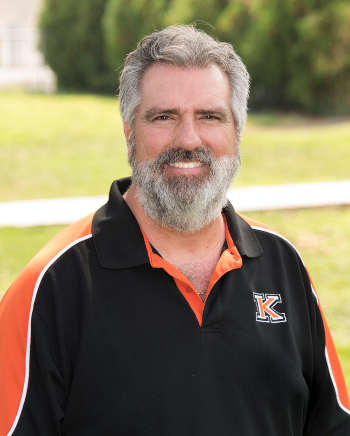
KELSEYVILLE, Calif. – At Kelseyville Unified School District, we focus on more than just academics to help our students grow and develop.
The fact is, students often need social and emotional support to reach their potential. Our experts in this area are our school counselors and school psychologists who use Positive Behavioral Interventions and Supports, or PBIS, to create a culture where students learn from mistakes rather than simply being punished for them.
As of this school year, we now offer counseling services for students of all ages, and it’s making a difference.
At the elementary school level, Casey Carlson has been teaching our youngest students the social skills they need to get along with their peers.
She supervises children on the playground and intervenes to help them learn how to stop disagreements from escalating.
She also works with small groups of students who are facing similar challenges, for example, to help them overcome grief or process strong emotions in a constructive way.
Teaching students how to cope with social and emotional challenges at such a young age allows them to use these skills for a whole lifetime.
At the middle school, Ellen Boettcher uses her considerable experience to help students through the awkward and sometimes difficult transition into adolescence.
Ms. Boettcher has been working with students for close to 30 years and she understands how to support them when their behavior makes others want to run out of the room.
“I love watching kids grow, watching them blossom,” she said. Ms. Boettcher not only works with students, she also works with parents and teachers, so everyone is aligned and attuned to a student’s needs.
She asks that parents who want to meet with her schedule appointments so she can be sure to give them the time they deserve. Recently, before the first bell rang, she had comforted a crying child, completed the check-in process with students who need a little extra attention each day, and been approached by a parent who wanted to discuss independent study for their child. That’s busy!
At the high school level, we have two new counselors: Elizabeth Pearce and Tammi Van Housen. They provide more academic counseling than social-emotional counseling. With a caseload of more than 250 students each, they are available to help students in crisis, but they refer long-term individual counseling to community providers.
Ms. Pearce said, “If a student is in crisis, we drop everything and attend to them to help them find their center.” She noted that students in crisis are often dealing with interpersonal relationship problems, either at home or at school.
Ms. Pearce and Ms. Van Housen often spend time monitoring student progress to keep kids on track for graduation, and they work with students to pursue various paths after high school (either college- or career-related).
They work on everything from helping families understand financial aid options for college to supporting students who are dual-enrolled at Mendocino College. Just like their counterparts at the elementary and middle school levels, our high school counselors are super busy.
In addition to counselors, Kelseyville Unified has two school psychologists who help support students of all ages: Julia Leonard and Michelle Sumares.
The psychologists focus primarily on our students in Special Education by completing assessments and helping students manage the complex social and emotional challenges of school while working through their classes.
Our Special Education Director John Leonard said, “Our psychologists help students with conflict resolution, crisis response, and behavior plans. We offer independent counseling as well as group work focused on problem-solving and social skills. We also have a licensed therapist through the county’s special education program, SELPA, to support students with ongoing unresolved needs – for example, issues related to being in foster care.”
Mr. Leonard is not only our Special Education director, he is also a credentialed school psychologist, so he really understands the challenges our students face.
It’s hard for students to learn if they’re on an emotional roller coaster. I’m really grateful to our counselors and psychologists for teaching students how to deal with some of life’s challenges in a more productive way.
Dave McQueen is superintendent of Kelseyville Unified School District.
- Details
- Written by: Greg Dill
You may have heard something lately about “preventive health care.” What does that mean?
At its most basic, preventive health care means living a healthy lifestyle. Eat a balanced diet. Exercise regularly. Maintain a healthy weight. And stop smoking.
Like anyone else, people with Medicare can benefit from healthy living habits. But Medicare covers a wide variety of shots to help you stay healthy. It also covers numerous tests to help detect diseases early, when they’re in their most treatable stages.
You pay nothing for most Medicare-covered preventive services if you get them from a doctor or other qualified healthcare provider who “accepts assignment,” meaning they accept Medicare as payment in full for their services.
For example, you pay nothing out-of-pocket when you get a “Welcome to Medicare” physical exam. This one-time exam is offered during the first 12 months after you’ve enrolled in Medicare Part B.
This visit includes a review of your medical and social history related to your health, and education and counseling about preventive services, including certain screenings, flu and pneumococcal shots, and referrals for other care if needed.
If you’ve had Part B for longer than 12 months, you can get a yearly wellness exam. You pay nothing for this visit if you’re doctor accepts assignment. And the Part B deductible doesn’t apply.
The wellness exam is designed to help prevent disease and disability based on your current health and risk factors. Your provider will ask you to fill out a questionnaire, called a “Health Risk Assessment,” as part of this visit.
Answering these questions can help you and your provider develop a personalized prevention plan to help you stay healthy and get the most out of your visit, which can also include:
– A review of your medical and family history.
– Developing or updating a list of current providers and prescriptions.
– Height, weight, blood pressure, and other routine measurements.
– Detection of any cognitive impairment.
– Personalized health advice.
– A list of risk factors and treatment options for you.
– A screening schedule (like a checklist) for appropriate preventive services.
However, you may have to pay coinsurance, and the Part B deductible may apply if:
– Your doctor or other health care provider performs additional tests or services during the same visit.
– These additional tests or services aren't covered as Medicare preventive benefits.
– Medicare also covers shots for flu, pneumococcal disease (which can cause pneumonia), and Hepatitis B. Flu, pneumococcal infections, and Hepatitis B can be life-threatening for older people. Flu and pneumococcal shots are recommended for people over age 65.
People with Medicare also can get screened for cardiovascular disease and different kinds of cancer, including breast, prostate, cervical/vaginal, and colorectal cancer.
Take colorectal cancer, for example.
Medicare covers screening tests to help find precancerous growths or find cancer early, when treatment is most effective. Medicare covers the multi-target stool DNA test, screening fecal occult blood test, screening flexible sigmoidoscopy, screening colonoscopy, and screening barium enema.
You pay nothing for fecal occult blood tests, flexible sigmoidoscopy, and screening colonoscopy if your doctor accepts assignment. (Note: If a polyp or other tissue is removed during a colonoscopy, you may have to pay 20 percent of the Medicare-approved amount for the doctor’s services and a co-payment if the procedure was done in a hospital outpatient setting.)
For people who have or are at risk for diabetes, Medicare covers screenings, certain supplies, and self-management training.
If you need help to stop smoking, Medicare pays for up to eight face-to-face counseling sessions per year with a doctor or other qualified provider.
Medicare also pays for tests for lung cancer, HIV, and bone mass (to see if you’re at risk for broken bones.)
People with Medicare don’t use preventive health services as much as they should. But getting screened can help you stay healthy and live longer – and save the government billions in healthcare costs.
It’s a classic win-win.
Greg Dill is Medicare’s regional administrator for Arizona, California, Nevada, Hawaii and the Pacific Territories. You can get answers to your Medicare questions by visiting www.Medicare.gov or calling 1-800-MEDICARE (1-800-633-4227).
- Details
- Written by: Dave McQueen
KELSEYVILLE, Calif. – As educators, our job is to provide students with the skills they need to thrive in the adult world.
They need basic skills like reading, writing and arithmetic, of course. They also need to discover their natural gifts so they can build on those gifts to create the life they want. Some people have a gift for music. Whether it becomes a profession or remains a hobby, music can bring lifelong joy.
This is why I’m so happy we have two full-time music teachers in our district.
Music offers students a way to express themselves, to connect with peers, and to have fun at school. As a side benefit, studies show music also helps with language development and spatial-temporal skills, which can lead to increased test scores in English and mathematics.
This year we have two new music teachers: Cory Cunningham at Kelseyville High School and Mercedes Castro at Mountain Vista Middle School. Both blend a love of music with a love of teaching and we are lucky to have them.
MVMS MUSIC PROGRAM
At MVMS, we invite sixth graders who’ve never played an instrument or sung in a choir to give it a try. In seventh and eighth grades, students build on what they’ve learned. Each grade level has its own concert band; the concert choir includes students from all three grades. MVMS also has a small percussion ensemble open to seventh and eighth graders.
Ms. Castro creates an environment where it’s safe for students to try new things. “I let students know we’re here to learn, that it’s okay to mess up,” she said. She helps students encourage each other and she strikes just the right balance between high expectations and having a good time. “Of course, we want to sound good. The students have to be serious about learning how to play, but we also laugh and have fun.”
Apparently, this message is striking a chord (pun intended), because the sixth grade band quickly grew from 35 to 50 students at the beginning of the year.
If you’d like to hear these budding musicians, come to one of their concerts. On March 28 at 7 p.m., the wind ensemble (eighth grade band) and concert choir are performing at Kelseyville High as part of the high school concert. On June 5 at 7 p.m., all MVMS bands, the choir and the percussion ensemble will perform their Spring Concert at the Thomas Aiken Center at KHS.
KHS MUSIC PROGRAM
At Kelseyville High School, Mr. Cunningham offers several music classes: concert band, jazz band, choir, mariachi band, beginning instrumental, and music history. To be in one of the bands, students need experience, but if students want to pick up an instrument in high school, they can take the beginning instrumental class.
Mr. Cunningham not only teaches, he continues to perform as a musician himself. He said, “I think it’s important to remember what it’s like to be on the receiving end of the baton. It helps me be patient when I’m working with the students.”
Some of the smaller KHS groups travel to perform. The 13-member jazz band performed at the Folsom Jazz Festival and at Sacramento State University, for example, and the 20-member choir enjoyed caroling at Christmas. “Traveling can give the students a whole new perspective,” Mr. Cunningham said.
The mariachi band is new this year. The idea for the class is to create an opportunity for students to learn and celebrate the musical traditions and culture that represent so many members of our community. All students are welcome to participate, regardless of heritage.
“This music is a new adventure for me. I think it’s beautiful and I’m grateful to the district for investing in the instruments we needed to get started. I hope, through this music, we can speak to and educate our community," said Mr. Cunningham, who continued by explaining that it is really important to him to be respectful of a culture that isn’t his own and to provide the students with an authentic experience.
To that end, the high school is very lucky to have assistance from local mariachi singer and Kelseyville High alumni Patty Rico. Mr. Cunningham said, “Patty has helped us bridge the gap – I couldn’t do this without her. Mariachi music is for everyone!”
THANKS TO THE AIKENS
Two more people who continue to help our music program are Tom and Beth Aiken – as in the KHS Thomas Aiken Student Center. Tom was our high school music teacher for decades, and Beth worked at MVMS and in our elementary schools.
Now retired, they serve as mentors to our current music teachers. They help with rehearsals, run sound at performances, play the piano for the choir and provide support when Mr. Cunningham and Ms. Castro have questions or need a little advice. Mr. Cunningham called them “beautiful people” and a “huge influence.”
The Aikens, Patty Rico, and our music teachers know that becoming a musician requires practice and commitment. Ms. Castro said, “Teaching music can be a hard job, but those moments when the students overcome something they’ve struggled with, seeing their effort pay off – that makes it worth it. And it’s not always about the music. It’s about learning to be part of a team, to be responsible for their part. There’s a lot of personal growth.”
Whether our students go on to play for huge audiences or simply for themselves, thanks to our music program, music can be part of their lives forever.
Dave McQueen is superintendent of Kelseyville Unified School District.