 How to resolve AdBlock issue?
Opinion
- Details
- Written by: D. Baumann
As per the above-mentioned article, old jokes are being replaced by awestruck hyperbole describing uniquely beautiful scenery, picturesque towns, wineries, hotels and eateries, wholesome locally grown food, and a healthy outdoor lifestyle. All of which translates into potential for a more prosperous future here. Prosperity that is based on the unique assets we already have.
Prosperity that could elude us, if we go the route of becoming just another "Generica, USA," our towns' streets crowded with the same familiar national-chain retail signs that you find everywhere, our agricultural products no different than those of Corporate/Industrial farm products that dominate the Central Valley.
What made this article resonate so strongly for me is that, as a newbie (since 2006), my first impressions of Lake Country were "Wow! Wow!" and "WOWWWWW!" How could I have been previously unaware of the existence of this gorgeous area? And it was affordable! Although raised in Northern California, I went to college and started a career down south, where I remained a renter for 25 years because anything worth buying was beyond my price range. Here in Lake County, I was blown away by the abundance of gorgeous properties available for less than the cost of a one-bedroom condo elsewhere.
After moving here, it took me awhile to realize that the magic I saw in this place did not seem so obvious to many of the current residents. I heard jokes about the single-wide lifestyle, meth labs, pot farms and even swimming pools empty of water but full of old beer cans. People with no sarcastic intent speak longingly of a desire for more fast food outlets and big box stores. An elementary study of retail economics explains why going that route would further destroy the local economy, but it is hard to explain to people who are desperate for something, for anything, that there really are alternatives that are worse than nothing. Articles like this one show the positive potential of the prosperity that is already hovering on the horizon, if we make better choices in shaping our county's future.
No place is without challenges. But jeepers-creepers! We're miles ahead of other areas, just on the basis of our natural resources.
Some intelligent planning, some prudent avoidance of mistakes that other areas have made, and we are well on our way to being the Tuscany of the west coast. An attractive place for companies to re-locate, where costs are low but the beauty of the surrounding area can help attract and retain high-tech employees seeking a cleaner environment to raise their children closer to nature. A "must-go" destination for tourists with a yen for beautiful, unique places, organic food and wine, and a healthy outdoor lifestyle (of which there are only a million or so, in the nearby Bay Area alone). Prosperity based on sustainable lifestyles and protecting our natural assets is REAL prosperity, one that will can sustain future generations indefinitely.
And farmers can be very much a part of that new prosperity, which has already begun to be defined as revolving around fresh, wholesome locally grown food.
Viva Lake County!
D. Baumann lives in Upper Lake.
- Details
- Written by: Dr. William MacDougall
The decision to close Oak Hill Middle School was not an easy one.
In the fall of 1990, I was selected as principal of Oak Hill Middle School. It was my first experience as a principal, it was the largest school in Lake County at the time with over 725 students, and I had just turned 34 years old.
I put my heart and soul, everything I had, into that school. Those were the years when the upper buildings were built. A group of hardworking dads helped us build the dugouts on the lower field and the cement OHMS on the side of the hill. The memories of the students, parents and staff whom I worked with I still cherish.
We must be considerate of the feelings of loss that those who work and go to school there are feeling now. They have worked very hard and deserve our appreciation. We will embrace them in their new settings next year and we will truly benefit from their experience and knowledge.
The decision to close Oak Hill was solely for financial reasons. This school has approximately the same number of students as Burns Valley, but requires a much larger staff. For example, Burns Valley has one principal; OHMS has two. Burns Valley has one and one half secretarial positions; OHMS has three.
We will save money by dispersing our seventh and eighth graders between four sites. The majority of this savings will be realized through a reduction in personnel. KUSD’s proposed expenses are now very close to our projected revenue for next year. That means that our schools are fiscally sound.
We are still in the process of making some difficult decisions. One thing that we clearly learned from the board meetings is that our community values our children, our schools and our relationships. It is our duty to provide the best possible programs for our students and that is exactly what the KUSD staffs are planning now. We must have strong academic programs for all levels of learners, while at the same time providing enrichment in areas of music, drama, career tech., and athletics.
I believe that the decision to create four K-8 community-based schools is a move towards stronger, longterm relationships, and that this, in turn, will strengthen our ability to educate our students. The elementary school staffs will be allowed the opportunity to work with their students for close to nine years! The K-8 configuration will allow us to offer more activities to more students than we did before. Our K-8 programs must, and will, provide students with the opportunities to excel in areas of their choosing, whether academics, the arts and/or athletics.
Many of you in our community said that you would volunteer at your local K-8 school to help overcome budget deficits and make sure that these opportunities are available to our youth. The site principals and I will be taking you up on that offer and asking for your support before we start the new school year. A child-centered, volunteer-minded community can offer our children a comprehensive, multi-faceted, educational program. Together, we can make this happen.
Dr. William R. MacDougall, Ed.D., is in his first year as Konocti Unified School District's superintendent. He writes periodic updates with community members to let them know the state of the district.
- Details
- Written by: Edwin Bender
Sunshine Week 2009 takes place from March 15 through 21. The annual event is about the public's right to know what its government is doing, and why. Sunshine Week seeks to enlighten and empower people to play an active role in their government at all levels, and to give them access to information that makes their lives better and their communities stronger. Lake County News will present guest commentaries and news stories about open government as part of this year's Sunshine Week.
Our democracy's infrastructure is crumbling, just as our roads, water systems and sewers are deteriorating across the country — and we have a unique opportunity now to fix them all properly.
I'll leave the roads and such to the engineers. The infrastructure of our democracy, though, is something I know a thing or two about. You see, more than 16 years ago, I and a few other hearty souls across the country began compiling state-level campaign-finance data and making it available to the public. We created databases by performing thousands of search-and-replace functions on 700-page Word documents that had been input at state agencies. And, even more time-consuming, we input donor information from innumerable paper reports that candidates had filed at their state disclosure agencies. And we made all this available to reporters via floppy disc and fax.
Then along came the Internet, and we happily upgraded our delivery system. But to this day, we still have to type in data by hand, because many candidates still file paper forms with state disclosure agencies. Can you believe it? In this day and age! What a waste of time.
The lack of uniform disclosure for the 50 states is a failure by design. Fragmented campaign-finance reporting means it's more difficult for people to follow the actions of their elected representatives — otherwise known as holding them accountable. Many candidates don't want you getting too familiar with their donor base. And lobbyists certainly don’t want you looking over their shoulders, especially when their actions might cost you money as a taxpayer.
We disagree with that. We think democracy works best when all aspects of campaigns are held up to the light of day. At the nonprofit, nonpartisan National Institute on Money in State Politics, we’ve compiled campaign-finance data from all 50 states dating back to the 2000 elections, as well as donor information for state party committees and ballot measures. And we’ve compiled a list of lobbyists registered in the states for 2006 and 2007. We update all our data continuously. In fact, we’re on a first-name basis with staff in all 50 state disclosure offices, who for the most part are public servants eager to do good work. They love seeing their work contributed to the data tools and analyses we offer at www.FollowTheMoney.org. To them, we tip our hats.
To the candidates who seem to think that funding public disclosure and ethics agencies is optional, we offer a Bronx salute. You don't have to look far to find examples of a disclosure agency fining a state political party or candidate for bundling or other breach of the public's trust, and you'll likely see the agency's budget on the cutting block next legislative session (Washington state and Alaska offer some sad examples.)
Since lawmakers themselves aren't eager to move disclosure into the 21st century, a host of nonprofit organizations are doing the work for citizens and displaying the results for free access. For our part, we built a tool called Lobbyist Link that lets you see which companies hired lobbyists and in which states, and where those companies also made political donations. (For instance, type "Merck" into our search window and you’ll see plenty of coordinated lobbying and donations in the states that considered the HPV vaccine for schools.) Our L-CAT feature reveals who gave to specific state legislative committee members, and how much. For example, (big surprise) it turns out that insurance companies are major donors to members of the 2008 Illinois Senate Insurance Committee.
There is tremendous work being done by nonprofit organizations for Sunshine Week to create an index of all public information held by government agencies, at all levels. Project Vote Smart compiles biographical information about lawmakers, their speeches and voting records for the public, and makes it all available at their site, www.VoteSmart.org. The Center for Responsive Politics tracks donations to presidential and congressional candidates as well as national party committees at www.OpenSecrets.org. Many others are looking at government subsidies and contracts, earmarks and corporate influence.
Unfortunately, we nonprofits are doing what we as taxpayers are already paying government agencies to do. (And we do realize those agencies often are between a rock and a hard place because of their budgets.)
So, now, when this country is set to invest billions of dollars on infrastructure projects meant to stimulate a horribly mismanaged economy, isn't it time we also invest in bringing the infrastructure of our democracy up to the 21st century? We aren’t talking rocket science. We’re talking standards that are common in the business world, where accurate, lightning-fast transactions are the norm.
President Obama has committed himself to transparency and accountability: He was co-sponsor of a 2006 federal law that created USASpending.org, which provides detailed federal spending lists, and the Strengthening Transparency and Accountability in Federal Spending Act of 2008 that addressed problems at USASpending.org.
That's a start. And it only makes sense. If we’re going to promote democracy around the world, shouldn’t we also promote its health at home?
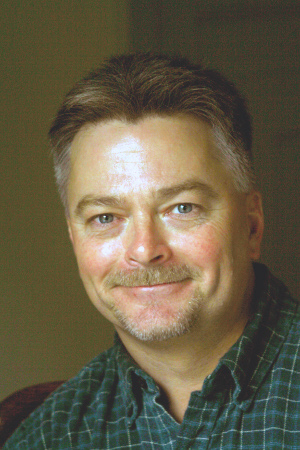
Edwin Bender is executive director of the National Institute on Money in State Politics, Helena, Montana.
{mos_sb_discuss:4}
- Details
- Written by: Ellen S. Miller
Sunshine Week 2009 takes place from March 15 through 21. The annual event is about the public's right to know what its government is doing, and why. Sunshine Week seeks to enlighten and empower people to play an active role in their government at all levels, and to give them access to information that makes their lives better and their communities stronger. Lake County News will present guest commentaries and news stories about open government as part of this year's Sunshine Week.
Imagine if Google worked this way: You type in a search term, and, at Google headquarters, an army of workers in the search department printed out the contents of every responsive Web page, then hauled them in wheelbarrows to a results department, where another army of workers typed the contents of those pages back into their computers.
Crazy? Indeed, but that's exactly how the Senate handles its campaign finance reports.
Federal election law requires candidates for the House of Representatives and the presidency to electronically file lists of their donors and their expenses. Unwilling to change with the times, senators continue to follow the practice they adopted in the 1970s.
They file paper reports of their campaign disclosures with the Senate Office of Public Records, which in turn has them shipped to the Federal Election Commission, which must then spend about $250,000 and untold hours having the records typed in, line by line, to the Federal Election Commission’s databases.
Today, all senators and their challengers use computers to track their donors and expenditures, but their archaic and expensive disclosure method keeps the public in the dark about who contributes to their campaigns in the final, critical weeks before Election Day.
The biggest problem is that Senate campaigns, unlike House or presidential campaigns, file reports on paper, and that means that well-heeled donors can bundle contributions in the final, critical weeks of a campaign – providing the funds necessary for last minute negative attack ads or push polls – with absolute anonymity. The public has a right to know who is contributing to senators’ campaigns – immediately, not four months after a paper report has been filed.
The Senate Campaign Disclosure Parity Act (S. 482), now pending in Congress, is the solution to this simple problem. The commonsense legislation, which has been languishing for several years, would bring the technology-averse Senate into modern times by requiring Senate campaigns to file their campaign reports electronically, like their counterparts seeking election to the House and the White House. This would result in timelier uploading of data by the FEC.
So far in 2009, no senator has publicly opposed this legislation, but Senate Minority Leader Mitch McConnell (R-Ky.) has a track record of blocking this reform. When an identical bill was considered in the 110th Congress (then known as S. 223), Republican senators used various parliamentary maneuvers to stop it. Ultimately, Sen. John Ensign (R-Nev.) blocked it by insisting on a vote on a contentious, unrelated amendment that would to chill ethics investigations of senators.
In the 111th Congress, Sen. Pat Roberts (R-Kan.) plans a repeat performance. His "poison pill" amendment is the same – it's intended to discourage groups from reporting questionable behavior by senators to the Ethics Committee by making them disclose information on their finances and donors. Groups like the National Legal Policy Center, which raised ethics charges about Democratic Reps. Charlie Rangel (D-N.Y.) and Alan Mollohan (D-W.Va.), would be deterred as much as those that have raised complaints against Republicans.
In fact, the amendment, which initially came from the offices of Sen. McConnell, has been called unconstitutional, a violation of the First Amendment, and is intended to protect sitting senators from ethics investigations. Beyond that, the Senate Ethics Committee has other means to obtain information about groups filing ethics complaints, including access IRS Form 990, which does not publicly disclose donors but does provide information on the leadership, finances and activities of 501(c) organizations.
Majority Leader Harry Reid (D-Nev.) is negotiating for a unanimous consent agreement that would prohibit any other amendments from being offered on S. 482. Sen. Reid, who supports this legislation, should actively whip his caucus to ensure that when the Senate considers the bill, every Democrat will support the bill and oppose the Roberts Amendment.
As the nation considers what an open government means, we should encourage Congress to become more transparent, as transparency is the cure to make sure the public is not kept in the dark as to who's funding whom and what they get in return. In the Internet age, that means the kind of electronic disclosure of campaign contributions that this bill mandates. It's time to give citizens 24/7 access to this information.
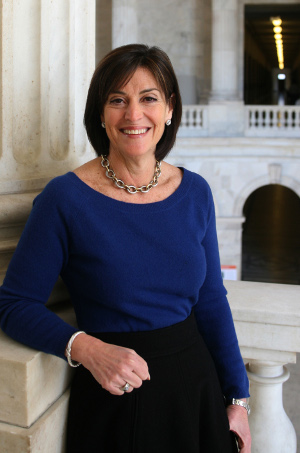
Ellen S. Miller is executive director and co-founder of the Sunlight Foundation in Washington, D.C.
{mos_sb_discuss:4}