 How to resolve AdBlock issue?
Opinion
- Details
- Written by: Michael R. Lemov
Sunshine Week 2009 takes place from March 15 through 21. The annual event is about the public's right to know what its government is doing, and why. Sunshine Week seeks to enlighten and empower people to play an active role in their government at all levels, and to give them access to information that makes their lives better and their communities stronger. Lake County News will present guest commentaries and news stories about open government as part of this year's Sunshine Week.
As we celebrate Sunshine Week this year, advocates of open government have reason to cheer. In the first week of his administration, President Barack Obama used an executive order to reverse the Bush administration’s direction to federal agencies — in the notorious Ashcroft memorandum — to resist most requests for government information and documents, requests based on the Freedom of Information Act (FOIA).
President Obama's executive order also required federal agencies to furnish definite plans to implement a more open and transparent government within 120 days. This is progress, indeed. But before we run up the flag and declare victory, a bit of history and a warning, is in order.
FOIA was authored and pushed to enactment by John E. Moss a little-known Congressman from Sacramento, who came to Washington in 1952. Moss fought for more than a decade with the Eisenhower and successor administrations to open the growing volume of government records to the public. He was originally involved in the issue when, while he was a freshman congressman, the civil service commission fired some 2,800 federal employees on grounds that they were "security risks." Moss, who had been burned himself by charges of being soft on communism in his first campaign for office in the McCarthy era, believed that the employees, who were being denied access to their own records, weren't getting a fair chance to defend themselves. And Moss doubted most were security risks at all.
The Departments of Justice and Defense have long offered many and varied reasons why people should not see what was in government files. It is too soon to know how they will respond to President Obama’s executive order. But under President Eisenhower, even as a member of Congress, Moss made little headway on the security matter and on his other efforts to open government. So he drafted and introduced one bill after another to change things. They went nowhere.
When John F. Kennedy defeated Richard M. Nixon in 1960, Moss, and his allies in the press, thought that FOIA’s time had come.
They were wrong. Although Kennedy was personally sympathetic to the idea of open government and promised Moss in a letter that he would only claim executive privilege personally and not through subordinates, the federal agencies proved to be a much tougher nut to crack, especially after Kennedy was assassinated. They significantly influenced Kennedy’s successor, Lyndon B. Johnson by recommending a veto of the FOIA bill that Moss was driving through the Congress.
At one point, Moss was pulled out of a hearing on FOIA by House Speaker John McCormack and Majority Leader Carl Albert. They had just come from a meeting with LBJ at the White House. The president wanted to know the status of "this terrible legislation." He asked, "What is Moss trying to do to me?" He suggested that the bill be shelved.
But Moss did not back down. The bill was eventually passed and sent to LBJ who was, at that moment, vacationing at his ranch in Texas. According to Bill Moyers, who was there at the time, LBJ was on the verge of vetoing the bill. What he feared — and what most presidents always fear — is that embarrassing or incorrect information would be released to the public and prove to be politically damaging. There is, as Moss found, an inherent tension between government and freedom of information.
With the clock ticking on FOIA's fate in July1966, it looked like the bill would die. LBJ was mostly concerned that national security and executive privilege might be compromised. But Moss and the press combined to energize a wave of editorials, telegrams and letters in support of the bill.
Moyers finally convinced LBJ to sign, what LBJ called, "the damn thing," even as he said "it will probably screw my administration."
History’s message is clear. Advocates of more open government and maximum freedom of the press must continuously fight against claims of national security and executive privilege to ensure they are not extended beyond reasonable boundaries or used as a shield against the publication of information that might prove embarrassing. Every week is, in a real sense, Sunshine Week.
Moss understood the need for vigilance. Before he died in 1997, he warned that openness in government was a concept that required constant renewal, no matter who is president and how sympathetic he or she may seem to the principle. Sometimes, he said, "You can have more disagreements with your family and friends than with strangers."
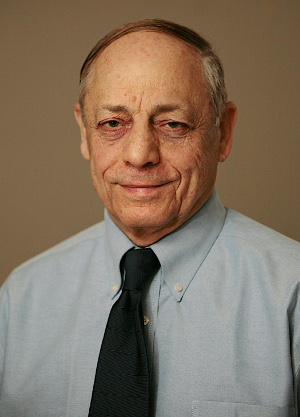
Michael R. Lemov is a Washington attorney and former counsel to Congressman John E. Moss. This article is based on his forthcoming book, “John Moss and the Consumer Decade.” He may be reached at
{mos_sb_discuss:4}
- Details
- Written by: Sophie Annan Jensen
You're welcome to believe whatever you want about the causes of this worldwide problem.
It's global warming as explained by Al Gore.
It's just a natural climate cycle.
It's chemical spraying.
It's Mother Earth fighting back at overpopulation and pollution.
It's La Niña and it will go away soon.
It's the God of your choice punishing us for something you don't like.
What you believe doesn't matter. It's happening, and it doesn't look as if we're responding well. In Spain last year, Barcelona was preparing to ship water in by truck, while a golf course was being planned in an arid region near the city.
The desert city of Las Vegas is gambling it can end its 10-year drought by tapping into underground aquifers northeast of the city, environmental consequences be damned.
Patricia Mulroy, manager of the Southern Nevada Water Authority, says, “We've tried everything … The way you look at water has to fundamentally change.”
No kidding. (Right, it sounds like the water guy in “Chinatown,” but that was Mulwray.)
In Sacramento, Governor Arnie repeated last year's call for a voluntary 20-percent cut in water use, and he and US Sen. Dianne Feinstein are talking about more dams. The state is broke; they didn't mention what they'd use for money.
In Lake County, despite the advice of Agricultural Commissioner Steve Hajik and Farm Bureau Executive Director Chuck March that we should avoid losing any of our good agricultural land, our planning commission has approved going ahead with a final environmental impact report on a development which would do just that.
Ms. Mulroy has one thing right: “The way you look at water has to fundamentally change.”
Maybe we could start by remembering that we're in the mostly dry West, of which Mark Twain is alleged to have said “Whiskey's for drinkin' and water's for fightin'.”
Then maybe we can think about why, if water is truly a “right,” people have been moving to where the water is throughout history.
Sophie Annan Jensen is a retired journalist. She lives in Lucerne.
{mos_sb_discuss:4}
- Details
Depression is becoming widespread. Today it could be triggered, in some individuals, by the global economic downturn, as well as the constant barrage of bad news spewed by the corporate media that seems to derive a perverse satisfaction in spreading hopelessness and fear. However it is generally believed that the original causes of depression are not well understood, so scientists choose the narrowly materialistic and seemingly practical approach of focusing on brain chemistry.
The fact that they do not appear to make the connection between suicide – which is a form of murder, of violence against the self to which depression can lead – and suppressed anger or rage, is significant, as it is a sign of how much anger has become a taboo subject and how little it is understood in our societies, how much it is regarded as undesirable and irrelevant.
There is a profound difference between sadness and depression. Some people confuse them, yet sadness is an actual feeling, depression is an absence of feeling, a general numbness and sense of emotional paralysis and hopelessness that come from the suppression of the feeling process. It forms a self-destructive pattern whereby thoughts and emotions are turned against the self, preventing the vital flow of healthy self-expression as well as growth and reaching out, and leading to stagnation and deep despair.
At the root of all depressions is suppressed and often unconscious anger, the more intense the anger the more profound the depression, suppressed rage often leading to suicide, or to murder and suicide. Such anger, such rage can linger just below consciousness, as parents and other adult authorities often quickly correct children whenever they express appropriate, healthy angry feelings, training them to control such emotions.
Anger is also culturally suppressed. Anger is the elephant in the room no one sees, because most have been conditioned to disregard it as soon as it emerges, to associate it with negativity. Anger is not “nice,” it is not pretty, sweet or cute. It can be hurtful and appears destructive, like a storm.
What makes anger destructive? The steam that escapes from a functioning pressure cooker does not cause any damage; block any means of escape and the pressure cooker explodes. Children and adults who have, most of their lives, been trained to suppress legitimate feelings of anger accumulate such anger to the point of self-implosion as in the case of depression, of explosion in abusive, violent behaviors, or of self-destruction through the weakening of their own immune system, as the suppression of such feelings takes a very heavy toll on the body. It is indeed a lot more exhausting and stressful to suppress rather than to express feelings, which explains the exhaustion that accompanies depression.
What is not understood in this process of the suppression of anger, or of any other feeling, is that such feelings do not vanish just because an individual or society wishes they would. All feelings seek and require expression, and will find a way out regardless of how carefully people attempt to seal them in. This requirement can lead to depression in the sense that depression is the ultimate expression of negation: in this paradoxical process the person can only express forms of self-denial and self-destruction, as all other expressions are blocked.
The other unintended outcome of the suppression of anger is the unconscious expression of anger: offensive, provocative behaviors that are grounded in suppressed rage but that an individual is not aware of displaying, which can provoke angry reactions from other people who are victimized by these behaviors; ironically, the said individual then often reacts with explosive rage to such angry reactions, having been given, from his/her own perspective, a legitimate cause to “let it out” and have intense and apparently irrational temper tantrums.
What is the difference between appropriate and inappropriate anger, between healthy, normal, natural anger and irrational anger? Society does not know or willfully ignores the difference. Parents, most of whom have acquired neurotic traits, do not make the difference in their children. Schools do not make the difference in their students. Some religious and superficially thinking pseudo-spiritual people do not make the difference within themselves or anyone else, so paranoid are they about “evil,” “negativity,” “darkness” or “toxicity.”
Many therapists and counselors busy themselves suppressing both in their patients, focusing on behavior and control rather than feelings and their full expression and integration. In this sense they become a kind of psychological police, unwittingly doing their part in the perpetuation of a repressive and neurotic culture, frequently prescribing or recommending mental straight jackets (medications) to their patients.
If you are either drawn to conflicts, to confrontations, to power struggles, to fights, or are conversely afraid of such things and avoid them at all costs, you have most likely suppressed your anger and are either terrified of the lingering, potentially destructive monster you sense you have created within yourself, or are propelled to let it out regularly for a cathartic release of the chronic inner tension your suppression of anger is causing you to experience.
If on the other hand you have no problem expressing anger whenever it arises in a manner that is not cruel, not underhanded, not mean, not hurtful but direct, real and to the point, and if you feel naturally compelled to walk away from someone who consistently provokes such anger in you rather than being drawn into a fight to the finish or a perpetual struggle as are so many, you are most probably healthy, that is to say free of residual anger. Being free of such pathological anger, you are most likely able to feel all other feelings (joy, pleasure, love) that much more deeply and satisfactorily.
Indeed the suppression of anger, or of any feeling, eventually causes an inability to feel other feelings adequately, until a person no longer knows who he or she is, what he or she wants, having become driven by unconscious impulses, compulsions and the dictates of society and culture rather than by conscious needs, consequently afraid of him/herself, of what could be festering within and lurking below conscious awareness, and frequently inclined to supporting the implementation of social systems, from governments to religions, whose prevalent ideology is one that is characterized by denial, suppression, repression and control.
The police state begins in neurosis, and neurosis begins in the suppression of feelings.
“In an unreal society, the simple truth is revolutionary” Arthur Janov, “The Primal Revolution.”
Raphael Montoliu lives in Lakeport.
{mos_sb_discuss:4}
- Details
- Written by: Lake County News Reports

Elizabeth Larson and I are both alumni of California State University, Chico. Though I met her only a few months ago, I appreciate her integrity, ambition and the love for journalism that we share.
In a time of publications that have seen two centuries or more in print buckling with the weight of the economy, we may serve as the proverbial musicians on the Titanic – doing exactly what we love until we die.
That’s OK – we are in good company.
Henry David Thoreau, author of “Walden,” spent his life dedicated to environmentalism and writing, so far ahead of his time that the majority of his life he was considered crazy.
Dannie M. Martin, a Lompoc penitentiary convict, loved writing almost as much as crime. He wrote columns for the San Francisco Chronicle from prison and later published a book titled “Committing Journalism: The Prison Writings of Red Hog,” with editor Peter Y. Sussman.
Journalism is a career field chock full of excitement, condemnation, criticism and glory.
Those who are passionate about it are ethical, balanced and embrace the unknown. There is a constant need to understand others in order to translate a story to a large population of people with varying backgrounds, opinions and beliefs.
Elizabeth might be compared to Margaret Fuller, born in 1810. She was the first American woman correspondent to cover foreign war. She joined the New York Tribune as the first woman on the newspaper’s staff. Elizabeth confidently created a worthy and accurate news Web site for Lake County.
She’s also somewhat like Anna Quindlen, born in 1951, the voice of the baby boomers as a writer for the New York Times. Her words encompassed a generation’s concerns about social, political, and personal issues. She won a Pulitzer Prize in 1992.
There’s a category for Elizabeth and me; we are word nerds.
We both love the book “Eats, Shoots and Leaves: The Zero Tolerance Approach to Punctuation.” It’s perfect for people like us.
Being in Elizabeth’s company reminds me of conversations and debates with other word nerds from my past.
We both admire Benjamin Franklin and Mark Twain’s contributions to journalism as well.
Not only do we love journalism and all that accompanies the career, we also love Lake County.
During the period that I was displaced Elizabeth gave me a voice with the Lake County News. I cannot begin to express my humble gratitude and respect I have for her and her passion for journalism.
While I am returning to the Lake County Record-Bee as the news editor, I look forward to the healthy competition the Lake County News will provide.
Mandy Feder returns to the Lake County Record-Bee on Wednesday. Lake County News has been proud to feature her work, wishes her much success and values her presence in the field of journalism.
{mos_sb_discuss:2}