 How to resolve AdBlock issue?
Opinion
- Details
- Written by: Frank LoMonte

Sunshine Week 2009 takes place from March 15 through 21. The annual event is about the public's right to know what its government is doing, and why. Sunshine Week seeks to enlighten and empower people to play an active role in their government at all levels, and to give them access to information that makes their lives better and their communities stronger. Lake County News will present guest commentaries and news stories about open government as part of this year's Sunshine Week.
Education is a $600 billion-a-year industry, and – as the single largest expense of state and local government – it deserves public scrutiny and demands public accountability.
Yet it's already difficult for parents and journalists to get reliable information about the performance of schools, because so much is cloaked under federal privacy regulations. And thanks to the U.S. Department of Education (DOE), the burden is worsening from difficult to impossible.
Over the objections of open-government advocates, departing Bush Administration officials at the DOE pushed through ill-considered eleventh-hour revisions to the Family Educational Rights and Privacy Act, or FERPA, which took effect Jan. 9.
FERPA, a 1974 federal privacy law, merely says that schools and colleges cannot publicly release individually identifying student "educational records" without consent. It clearly was meant to apply to grades, transcripts, attendance sheets and other "educational" information that most everyone agrees should be private.
Because of ignorance, bad legal advice, or simply a desire to avoid public scrutiny, far too many school officials ignore the limited scope of FERPA and invoke the law to conceal anything and everything they can.
At the Student Press Law Center, our phone rings daily with calls from exasperated student journalists who've been told by their principal some variation of the wacky urban legend that FERPA prevents them from publishing a photo of the homecoming queen unless they get a signed parental consent form in advance. That's not only wrong, it's just plain dumb – yet it is happening all over the country:
In Wisconsin, a college newspaper was told that tape recordings and minutes of public meetings in which student committee members took part were "confidential educational records," and the paper could have the tapes only with the students' voices edited out.
A newspaper in Ohio was told that the list of passengers flying on a college football team's airplane was a private "educational" record.
A college in Virginia recently refused to release even the number of sexual assault cases handled by the college's "judicial affairs" office, invoking FERPA.
"Over-compliance" with FERPA is so rampant and so widely documented that you'd assume the DOE – which is in charge of interpreting the Act – would take every opportunity to clarify that the law should be applied narrowly.
Sadly, DOE has taken the opposite approach. The Department's new regulations are making FERPA even more confusing to administer – and when confused, schools inevitably err on the side of releasing nothing at all.
Up until January, it was fairly clear – to the courts, if not to schools – that documents with names, addresses and Social Security numbers blacked out were no longer confidential FERPA records and could safely be released. Reporters routinely make such requests to, for instance, find out how many people were expelled for drugs or cheating in a given year.
But the DOE now is taking the position that schools may not release even blacked-out records if the school believes: (1) that the requester knows the individual that he is asking about, or (2) that the record refers to an incident well-known to people within the school, even if not known to the requester.
Stunningly, this is the example that the DOE gave in issuing its rule: if a requester wants to know how many students were punished for bringing guns to school in a particular year, and what punishments they received, the school should release no information at all, because people within the school will know which students brought guns to school. (Presumably, DOE's concern is that, if only two people brought guns to school, and school records show that two people received three-week suspensions, people within the school will be able to figure out that Billy and Bobby were the ones suspended.)
You haven't fallen down a rabbit hole into Wonderland – this is really the Department's position: that because everyone at school already knows what is in the records, that makes them secret.
We are already seeing the impact of DOE's regs in action. In February, the Springfield, Mo., school district released a new set of guidelines for handling school emergencies in light of the FERPA revisions. The district has always made available name-redacted reports of incidents reported to school police officers – but now has started redacting not only student names, but the dates of the incidents and the schools at which they occurred, citing FERPA.
So a typical police report will now say: "An unnamed person at an unnamed school on an unnamed date reported being robbed." Worse, the district's lawyers now say that, if a school is under security lockdown due to a safety threat, the district will no longer confirm which school is locked down; any announcement will simply say "a high school" or "an elementary school." Now there’s a recipe for minimizing public panic!
The Department has downplayed the impact of its changes, describing them as merely formalizing the DOE's informal guidance. What the Department fails to mention is that DOE's guidance – that records with identifying information redacted can still be confidential – has never been accepted by any court.
The DOE's view was rejected most recently in the Montana Supreme Court's 2007 decision, Board of Trustees, Cut Bank Public Schools v. Cut Bank Pioneer Press.
In that case, the Pioneer Press sought information about how two students at a local high school were punished for shooting people with BB guns. The Pioneer Press made a request under Montana’s open-records act for the results of the disciplinary proceedings, and specifically said that identifying information about the students could be blacked out. The school cited FERPA and refused to honor the request.
The Montana Supreme Court ruled in May 2007 that FERPA did not justify withholding the records in redacted form – no matter that the newspaper obviously knew the two students to whom the records pertained. The Montana ruling followed similar FERPA interpretations by federal district courts in New York and Miami.
In other words, DOE – having lost repeatedly in court – is attempting by rulemaking to make FERPA say what it doesn’t.
All 50 states have enacted laws requiring schools to make their documents open for public scrutiny, with limited exceptions for truly private material such as medical records. Because FERPA flies in the face of that overwhelming national consensus, it should be given the narrowest possible interpretation – exactly the opposite of the approach taken by DOE, which freely admits that in drafting the new regulations, it gave zero weight to public accountability.
The Department of Education is under new leadership, and Secretary Arne Duncan has an opportunity to pull in the agency's reckless FERPA interpretation for repairs. In the interim, requesters should go forward with confidence that the January 2009 rule is no more than the Wonderland nightmare from which Alice will soon awake – for if the DOE does not voluntarily remedy the damage it has done, a harsh wake-up call will be coming from the courts.
LoMonte is executive director of the Student Press Law Center, in Arlington, Va., a nonprofit legal assistance center for student journalists and journalism instructors.
{mos_sb_discuss:4}
- Details
- Written by: Jerry E. Stephens
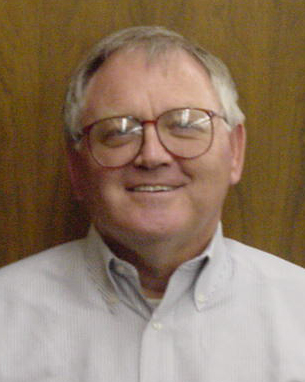
Sunshine Week 2009 takes place from March 15 through 21. The annual event is about the public's right to know what its government is doing, and why. Sunshine Week seeks to enlighten and empower people to play an active role in their government at all levels, and to give them access to information that makes their lives better and their communities stronger. Lake County News will present guest commentaries and news stories about open government as part of this year's Sunshine Week.
The Pentagon has for many years had a policy restricting the media coverage of the coffins containing the bodies of returning service members. The policy was, arguably, implemented so as to protect the privacy of our military families. That's a noble consideration. But it may also intentionally or otherwise shield Americans from the true costs of our overseas military involvement.
President Obama has directed a review of the policy. The principal change in policy seems to be some type of family choice whether there is media coverage or not.
But has anything really changed? Ralph Begleiter, a faculty member at the University of Delaware and a former CNN correspondent, has long fought the media ban. He has suggested that "people who die make that sacrifice not solely for the[ir] families but also for the nation."
I agree. Begleiter is speaking for me when he speaks of the sacrifices of our military. And by their families as well.
Begleiter has also written that our public recognition of the return of our dead soldiers "is a matter of national grieving."
I agree. Begleiter is speaking for me when he urges all of us to recognize our military dead as a mature part of our national grieving.
Now let me tell you why I agree with him. In part, it is my long held belief that government actions must be taken transparently. Citizens are expected to participate in government decision making. And real participation requires that we know what government is doing.
But there is more. Just look north to Canada and Route 401 known in Ontario as the "Highway of Heroes." There’s so much that we can learn from Canadians about a collective national grieving for a nation's personal losses and sacrifice.
My son is on his way to Afghanistan. Right now, he is at Ft. Riley, Kan., attending to counterinsurgency training. That's the type of work he will be expected to do in Afghanistan as he trains soldiers in the Afghan National Army. It is the type of training work my son has done for several years at a National Guard training academy.
My son is the type of soldier we would all be proud of. He is honorable, conscientious, ethical and forthright. He is both a loveable character and a man with well-developed values. He could be a poster child for many. But he is his family's hero.
My son is also very different from me in many ways. He is conservative, committed to the military, a voter and supporter of George W. Bush's presidency, and probably more genuinely spiritual. I am socially liberal, an internationalist at heart, and remain unconvinced that any of our wars fought since 1945 have been fully justifiable. Many of these military actions seem, at best, some part of an imperial ambition that is not worthy of our democracy.
Even as we are different in so many ways, I remain comfortable with the decisions my son has made. He is, after all, an adult fully capable of choosing what path he takes in life.
My son has now resigned from the Guard and has transferred to the regular Army. All that so he can take part in this training assignment in Afghanistan. In part, my son believes that every soldier must serve overseas at some time. He also honestly believes he has something to contribute to rebuilding Afghanistan.
This one, however, seems to be an assignment fraught with some real risks. But I know that my son will take all his character and his mature skills to Afghanistan. It is the wonderful adult that he is that will probably guarantee that he succeeds in this work with his Afghani colleagues. They will, in turn, be the ones to protect my son.
I am so proud of this strong, confident, and honorable man. Yet I worry about him being overseas. I do so want him to return safely from Afghanistan.
But there is one other thing that I believe. If my son were to die in Afghanistan, I would not want a Pentagon policy hiding his return. I would want every American to know that my son is returning from Afghanistan. After all, he would be returning just the way he went there. He went as a proud and honorable soldier serving his nation. He would deserve nothing less than an honorable recognition by this nation of his contributions. I would want everyone to know that my son had returned from Afghanistan.
Stephens is a resident of Edmond, Oklahoma.
{mos_sb_discuss:2}
- Details
- Written by: Jane E. Kirtley
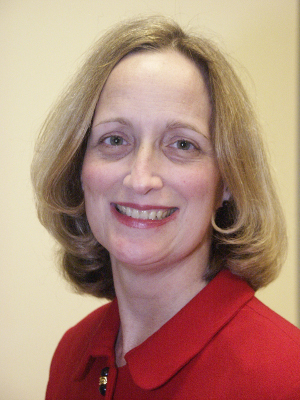
Sunshine Week 2009 takes place from March 15 through 21. The annual event is about the public's right to know what its government is doing, and why. Sunshine Week seeks to enlighten and empower people to play an active role in their government at all levels, and to give them access to information that makes their lives better and their communities stronger. Lake County News will present guest commentaries and news stories about open government as part of this year's Sunshine Week.
Do you want to know what your government is up to? What it's doing with your tax dollars? When it will propose a new health care policy? Where it's sending young men and women to fight? How it's regulating banks and bailing out the financial industry? Why children in our public schools aren't performing as well as their counterparts in other countries?
Of course you do. It's your right to know these things. Dozens of state and federal laws say so.
But governments have a million excuses for resisting those laws. They’ll say that disclosing information will endanger national security. Or invade someone's privacy. Or make it tougher to compete in the global marketplace.
Some of those excuses may sound pretty reasonable. Once in a while, they're probably justified.
But most of us are at least a little bit skeptical when the government says "No, you can't have that information." The government's business is the public's business. Unless there's a very good reason, we expect government to tell us what it's doing, and how it's doing it. In other words, we expect it to be accountable to us. After all, we're paying for it.
The Bush administration didn't see it that way. It expanded government's power to conceal more and more information about its operations, while increasing its authority to collect more and more information about each of us. Many state and local governments followed suit. Secrecy became the order of the day.
President Obama says he wants to change all that. On his first day in office, he issued a series of policy statements declaring "a new era of openness." He's promised that "transparency and the rule of law will be touchstones of this presidency." He's pledged to use the Internet to encourage the public to help create government policy.
Whether you voted for Obama or not, this is good news. If you're a supporter, you'll expect Obama to maintain the two-way flow of information that characterized his presidential campaign. If you’re not, you'll want to keep tabs on everything his administration does. These policies will help make that possible.
Everything won't change overnight. Undoing years of secrecy will take time, and some of Obama's initiatives have already prompted both praise and criticism. Defense Secretary Robert Gates' announcement in February that he would revise the 1991 policy forbidding the news media to photograph flag-draped caskets containing military remains arriving at Dover Air Force base is just one example.
Some view the new policy as a way to honor those who have made the ultimate sacrifice for their country, and to remind the public of the cost of war. Others contend that the media's presence will distress surviving family members unnecessarily, and encourage the use of the images for political purposes.
Similar debates will continue on the state and local level, too. Should the public have access to concealed weapons permits? Should government employees' e-mails be subject to disclosure? Or would this violate individuals’ privacy?
Different states will answer these questions in different ways. But the president is right: we should presume that government information is open to all of us, unless there's a very good reason why it shouldn't be. For much too long, government officials have acted as if this decision belongs to them alone. They concluded that what they're doing is none of our business, and told us to get lost.
The president's directives have sent a clear message. It's time to open the doors of government, and let the public in. And we won't settle for anything less.
Jane E. Kirtley is the Silha Professor of Media Ethics and Law at the University of Minnesota. An attorney and former journalist, she was the executive director of The Reporters Committee for Freedom of the Press from 1985-1999.
{mos_sb_discuss:4}
- Details
- Written by: Sen. Patrick Leahy
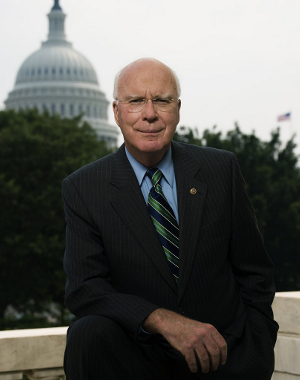
Sunshine Week 2009 takes place from March 15 through 21. The annual event is about the public's right to know what its government is doing, and why. Sunshine Week seeks to enlighten and empower people to play an active role in their government at all levels, and to give them access to information that makes their lives better and their communities stronger. Lake County News will present guest commentaries and news stories about open government as part of this year's Sunshine Week.
There is reason to hope that an era of greater openness is coming. As we mark this fifth annual Sunshine Week, some of the recent clouds obstructing the public's right to know are giving way to more transparency. The American people are beginning to get a better glimpse of how their government works — or sometimes doesn't work so well.
Already there is some good news for the Freedom of Information Act (FOIA), the law that gives life to the public's right to know. Within hours of taking the oath of office, President Obama issued a historic directive to strengthen FOIA, turning a page after the overreaching secrecy of the last administration. He issued presidential memoranda on FOIA and Transparency and Open Government that will promote accountability and transparency in government, along with an Executive Order on Presidential Records that will give the American people greater access to presidential records. Under the leadership of the new attorney general, Eric Holder, the Justice Department in recent weeks has begun releasing to the public some of the legal memos that were used to greatly expand executive power in the name of security.
Congress this month approved the first budget for the Office of Government Information Services at the National Archives. Established in the 2007 OPEN Government Act that I authored with my longtime partner on open government issues, Sen. John Cornyn of Texas, this office will house a FOIA ombudsman, charged with mediating inter-agency FOIA disputes and helping to ensure that the public's FOIA requests are swiftly addressed. By including funds for this office in the omnibus appropriations bill, Congress is renewing its commitment to the provisions of the OPEN Government Act, which made the first major reforms to FOIA in more than a decade.
Not all the clouds have been dispelled. It should concern every American that traditional sources of reliable reporting are shrinking or disappearing. Newspapers that have served their communities for more than a century are struggling, and some are closing their doors for good. It was investigative reporting by newspapers that ultimately forced the government to concede the existence of torture by our country and the shame of the mistreatment of our veterans at Walter Reed.
Information is a freedom, but information also is a right and a requirement for effective self government. Information is a pillar of our democracy. Without it, citizens are kept in the dark about key policy decisions that directly affect their lives. Without open government, citizens cannot make informed choices at the ballot box. Without the people's access to public documents and a vibrant free press, officials can make decisions in the shadows, often in collusion with special interests, escaping accountability for their actions. And once eroded, these rights are hard to win back.
When the Congress unanimously passed the OPEN Government Act, Democrats and Republicans alike joined together in promising the American people a more open and transparent government. FOIA's defenders in Congress must work to ensure that that this was not an empty promise. I intend to build on the FOIA reform work that Sen. Cornyn and I began several years ago by proposing new legislation to further strengthen FOIA. The bipartisan success with the OPEN Government Act and President Obama's FOIA directive shows that open government is not a partisan issue. Open government is an American value and a virtue that all Americans can embrace.
Sunshine Week gives us the chance to celebrate our successes and size up the challenges that lie ahead. We can remind ourselves that a free, open and accountable democracy is what our Founders envisioned and fought to create. The public's right to know helps government learn from mistakes so they are not repeated.
It is the duty of each new generation to protect this vital heritage. At this difficult and historic time for our nation, we have the opportunity again to reaffirm a commitment to an open and transparent government on behalf of all Americans today, which we have in our power the ability to leave as an enduring legacy for future generations of Americans tomorrow.
Sen. Leahy (D-Vt.) was installed in the Freedom Of Information Act Hall of Fame in 1996 and is the 2009 recipient of the Robert Vaughn FOIA Legend Award. He is the author of the Electronic FOIA Amendments of 1996 and coauthor of the OPEN Government Act.
{mos_sb_discuss:4}