 How to resolve AdBlock issue?
Opinion
- Details
- Written by: Sophie Annan Jensen
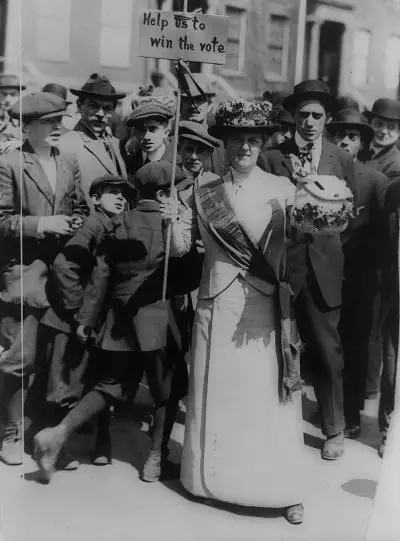
It’s Women’s History Month, and it’s not your fault if you didn’t know that.
The tradition started in 1981, when Congress established the second week of March as Women’s History Week. In 1987 they expanded it to a month and every year since, they’ve passed a resolution on it, and the president has issued a proclamation. And yes, he did so this year.
The only sign of it here was on March 8, when Lake County poet laureate Sandra Wade held a reading for International Women’s Day a Redbud Library and urged teachers to give students credit for attending.
OK, we’re not Sonoma County, where the National Women’s History Project started in 1980 and persuaded Congress to pay attention. Their impetus was noticing that only 3 percent of textbook content was about women.
Three percent. It is to laugh, scornfully. Anyone who’s ever watched Western movies knows the nation’s history, to say nothing of the world, is simply teeming with women.
And so are Lake County’s past and present. We’ve had women county supervisors before Denise Rushing. Louise Nan’s superintendent of Konocti Unified School District. A woman started this publication you’re reading.
Dozens, maybe hundreds, of women run our businesses, head political committees, provide health care at all levels, keep volunteer groups running, and lovingly fill that traditional woman’s job, teaching.
Shelby Posada runs the Arts Council, Melissa Fulton runs the Chamber of Commerce. Could you ask for a broader range?
Native women were here when the pioneer families arrived, and today some of them are running things in their tribes. Tracey Avila chairs the Robinson Rancheria Tribal Council. Irenia Quitiquit is Robinson’s environmental director.
(It’s just as well I've only been here four years and don’t know that many people or you’d be getting a very long list of names.)
So – why don’t we celebrate Women’s History Month and the many achievements of our friends and neighbors?
Don’t we care? Or are we just too busy doing today’s work?
Too busy is my guess. So how about we give ourselves a break from how much we are doing to notice what we have done?
And how about sending us a few words on your own favorite piece of women’s history? Mine’s that Mom riveted airplane wings during World War II. Then she made me take typing.
Watch a movie:
– North Country: Based on a real story, stars de-glammed Charlize Theron as one of a handful of women working in the Minnesota iron mines. Forced to labor under sexist conditions, she and her female colleagues fight the relentless harassment of their male co-workers and bring the first class action suit for sexual harassment.
– Iron Jawed Angels (history): From 1912 to 1920, a group of fiery young suffragettes led by Alice Paul (Hilary Swank) and Lucy Burns (Frances O'Connor) band together to wheedle the United States into adapting a Constitutional amendment guaranteeing women the right to vote. Their efforts incur the wrath of President Woodrow Wilson (Bob Gunton) and anger other suffragette leaders (Anjelica Huston and Lois Smith). Not a pretty picture.
– Calendar Girls: Based on a true story. These English women are resilient, resourceful and refined. They're also about to shock the residents of their little town. When one of their own discovers her husband has cancer and needs treatment, the group decides to put out their yearly calendar to raise money for the local cancer center. But instead of the usual Yorkshire dales, they'll grace the pages in the nude.
–Little Miss Sunshine is fiction, but has great insight. It gives us pudgy young Olive (Abigail Breslin), obsessed with beauty pageants, a blessedly sane mother (Toni Colette) who tells her it’s OK to be fat, a twitty father (Greg Kinnear) who redeems himself when he’s horrified by the pageant’s other contestants, all tarted up as premature sex objects. Also, it’s very funny, but rated R, in part for the wonderful Alan Arkin’s foul mouth.
Read a book:
– Inés of My Soul, Isabel Allende, 2006. The Chilean author brings her magic realism to an historic novel, the story of Ines Suarez, who left Spain in the 16th century to find her husband and wound up co-founding a New World nation.
– The Yellow Wallpaper, Charlotte Perkins Gilman, 1892, fiction. What to do with a depressed wife? This doctor husband thinks he knows, but it’s a prescription from hell.
– Writing a Woman’s Life, Carolyn G. Heilbrun, 1988, non-fiction. Great introduction to the historic treatment of women writers, and to rewriting your own life, if it needs that.
– And now for something really light, but crammed with early 20th century history: Laurie R. King’s mystery series based on the premise the retired Sherlock Holmes meets a much, much, younger woman, Mary Russell, who becomes his detecting partner and wife. Start anywhere. You’ll catch up.
E-mail Sophie Annan Jensen at
{mos_sb_discuss:5}
- Details
- Written by: Editor

These are strange times for people who advocate for open government. On one hand, technological changes appear to make information about government more easily available than ever before. We live in a radically changed media environment, in which news about government misconduct seems to reach our televisions instantaneously. And if we look around the world, we see an extraordinary spread of laws like the U.S. Freedom of Information Act. Over 70 countries now have FOI laws, most adopted in the last decade.
And yet we seem to be more concerned with government secrecy than ever before. Indeed, some people claim that secrecy today is the worst in decades. How can both of these stories be true?
It might help to recognize that we are in the middle of an intense, global battle over the principle of governmental openness. In the heat of battle, there's a temptation to employ overheated rhetoric. The truth is that the idea of transparency has gained a lot of ground over the last 20 years. This is evident in the spread of FOI laws, and the number of citizens who say that open government is an important value.
Nonetheless, there are serious challenges to openness. One is executive pushback – the determination of political leaders to reverse laws or policies that guarantee openness. As pressure for openness mounts, this countervailing pressure also intensifies. Of course, we've seen a classic case of pushback in United States, where the Bush administration waged a campaign against openness even before the 9/11 attacks. The administration tightened rules governing the Freedom of Information Act and policies on access to presidential records, among other measures.
However, pushback isn't unique to the United States. The British government led by Tony Blair was elected on a promise to introduce a Freedom of Information Act in 1997, but took eight years to put it into force. The new law was in operation for little more than a year when the Blair government announced substantial fee hikes that could gut the law. The Indian government also adopted a Freedom of Information law in 2005, but within months senior officials were pushing for restrictions. A wave of protests – and hunger strikes – deterred Indian leaders from introducing new limits.
Such struggles will continue in the years ahead. Some advocates argue that FOI laws eventually introduce a "culture of openness" in government – but the evidence tends to support a more hardheaded view. As a Canadian politician once said, the struggle over access to information is ultimately a struggle for political power. A well-organized community of stakeholders, including journalists and public interest groups, is essential to make rules about openness stick in the long run.
Executive pushback isn't the only challenge. The very structure of government is also being transformed, often in ways that undermine openness. One obvious example is the growing role of contractors in performing government functions. A 2006 study estimated that almost 8 million people work for federal government contractors – four times the size of the regular government workforce. As we've seen in Iraq, contractors now perform defense and intelligence tasks that we once thought belonged to government alone.
The problem? Most often, contractors aren't affected by FOI laws, so that internal documents about the use of money or power can't be accessed. Indeed, it may be difficult to obtain even the contract itself, which explains what contractors have promised to do, and how much they will be paid. Around the world, battles for access to government contracts are commonplace.
The structure of government is also being changed in more subtle ways. Since 9/11, we've all been reminded of the need to make difficult tradeoffs between security and openness. Less easily seen are the changes in the defense, intelligence, and policing sectors. Government agencies in different states (and different countries) are linking together more tightly, forming networks aimed at improving collective security. This is an admirable goal. But governments often agree to information-sharing agreements that allow inter-governmental confidentiality to trump FOI laws. OK as long as the network performs well – but bad news when the network fouls up, and journalists or citizens try to find out why.
Another subtle but important change: the growing role of international organizations. We live in a globalized economy, superintended by important institutions such as the World Trade Organization (which referees trade disputes), the International Monetary Fund (which monitors governments' economy policies), or the lesser-known ICANN (which rules the internet). Decisions made by organizations such as these affect the well-being of millions of citizens – but they are not required to comply with the transparency rules that we've imposed on national, state and local governments.
Are we making headway on governmental transparency? Frankly, it's too early to tell. The idea of transparency had gained ground. But it's not yet clear whether we will find ways of tailoring openness rules (like FOI laws) to fit new structures of governance. And we can expect political leaders to continue pushing back, especially as their capacity to control the outflow of government information is challenged more directly.
It's a long road ahead. But it's a road we must follow, if we want to protect the ideal of an open, vibrant democracy.
Alasdair Roberts is a professor of public administration at the Maxwell School of Syracuse University. His 2006 book, "Blacked Out: Government Secrecy in the Information Age," recently won awards from the National Academy of Public Administration and the American Society for Public Administration. His Web site is www.aroberts.us.
- Details
- Written by: Lake County News Reports
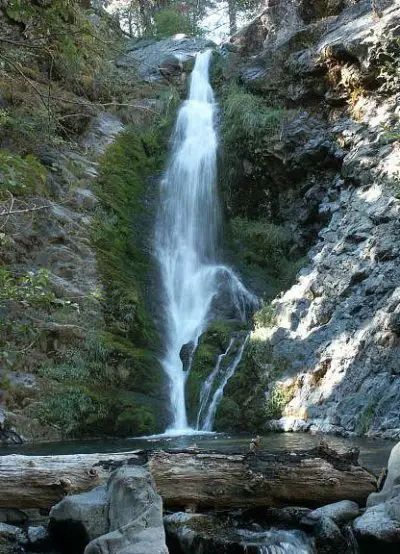
After more than five years of dialog, persuasion, and inspired cajolerie, advocates of wilderness protection in northwestern California won a stupendous victory last fall with the passage of the Northern California Coastal Wild Heritage Wilderness Act, more commonly and intimately known as the Wilderness Bill.
This far-reaching measure designates 275,830 acres (roughly 431 square miles) of Rep. Mike Thompson’s Congressional District One as federal wilderness, thus giving these special places the most potent conservation protection available in the United States. Among the areas included are the Cedar Roughs near Lake Berryessa, the King Range, Trinity Alps and Yolla Bollys. Here in Lake County, 51,671 acres located primarily in the vicinity of Cache Creek and Snow Mountain have been given wilderness status.
Although Congressman Thompson’s deft handling and persistence deserve the primary credit for making this landmark legislation a reality, many other individuals also played an important role in the result.
It all started early in 2001, when California environmentalists began working with Sen. Barbara Boxer to identify specific tracts of federally-owned land throughout the state that merited Wilderness designation. If public support was strong enough, she promised to sponsor a California Wild Heritage act to protect these remarkable places.
As it happened, those same months also saw the formation of the Sierra Club Lake Group, which took on Wilderness Bill passage as its number one conservation priority, and began the campaign by asking Congressman Thompson to introduce parallel legislation in the House of Representatives.
The Lake Group wrote letters, met with local stakeholders, and worked hard to allay anxieties about any negative consequences wilderness designation might have for our community. Although the positive energy generated by these efforts was muted in January 2002, when the Lake County Board of Supervisors voted 4-1 – with Supervisor Ed Robey the lone minority voice – to oppose any local extension of federal wilderness, momentum increased again after a tumultuous Town Hall meeting hosted by Congressman Thompson at Konocti Harbor Resort in April 2002.
By midsummer wilderness legislation was moving through both House and Senate, with lobbying efforts shifting to Sen. Dianne Feinstein, whose support was essential to passage.
In the meantime, Thompson, Robey and other advocates were working quietly in the background to win over as many different interest groups as possible. Letters and phone calls directed at all levels of government continued, as did petitions, informational tabling and lobbying trips to Washington. When the Board of Supervisors considered the bill again in April 2005 a show of hands in the packed chamber reflected an overwhelming affirmation for wilderness, and this time the Board voted the same way.
So did the United States Senate – but opposition from (then) House Natural Resources Committee Chair Richard Pombo prevented the bill from coming up for a floor vote in that branch of the legislature.
It was not until the summer of 2006 that Congressman Thompson, by acquiring the support of every county government in his district (the Del Norte Board of Supervisors being the last to concur) and by accommodating the needs of stakeholders ranging from mountain bikers to surf fishermen, managed to obtain Pombo’s grudging cooperation and break through the Resources Committee bottleneck.
At that point ultimate passage was assured even though the formalities required another few months for completion. President Bush signed the Wilderness Bill into law on October 17, 2006.
Many of the details surrounding these events, including a number of pithy anecdotes related to the lobbying effort, were recounted at a celebratory party hosted by Congressman Thompson and the California Wilderness Coalition at the Saintsbury Winery in Napa on Feb. 11.
Lake County environmentalists turned out in force, including Supervisors Ed Robey and Denise Rushing, equestrian Bill Knispel, Lake Group founders Peter Windrem, Steve Devoto, and Nina Marino, all three past and present group chairs, as well as other members of the executive committee, Land Trust and Redwood Audubon leaders, and assorted companions. The speeches were mostly brief and often funny, the hors d’oeuvres tempting, and the wines excellent, but now that the cheering is over it’s time to assess what this legislation means for this region.
First and foremost, more than 50,000 acres of pristine federal land within the borders of Lake County has been protected from roads, from logging, from mining, from off-road vehicles, from intrusive development of any sort – forever.
Wilderness designation affirms that the worth of these places for wildlife habitat, for watershed replenishment, and for providing the transcendent beauty that nourishes the spirit takes precedence over any possibility of monetary exploitation. Human intrusion is by definition guaranteed to be temporary, soft-spoken and soft-footed: hikers and horsemen, canoers and kayakers, hunters and anglers are all welcome within wilderness borders, but not wheeled vehicles or any sort of motorized equipment.
Each designated Wilderness Area is special in its own way. Cache Creek offers particularly outstanding and accessible recreational opportunities to county residents and visitors. It is a land of deep canyons and steep ridges graced with oak woodlands, grasslands, chaparral, streamside forest, groves of gray pine, and other important low elevation habitats, with a chaparral ecosystem so pristine that according to the BLM, "There are no other stands of this size that are largely free of man's influence."
The region hosts the second-largest wintering bald eagle population in California, a large herd of tule elk, black bear, beaver, river otter, bobcat, mountain lion, prairie falcons and golden eagles, as well as a profuse display of spring wildflowers, a unique assemblage of rare plants, and nationally significant Native American cultural sites. Wilderness designation also accentuates the special status given to Cache Creek when it was named a State Wild and Scenic River in 2005.
Snow Mountain, which straddles the summit of both the Sacramento and Eel River watersheds, is skirted by deep canyons which compress ecological life zones to create a unique biological sky-island providing habitat to 122 species of wildlife, including confirmed populations of marten, goshawk and northern spotted owl. Areas newly added to the existing Snow Mountain Wilderness include 10 miles of the spectacular Eel River canyon along with ancient forests of Douglas fir, ponderosa pine and incense cedar.
Areas of special value outside Lake County but still well within visiting range include the Cedar Roughs wilderness in Napa County west of Lake Berryessa, which shelters the world’s largest grove of the rare Sargent cypress, and the King Range on the Lost Coast, which is the longest stretch of undeveloped coastline in the contiguous United States.
The ecological effects of Wilderness designation also reverberate beyond the borders of the protected areas themselves. Provision of a nucleus of sacrosanct habitat allows many species of animals to establish healthy populations on wider ranges throughout surrounding swathes of public land and sometimes on private land too, where access restrictions are less stringent and may not exist at all.
In many of these locations on the margins of wilderness ecotourism facilities can be provided without impinging on the unsullied natural heritage of the wilderness areas themselves. Moreover, the presence of so much wild land of such high quality helps to establish Lake County’s image as a green refuge, a place to find values that have become rare and precious in this asphalt world.
The Wilderness Bill is now the law of the land, but that doesn’t mean that our work is over. Implementation measures include changing maps and posting signs, and sweatier restoration tasks such as demolishing old fence lines and controlling invasive alien plants – work that will provide many rewarding opportunities for volunteers to play a meaningful role in managing and preserving the wild places that we cherish.
While rejoicing in our victory here in Congressional District One, we should not forget that many equally precious gems remain at risk elsewhere in California.
The sweeping California Wild Heritage Act that Senator Barbara Boxer first proposed in 2002 and reintroduced a just a few weeks ago would grant Wilderness status to more than 2.4 million acres of public lands, and give federal Wild and Scenic protection to more than 400 miles of free-flowing rivers – an incredible legacy for future generations of Californians, and for the richly diverse plant and animal life of our state. Helping to make this dream a reality is a worthy objective for the next five years.
Victoria Brandon is chair of the Sierra Club Lake Group. She lives in Lower Lake.
{mos_sb_discuss:4}
- Details
- Written by: Editor
Recently I submitted an article about genetic engineering to the newspaper, but the paper balked at publishing it, (nicely) insisting that I insert a paragraph assuring readers that my article represented the result of extensive research or was my own opinion. The concern was that the readers might be too easily swayed by the definitive way I express myself.
Now I’ve been subjecting the Lake County public to my opinions for more than a decade and I’ve always considered readers to be intelligent enough to understand that anything in print should be subject to skepticism and rebuttal.
So what is it that has changed? Why is it that nationally, our publishers and editors seem consumed with vetting articles and information that is, in essence, unverifiable? Our society has been overrun with “experts” – the word parts “ex” and “pert” meaning “a drip under pressure.”
I will venture my opinion for your consideration. It is because we have come so far from being able to verify the glut of information we are inundated with through our own personal experiences and perceptions – “what we know.”
We are bombarded with information we are forced to blindly accept – opinions, conjectures, statistical studies, scientific studies, news reports, etc. etc. Science has strayed so far from pure unbiased studies that even Nobel Prize winners have complained that most of today’s science is agenda driven toward verifying pre-determined results.
Journalism has strayed even further from impartial and objective news, being purposely designed to lead us toward pre-determined conclusions. What we really know is easily defined as what we personally experience in our immediate relationships and environment. Beyond that, we are primarily forced to accept a myriad of perceptions, opinions, and ideas regarding history and current events with relatively little assurance in our facts or conclusions.
What may appear to be true today may be exposed as a hoax, misunderstanding or outright lie tomorrow. Science is constantly rearranging its facts and theories, and accepted history is often shown to be a concoction of fantasy, myth, and mass delusion. Some people insist that we must “trust” experts to gain a faithful perspective of the facts that surround us, but which of our sources do we consider innately trustworthy?
I know the Holocaust happened not because I read it in a book or saw a documentary but because of anecdotal evidence (despised by scientists and historians), from people who were there, and a father that was one of the first Americans to enter Dachau after the Germans fled.
To pretend that any of us have an undeniable grasp of what is happening far from our own reality is innately foolhardy and ultimately – dangerous. Those that would insist otherwise are either a part of the manipulated masses or are themselves a part of the machine that attempts to keep us distracted from what we truly “know,” replacing our true knowledge with manufactured perceptions of ourselves and the world around us. They want us to believe, inundating us with a glut of seemingly unrelated information, entertainment and distraction, that our civilization is moving forward in an orderly, progressive fashion toward a wonderful and more perfectly controlled future.
To insure a free and responsible dialogue we should not be arbitrarily pretending any authority in the opinions presented in books, newspapers and media, yet neither should anyone offering an opinion be required to be an “expert” in what they speak of. That concept of simple acceptance of expertise is inherently more dangerous than the admission of ignorance. It is the responsibility of the public, and all readers, to vigilantly compare anything we see, hear, read, or watch, to our own reality – our own experiences – our own histories.
The advent of writing, hailed by some as the great preserver of knowledge and intellect is also the great preserver of myth, falsehood and deception. The abandonment of constantly vetted oral histories reflects a feeble attempt to assure ourselves that the written word is always faithful to the truth when we know otherwise. The attempts of humanity to assure ourselves that what we think we know, we know, and that what we believe is incontrovertible fact, is further proof of the immaturity of our species.
Take the thoughts and assertions of the progeny and prophets that have attempted to define and clarify, through writing, the attributes and intentions of our deities. Have the results of those attempts manifested themselves in a more peaceful, prosperous, and humane world? No, disagreements between men regarding the interpretation and veracity of those documents have been the underlying source of countless tragedies, wars, and strife worldwide since they were first composed. Indeed, our world aligns itself socially, politically and even racially within the separate and divisive influences of those documents.
Adult humans and their beliefs are like petulant children, demanding the pretense of knowing the unknowable, arrogantly pointing to a page to justify our competence and existence. But if we were to ask, of all that we are so vehemently concerned with today, what will be important and remain important in 10,000 years? We will not have an answer.
The earth and our natural world will prune, cull, and quantify our experience in ways we cannot predict, so that all these so-called matters of import may be rendered meaningless. For this civilization, the pretense of knowing appears to be more important than the actuality of being.
Readers aren’t stupid – they do not need assurances to remind them of the fanciful nature of words – the primary element of the universe is still mystery. To pretend otherwise is simple arrogance.
James BlueWolf lives in Lakeport.