How to resolve AdBlock issue?
Education
- Details
- Written by: Jesse Harrell

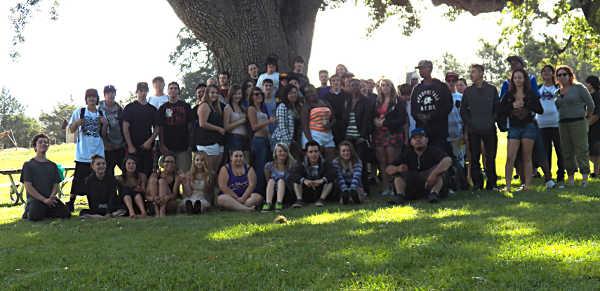
Here is an update on what’s going on at W.C. Carlé High School.
Student Austin Weldon made a very special plaque for our wonderful math/P.E. teacher Steve Hamann, congratulating him on his introduction into his college’s Hall of Fame. Thank you Austin and congratulations Steve!
Another plaque was made by Mayra Pantoja, welcoming our new English teacher Robin Shrive. In addition, Mayra also was selected this week’s Student of the Week by the staff. Mayra is a consummate student who is also one of our leaders in community service. Congratulations, Mayra!
The end of last week was the end of our FIRST grading period! It’s already going by very fast! Advisors will meet individually this week with each student to go over the first report cards and credit histories.
The cancellation of our Back to School Night was regrettable, but sometimes you can’t prevent what life throws your way.
We have rescheduled the Back to School night for 5:30 p.m. Thursday, Oct. 11. All of the previous information about it still applies: your child will get extra credit for showing up, it’s a potluck so bring something with you and try other foods, and come and learn more about Carlé yourself. We hope to see many of you there.
Carlé's official key chain contest is now over, but the next contest is designing mugs, so get your designs in, everyone.
We’d like to give a great big thank you to our secretary Barbara Dye for not only being just the best, but also going beyond that.
Here at Carlé we have CHILY(Carlé High is Liking you) awards for doing good things at the school. Not only did Barbara crunch all the numbers in record time to get us our report cards she also does everything to make sure the weekly Chile awards are a success. She actually wears so many hats around here that a new title needs to be created for what she does for us.
Now speaking of awards I’d also like to briefly mention our Sustainability Awards. We here at Carlé have levels of status that dictate just how well an individual is doing. These levels are bronze, silver and gold.
Every time a student attains silver or gold level more than one time in a row they are awarded Sustainability Awards created of course by Barbara. The more times you hold or better a level the better the prizes you receive from our media design and production program.
Finally, this past week we had the CASHEE for 11th and 12th graders here at Carlé. The California Exit Exam is a requirement for any and all to graduate.
We would like to thank Pat Howell who did so much to make sure the CAHSEE was a success here at Carlé.
In addition, Ms. Howell did an amazing amount of work to make sure our big barbecue during the fleetball tourney was a success.
Thanks also go out to student Chelsey Chearney who did so much to assure the barbecue’s success.
More information on the fleetball tourney, rosters and results will be in next week’s article.
Jesse Harrell is a student at Carlé Continuation High School in Lower Lake, Calif.
- Details
- Written by: Editor
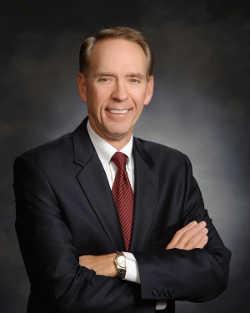
The California Community Colleges Board of Governors has announced the unanimous selection of former Los Rios Community College District Chancellor Brice W. Harris as the 15th chancellor to lead the 112-college system, the largest system of higher education in the country.
“Brice Harris is the right person at the right time to lead the California Community Colleges. I’ve known and worked with him for many years, and he is widely respected within the college system. He has the vision and leadership skills needed to navigate these tough fiscal times and keep us focused on improving student success,” said California Community Colleges Board of Governors President Scott Himelstein.
Harris was the longest-serving chancellor at Los Rios, with nearly 16 years at the helm, and led two local bond measures that funded facilities improvements and allowed the district to serve thousands of additional students.
The Los Rios district includes American River, Cosumnes River, Folsom Lake and Sacramento City colleges, and enrolls more than 85,000 students each semester.
Harris oversaw the establishment of the district’s fourth college, Folsom Lake, and provided the vision that made it home to a regional performing arts center, which was recently renamed in his honor.
Harris previously served as president of Fresno City College, and was a faculty member and vice chancellor in the Kansas City, Mo., community college system.
“It is humbling to be asked to lead such a tremendous system of colleges serving the educational needs of California. The California Community Colleges have helped educate generations of citizens, and these colleges are even more important to the future of our great state,” Harris said. “Serving as the system chancellor at this time is very exciting. The efforts that retiring Chancellor Jack Scott and the board of governors have begun related to improving student success provide us all a clear road-map to a better future for our colleges and for California.”
Harris has served on a host of local, state and national boards and commissions. He was the first educator to serve as president of the Sacramento Metropolitan Chamber of Commerce and also served as president of the Sacramento Area Commerce and Trade Organization (SACTO).
Harris serves on the American Council on Education (ACE) board, and was a member of the California Community College Chancellor’s Office Student Success Task Force.
“I enthusiastically endorse the appointment of Dr. Brice Harris as the chancellor of the California Community Colleges. He is an outstanding educational leader, as evidenced by his superb leadership of the Los Rios Community College District,” said former Chancellor Jack Scott, who retired earlier this month. “He will ably represent community colleges in state government, and I predict great progress for California community colleges under his leadership.”
Harris did his post-doctoral study at the Harvard University Institute of Educational Management, received his doctorate in education at Nova Southeastern University, his master’s in communication from the University of Arkansas, and his bachelor’s in communication from Southwestern Oklahoma State University.
“I’ve known and worked with Brice for almost 20 years, going back to my days on the Sacramento City Council. He was an exemplary chancellor at the Los Rios Community College District, broadening higher education opportunities for tens of thousands of students through unprecedented renovation and expansion of the district’s four colleges,” said Senate President pro Tempore Darrell Steinberg. “As California Community Colleges enlarge their role in educating and training our state’s workforce, I look forward to working with Brice as he takes on another leadership challenge.”
As chancellor, Dr. Harris will receive an annual salary of $198,500, plus a standard benefits package afforded to state employees. He begins his duties on Nov. 6, 2012
Harris lives in Fair Oaks, Calif., with his wife, Barbara, who is an elementary educator and he has three adult children also in the state.
The California Community Colleges is the largest system of higher education in the nation. It is composed of 72 districts and 112 colleges serving 2.4 million students per year.
- Details
- Written by: Editor
LAKE COUNTY, Calif. – The members and families of Clear Lake Callayomi Masonic Lodge F. & A.M. are proud to announce that 12 scholarships were awarded to deserving graduating high school seniors in the Clearlake and Middletown areas.
Six scholarships were awarded to Middletown High School, three were awarded to Lower Lake High School, two were awarded to W.C. Carlé High School and one was awarded to Richard Lewis Alternative School.
The cash scholarships are each $750.
These scholarship are made possible by the Masons, their families and the Clear Lake Callayomi Masonic Golf Scholarship Golf Tournament, held annually at Adams Springs Golf Course on Cobb Mountain.
This year the golf scholarship tournament was held on Sept. 8.
- Details
- Written by: Jesse Harrell
This past Saturday, Dan Maes organized a community service project at the senior center. The fundraiser took place from 4 p.m. to 9 p.m. with the help of some of Carlé's very own students. Credit will be given in the next article.
Congratulations to our Student of the Week, Sara Peters. Peters worked very hard to earn this award. She is a new student this year at Carlé. Peters is a natural leader and role model who always tries to rise above all challenges. We are all very proud of her.
We’d like to give a very special welcome to Konocti Unified School District’s new superintendent, Donna Becnell. Student Nura Brown made a beautiful plaque welcoming the new superintendent and it will be awarded to her on her next visit to our site.
Our super secretary Barbara Dye works very, very hard for us here at Carlé and sometimes she seems superhuman for how much work she puts in.
However, like everyone else she needs a break sometimes. So with that in mind we here at Carlé would like to give a shout out to student Rosie Trejo, who gives Barbara the only time she gets all day to have a short lunch. Thanks for all your hard work and dedication, Rosie.
The end of the first grading period has arrived. Friday, Oct. 5, will mark this point and means we are already one-sixth of the way through the school year.
Unfortunately our Back to School night had to be canceled because of the power outage this last Thursday. We all here at Carlé are trying to reschedule and will let you know when it is calendered.
Lastly, the Armed Services Vocational Aptitude Battery – or ASVAB – test was administered last Thursday to students at Carlé who signed up to take this test. Not only is this a great military test but it is also a great test for a student’s future.
The following are all of the students who took the test: Malia Askew, Forrest Ferris, Junior Garcia, Summer Gunn, Keanon Jardstrom, James Mora, Mayra Pantoja, Cody Perdock, Johnny Roofener, Lance Thurston and Levy Venuto.
Jesse Harrell is a student at Carlé Continuation High School in Lower Lake, Calif.