 How to resolve AdBlock issue?
Education
- Details
- Written by: Editor
LAKEPORT – The Lake County Child Care Planning Council, in partnership with First 5 Lake, is now accepting applications for the 2012-13 Steps to Quality Program for early childhood educators.
Steps to Quality offers generous stipends for completion of a year-long program designed to mentor early childhood educators, provide opportunities for professional growth and reward those who are continuing their education.
Thanks to a new funding opportunity through First 5 California, the 2012-13 program offers increased stipends, as well as additional resources.
Local early childhood educators will receive intensive training on the CLASS assessment tool.
CLASS is an evaluation tool that measures the quality of teacher/child interactions and the atmosphere of the classroom or program, based on decades of research that high quality teacher/child interactions and positive climate in the classroom both have a significant positive impact on student outcomes.
For more information on eligibility and requirements, and to access the application, visit www.lakecountychildcareplanning.com and see “monthly highlight,” or contact the Lake County Child Care Planning Council at 707-262-4162.
- Details
- Written by: Editor
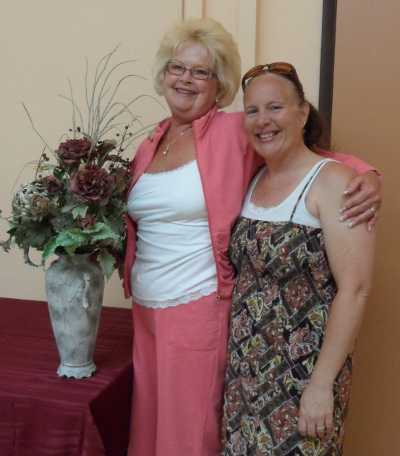
LAKEPORT, Calif. – After 25 faithful years serving as director of Lakeport Christian Center Preschool, Mrs. Mary Paarsch is officially retiring. D
During her tenure as Director of LCC Preschool, Mrs. Mary also was extremely active in the community. She served as Commissioner for First 5 Lake County Commission.
The board and staff of LCC Preschool would like to express their gratitude to Mrs. Mary for the many years of sacrificial, dedicated and diligent service.
Though she is formally retiring, this will not conclude Mrs. Mary's involvement with LCC Preschool programs, as this is her passion to continue to serve the children and families of the community through the preschool.
Julie Landrum has been officially appointed as the new preschool director effective on Aug. 13.
Landrum is not new to LCC Preschool as she served as assistant director. She also has served as a site supervisor for the Lake County Office of Education as well as lead teacher for Lake Mendocino Child Development Center.
She graduated from Mendocino College with an associate’s degree in early childhood/family relations. She is fully qualified to serve as director of the preschool and is excited about this new chapter in her life as well as in the operation of the preschool. She is here to serve the community and provide a safe, loving, enriching investment in the lives of the young children.
LCC Preschool is accepting applications for the fall preschool/daycare/pre-kindergarten programs.
They offer full and half-day programs, Monday through Friday, 7:30 a.m. to 5:30 p.m. for ages 2-5.
The preschool is NCO approved, offers multi-child discounts and affordable rates, License No. 173000812.
The preschool is located at 175 C St. Stop by and tour the facility and meet the friendly, caring staff and pick up your fall applications.
Preschool orientation will take place on Tuesday, Aug. 30, at 6:30 p.m.
For more information call 707-262-5520 or visit the school online at www.lcchub.com/preschool-daycare or on Facebook at www.facebook.com/lccpreschool .
- Details
- Written by: Editor
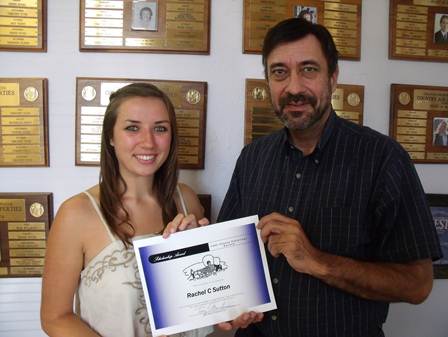
LAKE COUNTY, Calif. – The Lake County Historical Society has awarded its annual scholarship to Middletown High School graduate Rachel Sutton,
Sutton plans to attend CSU Monterey Bay focusing on environmental protection and conservation.
She was an outstanding athlete at Middletown High School, having participated in volleyball, basketball and softball all four years.
Sutton played varsity basketball all four years; varsity softball her sophomore, junior and senior years; and varsity volleyball her junior and senior years. She was Captain of the varsity volleyball team, basketball team and the softball team her senior year.
In addition to her athletic skills, Sutton was an excellent student. Her total weighted grade point average was 3.8269.
All applicants for the Lake County Historical Society Scholarship are required to write a 250 to 750 word essay on Lake County history.
Sutton’s excellent essay was titled “From Stage Routes to Romance to Riches.” The essay will be published in a Historical Society Pomo Bulletin.
- Details
- Written by: Editor
LAKE COUNTY, Calif. – Kevin Leal has been named one of six recipients of the Mendocino College Foundation $1,000 Directors/Trustees Annual Fund Scholarship.
Leal finished his first year of “traditional” school in May 2012, having been home-schooled from kindergarten through high school.
Leal, who attended his first year of classes at the Lakeport Center, is majoring in liberal arts with a natural science emphasis. He plans to attend classes at the Ukiah campus in the Fall 2012 semester, then go back to the new Lakeport Center – which will be open by then – for the spring semester of 2013.
He says he is very excited about the beautiful new Lakeport Center, and cannot wait to take classes there.
Leal plans to transfer to Southern Oregon University, a small, public university in Ashland, where he expects to enroll in pre-med studies, with the goal of becoming a medical doctor. He is currently seeking opportunities to shadow physicians and volunteer at local hospitals.
The June day he met with foundation staff for his interview was the first time he had been to the Ukiah campus, and he was obviously delighted with all he saw. He explained that he is taking an online math course which requires a few face-to-face classes in Ukiah, and he was happy to have a chance to look around.
Leal said “the friendliness of the staff” during his initial inquiries, made Mendocino College an easy choice for him.
When classes started, he was delighted to find that he experienced the same warm welcome from the faculty. He especially acknowledged professors Bob Alto, Michelle Scully and Kathleen Wagschal for their assistance during his transition to college life.
Leal noted that he was shy at first because he did not know anyone, but he soon became part of an “awesome” community of fellow students. He is proud to be the the newly elected publicity director for the Associated Students of Mendocino College.
The most challenging part of his first year was the commute from his home near Middletown. “I spent a lot of time on the bus,” he said.
He is not kidding. The trip from his home to the Lake Center takes one and a half hours each way by bus, while the trip to Ukiah takes two and a half hours each way. “I am getting used to it,” he said.
The first person in his family to attend college, Leal said his parents are thrilled that he aspires to attend medical school. “I find medicine so fascinating,” he said. “I look forward to pursuing this goal.”
Leal said the secret to his success is that “I give school my all. Nothing is more satisfying to me than getting an A.”
And he has an impressive number of top grades to his credit. Unlike home school, where grades were not stressed, “It feels great to have my accomplishments acknowledged,” he said.
However, Leal admitted that he is not always a model student. “Procrastination is a bad habit I need to break,” he confessed, “as it often keeps me up until 3 or 4 a.m. doing homework.”
When he has the time, Leal loves to swim. He was on a local swim team for five years, and he works as a lifeguard at the Hidden Valley pool, near his home. He also likes to play video games.
Leal is grateful to the Mendocino College Foundation for selecting him to receive the Director's/Trustee's scholarship. “It’s quite the blessing, and I cannot thank them enough,” he said.
For more information about the Mendocino College Foundation, call 707-467-1018 or visit the foundation online at http://foundation.mendocino.edu/site/ .