 How to resolve AdBlock issue?
News
- Details
- Written by: Elizabeth Larson
The budget includes cuts for K-12 education, higher annual tuition for students in the state's university system, cuts in fire protection and law enforcement, and elimination of the California First 5 Commission, which would require voter approval.
In an effort to generate new revenue, the governor proposes raising car licensing fees, hiking the state sales tax for two years and taxing certain services such as veterinarian care for animals.
The plan already is facing opposition from legislative leaders on both sides of the aisle, who either oppose the tax hikes or the cuts.
Senate Republican Leader Dave Cogdill of Modesto applauded Schwarzenegger's early proposal.
"While Republicans have serious concerns about raising taxes during a recession, we appreciate that the governor’s proposal includes difficult, but necessary reductions to bring state spending closer in line with revenues,” he said.
Cogdill added that the state needs to focus on economic stimulus “instead of simply asking taxpayers to send more of their hard-earned money to Sacramento.” He accused the Democrats of blocking attempts at stimulus.
Democratic Assembly Speaker Karen Bass said in a prepared statement said she believes the governor's budget indicates he “may finally be coming around and realizing he needs to approve the responsible package of budget solutions the legislature passed Dec. 18.”
Bass said the Democrats' proposal includes $18 billion “in real cuts and new revenues,” plus $3 billion in new funds for transportation projects and $3 billion in expedited projects that have already been approved by voters. “That means we'd be creating 367,000 new jobs at a time California needs all the new jobs we can get.”
Filling in for the governor on his Saturday “California Report” radio address was state Finance Director Mike Genest.
As of Saturday it had been 59 days since Schwarzenegger called the state's legislators into an emergency special session on the budget crisis. “And still they have failed to take real and comprehensive action to close California's exploding deficit,” Genest said.
“Every second the legislature’s inaction continues, we spend another $470 more than we’re taking in,” said Genest. “Every minute, another $28,000. Every hour, $1.7 million. Every day, more than $40 million.”
Compromise is needed to meet the most challenging fiscal crisis the state has ever faced, said Genest.
If nothing is done, the deficit will reach $41.6 billion by the end of the 2008-09 fiscal year, at the same time as projected revenues only are $86 billion.
Schwarzenegger delivered his budget proposal on Dec. 31, 10 days ahead of the constitutional deadline. It includes $17 billion in cuts that will impact all areas of government, and $14 billion in new revenues to minimize the impact on vital programs such as education, said Genest.
Other proposals, according to Genest, include measures to increase the state government's efficiency, such as eliminating or consolidating dozens of government boards and commissions.
“Our situation is dire,” said Genest. “California runs out of cash in less than 70 days.”
Genest also referred to State Controller John Chiang's Dec. 30 warning that as of Feb. 1, the state will be forced to begin issuing IOUs in lieu of salaries and per diem payments to 1,700 legislators, state elected officers, judges and their appointed staff, and for tax refunds to businesses and individuals.
Those measures will be necessary, Chiang said in a letter to legislators, in order to ensure the state can meet its obligations to schools and repay external loans.
The proposed budget's new revenue sources include:
A temporary increase of the state's sales tax rate by 1.5 percent from March 1 through Dec. 31, 2011, which would reportedly raise $2.35 billion in 2008-09 and $7.114 billion in 2009-10, according to an analysis by the California Budget Project.
Broadening tax base to include appliance, furniture, and vehicle repair; veterinarian services; and amusement parks, sporting events and golf; that would raise an estimated $272 million in 2008-09 and $1.154 billion in 2009-10.
Impose a 9.9 percent oil severance tax effective Feb. 1 to generate an estimated $358 million in 2008-09 and $855 million in 2009-10.
Raise alcoholic beverage taxes by the equivalent of a nickel a drink effective Feb. 1, raising an
estimated $244 million in 2008-09 and $585 million in 2009-10.
Reduce the dependent tax credit – the tax credit claimed for children and other dependents – to the same level as the personal credit beginning in the 2009 tax year, to raise $1.44 billion in 2009-10.
Increase vehicle registration fees by $12 per vehicle to raise $92 million in 2008-09 and $359 million in 2009-10.
Increase the fee charged for driver's licenses by $3 to raise an estimated $16.5 million in 2009-10.
The governor's general fund proposals document explains that the origins of the budget problem go back to 1999-2000, when state revenues increased by 23 percent thanks to the stock market and dot-com boom. “The surge in revenues resulted in massive and unsustainable new spending commitments,” the document notes.
When revenues declined, spending didn't, and one-time measures such as borrowing took place, giving birth to the structural deficit. When growth surged in 2005-06, those revenues were needed to pay back loans and backfill for the loss of temporary cost-saving steps, according to the governor's analysis.
The California Budget Project's analysis notes that the massive budget shortfall facing California now “largely reflects the impact of the downturn in the economy on state revenue collections.”
The situation is made worse, according the California Budget Project, due to the elimination of $500 million in previously anticipated 2009-10 revenues from the sale of the EdFund; a $123 million reduction in 2008-09 tribal gaming revenues and a $192 million reduction in 2009-10 due to the
failure of one tribe to ratify a gaming compact with the state and lower levels of gaming activities due to the economic downturn; and projected reductions of $252 million in 2008-09 and $272 million in 2009-10 in royalty receipts from oil and gas production due to declining oil prices.
The analysis also notes, “California's economy weakened in 'in step' with the US economy in 2008.”
How it would impact Lake County
Specific cuts in education, social services and law enforcement could hit hard here in Lake County.
One of the biggest cuts would be the elimination of the California First 5 Commission, which was formed to bring education, health, child care and other important programs to children from birth to age 5 and their families.
The commission's programs are supported by a 50-cent-per-pack tax on cigarettes imposed by Proposition 10 in 1998.
First 5 Lake County reports that Lake County ranks in the bottom 10 percent of state counties for standards of child health and wellness. Annual funding for the local agency averages $775,000.
Dissolving the commission and redirecting its funds would require voter approval. Its elimination would result in general fund savings of $275 million in 2009-10, with all state funds and 50 percent of county First 5 funds to support children's programs overseen by the Department of Social Services.
Another significant cut would be $500,000 annually from Sheriff Rod Mitchell's budget. Lake County receives those funds through the Small/Rural Sheriffs Grant program, which Schwarzenegger proposes to cut in order to save $18.5 million. The funds have been on the chopping block repeatedly in recent years after a caucus of rural legislators had the grants reestablished.
Counties also would see reductions in revenues due to lost Williamson Act contracts, which allow agricultural landowners to pay lower property taxes if they agree not to develop their land. Local governments would see a reduction of $34.7 million for both 2008-09 and 2009-10.
Seniors and the disabled will be challenged by some of the budget's proposals. Property tax assistance for seniors and blind or disabled Californians available through the Senior Citizen's Property Tax Deferral program, would be reduced for savings of $32 million beginning Feb. 1.
Local transportation efforts, such as Lake Transit, could face the elimination of grant money based on gas tax revenue, which would be shifted to other transportation costs.
Education for K-12 would take more hits. Last month, county superintendents of schools reported that Lake County schools saw more than $3.8 million in cuts when the state budget was passed in September. Those cuts led to 21 teaching positions being eliminated, as well as dozens of other jobs including instructional aids, office support, counselors and administrators.
It's not all bad news. Among other things, the governor also is proposing increases in certain areas, such as $3 million to fund 14.2 additional game warden positions for Fish and Game. Programs such as the Department of Health Care Services, Department of Social Services, Department of Developmental Services and Department of Mental Health would see increases totaling $2.4 billion.
Special fund support also is being proposed for a $34.9 million increase to support 240 new California Highway Patrol positions and $11.9 million for a new CHP dispatch system, which handles 911 calls.
Schwarzenegger proposes using vehicle license revenues to pay for law enforcement programs like the Citizens Option for Public Safety (COPS) and Juvenile Justice Crime Prevention Act programs, local juvenile probation activities and booking fee payments. The county and two cities currently receive about $100,000 each from the COPS grants.
That vehicle license fee funding, which would be shifted toward those law enforcement purposes and away from the Department of Motor Vehicles, would be replaced by a $12 per car hike in the vehicle license fee, which would generate an estimated $92 million in 2008-09 and $359 million in 2009-10.
Certain other law enforcement grants, such as Vertical Prosecution Block Grants, Rural Crime Prevention, California Multi-jurisdictional Methamphetamine Enforcement Teams, the High Technology Theft Apprehension Program, Sexual Assault Felony Enforcement Teams and various other
programs would be eliminated.
Here are rundowns of some of the other projected changes in specific areas outlined by the California Budget Project and the governor's budget documents.
In-Home Supportive Services (IHSS) Program
The governor proposes to cap the state's contribution toward the wages of IHSS workers at the state's minimum wage, which is currently $8 per hour. Locally, there are about 1,400 IHSS workers.
The budget also would require IHSS recipients who have less severe impairments to begin paying their own Medi-Cal "share-of-cost."
In addition, the proposals would eliminate domestic and related services for IHSS recipients who have less severe impairments.
Fire suppression
A summary of the major expenditure changes from the state's general fund includes a $248 million decrease for Cal Fire's emergency fire suppression expenditures.
Such emergency expenditures assisted in fighting the 14,500-acre Walker Fire, which was caused by a vehicle in June. That fire cost $3.2 million to suppress, according to Cal Fire's final numbers.
The summer lightning fires and fall fires in Southern California have resulted in Cal Fire's emergency fire costs rising to $437 million in fiscal year 2008-09.
The 2009-10 budget would propose $189 million, “which reflects the historical average of firefighting costs over the past five years and additional federal reimbursements.”
Supplemental Security Income/State Supplementary Payment (SSI/SSP) Program
SSI/SSP grants would be reduced to the minimum level required by federal law and the Cash Assistance Program for Immigrants (CAPI) would be eliminated, for combined savings of $200.1 million in 2008-09 and $1.247 billion in 2009-10.
CAPI provides state-funded cash assistance to approximately 10,000 elderly and/or disabled legal immigrants who are not eligible for SSI/SSP payments due to their immigration status, according to the California Budget Project.
The June 2010 state cost of living increase for SSI/SSP grants also would be eliminated, for savings of $27 million in 2009-10 and annual savings of $323.9 million beginning in 2010-11.
Health and Human Services
County administration of the Medi-Cal Program would see the statutory cost of living increase suspended, resulting in a $24.7 million decrease.
There also would be a $50.8 million decrease in 2008-09 and a $668.7 million decrease in 2009-10 through Medi-Cal Program eligibility and benefit changes.
Schwarzenegger proposes eliminating the California Food Assistance Program (CFAP) beginning on July 1, for savings of $37.8 million in 2009-10. The program provides food assistance to certain legal noncitizens who are ineligible for the federal Supplemental Nutrition Assistance Program – formerly the Food Stamp Program – solely due to their immigration status.
The budget also would cut funding for Regional Centers, which coordinate services for people with developmental disabilities, by $334 million in 2009-10 through unspecified program reductions. The governor is proposing to reduce funds to those centers' operations and services by 3 percent beginning on Feb. 1 for savings of $24.6 million in 2008-09 and $60.2 million in 2009-10.
K-12 Education
The state would defer $2.6 billion of school district revenue limit and K-3 Class Size Reduction program payments from April to July, reduce revenue limit funding for school districts and county offices of education by $1.6 billion, reduce funding for a number of K-12 educational programs by $55.5 million and eliminate cost-of-living adjustments for K-12 education programs, a reduction of $2.5 billion.
There would be reductions in revenue limit funding for school districts and county offices of education by $1.5 billion and for K-12 education programs by $1.1 billion by allowing districts to shorten the school year by five days.
At the same time, the governor proposes to increase funding to school districts and county offices of education by $268.2 million to backfill projected reductions in property tax collections.
A projected decline in enrollment would lead to reduced general purpose funds for school districts and county offices of education by $152.7 million. The budget also would eliminate funding for the High Priority Schools Grant Program, a reduction of $114.2 million.
All education mandates – with the exception of mandated costs related to the California High School Exit Exam and interdistrict and intradistrict transfers – would be suspended.
The governor also proposes to provide "schools complete and permanent flexibility with respect to categorical funding," authorizing the transfer of funding for categorical programs, such as class size reduction and instructional materials, to a district's or county office of education's general fund.
Community colleges and higher education
Community colleges would see a $322.9 million reduction through the elimination of a 5.02 percent statutory cost of living adjustment for California Community College programs. The state also would defer $230 million of community college apportionments from January and February to July so that this amount counts toward the 2009-10 Proposition 98 guarantee, rather than the 2008-09 guarantee.
The governor would increase funding by $185.4 million to reflect a 3-percent growth in apportionments and categorical programs, and authorize community colleges to transfer any categorical funds to their general fund following a public hearing.
University students would see higher tuition, with a 9.3-percent fee increase in the University of California (UC) system, 10 percent in the California State University (CSU) system and 13 percent at Hastings College of Law. Those increases would generate a total of $300.7 million.
Systemwide undergraduate fees in the UC system would rise from $7,126 to $7,788 and in the CSU system fees would rise from $3,048 to $3,354.
The three systems would see a combined $132.1 million in unallocated reductions, and funding for enrollment growth and operating cost increases that would be required pursuant to the Higher Education Compact would be eliminated to the tune of nearly $430 million.
The governor proposes to increase funding for CSU by $3.6 million and for UC by $1.1 million to provide support for nursing enrollments.
E-mail Elizabeth Larson at
{mos_sb_discuss:3}
- Details
- Written by: Lake County News Reports
For those of you who don’t know, jazz trumpeter Eddie Gale is a property owner in Lake County. He also has an interesting take on Obama as president. I called him on New Year's Eve to wish him cheers for 2009.
If you are not familiar with Eddie Gale, here are some of his qualifications:
He is listed in the comprehensive academic music reference volume entitled, “The Trumpet Kings: The Players who Shaped the Sound of Jazz Trumpet.” Written by Scott Yanow, this book unveils the personal and musical lives of 479 brilliant jazz trumpeters, past and present.
You can hear the work of Eddie Gale on recordings by Sun Ra, Larry Young and Cecil Taylor. His muted trumpet work with Cecil Taylor is included in the Smithsonian Collection of Classic Jazz. Gale also has performed live with such luminaries as John Coltrane, Elvin Jones and Jimmy Garrison.
Before his usual conversation ending salutation of “Inner Peace To You,” he shared with me his interesting take on the inauguration of Barack Obama.
A deeply spiritual man, Eddie Gale feels the election has more to do with the highest force in the universe calling on us as human beings to finally begin to work toward a world of true peace and understanding without regard to race.
“The change that the election brings should mean the end of us thinking about each other in strictly racial terms,” he said. “It could be the end of red, white, black, brown, yellow men and women. Just an American man and woman. It is a greater America for the world. We are hearkening to the pull of the spirit.”
To view and hear Eddie Gale’s ninety second video that I’ve just quoted from go to this link:
http://www.youtube.com/watch?v=W7inoF8I49Y.
Unfortunately, many of us are yet hung up on the so-called racial ramifications of the installation of the first African American president. I say this despite the historical rumors that there was another before him! (For now, you'll have to research that yourself!)
* * * * *
A couple of strange rumors from pretty reliable sources floated past me recently.
A friend of mine went church shopping in Lake County recently and, at one church, the pastor prophesied to his flock that if Obama won the election it was a sure sign that the end times were upon us.
Another person reported that at a drunken Republican gathering on election night those in attendance were calling President-Elect Obama “The Antichrist.” The margin of error in public opinion is frequently shaped by folks who have no idea of what they are talking about ...
* * * * *
We lost the great songstress/actress/dancer and diva Eartha Kitt recently.
Immediately, I recalled a film I saw as a teenager entitled “Anna Lucasta” that co-starred her with Sammy Davis, Jr. It was a great film. I think I was a legal adult before I realized that the Eartha version was a remake of the original version which starred Joann Woodward.
After Ms. Kitt died, I ordered the DVD of the Eartha/Sammy version to view with my elderly mother. When I received it, I couldn’t wait for the opportunity to drive 100 miles to take it to my Mom. I had to see it quickly.
The story line wasn’t quite like I remembered it and it would probably be categorized as a B movie in terms of what Hollywood spent on the production in 1958. But the performances by Kitt and Davis are brilliant. I highly recommend it.
* * * * *
“Cadillac Records” came to Lake County for an all-too-brief run in early December. It was billed as the story of Chess Records, but really portrayed primarily an interpretation of the Muddy Waters/Leonard Chess business arrangement.
Though not always historically accurate, the film featured fine performances by Jeffrey Wright as Muddy Waters, Columbus Short as the tragic genius Little Walter, Mos Def as Chuck Berry, Eammon Walker as Howlin’ Wolf, Adrian Brody as Leonard Chess and Beyonce Knowles as Etta James. This film is good entertainment. The real story of Chess Records is way too large to be confined to a two-hour movie.
* * * * *
Finally, the Village Voice fired the great Jazz Critic Nat Hentoff recently.
The face of the world of publishing is changing as well as the political climate. We are conscious of it here in Lake County as well.
This column will attempt to articulate certain truths that historically haven’t been covered in Lake County and the world.
Keep prayin’, keep thinkin’ those kind thoughts.
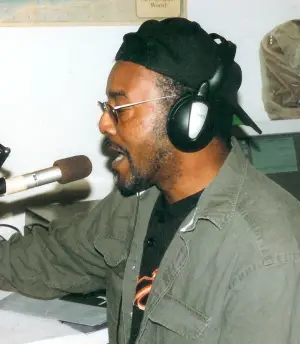
T. Watts is a writer, radio host and music critic. Visit his Web site at www.teewatts.biz.
{mos_sb_discuss:4}
- Details
- Written by: Ross Christensen

Happy New Year!
I want to take this opportunity to thank all of you for reading my column over this past year. And thanks for letting me know that you enjoy them.
I’ve had so many people come up to me and tell me that they got a kick out of one of my jokes or that they learned something new from one of my articles, and it’s been very gratifying. Thank you.
I’ve had some requests for this upcoming year’s Foodie Freak columns. One request is that I write more about wine and Lake County wineries; another is to cover more food/wine events around the county.
Despite what I’ve got my daughter believing I am not actually omniscient, so I need your help to know what events are going on around the county. But please, keep quiet about the not being omniscient thing to my daughter.
Do you have some food news you would like me to cover for Lake County News? Are you opening a new restaurant, or changing cuisines in your current one? Are you holding a food/wine related event and want me to tell people about it ahead of time, or review it after the fact? Give me the particulars, the whens and wheres, and I’ll do what I can to get the news out there.
And even on a personal level – do you need a caterer for your event and don’t know who to call? Are you looking for a personal or restaurant chef and want help in finding one? Let me help you get connected to the right people. I have the resources and associations not only to help you with your personal requests, but to cover the news you want to know more about.
What can the Foodie Freak do for you in 2009?
E-mail me your information at
Ross A. Christensen is an award-winning gardener and gourmet cook. He is the author of "Sushi A to Z, The Ultimate Guide" and is currently working on a new book. He has been a public speaker for many years and enjoys being involved in the community.
{mos_sb_discuss:4}
- Details
- Written by: Lake County News Reports
Late last month, USDA Rural Development State Director Ben Higgins released the agency’s Annual Report, outlining the full array of USDA Rural Development assistance delivered in the Golden State in the prior fiscal year.
“For our employees and the hundreds of rural communities they serve, 2008 was an enormously successful year – arguably our most successful ever,” said Higgins. “Collectively we invested more than $550 million in our state’s rural communities – an increase of well over $100 million from 2007. In doing so, USDA Rural Development helped create thousands of new jobs and played a significant role in mitigating economic uncertainties faced by hundreds of businesses, families, and local and tribal governments in rural California.
Over $210 million was invested to support entrepreneurs in rural areas, organizations which assist small and emerging businesses, and renewable energy production in California. These investments, primarily made in the form of loan guarantees to private businesses, saved or created almost 4,000 jobs in rural communities throughout the state.
Nearly $69 million in grants and loans were provided to California rural communities for facilities and infrastructure, including water distribution and wastewater treatment systems, telecommunications, hospitals, health clinics, schools, and to meet the needs of rural law enforcement and fire suppression agencies. Rural areas eligible for community programs funding are generally defined as those with a population fewer than 20,000.
An additional $180 million was provided to create first-time homeownership opportunities for hundreds of rural families, including many who took advantage of USDA’s Mutual Self-Help Housing Program.
USDA Rural Development’s Mutual Self-Help Housing Program enables groups, generally eight to 10 families, to work together over the span of 15-18 months to build their own homes under the guidance of a construction expert. USDA Rural Development helps with construction financing with local housing developers and extends low-interest loans to new homeowners.
The agency’s Multi-Family Housing Program, which makes grants and loans for new construction and repair of apartments for low-income tenants, and for construction and renovation of farmworker housing, contributed over $97 million to the investment total.
“We’re proud of our accomplishments in 2008, and look forward to even more success through fiscal year 2009,” said Higgins. “California’s rural communities have real needs for improved infrastructure, economic development, affordable housing, and investment capital. As long as these critical needs exist, USDA Rural Development will play a role in helping create healthy, vibrant rural communities.”
To view the USDA Rural Development California 2008 Annual Report, visit www.rurdev.usda.gov/ca.
{mos_sb_discuss:2}




