 How to resolve AdBlock issue?
Education
- Details
- Written by: Charles Warren

Hello readers and welcome to the Carlé Chronicle, your primary news source for all things Carlé.
Open House will take place on April 3 at Carlé High School starting at 5:30 p.m.
Along with showing the many high points and goals Carlé staff and students have achieved, Konocti Unified officials will be discussing the Local Control Accountability Plan (LCAP), a new funding formula which by asking parents and officials for their input will help shape the future of funding and education for all California schools.
Parents are highly encouraged to attend and give input and show support for their children's education and the future of California standards.
Last week's student of the week was Destiny Cypert, who has shown a great sense of maturity and self-motivation towards her schoolwork.
This week's student of the week is Paul Yanez, who takes the time to help other students succeed while still juggling his own work and Carlé's upcoming play, written by him and fellow student DeAndre Morris.
Here at Carlé, those who pursue their academics to their full potential are awarded Gold level privileges.
Achieving gold level academics requires students to maintain a 90-percent attendance rate and achieve a minimum of 15 credits in a single grading period.
Gold level students receive open-campus privileges during lunch, along with a number of special gold-level trips during the year.
Our latest gold level trip will have Ms. Shrive and Angie Siegel taking gold-level students to Jellystone Park for a day filled with outdoor fun under the sun.
We'd like to take the time to thank Healthy Start worker Mari Valdez, who is always willing to help students out with their health care and dental hygiene, along with helping our female students with prom dresses and giving all around good advice.
Our staff is preparing to generate senior award titles and plaques, which are each individually designed with each student in mind. The awards will be based on their school achievements and personal interests.
A big thanks to Dr. Barry Munitz, who generously donated $1000 towards funding these senior plaques.
Many students at Carlé High School are avid readers, and their enthusiasm for literature is well encouraged.
Students and staff alike share their favorite books, short stories, poems, and other literary works with each other to expand their views and find new sources of knowledge and good reading.
This week Carlé readers have been pumped about the novel “Divergent,” a fast-paced and thrilling story by author Veronica Roth set in a futuristic dystopian version of Chicago, where society is divided between five separate factions with their own separate views of the world.
“Divergent” is the first book of the Divergent trilogy, and an upcoming film of the book was released in theaters on March 21.
Students Roy Kirk and Sabrina Farnan designed key chains to give out for donations to fund our prom.
We currently have about 100 keychains ready to sell for $7 each, although buyers have the choice to give larger donations if they please.
Every dollar earned from keychain sales helps fund our school's prom and is very much appreciated.
If any Carlé Chronicle readers want to buy any, call the school to order a key chain at 707-994-1033.
Charles Warren is a student at Carlé Continuation High School in Lower Lake, Calif.
- Details
- Written by: John Jensen
UKIAH, Calif. – Mendocino College Foundation announced it will award six new scholarships ranging from $500 to $1,250 for 2014-15; two for agriculture majors, two for returning Mendocino College students, one for re-entry women, and one for a student transferring to a four-year school.
These new scholarship opportunities were made possible by the generosity of local philanthropic organizations and individuals who are dedicated to helping students achieve their dreams.
The Mendocino County Fair Wine Competition will provide two $1,250 scholarships for students who are pursuing a degree in agriculture.
Glenda Preston and family have created the Hugh Preston Memorial Scholarship in memory of her late father a well-known attorney at law.
This $1,000 scholarship will be given to a student who will be returning to Mendocino College in the fall.
The local Peregrine Audubon Society will give a $1,000 scholarship to a Mendocino College student that plans to transfer to a four-year school.
The Ukiah Kiwanis Club has added a new $500 scholarship in memory of late Kiwanian Evelyn Broaddus which will be given to a continuing student.
The American Association of University Women’s Ukiah Chapter has added an additional $750 scholarship for a reentry woman.
The foundation invites anyone who is interested in contributing to an existing scholarship or creating a new award to contact the Mendocino College Foundation Office at 707-467-1018. The deadline for donor’s to participate in this year’s scholarship ceremony will be April 15.
For more information about donating to the Foundation, contact Katie Fairbairn at 707-468-3164 or
The scholarship application period at Mendocino College has closed but other scholarship opportunities offered outside of the college can also be found in the scholarship section of the Mendocino College Web site, www.mendocino.edu .
For more information about the scholarship program, contact Lana Eberhard at 707-467-1018 or
- Details
- Written by: Editor
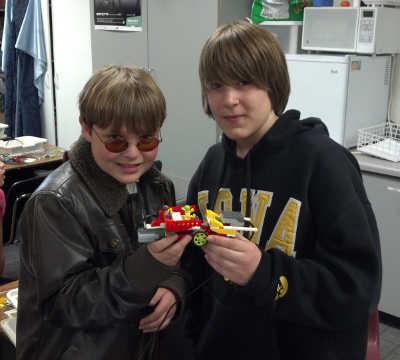
LAKEPORT, Calif. – Students in the after school program at the Konocti Christian Academy in Lakeport had three two-hour sessions with Lego robots on consecutive Fridays recently.
Volunteers from the Children’s Museum of Art and Science (CMAS) provided the kits and laptops for this unique hands-on learning opportunity.
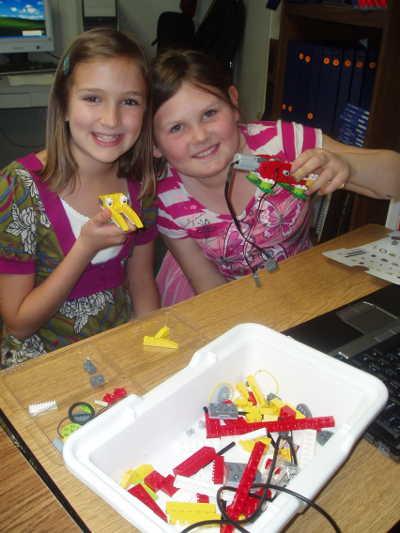
Students ranged in age from first grade to eighth grade but all were engaged and successful in building, and then programming, the robots.
After completing many of the 12 possible projects, some students like Luke McQuiad created robots on their own. Luke made a car which he programmed to drive forward and back.
Two students, Benjamin Martin and Koby Nelson, improved on the spinning top design, to create a top that spun even faster.
The help of two eighth grade assistants, Joy Nowak and Cooper Dodd, was greatly appreciated.
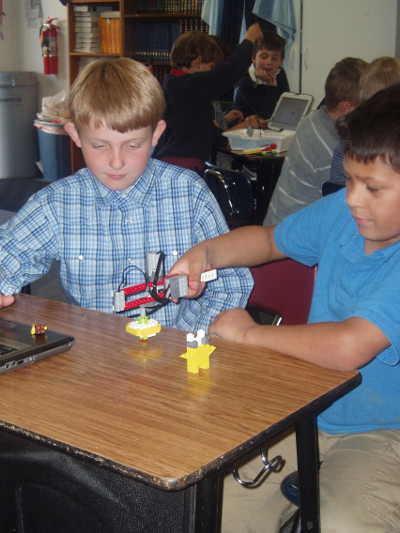
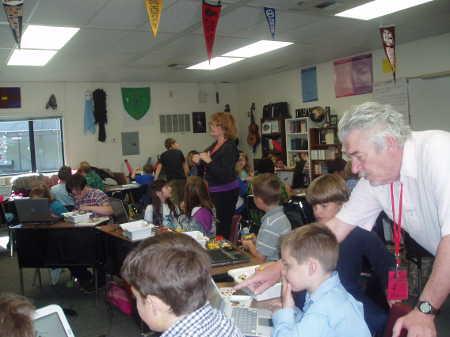
CMAS volunteers, Billy Gear, Kinene Barzin, John Burke and Ginger Ingersoll took turns as supervisors.
Students followed step-by-step directions on the computer which showed them which Lego pieces were needed next, and where they go.
The most frequently asked question asked by adults when kids were stuck: “Does your model look like what’s on the computer screen?”
Students had to pay close attention and follow the directions exactly. After the robot was completed, they used icons to create a program to run the robot.
CMAS provides these two-hour workshops free of charge to any after school program, public or private school classroom, or cluster of home schooled students in Lake County.
Call Billy Gear at 707-279-1514 to schedule a session.
- Details
- Written by: Editor
LAKEPORT, Calif. – The Lakeport Christian Center will hold a chili cookoff fundraiser for its preschool on Friday, March 28.
The cookoff will take place from 6:30 to 8:30 p.m. at the school, 455 S. Forbes St.
All funds go to help with Lakeport Christian Center Preschool upgrades, including new toys and bookshelves.
Adult tickets are $8, tickets for children under age 12 cost $5 and a discounted rate for family of four is $20.
For more information call Lakeport Christian Center at 707-262-5520.