 How to resolve AdBlock issue?
Health
- Details
- Written by: Editor
Positive Choices is a simple guide that features healthy thoughts and recipes, and helpful information for busy families.
The purpose of the guide is to raise awareness and provide tools for families interested in changing their eating habits without having to piece together sound information from the volumes of literature and resources that are available.
It's a reference guide with handy tools for busy moms, dads, grandparents, caregivers and child care facilities. The Positive Choices Guide gives you tips on how to clear you house of unhealthy food and stock your pantry with positive choices. It can help the reader plan a weekly outline of meals to keep your food budget manageable.
Physicians, nutritional experts, registered dietitians and host of local experts contributed to this project with the express desire to help families know not only where and how to start but how to maintain long-term success using easy to prepare dishes and foods that kids will like and families can find within our community.
If you are interested in receiving a free copy, you can visit the Healthy Kids are Contagious staff at one of the following locations and dates:
CLEARLAKE
Saturday, Oct. 4
Foods Etc., 10 a.m. to 11 a.m.
Safeway, 12 p.m. to 1 p.m.
LAKEPORT
Saturday, Oct. 11
Bruno’s, 10 a.m. to 11 a.m.
LUCERNE
Saturday, Oct. 11
Lakeview Market, 12 p.m. to 1 p.m.
Positive Choices can also be downloaded from the Web by visiting www.sutterlakeside.org.
For more information contact the Healthy Kids are Contagious program by calling 262-5039 or e-mail
{mos_sb_discuss:2}
- Details
- Written by: Editor
The event is intended to give the public an opportunity to learn more about Sutter Lakeside’s wellness philosophy, tour their Wellness Center facilities, meet members of their wellness staff and experience some of their wellness-related services.
The Well Check event features the stress-relieving benefits of biofeedback. Biofeedback is a clinically-tested, non-invasive, relaxing treatment that can be particularly useful in relieving stress-related conditions.
Research indicates that it can be effective in the treatment of other conditions such as: asthma, Raynaud's disease, irritable bowel syndrome, hot flashes, nausea and vomiting associated with chemotherapy, incontinence, headaches, irregular heartbeats (cardiac arrhythmias), high blood pressure, epilepsy and others.
Sutter Lakeside is committed to combining wellness with traditional “illness care.” This philosophy arose from a national study that showed that people have some – if not total – control over 70 percent of the factors that impact their health. These lifestyle factors include diet, exercise and coping with stress; and environmental factors such as noise, clutter, pollution and people’s work and home environment.
Check-in and Wellness Center tours are scheduled to begin at 5 p.m., with the first wellness talk, given by Leslie Lovejoy, Ph.D., beginning at 5:30 p.m. At 6:15 p.m. there will be a biofeedback presentation, with wellness coaching and other events to follow.
To register for the Well Check open house or for more information call the Sutter Lakeside Wellness Center at 262-5171.
{mos_sb_discuss:2}
- Details
- Written by: Editor
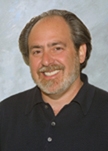
CLEARLAKE – Marc Shapiro, MD, a longtime Lake County physician and advocate of quality improvement, has been appointed chief medical officer for Redbud Community Hospital.
Having served as medical director of Redbud’s intensive care unit since inception and medical director of the cardiopulmonary department, Dr. Shapiro is now responsible for leading the medical staff in the improvement of patient care and safety.
“In addition to his extensive contributions to Redbud Community Hospital since joining us in 1981, Dr. Shapiro has distinguished himself as a capable and respected leader in the medical community,” said Linda Gibson, the hospital’s vice president of operations.
Since 1981, Dr. Shapiro has lived and practiced medicine in Lake County. He is board-certified by the by American Board of Internal Medicine.
He received his medical degree from the University of Illinois and completed his internal medicine residency at Martin Luther King General Hospital in the Los Angeles area.
For more information, visit www.redbudcommunityhospital.org.
{mos_sb_discuss:2}
- Details
- Written by: Editor
The Assembly approved SB 992 week before last, so Thursday’s Senate vote means the bill next heads to the desk of Gov. Arnold Schwarzenegger for his consideration.
In presenting the bill for Thursday’s vote, Wiggins told her Senate colleagues that “existing law grants the Department of Alcohol and Drug Programs (ADP) the authority to license and regulate “alcohol or drug abuse recovery or treatment facilities.
“SB 992 builds on the existing licensing law to create a second category of licensed facilities known as “Adult Recovery Maintenance Facilities,” Wiggins said. “Currently, these 'second tier' facilities – sometimes called 'sober living homes' – are not subject to any state requirements whatsoever. SB 992 imposes regulatory structure through the licensing process.”
Existing law requires the Department of Alcohol and Drug Programs (DADP) to develop and implement a statewide plan to alleviate problems related to inappropriate alcohol use, and to license alcoholism and drug abuse recovery or treatment facilities that provide a broad range of services in a supportive environment for adults who are addicted to alcohol or drugs.
Existing law also defines alcoholism or drug abuse recovery treatment facilities as any premise, place, or building that provides 24-hour residential non-medical services to adults who are recovering from problems related to alcohol, drug, or alcohol and drug misuse or abuse, and who need alcohol, drug, or alcohol and drug recovery treatment or detoxification services. The law prohibits a licensee of a treatment facility from operating beyond the conditions and limitations specified on the license.
The Wiggins bill:
Requires DADP, on or before July 1, 2010, and in consultation with specified stakeholders, to develop and adopt emergency regulations governing the licensing and operation of ARMFs, including regulations governing services related to special needs as these needs are identified by DADP;
Requires DADP to commence licensing of ARMFs, by Jan. 1, 2011;
Defines ARMFs as any facility, place, or building that provides alcohol- or drug-free housing whose rules, peer-led groups, staff activities, or other structured operations are directed primarily toward maintenance of sobriety for adults in early recovery from substance abuse or adults who recently have completed alcoholism or drug abuse recovery or treatment services;
States that ARMFs are designed to promote independent living in a supervised setting, but do not provide professional recovery and treatment services onsite;
Prohibits (beginning Jan. 1, 2011) a state or local social services, law enforcement, or corrections agency, court, probation officer, or parole officer from referring any person to an alcohol or drug abuse recovery or treatment facility, or an ARMF, that is not licensed;
Prohibits any person, firm, partnership, association, corporation, or local government entity from operating, establishing, managing, conducting or maintaining ARMFs without a license.
According to the bill’s sponsor, the California Association of Addiction Recovery Resources, the purpose of SB 992 is to help ensure a safe environment for recovering addicts in their transition to sober living, and for the surrounding community. DADP states that there are roughly 500 facilities which would be subject to SB 992.
{mos_sb_discuss:2}