 How to resolve AdBlock issue?
Health
- Details
- Written by: Elizabeth Larson
This bill would expand access to mental health services for seniors by allowing Medicare coverage to include marriage and family therapists and mental health counselors.
“Far too many of our seniors don’t have adequate access to mental health care at a time in their lives when they are at greater risk for mental illnesses. Left unaddressed, this access gap can exacerbate other health problems and increase health costs. This is an unacceptable outcome for our nation’s older Americans,” said Thompson. “That’s why I’ve once again introduced the Mental Health Access Improvement Access to ensure seniors can see a wide range of qualified mental health professionals through their Medicare. This bill is an important piece of ensuring we are providing for the health of our nation’s seniors.”
“I’m proud to join my colleague Rep. Thompson to re-introduce this important bipartisan legislation to improve access to mental healthcare. This measure will not only increase access to care for older Americans in communities nationwide, but it will help alleviate the strain on our nation’s mental health and addiction workforce,” said Katko. “I’ll continue to fight at home in Central New York and in Washington to ensure individuals and families receive the care they need.”
Under current regulations, psychiatrists, psychologists, clinical social workers and psychiatric nurses are currently recognized to offer covered mental health services under Medicare.
This does not include mental health counselors and marriage and family therapists who have the same training and education but are not able to be reimbursed by Medicare and thus more expensive for seniors.
This bill closes that gap by adding those providers to the list of those accessible to Medicare beneficiaries.
A bipartisan companion bill was introduced in the Senate by Senator Debbie Stabenow (D-MI) and John Barrasso (R-WY).
Thompson represents California’s Fifth Congressional District, which includes all or part of Contra Costa, Lake, Napa, Solano and Sonoma counties.
- Details
- Written by: Elizabeth Larson
Most of the infected people have been children under 10 years old, and there is a correlation with greater numbers of cases occurring in areas with lower than average vaccination rates.
Of the confirmed cases, 42 of 49 were unimmunized, 6 are unverified, and 1 case had 1 dose of MMR vaccine. There has also been one confirmed measles case in Multnomah County, Oregon, and one case in King County, Washington in the Seattle area.
While this is considered a “public health emergency” in the affected areas around Portland, no cases have been seen in Northern California yet.
The Lake County Public Health Department is concerned about the health of the community and are interested in getting information out that may be useful in preventing measles or in identifying it soon after it appears.
Measles is a highly contagious viral disease. The Centers for Disease Control and Prevention reports that 90 percent of unvaccinated people exposed to the measles virus come down with the disease. It is widespread in many parts of the world, including Europe, Africa and Asia.
It begins with a fever (which can go as high as 104) that lasts for a couple of days, followed by a cough, runny nose, conjunctivitis (pink eye), and a rash. The rash typically appears first on the face, in the mouth, along the hairline, and behind the ears and then affects the rest of the body. Infected people are usually contagious from about 4 days before their rash starts to 4 days afterwards.
The virus lives in the nose and throat mucus of an infected person. It can spread to others through coughing and sneezing. Surprisingly, measles virus can live for up to two hours in an airspace where the infected person coughed or sneezed. If other people breathe the contaminated air or touch the infected surface, then touch their eyes, noses, or mouths, they can become infected.
This disease can be fatal. As many as one out of every 20 children infected with measles gets pneumonia, the most common cause of death from measles in young children.
One in every 1,000 children with measles develops swelling of the brain that can cause deafness or an intellectual disability. Pregnant women with measles might give birth early or have a low-weight baby.
The last large outbreak of measles in California was associated with Disneyland and occurred from December 2014 through April 2015, when at least 131 California residents were infected.
Immunization is thought to be 97-percent effective, and most children are adequately vaccinated by the time they enter Kindergarten. Child care facilities and schools with low vaccination rates are at increased risk for outbreaks of this vaccine-preventable disease. It is not too late to get vaccinated now; it may even help up to 72 hours after exposure.
You can lookup vaccination rates at the schools in your area to see if your child is more likely to get the illness.
– Pre-schools: http://www.shotsforschool.org/child-care/how-doing/;
– Kindergarten: http://www.shotsforschool.org/k-12/;
– Seventh grade: http://www.shotsforschool.org/7th-grade/.
There is no effective treatment. The best thing to do is to keep your child at home if they become ill with a suspicious rash. Getting them out in public makes it much more likely to spread. Getting medical help if they are getting quite ill, especially with pneumonia or severe headache is important.
FAQs:
What about the vaccine?
There is a vaccine (that comes in a shot) that keeps people from getting measles. It is called the MMR vaccine. It protects against three different infections: measles, mumps, and rubella. The CDC states that one dose of MMR vaccine is about 93 percent effective at preventing measles; two doses are about 97 percent effective. Contact your medical provider if you or your child haven’t been vaccinated and you want to be.
Should I call the doctor or nurse if I think my child or I have measles?
Yes. If you or your child has a fever and rash, call the doctor or nurse. He or she can ask questions and tell you what to do next. Don't go to the doctor's office without calling first. Measles spreads easily, so you could give it to other people at the doctor's office.
What if I was near someone with measles?
If you or your child has not had the MMR vaccine, call the doctor or nurse. It might still be possible to avoid getting sick. If you get it soon enough, the vaccine can stop measles or make it less serious. People who cannot get the vaccine can take a medicine that can help keep them from getting sick.
Is there a test for measles?
Yes. The doctor or nurse can do blood tests to check for measles. But these tests might not be needed. A doctor or nurse can often tell if a person has measles by doing an exam and learning about the symptoms.
How is measles treated?
For most people, there is no specific treatment. If you or your child have it, you can:
Rest, drink plenty of fluids, take acetaminophen (sample brand name: Tylenol) to help with fever and aches.
Do not give aspirin or medicines that contain aspirin to children younger than 18. In children, aspirin can cause a serious problem called Reye syndrome.
Doctors give vitamin A to some children with measles. If your child needs treatment in the hospital, or has another health condition besides measles, the doctor might give vitamin A.
Contact the Lake County Health Department with questions at 707-263-1090, visit the California Department of Public Health Web site or the Center for Disease Control site.
- Details
- Written by: Elizabeth Larson
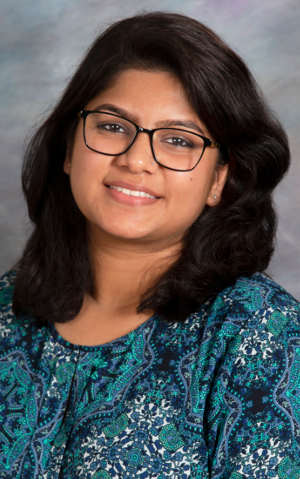
LAKEPORT, Calif. – Lakeview Health Center has expanded access to pediatric care in Lake County with the addition of full-time pediatrician Dr. Rishika Singh.
Dr. Singh has extensive experience with newborns, having worked in a hospital with a Level II Neonatal Intensive Care Unit.
She can perform intubations, insert umbilical lines when needed, attend high-risk deliveries and help in stabilizing sick newborns. She is also well trained in performing circumcisions.
“I like to joke around with little kids. For example, when I look in their ears I say, ‘Let’s see if I can find any puppies in here,’ or something like that to make them laugh,” she said.
With adolescent patients, she interacts on a more mature level. “My goal is to educate them, to let them know they are responsible for their own health,” she said.
Rather than putting adolescents on the spot about their behavior, she sometimes asks about their friends’ behaviors, which gives her insight into the types of risks and activities the patient may be exposed to. She builds rapport and “usually, the adolescents will come out with the truth.”
For Dr. Singh, becoming a pediatrician was a “no brainer” – she knew she wanted to work with children in some capacity and her parents are both doctors who encouraged her to pursue medicine.
After graduating from medical school in 2011, Dr. Singh completed her pediatric residency at Western Michigan University. She enjoyed learning about various pediatric specialties, and loved the people in her program, but she “did not love the Michigan winters,” so she and her fiancé moved to Georgia where Dr. Singh spent three years caring for pediatric patients of all ages.
When her husband’s work brought him to California, Dr. Singh looked for a small community where she could build relationships with her patients.
The reason she chose Lakeview Health Center is because she liked their comprehensive approach and the expertise of the team members, from colleagues, nurses and medical assistants to schedulers and receptionists.
“We have dentists right here, so if a patient needs dental care we send them right over. If a patient needs behavioral health support, we can do a warm hand-off. We can introduce the patient to the psychologist and make sure they’re comfortable,” she explained.
She also noted that Lakeview was a good fit for her because of the way the health care team supports patients without judgment.
Regardless of a patient’s condition or how patients become ill, Dr. Singh and the team at Lakeview Health Center are focused on helping patients get well.
Lakeview Health Center is part of MCHC Health Centers – a local, nonprofit, federally qualified health center offering medical, dental and behavioral health care to people in Lake and Mendocino counties.
Lakeview Health Center can be reached at 707-263-7725.
- Details
- Written by: California Treasurer’s Office
Eight private nonprofit children’s’ hospitals are each eligible for $135 million, five University of California Children’s Hospitals are eligible for $54 million, and public or private nonprofit hospitals that provide pediatric services for children eligible for California Children’s Services (“CCS Hospitals”) are eligible for $150 million in total funding.
CHFFA is in the process of developing emergency regulations for the Children’s Hospital Program so that awards can be made on a non-competitive basis and to the CCS Hospitals on a competitive basis.
“We are moving quickly to help children who are facing life-threatening illness or injury,” Treasurer Ma said. “The public’s input is needed on how we do that.”
To register for the webinar, please visit CHFFA’s Web site. It will be held Feb. 5 from 10:30 a.m. to 12:00 p.m. Ma said she encourages people to participate in the upcoming webinar.
During the webinar input will be sought from stakeholders, questions will be answered about the proposed regulations, and an overview will be provided of the development of the program’s structure specific to hospitals that provide services to children eligible for the CCS program.
In November 2018, California voters, voted to approve Proposition 4, the Children’s Hospital Bond Act of 2018 enabling California to issue an additional $1.5 billion in general obligation bonds to fund the Children’s Hospital Program of 2018.
California’s network of regional children’s hospitals provide vital health care services to children in need. Over one million times a year, children are cared for at these hospitals without regard to their family’s ability to pay.