How to resolve AdBlock issue?
Recreation
- Details
- Written by: Editor
The California Department of Fish and Wildlife (CDFW) is closely monitoring the population of band-tailed pigeons for mortality this winter.
Band-tailed pigeons are California's only native pigeon. They spend their winter from central to Southern California primarily inhabiting oak woodland and conifer forests.
In late winter into early spring, band-tailed pigeons will migrate north into northern California, Oregon, Washington and British Columbia.
Band-tailed pigeons are a different species than rock pigeons (also called city, urban or barn pigeons), which were introduced into North America from Europe.
Large flocks of band-tailed pigeons, sometimes up to 200 birds, have been observed in numerous coastal locations from the San Francisco Bay Area south into Santa Barbara County and in the San Bernardino Mountains.
Increased mortality has been reported in several of these areas since mid-December. CDFW's Wildlife Investigations Laboratory has evaluated carcasses from these locations and determined the cause of mortality to be Avian Trichomonosis.
Avian Trichomonosis is a disease caused by a single-celled microscopic protozoan parasite, typically Trichomonas gallinae, which only infects birds.
The parasite lives in the mouth and throat of infected birds, causing caseous ("cheese-like") lesions in the birds' mouth or esophagus.
The lesions eventually block the passage of food, causing the bird to become weak and emaciated. Infected birds die from starvation or suffocation if the lesions block the airway. Non-native rock pigeons are thought to be the source of infection for native bird species.
The CDFW's Wildlife Investigations Lab is asking residents to be on the lookout for band-tailed pigeons this winter and to report any sick or dead pigeons.
This information helps CDFW determine how many pigeons die during these mortality events and consequently, how these events may impact the overall population.
Mortality can be reported using the following link: https://www.wildlife.ca.gov/Conservation/Laboratories/Wildlife-Investigations/Monitoring/Mortality-Report or by phone at 916-358-2790.
If sick birds are observed, please contact a local wildlife rehabilitation center for advice. The list of CDFW licensed centers can be found at http://www.dfg.ca.gov/wildlife/WIL/rehab/facilities.html .
Additionally, residents can help reduce transmission of the disease by removing artificial sources of food and water (bird baths and fountains).
Bird feeders and artificial water sources may increase disease transmission between individual band-tailed pigeons, and possibly other bird species, because it brings the birds into closer contact than is normal.
- Details
- Written by: Editor
LOWER LAKE, Calif. – Anderson Marsh State Historic Park continues to hold monthly guided nature walks.
The next walk is scheduled for Saturday morning, Feb. 14.
There will be no tour of the Historic Ranch House Museum in February.
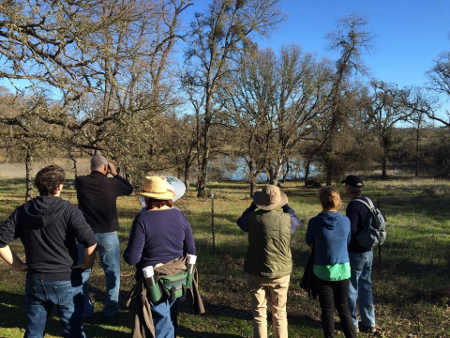
Park Docent and AMIA Volunteer Billy Gear, who will lead the walk, says he “plans on hiking the creek trail with an option to do the ridge trail if dry. The theme will be 'Early spring – flowers, buds, birds and insects'.”
Bring binoculars and meet in front of the Ranch House at 8:15 a.m. for time to experience the early morning wildlife to be found in the Ranch House and Barn complex yard – the walk will begin at 8:30 a.m.
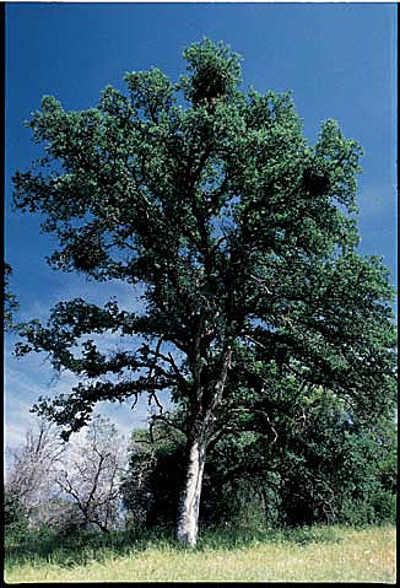
Many of the trees are “naked” in the winter, making it easier to see birds.
Recent birds seen in the park: wood ducks; phainopepla; acorn, Nuttal’s and Lewis’s woodpeckers; red-shafted flickers; cedar waxwings; spotted and California towhees; cormorants; white-tailed kites; red-tailed and red-shouldered hawks; great egrets and great blue herons; kingfishers; red-winged blackbirds and robins.
This also is the time of year a snipe, white-throated sparrows, a bobcat and deer have been seen near the boardwalk.
Heavy rain will cancel the walk which begins at 8:30 a.m. from the Ranch House parking lot.
There is no charge for those attending.
Anderson Marsh State Historic Park is located on Highway 53, between Lower Lake and Clearlake.
For more information about the walks, email
For more information about the park, you may also visit http://www.parks.ca.gov/?page_id=483 .
- Details
- Written by: Editor
NORTH COAST, Calif. – Two days after state Sen. Mike McGuire introduced legislation calling on Congress to protect the Smith River, the Panama-based Red Flat Nickel Corp. has withdrawn its water application from the Oregon Water Resources Department.
“I'm grateful to join with Congressman Huffman to fight this devastating proposal and I am pleased to see the mining company reconsidering their plans. That said, now is the time to ensure the entire Smith River watershed is protected forever which means our work is far from over,” McGuire said.
Thousands of Northern Californians – including the Del Norte County Board of Supervisors, Crescent City Council and the Smith River Alliance – worked together to stop the mining company from getting a license to use water from the Smith River for a devastating strip mine.
McGuire’s legislation is officially known as the Smith River Watershed Protection measure, or SJR 03.
The resolution urges the president of the United States and Congress to permanently safeguard the currently unprotected North Fork of the Smith River watershed in Oregon from any mining activities.
Co-authoring the resolution are Senators Mark Leno and Fran Pavley (Chair of Senate Natural Resources), along with Assemblymembers Jim Wood, Marc Levine, Bill Dodd, Mark Stone (Chair of Assembly Natural Resources) and Das Williams.
Recently, the Panama-based Red Flat Nickel Corp. submitted a plan to drill up to 59 test mine shafts on 3,980 acres, which could allow for one of the largest nickel, cobalt and chromium mines in the Western United States.
Any mining would have irreversible negative impacts to water supplies, the North Coast’s economy and the environment in California’s portion of the Smith River Watershed.
“Mining of any kind in the Smith River Watershed is simply unacceptable. I will continue to work tirelessly, along with Congressman Jared Huffman, to protect our river, which is one of the premier salmon fisheries in the lower 48 states and the source of drinking water for tens of thousands of residents in Del Norte County, including Crescent City,” said McGuire.
The Smith River is the primary source of drinking water for the majority of Del Norte County’s 28,000 residents, and is a crucial waterway for the threatened Coho salmon and other important fish runs.
The Smith also offers a multitude of recreational activities that are a primary driver of the Del Norte economy.
- Details
- Written by: Editor
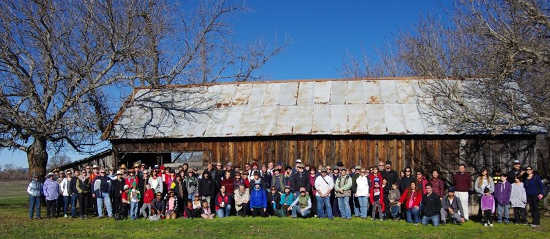
LOWER LAKE, Calif. – A large group of more than 110 people came to Anderson Marsh State Historic Park New Year’s Day as part of America's State Parks First Day Hikes program.
The First Day Hikes offer individuals and families an opportunity to begin the New Year rejuvenating and connecting with the outdoors by taking a healthy hike on Thursday, Jan. 1, at a state park close to home.
These hikes offer a great way to get outside, exercise, enjoy nature and welcome the new year with friends and family.
“Preliminary figures released by the state of California say that about 1,200 individuals participated in First Day Hikes in California State Parks,” said Anderson Marsh Interpretive Association (AMIA) Board member and park docent Gae Henry. “It’s incredible to realize that almost 10 percent of the first day hikers in California were at Lake County’s own Anderson Marsh State Historic Park.”
Beginning at noon on Jan. 1, two different hikes were offered through the park.
Led by AMIA volunteers and park docents Henry Bornstein, Gae Henry, Tom McFarling and former State Park Ranger Tom Nixon, both walks went through grasslands, oak woodlands and willow/cottonwood habitats.
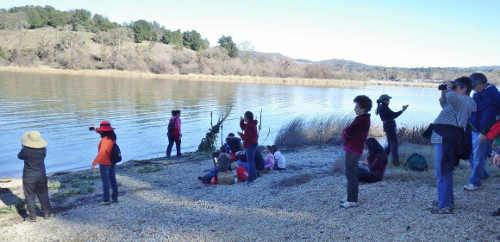
About 75 walkers took the McVicar Trail. This leisurely walk covered nearly eight miles of mainly flat terrain which passes along the edge of Anderson Marsh and ends up at the gravel beach on the lake across from Indian Island.
The walk took between three and four hours, depending on how many times the individuals stopped to admire what was seen along the way. Participants were welcome to walk part way and make an early return at their own pace.
Another group of about 35 walkers took a three and a half mile loop that included the Cache Creek, Marsh and Ridge Trails. Passing by a vernal pool near the end, this walk took about two to two and a half hours.
“It was wonderful to see so many Lake County residents taking advantage of this opportunity to start off the year right by getting out into nature,” said Bornstein. “We hope even more people will join us on next year’s Jan. 1 walk.”
Anderson Marsh State Historic Park is located on Highway 53, between Lower Lake and Clearlake.
For more information, email