 How to resolve AdBlock issue?
Recreation
- Details
- Written by: Editor
The California Department of Fish and Wildlife (CDFW) informs anglers that sport fishing regulation changes have gone into effect for coastal streams in Mendocino, Sonoma and Marin counties.
The new regulations can be found in Title 14, California Code of Regulations, section 8.00 (b).
On Dec. 3, 2014, the California Fish and Game Commission adopted a regulation for annual special low flow conditions from Oct. 1 through April 30 for coastal streams within the three counties.
This regulation now bases flow closure conditions for Mendocino County streams on the Navarro River gauge near Navarro by establishing a minimum flow of 200 cubic feet per second (cfs) at the USGS gauging station on the main stem Navarro River near Navarro, Calif.
With the exception of the Russian River, coastal streams in Marin and Sonoma counties will be based on the South Fork Gualala River gauge near Sea Ranch with the establishment of a minimum flow of 150 cfs at the gauging station on the South Fork Gualala River near Sea Ranch (Sonoma County).
The new regulation also establishes low flow conditions for the Russian River in Mendocino and Sonoma counties based on the Russian River gauge near Guerneville.
These streams will be closed to fishing when stream conditions fall below the minimum flow of 300 cfs at the gauging station located on the main stem Russian River near Guerneville (Sonoma County).
Low stream flow conditions prevent the movement of salmon and steelhead to their spawning grounds, increasing their vulnerability to predation, physiological stress and angling pressure.
These coastal streams provide critical life-stage habitat for coastal Chinook salmon, coho salmon and steelhead trout.
All three of these species are listed under the federal Endangered Species Act (ESA). Coho salmon is also listed under the California ESA.
In addition, CDFW will make low flow stream closure information available to the public by a telephone recorded message updated, as necessary, no later than 1 p.m. each Monday, Wednesday and Friday as to whether any stream will be open or closed to fishing.
It shall be the responsibility of the angler to use the telephone number designated in the sport fishing regulations booklet to obtain information on the status of any stream.
The number for low flow stream closure information is 707-822-3164 for Mendocino County and 707-944-5533 for Sonoma, Marin and Napa counties.
- Details
- Written by: Editor
NORTHERN CALIFORNIA – The California Department of Fish and Wildlife's (CDFW) Advanced Hunter Education Program is offering a turkey hunting clinic on Saturday, March 14, at Gray Lodge Wildlife Area near Gridley.
Experienced instructors will instruct this clinic. Topics covered will be concepts of decoy placement, blind design, ballistics, calling, equipment, game care and cleaning, cooking tips and safety.
The clinic is scheduled from 9 a.m. to 5 p.m. The cost is $45. Youths 16 years and younger are free, but must be accompanied by adult.
Space is limited and participants must register in advance: http://www.dfg.ca.gov/huntered/advanced/ .
After registering, participants will receive an email with a map to the facility and a list of items to bring.
CDFW's Advanced Hunter Education Program will provide all necessary class equipment.
Gray Lodge Wildlife Area is located, approximately 60 miles north of Sacramento.
- Details
- Written by: Carrie Wilson
Residential varmint trapping
Question: I live in Chico across the street from Bidwell Park. Lately I have been plagued with raccoons and skunks on my property.
They have been wreaking havoc on my garden, crapping all over my deck and carport, and I think they have been using the pool (WITHOUT a lifeguard on duty which is COMPLETELY UNSAFE!).
I contacted a gentleman who is employed by the USDA and he told me he has been contracted by the county of Butte to trap and euthanize or relocate problem varmints.
He explained to me that I can either perform these tasks myself or, for a fee, he will remove and eliminate any problem varmint that I trap on my property. I am located within the city limits of Chico in the county of Butte.
I am writing to you to make sure that I am in compliance with all laws. The last thing I want is to get cited and fined because of a raccoon or a skunk.
If the information I received from this person is incorrect, then it would seem that the California Department of Fish and Wildlife (CDFW) and the USDA employee contracted by Butte County need to have a chat and come up with a final call on a situation like this so everyone is reading the same book and getting on the same page.
I didn't know who to go to with this before I acted on it, but you have never steered me wrong in the past. (Dave)
Answer: While the USDA trapper did provide some good information, you are correct to worry about following all the rules because there are lots of them.
If you decide to do your own trapping, be aware you are not allowed to relocate any wildlife you catch. If an animal is trapped, it must be quickly killed or released in the immediate area of where the animal was trapped.
Driving the animal to a faraway meadow or park away from your house and “relocating” it is not a legal option.
Relocating nuisance wildlife not only relocates the problem but also places the critter into an area where it has no established shelter or food and water source, and could potentially spread disease.
Also, keep in mind that it is spring time and many adult animals may have babies soon, so causing orphans through trapping should be avoided.
Trapping rules are for public safety and animal welfare reasons. Before venturing into nuisance wildlife trapping, you should read and understand California Code of Regulations Title 14, section 465.5 entitled “Use of traps” available online at www.wildlife.ca.gov/Regulations .
Collecting fish donations to donate to local food banks?
Question: I was wondering if it would be possible (i.e. legal) to put a freezer at boat landings to collect fish donations from anglers on sport and private boats? Donations would be given to local food banks and shelters. (Will E.)
Answer: Although this sounds like a nice idea, existing law doesn’t allow for overlimits of fish, and it would be very difficult for wildlife officers to separate an angler with an overlimit from a person transporting the freezer contents to a food bank.
Potential criminal liability would also arise if people deposited fish that were undersized or out of season.
A better option might be to post information at the landing encouraging anglers to donate fish directly to the food banks and shelters.
OK to have a firearm onboard while fishing for sturgeon?
Question: We’d like to do some casting and blasting and are interested in shooting target skeet while fishing for sturgeon. Is it legal to possess a firearm, or rather, to have a firearm on my boat while sturgeon fishing?
I am not a hunter or a gun guy and I know it is illegal to use a firearm to land a sturgeon. What about having just a pellet gun in the cuddy cabin for non-hunting target practice? Is this legal? (Scott E.)
Answer: There are no CDFW regulations prohibiting you from simply having a firearm on the boat while sturgeon fishing.
Your only firearms concerns will be to make sure you won’t be violating any county or city ordinances by possessing firearms and shooting skeet in whatever area you intend to do this.
There may be any issue with throwing clay birds, which are coated in paint for visibility, into the water though. "It is unlawful to deposit, permit to pass into, or place where it can pass into the waters of the state ... within 150 feet of the high water mark of the waters of the state, any cans, bottles, garbage ... rubbish, litter, refuse, waste, debris ...” (Fish and Game Code, section 5652).
Catch and release after reaching limit
Question: A friend (not me, really!) asked me if he caught two striped bass while beach fishing, could he continue to fish for striped bass and release any future fish he caught? (Mike B.)
Answer: You (I mean he!) could not continue to target striped bass, but could continue fishing for other species of fish.
If you incidentally catch another striper while trying to catch some other species and already have your limit, you must immediately release the striper.
Carrie Wilson is a marine environmental scientist with the California Department of Fish and Wildlife. While she cannot personally answer everyone’s questions, she will select a few to answer each week in this column. Please contact her at
- Details
- Written by: Editor
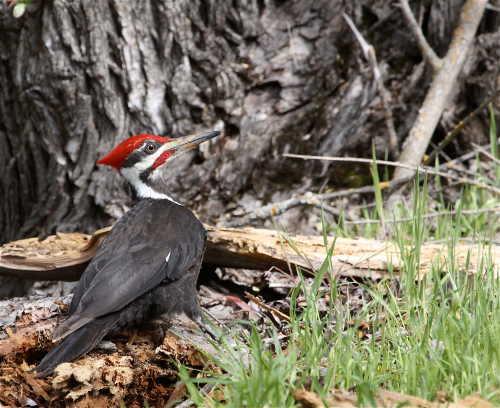
KELSEYVILLE, Calif. – Join Brad Barnwell on Saturday, Feb. 21, for a bird walk along Cole Creek, Kelsey Creek Outlet and Kelsey Slough at Clear Lake State Park.
The two-hour walk will start at the visitor center parking lot at 8:30 a.m.
The walk will be at a slow pace and cover about one mile of paved road and trails.
Participants should wear sturdy shoes and bring binoculars/scopes, birding guide and water. Rain will cancel the walk.
Clear Lake State Park is located at 5300 Soda Bay Road, Kelseyville. Entry into the park is free for those attending the walk.
Anyone having special needs should contact the Clear Lake State Park Sector Office Tuesday through Thursday between 8 a.m. and 5 p.m. at 707-279-2267.
For further information on California State Parks go to www.parks.ca.gov .