 How to resolve AdBlock issue?
Recreation
- Details
- Written by: Editor
The California Department of Fish and Wildlife (CDFW) is reminding sturgeon anglers to return their 2014 sturgeon fishing report cards as required by law.
Although the deadline to report their catch was Jan. 31, so far only about 9,000 (or 18 percent) of the 49,263 report cards sold have been returned.
The sport fishing regulations require that all sturgeon anglers return their Report Cards, even the sturgeon anglers who did not encounter sturgeon and who did not fish for white sturgeon.
Without the data gleaned from the late report cards, CDFW's scientific understanding of the white sturgeon and green sturgeon populations is incomplete.
This makes it harder for scientists to recognize possible overfishing of the diminished white sturgeon population and to document accidental catch of the threatened green sturgeon. In this case, addressing the uncertainty could mean new harvest restrictions.
“Anglers who return their cards are providing data that is otherwise unavailable and it's very good data. They are also helping to protect the white sturgeon fishery and rebuild both sturgeon populations. Anglers who do not return report cards are complicating those efforts,” said Marty Gingras, CDFW Sturgeon Program Manager. “We're asking anglers to send the information to us now, even though the deadline has passed. It's truly better late than never.”
Anglers can return the overdue report cards by mail to the address printed on the card or use the CDFW Web site at https://www.wildlife.ca.gov/Licensing/Fishing-758846-harvest-reporting .
White sturgeon and green sturgeon are anadromous, meaning they move from the salt and brackish water to spawn in freshwater. They are both native California species and can live to be more than 100 years old.
California's white sturgeon and green sturgeon populations were substantially reduced by commercial fishing in the 19th century and the recreational and commercial sturgeon fisheries were (with minor exceptions) closed from 1901 through 1953.
Only recreational fishing for sturgeon has been allowed since 1954, and that fishery has become increasingly restricted over time in an effort to rebuild the populations and protect the fishery.
- Details
- Written by: Editor
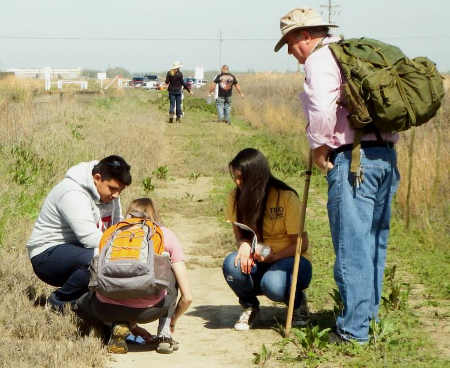
WOODLAND, Calif. – Take a closer look at the nature surrounding you and discover countless stories of the wildlife nearby.
Learn where otters slide into the water, where beavers have taken down trees and what critter's paw prints you may be walking in at Home Place Adventures' animal tracking workshop.
Meet on Thursday, Feb. 12, from 4 to 5:30 p.m. at Conaway Ranch, 45332 County Road 25, in Woodland.
Join survival expert Chris Stephens as he shares his tracking skills and hilarious stories while walking along the riparian preserve.
This is an excellent place to find tracks and scat of a variety of different animals due to the farm’s wildlife friendly farming and proximity to water.
This event is for all ages, families welcome. RSVP is required; email
Tuleyome’s Home Place Adventure program believes everyone deserves access to the outdoors.
Tuleyome is a conservation nonprofit based in Woodland and committed to protecting the wild and agricultural heritage of our region.
While this event is free and open to the public, there is a $5 suggested donation.
For more information, event details and directions visit www.tuleyome.org and check out other upcoming outdoor events.
- Details
- Written by: Editor
SACRAMENTO – Want to discover what’s happening in parks across California, find places where you can do everything from camping to climbing to playing basketball, plan a trip, share images and comments, and invite friends to join you?
Now there’s an app for that.
“CaliParks” is California’s first park finder application covering every park in the state – 11,826 parks in all.
Combining data from the California Protected Areas Database, GreenInfo Network and Hipcamp, with social media content from Flickr, Instagram, Twitter and Foursquare, and linking to trip planner technology from Apple and Google, the bilingual CaliParks is launching in conjunction with a report from Parks Forward, an independent commission, that calls for increased use of technology to connect Californians with their parks.
While still undergoing testing and refinement, this first version is accessible through any browser on a smartphone, tablet, laptop, or desktop at CaliParks.org, the web-based app draws on social media from more than half-a-million users to create an incredibly diverse, accessible, and welcoming way to discover California’s parks.
“This is a wonderful new tool that will help connect Californians with their parks in a new and exciting way,” said Natural Resources Agency Secretary John Laird. “California has always been on the cutting edge when it comes to technology, and CaliParks keeps up that tradition.”
“CaliParks is just what we need to engage Californians with all of our great parks, especially diverse, technologically adept, and socially connected users,” said Parks Forward Commissioner Michael Woo, dean of the College of Environmental Design at Cal Poly Pomona. “We tested the app on a diverse group of students at Cal Poly and they took to it immediately. We could hardly keep them in their seats. They wanted to get outdoors and share it with their friends.”
“Park users have long shared their experiences using social media, and for the first time, these stories and images come together in a single app,” said Jon Christensen, a UCLA professor and partner in Stamen Design, which built the application. “Our new park finder app – CaliParks – taps these existing conversations to create a welcoming invitation to all Californians – especially the state’s diverse, technologically adept and socially connected millennial generation, to discover where they can do the things they want to do in parks, nearby or far away, today or tomorrow, or whenever they want to get outdoors. Over time, this tool is also designed with the flexibility to evolve its engagement with users in supporting the future of parks in California.”
With CaliParks, visitors can use the interactive, responsive, mobile-friendly, browser-based app to discover their next adventures, share their experiences, and enlarge conversations and build communities around parks, said Christensen.
CaliParks was developed by San Francisco-based Stamen Design, a leading data visualization firm with interdisciplinary expertise in mapping, social media, user experience, open data, and public policy, together in collaboration with GreenInfo Network, Hipcamp, and Latino Outdoors, with support from the Resources Legacy Fund.
The team and the California Department of Parks and Recreation will continue to test and refine CaliParks over the next year.
Driven by a user-centered approach to design, Stamen carried out extensive research into social media and user experiences in parks and engaged in targeted user testing throughout the state.
The result is an inclusive and dynamic platform that lets users find parks – local, regional, state and national parks – through their activity-specific offerings.
“The beauty of the application is its simplicity,” said Eric Rodenbeck, CEO of Stamen Design. “Drawing on best practices from industry giants like Yelp! and Airbnb, CaliParks’ easy-to-navigate search and filter features are designed to respond to the interests and needs of today’s park goers and empower users to discover their own unique park experiences.”
The app is bilingual – in English and Spanish – and incorporates activities data for 816 state, national, and regional parks, as well as all 5,447 urban parks in the state to ensure that users can access and share a diverse range of park experiences.
By filtering social media through the lens of California’s parks, CaliParks also offers park agencies new opportunities for discovering how the public is already using their parks and fostering engagement with new communities across the state.
As social media conversations about parks evolve, the site evolves as well, regularly harvesting the latest images and social check-ins to show how Californians are sharing their park experiences.
- Details
- Written by: Editor
The National Wild Turkey Federation (NWTF) has selected Wildlife Officer Dan Lehman as the California Department of Fish and Wildlife’s (CDFW) Wildlife Officer of the Year for 2014.
The NWTF annually honors a California wildlife officer who serves as an outstanding example of supporting its mission on behalf of wild turkeys, turkey hunting and wildlife conservation.
Capt. Lehman will now be in the competition for NWTF’s Officer of the Year Award for 2014.
Lehman is a 22-year CDFW employee who places a high priority on outreach and education in the area of safety and conservation.
He is one of CDFW’s leading ambassadors for hunter education, and has spearheaded hunter recruitment and retention efforts for CDFW.
Studies have shown that for new hunters to continue hunting they must be successful at some level, and CDFW’s Advanced Hunter Education Program prepares hunters for safe, enjoyable and successful hunts.
In 2008, Lehman transferred into the Hunter Education Program as the advanced hunter education program coordinator. Advanced hunter education clinics are designed for both the novice and the experienced hunter.
In 2008, the clinic schedule had eleven clinics statewide, but by 2014 Lehman had helped expand the program to 20 clinics.
In the past three years, approximately 2,000 students have participated in CDFW’s Advanced Hunter Education Program.
Men, women, youths and older Californians alike took the courses. The clinics also provided training to California volunteer hunter education instructors to make them better prepared to teach standard hunter education classes.
Lehman accomplished his mission with no support staff and attended most of the clinics himself, at times sacrificing free time with his family.
Lehman also worked with both California and national conservation organizations, including NWTF, to host clinics taught by experts.
The NWTF, a national nonprofit organization, was founded in 1973. Through partnerships with state, federal and provincial wildlife agencies, the NWTF and its members have helped restore wild turkey populations throughout North America.