 How to resolve AdBlock issue?
Recreation
- Details
- Written by: Editor
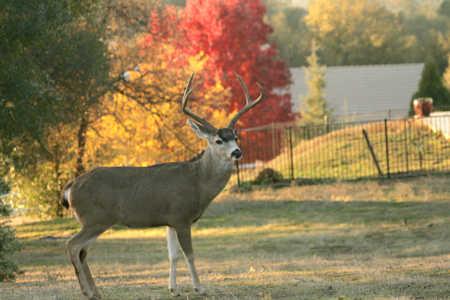
California’s wildlife is one of its greatest treasures, and the California Department of Fish and Wildlife (CDFW) is committed to protecting and conserving this important resource.
As the drought continues into the summer months, CDFW reminds residents to be mindful of their actions in the outdoors and to take measures to discourage wildlife from coming into contact with humans.
“During times of drought, animals may have to search farther for food and water,” said Marc Kenyon, CDFW senior environmental scientist. “Although these periods can be stressful for animals, they are also a natural part of ecological systems that regulates their numbers. In nature, we must realistically expect some starvation and overall increased mortality. Otherwise, nature wouldn’t be natural.”
Well-intentioned residents who set out food for wild animals are actually doing them no favors, particularly for large animals.
Feeding deer may cause them to congregate in small areas in unusually high numbers, which can cause the spread of disease and increase the likelihood of collisions with vehicles.
Deer also may attract dangerous predators like mountain lions to residential areas.
Careless campers and residents who fail to secure their garbage can also cause problems. The scent of trash, particularly leftover food scraps, will lure bears out of the woods. They are likely to return again and again in search of an easy meal.
Habituated bears can cause extensive property damage, and some ultimately have to be killed.
Both deer and bear are considered “big game”mammals and it is against state law to feed them. A citation could lead to hefty fines and jail time.
“Reports of wildlife sightings have become quite common with the increased use of cellphone cameras and social media, and with increased development into largely undeveloped areas,” said Kenyon. “In most cases, wildlife sightings are not a cause for alarm and are not necessarily due to the drought. Wildlife lives in the hills, fields and forests all around us, and we must do our part to help them maintain their natural ways.”
Follow these “Keep Me Wild”tips to help ensure you are not attracting wildlife to your property:
- Secure trash in bear-proof cans and don’t wheel them out until collection day morning.
- Don’t leave trash, groceries or animal feed in your car.
- Harvest ripe fruit off trees and promptly collect fallen fruit.
- Do not use birdfeeders.
- Keep barbecue grills clean and stored when not in use.
- Don’t leave any scented products outside (i.e. suntan lotion or candles).
- Keep doors and windows closed and locked.
- Install motion-activated alarms, sprinklers and/or electric fencing.
- Landscape with deer-resistant plants and install high fencing around gardens.
- Remove shrubs and debris piles that provide hiding places for mountain lions.
- Secure livestock in sturdy enclosures.
- Do not leave small children or pets unattended outdoors.
- Keep pet food and water dishes indoors.
If you aware of someone feeding wildlife, please call 1-888-CALTIP (1-888-334-2258).
For more tips, please visit www.keepmewild.com .
- Details
- Written by: Editor
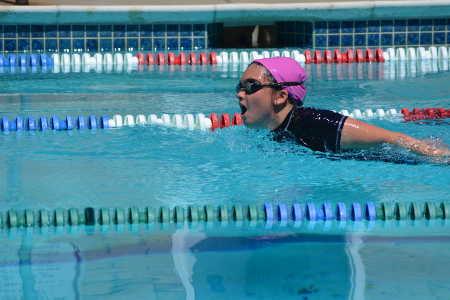
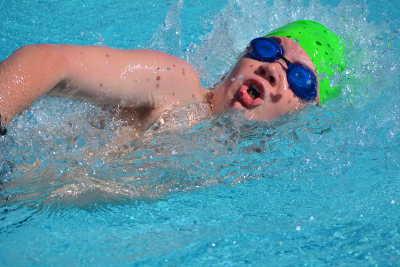
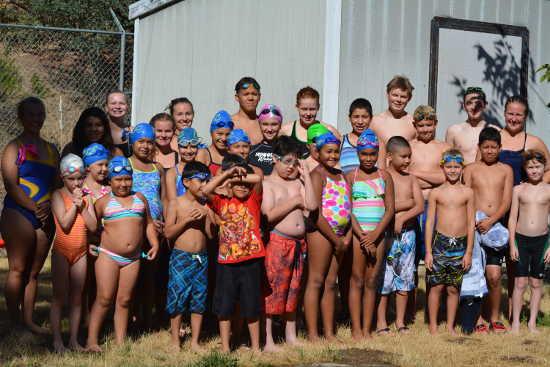
LAKEPORT, Calif. – The Lake County Channel Cats hosted a dual meet with the Willits Otters on Saturday at the Westshore Pool.
It was the very first competitive meet for many swimmers from both teams and the focus was to introduce these new swimmers to competitive swimming.
“Due to the uncertainty of the Westshore Pool we were forced to cancel our regular summer meet and when Willits called and suggested this get-together, we were more than excited to host it,” said team President Jennifer Hanson. “The city of Lakeport has been very supportive of our summer program and allowed us to go forward with this one-day, training meet.”
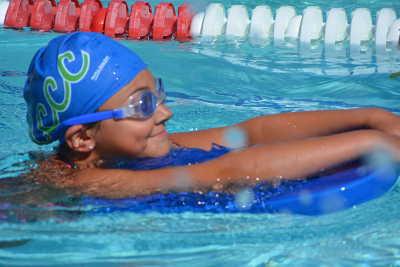
From their summer program of more than 160 swimmers, 31 swimmers from the Lake County Channel Cats and 24 swimmers from the Willits Otters came to the pool on Saturday to participate in the dual meet.
Of the 31 Channel Cats, 20 had never participated in a competitive meet before Saturday.
“This was a wonderful opportunity for our newest swimmers to establish times and get past the hurdle of swimming against the clock for the first time,” Head Coach Agustin Merodio said. “Now that they have experienced competition, we hope that they will participate in some of the upcoming USA Swimming competitive swim meets.”
Swimmers as young as 6 years old competed in events like a kickboard race and 25 yard freestyle, breast, butterfly and backstroke. There were events for all swimmers from every competitive level.
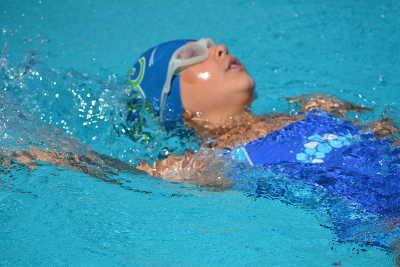
“It was wonderful to see the older swimmers mentoring the younger, more novice swimmers,” Merodio added said. “Competitive swimming can be a little intimidating as first but the older swimmers helped the younger swimmers understand that it can be a fun and rewarding experience.”
The Channel Cats swim team will next be participating in the North Bay Aquatics League meet next weekend and the Ukiah Dolphin swim meet at the end of the month.
The Channel Cats also would like to send special thanks to Cliff and Nancy Ruzicka for their steadfast dedication to the Westshore Pool and the Lake County Channel Cats.
- Details
- Written by: Editor
HIDDEN VALLEY LAKE, Calif. – The HVL Men’s Niners Golf Club held a two-man scramble tournament on Thursday, July 10.
The results were:
- A Flight: The team of Dave Mann/Mike Casolo was first with a combined net of 25. Jim Brown/Cliff Hughes was second, 26 and Arch Madsen/Stan Kalata third, 27.
- B Flight: Tom Swihart/Ed Carver combined for the lowest net of the day, 22. Ron Clark/ Brian Panizzera, second 23. Jim Hodges/Jay Hodges and Jim Cary/Gary Faulkner tied for third, 24.
Closest to the par 3 pins were Bob Chesnut and Ron Clark.
Chip-ins were scored by Don Herndon and Joe Vallee.
A barbecue followed play hosted by the Niners and catered by the Greenview Restauant.
Seventy-two men, or 36 teams, participated in this event.
- Details
- Written by: Editor
The California Department of Fish and Wildlife (CDFW) announced it found no evidence state fishing laws were violated by an angler who hooked a white shark from the Manhattan Beach Pier.
The incident, which occurred July 5, took place just before the 7-foot-long juvenile shark bit a swimmer in the area.
An investigation including evidence from videos, social media and personal interviews did not provide proof there was intent by the angler to target white sharks.
It is legal to fish for the many species of sharks, rays and other fish that frequent the waters surrounding the pier using the same techniques used that day. Facebook posts and interviews resulted in evidence that showed the angler was targeting bat rays, but admitted to catching sharks including white sharks.
This is a legal activity and consistent with numerous other fishing practices in waters where similar tackle is used to catch a variety of fish species.
Incidentally caught species that are not legal to keep must immediately be released. In this case, the line was cut before the fish was landed.
Although this was a very unfortunate incident where a person was injured, criminal prosecution requires proof beyond a reasonable doubt that a crime was committed.
Unless additional evidence is discovered, no charges will be pursued by CDFW in this case.
The department encourages a diverse range of ocean recreation and reminds all ocean users to be aware of their surroundings, including the activities of others, when recreating in or near the ocean.
CDFW looks forward to working closely with the city of Manhattan Beach to restore fishing access to the pier as soon as possible.