
Recreation
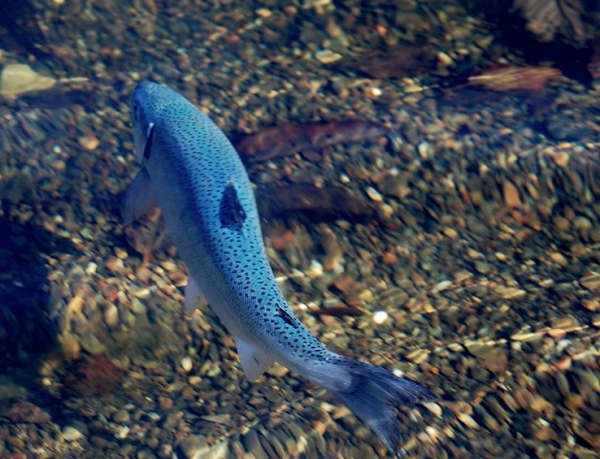
The California Fish and Game Commission has adopted emergency regulations allowing the California Department of Fish and Wildlife, or CDFW, to extend low-flow related fishing restrictions on portions of the Smith, Eel and Russian rivers and a number of other coastal rivers and streams through April 30 if needed to protect runs of salmon and steelhead.
“We’ve observed extended periods of drought and warming climate trends over the past decade,” said Jonathan Nelson, environmental program manager for CDFW’s Anadromous Fishes Conservation and Management Program. “The added flexibility to manage the health of our fisheries through extended angling restrictions on coastal waters when low flows create potentially lethal conditions is paramount to the long-term survival of our salmon and steelhead populations.”
The emergency regulations took effect Jan. 31.
Before the change, CDFW was allowed to enact low-flow specific angling closures on coastal rivers in Del Norte and Humboldt counties including the Smith, Mad, Eel, Van Duzen and Mattole rivers through Jan. 31 of each year and in Mendocino, Sonoma and Marin counties including the Gualala, Russian, Napa rivers and several others through March 31 each year.
The emergency regulations have been added to the 2021-2022 California Freshwater Sport Fishing Regulations online. For a complete list of the coastal rivers subject to low-flow restrictions, please review the California Code of Regulations, Title 14, section 8.00(a) and (b).
CDFW will make information available to the public by a telephone recorded message updated, as necessary, no later than 1:00 p.m. each Monday, Wednesday and Friday, as to whether any river or stream will be open or closed to fishing. It is the responsibility of the angler to call and obtain information on the status of any stream.
For information about coastal rivers in Del Norte, Humboldt and Mendocino counties, call 707-822-3164.
For information about coastal rivers in Marin and Sonoma counties, call 707-944-5533.
- Details
- Written by: California Department of Fish and Wildlife
Bay Area salmon
Q: Why are so many salmon showing up in Bay Area rivers and streams?
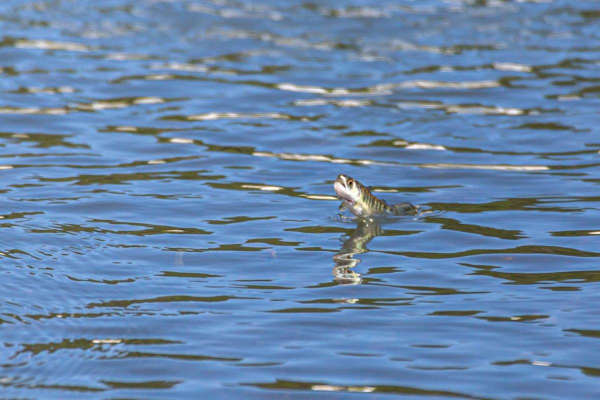
A: CDFW fisheries staff can confirm that hundreds of salmon — many of them Chinook — have been spotted over the past few months in Bay Area streams and rivers, especially in the east bay.
Chinook salmon stray for a lot of reasons, including natural repopulation strategies, lack of attraction flows coming from natal streams, release location and large attraction flows at the right time of year.
This fall, we had substantial early rain that coincided with the adult fall-run migration back into freshwater. This helped attract salmon to these areas. Salmon may attempt to spawn in these streams, but because they do not have sufficient year-round stream flows, they can’t maintain a run. Due to poor environmental conditions in the Central Valley rivers and Delta, the California Department of Fish and Wildlife typically trucks millions of juvenile salmon to the San Pablo, San Francisco and Monterey bays to help increase their chances of survival to the ocean.
When these fish return to spawn, the majority will find their native streams or be caught near their release location. However, a proportion of the hatchery-origin fish will stray into alternative streams. This straying is exacerbated by low natal stream flows and high localized flows in other locations.
Fish and Game Commission
Q: What’s the difference between CDFW and the California Fish and Game Commission?
A: Essentially, CDFW implements and enforces the Fish and Game Code, along with regulations adopted by the California Fish and Game Commission. CDFW also provides biological data and expertise to inform the Commission’s decision-making process.
The Commission was one of the first wildlife conservation agencies in the U.S. Established by California’s State Constitution, it is composed of five Commissioners appointed by the Governor and confirmed by the state Senate.
The Commission and CDFW are separate legal entities with a wide variety of authorities, some general in nature and some very specific.
Primary functions of the Commission are adopting policies and regulations that guide its work and the work of CDFW, listing and delisting threatened or endangered species, letting leases for shellfish cultivation and kelp harvest, and establishing seasons, bag limits, and methods of take for hunting and fishing.
CDFW’s law enforcement division enforces regulations adopted by the Commission, but CDFW also administers other programs, such as the streambed alteration program, that are unrelated to the Commission.
Visit the Commission’s webpage to learn more. Commission meetings are held bimonthly, with both video and audio coverage livestreamed and archived. During the COVID-19 pandemic, the Commission and its committees are conducting meetings by webinar and teleconference to avoid public gatherings and protect public health. Visit the Commission homepage on the day of the meeting to watch or listen live.
Deer poaching
Q: Can a deer hunter lose their license if they are convicted of a poaching offense?
A: Yes. Fish and Game Code section 4340(a) states: Any person who is convicted of a violation of any provision of this code, or of any rule, regulation or order made or adopted under this code, relating to deer, shall forfeit his or her deer tags, and no new deer tags shall be issued to that person during the then current license year for hunting licenses. Section 4340(b) also specifies that no person described in subsection (a) may apply for deer tags for the following license year.
In addition, the Fish and Game Commission can suspend or revoke hunting and fishing privileges when an individual is convicted of violating the Fish and Game Code or its implementing regulations (California Code of Regulations, Title 14, section 745.5).
Decades of wildlife law enforcement have provided anecdotal evidence that the potential loss of future hunting privileges is often more effective than fines to deter future poaching behavior.
- Details
- Written by: California Department of Fish and Wildlife





 How to resolve AdBlock issue?