 How to resolve AdBlock issue?
Recreation
- Details
- Written by: California State Parks
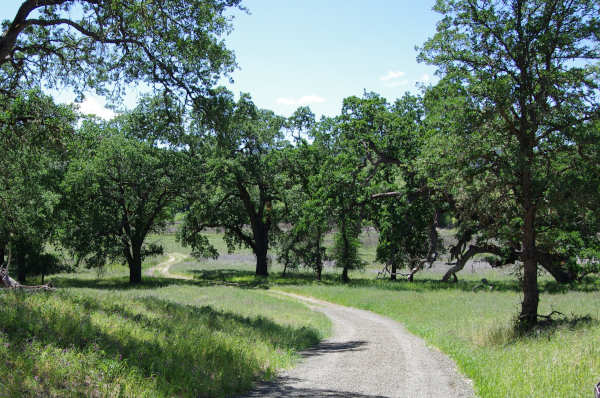
LOWER LAKE, Calif.— The California Department of Parks and Recreation has announced that after a lengthy pause caused by the COVID-19 pandemic, monthly “Second Saturday” guided nature walks will begin once again at Anderson Marsh State Historic Park.
The next scheduled walk will be held on Saturday, March 12, beginning at 8:30 a.m.
Leading the March walk will be State Parks Docent and Certified California Naturalist Henry Bornstein.
The hike will cover parts of the Cache Creek Nature Trail, the Marsh Trail and the Ridge Trail.
The hike is over mostly level terrain and will cover about 3 miles at a leisurely pace. The hike should last between 1½ and 2 hours.
Bring binoculars and meet in the parking lot at 8:15 a.m. for time to experience the early morning wildlife that can be found in the ranch house and barn complex yard – the walk will begin at 8:30 a.m.
There is no charge for the guided nature walk and parking is free for those attending.
Anderson Marsh State Historic Park is located on Highway 53, between Lower Lake and Clearlake.
For more information about the guided walk, email
- Details
- Written by: Lake County Land Trust
Volunteers have noticed that most people prefer arriving later in the day so an effort is being made to accommodate them.
The preserve offers a moderate one and a half mile walk where visitors will see birdlife and even some mammals like foxes and coyotes.
A volunteer will open the gate at 10 a.m. and visitors are asked to sign in before embarking on a pleasant morning walk.
The nature center remains closed due to COVID-19 concerns but visitors are welcome to enjoy the walk and the open air back porch.
Go to the Lake County Land Trust website for more information and don’t mistake the Rodman Preserve for the Rodman Slough County Park which is down the road from the Preserve on the Nice/Lucerne cutoff.
- Details
- Written by: Mendocino National Forest
Current information on campgrounds and trailheads can be found on the forest website.
Several campgrounds and trailheads identified in Forest Order 08-22-01 remain closed due to safety hazards from the 2018 Ranch fire and 2020 August Complex.
These recreation sites remain closed to the public:
• Forest Trail No. 85463;
• Cedar Camp Campground;
• Copper Butte Trailhead;
• Hammerhorn Campground;
• Kingsley Glade Campground;
• Lower Nye Campground;
• Plaskett Meadows Campground;
• Smokehouse Ridge Trailhead;
• Soldier Ridge Trailhead;
• Sugar Springs Campground;
• Sugarfoot Campground;
• West Crocket Trailhead;
• West Crocket Campground.
Forest officials remind visitors to continue recreating responsibly.
“We want visitors to have fun, but we ask everyone to make smart decisions,” said Mendocino National Forest Supervisor Ann Carlson.
“Let someone know where you’re going,” Carlson said. “Bring extra supplies and pack out your trash. It’s also a good idea to carry a satellite phone in case of an emergency. Downed trees and falling limbs continue to be a hazard on the forest. Visitors should bring a chainsaw and plan for alternate routes in case roads become impassable.”
- Details
- Written by: Bureau of Land Management
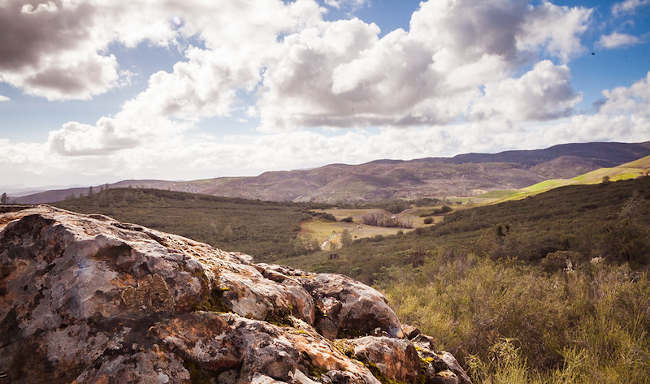
In an effort to provide safe, well-maintained off-highway vehicle trails with services all recreationists can enjoy, the Bureau of Land Management welcomes public input on grant applications to the California State Parks Off-Highway Motor Vehicle Recreation Division.
The BLM Bakersfield and Ukiah field offices will hold virtual public meetings to discuss grant proposals and receive public input.
This year, the BLM will apply for grants to pay for law enforcement and operations and maintenance.
Funding would be used at the Knoxville, Indian Valley and South Cow Mountain OHV management areas managed by the Ukiah Field Office, as well as at the Keysville Special Recreation Management Area and the Temblor and Chimney Peak recreation areas managed by the Bakersfield Field Office.
California’s grants program has funded trail maintenance and restoration, watershed assessments, accessible fire rings and barbecues, informational kiosks, animal-proof trash enclosures, restroom cleaning, route signage, emergency dispatch, sound testing and law enforcement patrols on BLM-managed public lands.
The virtual public meetings will be held via Zoom. Click on the registration link below to receive the meeting details. Please contact the email addresses below for reasonable accommodations to participate. Comments may also be submitted electronically using the following email addresses.
Ukiah Field Office: Feb. 17 at 5:30 p.m.
Zoom registration link: https://tinyurl.com/29t5nemj
Comment by email:
For specific questions, call Ashley Poggio, BLM at 707-468-4000
Bakersfield Field Office: Feb. 24 at 6 p.m.
Zoom registration link: https://tinyurl.com/yvm87myk
Comment by email:
For specific questions, call Brian Ludt, BLM at 661-391-6000
The California State Parks Off-Highway Motor Vehicle Recreation Division supports well-managed off-highway vehicle recreation in California by distributing more than $35 million annually collected from gas tax, entrance fees and OHV sticker registrations.
Cities, counties, districts, federal and state agencies, educational institutions, federally recognized Native American Tribes and nonprofit entities can apply for funds to develop, maintain and restore trails; provide law enforcement; and offer safety and training for riders.
Preliminary applications must be submitted to OHMVR Division no later than March 7, and will be available on the OHMVR Division’s website at www.ohv.parks.ca.gov/ for additional public review and comment, March 8-May 2.
The website will provide detailed instructions for accessing the preliminary applications and submitting comments.
Public comments should be submitted to both the OHMVR Division and to the appropriate BLM field office by May 2, 2022.