 How to resolve AdBlock issue?
Recreation
- Details
- Written by: Editor
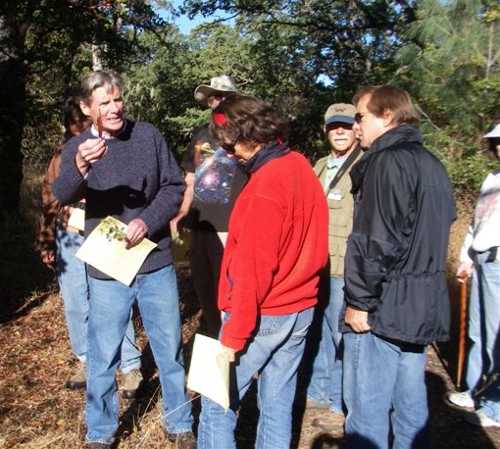
LOWER LAKE, Calif. – Anderson Marsh State Historic Park remains open and the Anderson Marsh Interpretive Association (AMIA) continues to hold its monthly guided nature walks, followed by a tour of the Historic Ranch House Museum, on the second Saturday of the month.
The next walk is scheduled for the morning of Saturday, Feb. 11.
Dr. Harry Lyons, professor of ecology at Yuba College, will lead the nature walk.
He will present a walking-talking tour that highlights aspects of the “three histories”: Native American, European settler and natural history.
Parts of this walk will not be ADA accessible.
Bring your binoculars and meet in front of the ranch house at 8:15 a.m. for time to experience the early morning wildlife to be found in the ranch house and barn complex yard.
The walk begins at 8:30 a.m.
Park docents Gae Henry and Henry Bornstein will lead a tour of the historic ranch house museum immediately after the walk.
If rain cancels the walk, the ranch tour will begin at 8:30 a.m.
Anderson Marsh State Historic Park is located on Highway 53, between Lower Lake and Clearlake.
For more information about the walks, email
For more information about the park, visit www.parks.ca.gov/?page_id=483.
- Details
- Written by: Editor
WASHINGTON, DC – Agriculture Secretary Tom Vilsack on Thursday announced a new report, Increasing the Pace of Restoration and Job Creation on our National Forests, that outlines a strategy and series of actions for management on 193 million acres of national forests and grasslands managed by the U.S. Forest Service.
As part of the accelerated restoration strategy, $40 million for 20 forest and watershed restoration projects have been announced for the upcoming year.
The funding includes 10 new projects under the Collaborative Forest Landscape Restoration (CFLR) program, continued funding for the original 10 projects selected under the CFLR program in 2010, and an additional $4.6 million to support other high priority restoration projects.
"Through our partnerships with states, communities, tribes and others, we are committed to restoring our forests and bringing jobs to rural America," said Vilsack. "Whether the threat comes from wildfire, bark beetles or a changing climate, it is vital that we step up our efforts to safeguard our country's natural resources."
Within the context of the overall restoration program, the strategy and actions announced today are designed to expand the number of forest acres treated by 20 percent over the next three years and increase the pace of active forest management, including fuels reduction, reforestation, stream restoration, road decommissioning, replacing and improving culverts, forest thinning and harvesting, prescribed fire and a range of other techniques.
As a result of these efforts, the Forest Service will be able to accomplish critical restoration objectives, including for water, wildlife, forest health and resilience, and community safety.
This effort will support jobs and stimulate a more vibrant forest industry that will provide the workers and the know-how to undertake other restoration projects.
Altogether, the Forest Service estimates this will increase the amount of forest products sold in 2014 to 3 billion board feet, up from 2.4 billion board feet in 2011.
The restoration of National Forest System lands is critically needed to address a number of threats to the health of forest ecosystems, watersheds, wildlife habitats and forest dependent communities. Major threats include wildland fire, climate change, beetle epidemics and invasive species.
The national forests and grasslands are the backdrop and neighbor to many rural and urban communities, providing a range of values and benefits, including clean drinking water for millions of people across the U.S., vital wildlife habitat, a variety of recreation opportunities, and other multiple uses that support jobs and economic growth in rural communities.
The Forest Service’s restoration program of work is designed to sustain the ability of these lands to continue to deliver a full range of ecosystem services for generations to come.
These restoration efforts will further stimulate local economies by retaining and increasing other forest related jobs, such as the 1,550 jobs expected to maintained or generated through implementation of the CFLR projects, and by supporting recreation activities and attracting more tourists to rural areas. Currently, recreation activities on National Forest System lands contribute $14.5 billion annually to the U.S. economy and support hundreds of thousands of jobs in local communities.
“Accelerated restoration efforts demonstrate a shared vision where environmentalists, forest industry and local communities are working together to build healthier forests and contribute to local economies,” said U.S. Forest Service Chief Tom Tidwell. “The increased restoration work will benefit the environment and people, with more resilient ecosystems, improved watersheds and wildlife habitat, hazardous fuel reduction, and outputs of forest products. We hope accelerated restoration activities will bring all of our partners together, working as allies for forest conservation.”
The Forest Service will increase restoration activities with a series of actions, some of which are already underway.
The list includes: expanding collaborative landscape partnerships; finalizing and implementing a new forest Planning Rule; implementing the Watershed Condition Framework; improving efficiencies of the planning process for restoration projects under the National Environmental Policy Act; implementing Integrated Resource Restoration budgeting; implementing the agency bark beetle strategy; improving the implementation and efficiencies of timber and stewardship contracts; and expanding markets for forest products.
The Forest Service received 26 proposals for Collaborative Forest Restoration Grants which were evaluated by a federal advisory committee.
The committee recommended 13 projects to the USDA for funding consideration, of which 10 were selected under the program.
Because the remaining three are high priority restoration projects and exemplify the intent of the program, the Forest Service is setting aside another $4.6 million to fund those projects as well.
Project proposals included ecological restoration treatments to reduce wildfire risk, enhance fish and wildlife habitats, maintain and improve water quality, use woody biomass and harvest timber. All of the landscape proposals include matching contributions from partners, either funds or in-kind services.
The following 10 new projects are approved for funding in 2012:
- Burney-Hat Creek Basins Project, California – $605,000
- Pine-Oak Woodlands Restoration Project, Missouri – $617,000
- Shortleaf-Bluestem Community Project, Arkansas and Oklahoma – $342,00
- Weiser-Little Salmon Headwaters Project, Idaho – $2,450,000
- Kootenai Valley Resource Initiative, Idaho – $324,000
- Southern Blues Restoration Coalition, Oregon – $2,500,000
- Lakeview Stewardship Project, Oregon – $3,500,000
- Zuni Mountain Project, New Mexico – $400,000
- Grandfather Restoration Project, North Carolina – $605,000
- Amador-Calaveras Consensus Group Cornerstone Project, California – $730,000
The following three projects are considered high priority restoration and are approved for funding in 2012 outside of the Collaborative Forest Landscape Restoration Act:
- Northeast Washington Forest Vision 2020, Washington – $968,000
- Ozark Highlands Ecosystem Restoration, Arkansas – $959,000
- Longleaf Pine Ecosystem Restoration and Hazardous Fuels Reduction, De Soto National Forest, National Forests in Mississippi – $2,710,000
The following 10 Collaborative Forest Landscape projects were approved for funding in 2010 and will continue to receive funding in 2012:
- Selway-Middle Fork Clearwater Project, Idaho
- Southwestern Crown of the Continent, Montana
- Colorado Front Range, Colorado
- Uncompahgre Plateau, Colorado
- 4 Forest Restoration Initiative, Arizona
- Southwest Jemez Mountains, New Mexico
- Dinkey Landscape Restoration Project, California
- Deschutes Skyline, Oregon
- Tapash Sustainable Forest Collaborative, Washington
- Accelerating Longleaf Pine Restoration, Florida
- Details
- Written by: Editor
The California Fish and Game Commission on Thursday took final action to reject proposed changes to striped bass regulations.
In a unanimous decision, Commissioners voted not to pursue a proposal that would have changed sport fishing regulations related to anadromous striped bass, including increasing bag limits and decreasing size limits.
The proposal that was introduced by the Department of Fish and Game arose out of a settlement agreement resulting from a 2008 lawsuit.
In that lawsuit, the Coalition for a Sustainable Delta, a group of San Joaquin Valley water districts, asserted that striped bass are harming native species, including endangered salmon and Delta smelt.
- Details
- Written by: Editor
WASHINGTON, DC – The U.S. Forest Service Wednesday announced eight national forests that will be the first to revise their land management plans using a new National Forest System Planning Rule, after it is finalized in the months ahead.
The Nez Perce-Clearwater National Forest in Idaho, the Chugach National Forest in Alaska, the Cibola National Forest in New Mexico, El Yunque National Forest in Puerto Rico and California’s Inyo, Sequoia and Sierra National Forests will begin revising their plans shortly after a final rule is selected.
This announcement follows Agriculture Secretary Tom Vilsack’s release last week of the agency’s intended course of action for finalizing a planning rule, included as the “preferred alternative” in the Final Programmatic Environmental Impact Statement (PEIS) for the National Forest System Land Management Planning Rule.
“These forests will demonstrate straight out of the gate what we’ve been talking about in terms of collaboration,” said U.S. Forest Service Chief Tom Tidwell. “People will see that under a new rule, public engagement increases and process decreases, all while provide stronger protections for our lands and water.”
The preferred alternative is grounded in science and public input, and seeks to deliver stronger protections for forests, water, and wildlife while supporting the economic vitality of our rural communities.
It requires providing opportunities for public involvement and collaboration throughout all stages of the planning process, as well as opportunities for Tribal consultation and coordination with state and local governments and other federal agencies.
These eight national forests were selected because of their urgent need for plan revisions, the importance of the benefits they provide, and the strong collaborative networks already in place.
They will emphasize strong science, collaboration, strengthened protections for land, wildlife and water, and opportunities for sustainable recreation and other multiple uses that support jobs and economic vitality as they begin the process to revise their plans.
“There are 14 million acres of national forest at risk of fire in California, so this new approach to forest planning is vital,” said Senator Dianne Feinstein (D-California). “I am encouraged that a new planning rule will build on existing efforts like the one in the Sierra National Forest that bring together scientists, timber harvesters and environmental groups to reduce hazardous fuels. We need more of that type of cooperation to reduce fire risks and prevent harm to people and property.”
“We have seen how collaboration is bringing divergent viewpoints together in Idaho under the Clearwater Basin Collaborative (CBC) and the development of the Idaho Roadless Rule. I note the Forest Service’s active collaboration in both of these processes and I recognize its commitment to collaboration in this new rule,” said U.S Senator Mike Crapo of Idaho. Crapo worked with local residents and the Forest Service to convene the CBC in 2008 as a national model for collaborative land management.
Crapo continued, “It is important to note that the new planning rule does have its critics and is controversial in the view of many affected interests. Those concerns need to be respected and managed to a successful outcome. So while I have a mixed view of this rule, I will work with the Forest Service and the affected parties to make this effort successful and achieve the many objectives of collaborative management of our public forests. Any collaborative process should decrease the potential for litigation and provide opportunities for consensus-based management activities on our public lands. I look forward to working with Chief Tidwell and hearing concerns, questions and comments about the new rule.”
The planning rule provides the framework for U.S. Forest Service land management plans for the 155 forests and 20 grasslands. USDA will issue a record of decision selecting a final planning rule no less than 30 days following publication of the PEIS in the Federal Register this Friday, February 3, 2012. Early adopter forests will begin the plan revision process in the months following a final decision.
Members of the public will have a number of opportunities to continue to be involved after a final planning rule is selected, in addition to participating in the plan revision process for the national forests announced today. The Forest Service also will be revising and issuing new directives for public notice and comment that will provide further guidance in implementing a final rule.
A new federal advisory committee for implementation of a final planning rule will provide another opportunity to collaborate in National Forest System land management planning. Interested members of the public are encouraged to seek nomination to the committee: the call for nominations was published in the Federal Register on Jan. 5, 2012 and will close on Feb. 21, 2012.
A final rule planning rule, when selected, would update planning procedures that have been in place since 1982, creating a modern planning process that reflects the latest science and knowledge of how to create and implement effective land management plans.
Revisions of land management plans would take less time and cost less money under the preferred alternative than under the current 30-year-old procedures, while achieving better results for people and the environment.
The mission of the U.S. Forest Service is to sustain the health, diversity, and productivity of the nation’s forests and grasslands to meet the needs of present and future generations. The agency manages 193 million acres of public land, provides assistance to state and private landowners, and maintains the largest forestry research organization in the world.