
Recreation
Gov. Gavin Newsom on Friday introduced his California Comeback Plan, which includes significant fiscal resources aimed to protect California’s diverse fish, wildlife and plant resources and the habitats on which they depend.
The California Department of Fish and Wildlife, or CDFW, said the proposal is a historic moment for its budget.
The proposed budget increases show the Newsom Administration is deeply invested in California’s biodiversity both for its intrinsic, ecological value as well as for future generations of hunters, hikers, anglers, birders and outdoor enthusiasts.
The proposal increases the CDFW budget by $252.1 million and includes funds to safeguard California’s biodiversity, protect endangered species and their habitats, support the Cutting the Green Tape initiative, enhance drought preparedness through the water resilience package, increase renewable energy on land and in the ocean, cover payments for fishermen and women voluntarily transitioning out of the drift gill net shark and swordfish fishery, and address other CDFW’s budget shortfalls identified through years of in-depth budget analysis and research through the Service Based Budgeting, or SBB, Project.
Friday’s proposal includes 216 staff positions to deliver services and safeguard fish and wildlife in California.
SBB is a budgeting approach that identifies the tasks needed to accomplish the mission of CDFW.
Directed by the Legislature, and working with many diverse stakeholders, CDFW conducted one of the first and most comprehensive state agency reviews of its budget, tasks and labor needs.
In a report to the Legislature in January, the SBB project clearly defined CDFW activities, tasks and resources required to deliver our mission. It is through the continued engagement by a wide range of stakeholders that CDFW was able to show needed resource increases that are reflected in this budget proposal.
The proposal also provides funding that will assist CDFW’s human-wildlife conflict program, which is exacerbated during times of drought when animals travel farther to seek out water sources.
The plan provides monies for CDFW’s Law Enforcement Division as wildlife officers are nearly always the responders in human-wildlife conflicts.
It also includes funding increases for monitoring and management on CDFW lands, and provides seed money to grow the CDFW wolf program, including a comprehensive reimbursement program that incentivizes non-lethal measures for livestock producers as California’s wolf population grows.
The proposal will allow CDFW to augment major efforts underway to increase access to our natural resources throughout California.
This includes increasing access to our approximately 1.2 million acres of ecological reserves and wildlife areas across more than 700 properties in the state.
These efforts also include increasing tribal representation and care for cultural resources, and focusing on justice, equity, diversity and inclusion both within the CDFW workforce and among our constituents, with a vision of truly ensuring Nature for All and a California for All.
There is already some evidence suggesting these efforts are working. Through the pandemic, CDFW watched as hunting and fishing license sales increased significantly. CDFW issued nearly two million sport fishing licenses in 2020, an 11 percent increase from 2019.
California hunter numbers also spiked. CDFW issued nearly 300,000 California hunting licenses in 2020, a 9% increase from the previous year.
Though it’s clear that much of this is credited to Californians seeking safe outdoor activities, it also correlates with our recent rededication to learning reasons behind previously decreasing license sales through the nationwide recruitment, retention and reactivation, or R3, effort.
R3 aims to increase statewide hunting and fishing participation by collaborating with diverse stakeholders to transform barriers into opportunities.
The governor’s plan continues that vision by including funding to improve license purchasing technology and provide a mobile application to display fishing and hunting licenses.
The simultaneous increase in CDFW’s ability to provide additional access to lands and outdoor recreation, while enhancing the ability to conserve water resources, habitat and native species is the beginning of making California’s wildlands, fishing, hunting, birding, and many other outdoor activities available for all Californians.
The California Department of Fish and Wildlife, or CDFW, said the proposal is a historic moment for its budget.
The proposed budget increases show the Newsom Administration is deeply invested in California’s biodiversity both for its intrinsic, ecological value as well as for future generations of hunters, hikers, anglers, birders and outdoor enthusiasts.
The proposal increases the CDFW budget by $252.1 million and includes funds to safeguard California’s biodiversity, protect endangered species and their habitats, support the Cutting the Green Tape initiative, enhance drought preparedness through the water resilience package, increase renewable energy on land and in the ocean, cover payments for fishermen and women voluntarily transitioning out of the drift gill net shark and swordfish fishery, and address other CDFW’s budget shortfalls identified through years of in-depth budget analysis and research through the Service Based Budgeting, or SBB, Project.
Friday’s proposal includes 216 staff positions to deliver services and safeguard fish and wildlife in California.
SBB is a budgeting approach that identifies the tasks needed to accomplish the mission of CDFW.
Directed by the Legislature, and working with many diverse stakeholders, CDFW conducted one of the first and most comprehensive state agency reviews of its budget, tasks and labor needs.
In a report to the Legislature in January, the SBB project clearly defined CDFW activities, tasks and resources required to deliver our mission. It is through the continued engagement by a wide range of stakeholders that CDFW was able to show needed resource increases that are reflected in this budget proposal.
The proposal also provides funding that will assist CDFW’s human-wildlife conflict program, which is exacerbated during times of drought when animals travel farther to seek out water sources.
The plan provides monies for CDFW’s Law Enforcement Division as wildlife officers are nearly always the responders in human-wildlife conflicts.
It also includes funding increases for monitoring and management on CDFW lands, and provides seed money to grow the CDFW wolf program, including a comprehensive reimbursement program that incentivizes non-lethal measures for livestock producers as California’s wolf population grows.
The proposal will allow CDFW to augment major efforts underway to increase access to our natural resources throughout California.
This includes increasing access to our approximately 1.2 million acres of ecological reserves and wildlife areas across more than 700 properties in the state.
These efforts also include increasing tribal representation and care for cultural resources, and focusing on justice, equity, diversity and inclusion both within the CDFW workforce and among our constituents, with a vision of truly ensuring Nature for All and a California for All.
There is already some evidence suggesting these efforts are working. Through the pandemic, CDFW watched as hunting and fishing license sales increased significantly. CDFW issued nearly two million sport fishing licenses in 2020, an 11 percent increase from 2019.
California hunter numbers also spiked. CDFW issued nearly 300,000 California hunting licenses in 2020, a 9% increase from the previous year.
Though it’s clear that much of this is credited to Californians seeking safe outdoor activities, it also correlates with our recent rededication to learning reasons behind previously decreasing license sales through the nationwide recruitment, retention and reactivation, or R3, effort.
R3 aims to increase statewide hunting and fishing participation by collaborating with diverse stakeholders to transform barriers into opportunities.
The governor’s plan continues that vision by including funding to improve license purchasing technology and provide a mobile application to display fishing and hunting licenses.
The simultaneous increase in CDFW’s ability to provide additional access to lands and outdoor recreation, while enhancing the ability to conserve water resources, habitat and native species is the beginning of making California’s wildlands, fishing, hunting, birding, and many other outdoor activities available for all Californians.
- Details
- Written by: California Department of Fish and Wildlife
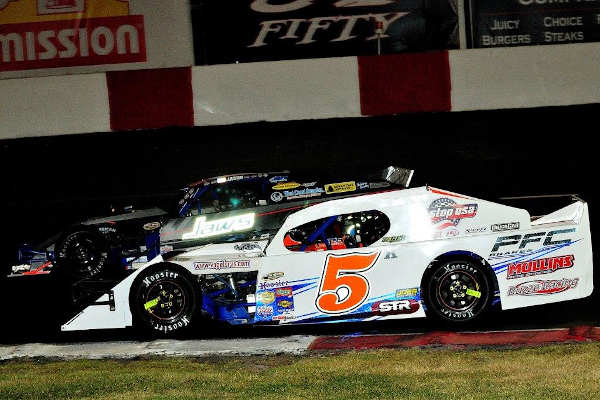
MADERA, Calif. — Protect the Harvest North State Modified Series 2020 champion Kyle Tellstrom of Ukiah charged from 18th starting position to win Saturday’s Mission Modified 60-lap feature at Madera Speedway.
The victory paid a total of $2,000 including a $1,000 bonus from Terry Deal’s Economy Heating and Air after Tellstrom elected to start at the rear of the field.
“(It took a) little bit of patience. Man I’ve just had a lot of luck here and a lot of success. This place has been so good to me. Fits my driving. Did what we had to do and stayed disciplined,” Tellstrom said. “Early there it was kind of rough. Once I got clear of a couple of cars, I got the right restart, got to the outside and it just opened up for me.”
A caution flew immediately at the start when a 3-wide situation occurred among Keith Bloom of Redding, Rich Cobb of Oregon and Bakersfield’s Jim Coffey, resulting in Cobb spinning in turn 4. Chris Lyon of Greely Hill also spun to avoid Cobb’s stalled car.
When action resumed, Coffey went around the outside of Simi Tour to lead lap one. Dustin DeRosier of Cloverdale worked to the inside and took the lead on lap four. Cobb and Utah’s Jeff Longman spun in turn one for a caution on lap six.
DeRosier battled side-by-side with Ian Elliott of Lakeport for the lead but held the position. 2019 North State Modified Series champion Scott Winters of Tracy passed Hesperia’s Eddie Secord for third.
Tellstrom advanced to sixth by the 17th lap. He then went two-for-one on the inside of Secord and 2020 Roseville and Ukiah champion Jason Philpot of Sacramento to grab fourth.
The top-four went two-by-two with Elliott sweeping around DeRosier for the lead on lap 24. Tellstrom went upstairs to follow him into second as well.
A caution flew on lap 27 for Mike Neilson spinning in turn one. Elliott chose the inside for the restart and Tellstrom immediately took over the lead. The caution fell once more for Longman spinning on the front stretch on lap 29.
Winters advanced to the second position but couldn’t capitalize on a late restart to challenge for the victory. Tellstrom won by 1.791 seconds over Winters, Elliott, DeRosier and Philpot.
Philpot won a $750 bonus as the top finishing GM 602 Crate Engine, persevering over a long battle with Keith Bloom, Jr. Secord won $500 as the second highest finishing crate with Kern County Raceway champion Jim Coffey earning $250 for third place finisher among the crates.
Tellstrom also set a new Hoosier Tire track record of 14.789 seconds and won the Naake Hard Charger Award. Neilson won the Lucas Oil Dash for Cash. The Scribner jugs went to Neilson and Bloom.
The next race for the North State Modified Series will be at Redwood Acres Raceway in Eureka on June 5.
The North State Modified Series would not be possible without the support of Protect the Harvest, Lucas Oil, Sullivan Construction and Masonry, Hoosier Tire West, Sunoco Race Fuels, Naake Suspension, Five Star Bodies, Racer Bling, Mark & Sharon Baldwin, Scribner Plastics, Mort Houston, McMurray & Sons Roofing, Frank’s Radios, Economy Heating & Air, and Mission Foods.
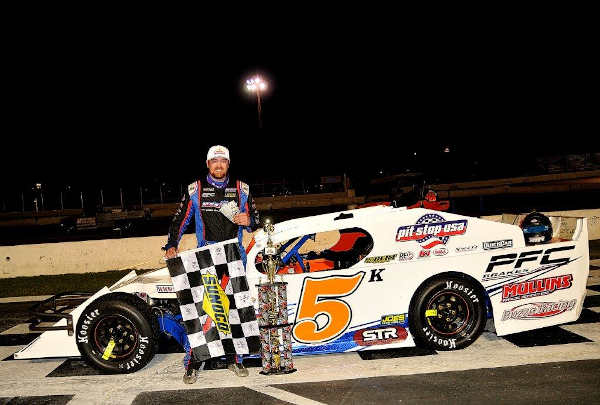
MISSION FOODS MAIN EVENT:
Kyle Tellstrom, Scott Winters, Ian Elliott, Dustin DeRosier, Jason Philpot, Keith Bloom, Brian Collins, Eddie Secord, Rich Cobb, Jim Coffey, Jeff Longman, Mike Neilson, Darrin Sullivan, Ed Coffey, Chris Lyon, Simi Tour, Rick Avila, Sal Lopez, Kylei Keown DNS
ECONOMY HEATING & AIR 602 CRATE BONUS:
Jason Philpot, Eddie Secord, Jim Coffey
LUCAS OIL DASH FOR CASH
Mike Neilson, Keith Bloom, Eddie Secord, Jeff Longman, Jim Coffey, Ed Coffey
HOOSIER QUALIFYING:
Tellstrom (14.789 NTR), Winter (14.963), Elliott (15.072), Philpot (15.099), DeRosier (15.101),Collins (15.140), Cobb (15.188), Bloom (15.193), Tour (15.242), J Coffey (15.245), Secord (15.326), Longman (15.330), Neilson (15.409), Sullivan (15.412), E Coffey (15.531), Lyon (15.738), Avila (16.105), Lopez (16.105), Keown (DNQ)
- Details
- Written by: Steven Blakesley and Nadine Strauss





 How to resolve AdBlock issue?