 How to resolve AdBlock issue?
Recreation
- Details
- Written by: California Department of Fish and Wildlife
The California Department of Fish and Wildlife, or CDFW, said the proposal is a historic moment for its budget.
The proposed budget increases show the Newsom Administration is deeply invested in California’s biodiversity both for its intrinsic, ecological value as well as for future generations of hunters, hikers, anglers, birders and outdoor enthusiasts.
The proposal increases the CDFW budget by $252.1 million and includes funds to safeguard California’s biodiversity, protect endangered species and their habitats, support the Cutting the Green Tape initiative, enhance drought preparedness through the water resilience package, increase renewable energy on land and in the ocean, cover payments for fishermen and women voluntarily transitioning out of the drift gill net shark and swordfish fishery, and address other CDFW’s budget shortfalls identified through years of in-depth budget analysis and research through the Service Based Budgeting, or SBB, Project.
Friday’s proposal includes 216 staff positions to deliver services and safeguard fish and wildlife in California.
SBB is a budgeting approach that identifies the tasks needed to accomplish the mission of CDFW.
Directed by the Legislature, and working with many diverse stakeholders, CDFW conducted one of the first and most comprehensive state agency reviews of its budget, tasks and labor needs.
In a report to the Legislature in January, the SBB project clearly defined CDFW activities, tasks and resources required to deliver our mission. It is through the continued engagement by a wide range of stakeholders that CDFW was able to show needed resource increases that are reflected in this budget proposal.
The proposal also provides funding that will assist CDFW’s human-wildlife conflict program, which is exacerbated during times of drought when animals travel farther to seek out water sources.
The plan provides monies for CDFW’s Law Enforcement Division as wildlife officers are nearly always the responders in human-wildlife conflicts.
It also includes funding increases for monitoring and management on CDFW lands, and provides seed money to grow the CDFW wolf program, including a comprehensive reimbursement program that incentivizes non-lethal measures for livestock producers as California’s wolf population grows.
The proposal will allow CDFW to augment major efforts underway to increase access to our natural resources throughout California.
This includes increasing access to our approximately 1.2 million acres of ecological reserves and wildlife areas across more than 700 properties in the state.
These efforts also include increasing tribal representation and care for cultural resources, and focusing on justice, equity, diversity and inclusion both within the CDFW workforce and among our constituents, with a vision of truly ensuring Nature for All and a California for All.
There is already some evidence suggesting these efforts are working. Through the pandemic, CDFW watched as hunting and fishing license sales increased significantly. CDFW issued nearly two million sport fishing licenses in 2020, an 11 percent increase from 2019.
California hunter numbers also spiked. CDFW issued nearly 300,000 California hunting licenses in 2020, a 9% increase from the previous year.
Though it’s clear that much of this is credited to Californians seeking safe outdoor activities, it also correlates with our recent rededication to learning reasons behind previously decreasing license sales through the nationwide recruitment, retention and reactivation, or R3, effort.
R3 aims to increase statewide hunting and fishing participation by collaborating with diverse stakeholders to transform barriers into opportunities.
The governor’s plan continues that vision by including funding to improve license purchasing technology and provide a mobile application to display fishing and hunting licenses.
The simultaneous increase in CDFW’s ability to provide additional access to lands and outdoor recreation, while enhancing the ability to conserve water resources, habitat and native species is the beginning of making California’s wildlands, fishing, hunting, birding, and many other outdoor activities available for all Californians.
- Details
- Written by: Steven Blakesley and Nadine Strauss

MADERA, Calif. — Protect the Harvest North State Modified Series 2020 champion Kyle Tellstrom of Ukiah charged from 18th starting position to win Saturday’s Mission Modified 60-lap feature at Madera Speedway.
The victory paid a total of $2,000 including a $1,000 bonus from Terry Deal’s Economy Heating and Air after Tellstrom elected to start at the rear of the field.
“(It took a) little bit of patience. Man I’ve just had a lot of luck here and a lot of success. This place has been so good to me. Fits my driving. Did what we had to do and stayed disciplined,” Tellstrom said. “Early there it was kind of rough. Once I got clear of a couple of cars, I got the right restart, got to the outside and it just opened up for me.”
A caution flew immediately at the start when a 3-wide situation occurred among Keith Bloom of Redding, Rich Cobb of Oregon and Bakersfield’s Jim Coffey, resulting in Cobb spinning in turn 4. Chris Lyon of Greely Hill also spun to avoid Cobb’s stalled car.
When action resumed, Coffey went around the outside of Simi Tour to lead lap one. Dustin DeRosier of Cloverdale worked to the inside and took the lead on lap four. Cobb and Utah’s Jeff Longman spun in turn one for a caution on lap six.
DeRosier battled side-by-side with Ian Elliott of Lakeport for the lead but held the position. 2019 North State Modified Series champion Scott Winters of Tracy passed Hesperia’s Eddie Secord for third.
Tellstrom advanced to sixth by the 17th lap. He then went two-for-one on the inside of Secord and 2020 Roseville and Ukiah champion Jason Philpot of Sacramento to grab fourth.
The top-four went two-by-two with Elliott sweeping around DeRosier for the lead on lap 24. Tellstrom went upstairs to follow him into second as well.
A caution flew on lap 27 for Mike Neilson spinning in turn one. Elliott chose the inside for the restart and Tellstrom immediately took over the lead. The caution fell once more for Longman spinning on the front stretch on lap 29.
Winters advanced to the second position but couldn’t capitalize on a late restart to challenge for the victory. Tellstrom won by 1.791 seconds over Winters, Elliott, DeRosier and Philpot.
Philpot won a $750 bonus as the top finishing GM 602 Crate Engine, persevering over a long battle with Keith Bloom, Jr. Secord won $500 as the second highest finishing crate with Kern County Raceway champion Jim Coffey earning $250 for third place finisher among the crates.
Tellstrom also set a new Hoosier Tire track record of 14.789 seconds and won the Naake Hard Charger Award. Neilson won the Lucas Oil Dash for Cash. The Scribner jugs went to Neilson and Bloom.
The next race for the North State Modified Series will be at Redwood Acres Raceway in Eureka on June 5.
The North State Modified Series would not be possible without the support of Protect the Harvest, Lucas Oil, Sullivan Construction and Masonry, Hoosier Tire West, Sunoco Race Fuels, Naake Suspension, Five Star Bodies, Racer Bling, Mark & Sharon Baldwin, Scribner Plastics, Mort Houston, McMurray & Sons Roofing, Frank’s Radios, Economy Heating & Air, and Mission Foods.

MISSION FOODS MAIN EVENT:
Kyle Tellstrom, Scott Winters, Ian Elliott, Dustin DeRosier, Jason Philpot, Keith Bloom, Brian Collins, Eddie Secord, Rich Cobb, Jim Coffey, Jeff Longman, Mike Neilson, Darrin Sullivan, Ed Coffey, Chris Lyon, Simi Tour, Rick Avila, Sal Lopez, Kylei Keown DNS
ECONOMY HEATING & AIR 602 CRATE BONUS:
Jason Philpot, Eddie Secord, Jim Coffey
LUCAS OIL DASH FOR CASH
Mike Neilson, Keith Bloom, Eddie Secord, Jeff Longman, Jim Coffey, Ed Coffey
HOOSIER QUALIFYING:
Tellstrom (14.789 NTR), Winter (14.963), Elliott (15.072), Philpot (15.099), DeRosier (15.101),Collins (15.140), Cobb (15.188), Bloom (15.193), Tour (15.242), J Coffey (15.245), Secord (15.326), Longman (15.330), Neilson (15.409), Sullivan (15.412), E Coffey (15.531), Lyon (15.738), Avila (16.105), Lopez (16.105), Keown (DNQ)
- Details
- Written by: California Department of Fish and Wildlife
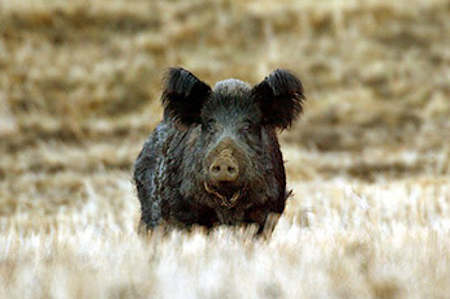
Wild pigs
Q: I live in Alameda County where wild pigs sometimes get onto my property and tear up my yard. If I see a pig actively destroying my property, do I need permission from the California Department of Fish and Wildlife (CDFW) to shoot it?
A: Wild pigs can be a common challenge for residents who live near open land in the Bay Area and elsewhere throughout the state. During the dry season, pigs may work their way into residential areas to take advantage of food resources that have dried out where they usually feed.
California Fish and Game Code (FGC) section 4181.1 allows for immediate take of any wild pig encountered damaging, destroying, or threatening to immediately damage or destroy land or other property, by the owner of the land, the property owner’s agent or employee, or by an agent or employee of any federal, state, county or city entity when acting in an official capacity.
Known as the “encounter provision,” it most commonly applies to chance circumstances or unexpected issues.
A person who takes a pig by encounter must report the take to CDFW no later than the next working day and must make the carcass available to department staff for inspection.
For individuals such as yourself who are aware of an ongoing issue, the most appropriate mechanism is the depredation permit process.
Depredation permits can be obtained through CDFW’s Wildlife Incident Reporting System. With either depredation provision – encounter or permit – safe discharge of firearms and use of non-lead ammunition apply.
Additionally, these authorizations do not supersede local ordinances that may prohibit discharge of a firearm where you live, so be sure you do not run afoul of local law.
Airguns
Q: Are airguns included in the “archery only” spring turkey special seasons beginning in May? (Bill)
A: No. Airguns are not considered archery equipment and may not be used to hunt wild turkeys during the archery-only season. Section 354 of the California Code of Regulations (CCR), Title 14, describes what constitutes archery equipment, starting with the definition of a bow. CCR, Title 14, section 354(a), defines a bow as any device consisting of a flexible material having a string connecting its two ends and used to propel an arrow held in a firing position by hand only. Bows include long bows, recurve or compound bows (but not crossbows).
Wolverines
Q: I read about the elusive wolverine that scientists documented in the Truckee region of the Tahoe National Forest from 2008 to 2018. I’m not interested in hunting wolverines but I can’t find the law which says you can’t. Aren’t they non-game weasels, which would mean you can legally hunt them?
A: No. Wolverines are fully protected mammals as defined by section 4700 of the FGC. It is not legal to hunt them. Your confusion may stem from the taxonomy (scientific name) of a weasel family and genus, and CCR, Title 14, section 472(a). That section states, in part: “The following nongame birds and mammals may be taken at any time of the year and in any number except as prohibited in Chapter 6: English sparrow, starling, domestic pigeon (Columba livia), coyote, weasels, skunks, opossum, moles and rodents (excluding tree and flying squirrels, and those listed as furbearers, endangered or threatened species).”
Weasels and wolverines are in the same family Mustelidae, but wolverines are not in the weasel genus Mustela, so they do not meet the definition of “weasel” by this regulation.
Wolverines have a well-deserved ferocious reputation. But other than the lone wolverine recorded living north of Truckee, there have been no verified detections in California since the 1930s. Legal protection of the species is provided in FGC section 4700, which states “fully protected mammals or parts thereof may not be taken or possessed at any time.” That FGC section also states, “No provision of the code or any other law shall be construed to authorize the issuance of permits or licenses to take any fully protected mammal, and no permits or licenses heretofore issued shall have any force or effect for that purpose…”
In addition to being listed as threatened pursuant to the California Endangered Species Act, the wolverine is number nine of nine mammals on the fully protected mammal list in California: (1) Morro Bay kangaroo rat (Dipodomys heermanni morroensis). (2) Bighorn sheep (Ovis canadensis), except Nelson bighorn sheep (subspecies Ovis canadensis nelsoni) as provided by subdivision (b) of Section 4902. (3) Northern elephant seal (Mirounga angustirostris). (4) Guadalupe fur seal (Arctocephalus townsendi). (5) Ring-tailed cat (genus Bassariscus). (6) Pacific right whale (Eubalaena sieboldi). (7) Salt-marsh harvest mouse (Reithrodontomys raviventris). (8) Southern sea otter (Enhydra lutris nereis) and (9) Wolverine (Gulo luscus).
- Details
- Written by: California Department of Fish and Wildlife
All calendar items are subject to change due to the COVID-19 pandemic. Please continue to adhere to all safety protocols including physical distancing, wearing masks and frequent hand washing.
Wildlife areas, ecological reserves and other properties may be closed due to wildfire damage. Hunters and outdoor enthusiasts are strongly encouraged to check for closures before leaving on any recreational trip.
Various days — Nature Bowl 2021: Family Challenge Edition. Hosted by CDFW’s North Central Region, the 2021 Nature Bowl has been reformatted into a virtual nature challenge to all California families with school-age students. Spring is here, and it’s time for rejuvenation, emerging from winter hibernation and getting outside for a healthy dose of nature. Your challenge is to work together as a family to compete in five nature-themed activities – and possibly win cool nature-related prizes. Nature Bowl runs through May 14, 2021. For more information and materials, please visit wildlife.ca.gov/regions/2/nature-bowl or contact Genelle Treaster at
Various days — Nimbus Hatchery Virtual Tot Time, 10 to 10:30 a.m. May 3, 10, 17 and 24. The popular storytime program hosted by Nimbus Hatchery is back in a virtual format! Join us for nature-themed stories, songs, dancing and more! These free events are designed for ages 3-5. To register, click here. For more information, please contact Stephanie Ambrosia at
Various days — Vernal Pool Virtual Tours, 9 to 10 a.m. May 8 and 6:30 to 7:30 p.m. May 19. Explore these crucial, incredible habitats with Yolo Basin Foundation staff and volunteers through a virtual experience at the vernal pools of Grasslands Regional Park. Discover how vernal pools are naturally created, how they can be restored and how they provide unique habitat. Zoom in more closely to view amazing wildflowers and small creatures that call the vernal pools home. For more information and to register for these free events, please visit yolobasin.org/virtualwetlandtours.
1 — Recreational Groundfish Season Opens for All Boat-based Anglers for the Northern and Mendocino Management Areas (Oregon-California State Line to Point Arena). Season opens for the following species: rockfish, cabezon, kelp and rock greenlings, lingcod, California scorpionfish (aka sculpin), leopard shark, soupfin shark and spiny dogfish, and other federally managed groundfish. For more information, please visit wildlife.ca.gov/fishing/ocean/regulations/groundfish-summary.
1 — Recreational Pacific Halibut Fishery Opens (until Nov. 15 or until the quota is reached, whichever is earlier). For more information, please visit www.wildlife.ca.gov/conservation/marine/pacific-halibut.
1 — Virtual Tour of the Davis Wetlands, 10 to 11 a.m. Join Yolo Basin Foundation staff and docents to explore and learn about this managed, native California wetland ecosystem. Observe wildlife up close with our virtual spotting scope view! Registration is required to receive the Zoom event link. To register for this free event, please visit www.yolobasin.org/virtualwetlandtours.
3 — Archery Only Spring Wild Turkey and Additional Junior Spring Turkey Seasons Open (extending through May 16). For more information on upland game bird seasons and limits, please visit www.wildlife.ca.gov/hunting/upland-game-birds.
5 — Deadline for California Invasive Species Action Week Youth Art Contest. Students in grades 2-12 are invited to submit artwork on the theme, “Be an Invasive Species Detective!” All types of media are encouraged! Submit entries electronically by May 5, 2021. Find complete information at www.wildlife.ca.gov/conservation/invasives/action-week/poster-contest. Winners will be announced during California Invasive Species Action Week in June. Please send any questions to
5-9 — World Migratory Bird Week at the Elkhorn Slough Reserve, 1700 Elkhorn Road, Watsonville (95076). Celebrate the diversity of birds migrating through Elkhorn Slough Reserve with an independent avian scavenger hunt, do-it-yourself crafts and an outdoor exhibit of bird artifacts. To find out more, please visit the event calendar at www.elkhornslough.org.
7 — International Migratory Bird Day Webinar, 10 to 10:45 a.m. What is the Pacific Flyway, and why is it key to the diversity of birds in California? Learn which migratory birds use the Pacific Flyway and how they move across the world in this free Zoom webinar hosted by Nimbus Hatchery Visitor Center naturalists. To register, click here. For more information, please contact Stephanie Ambrosia at
8 — Yolo Bypass Wildlife Area Tour, 8 to 11 a.m., 45211 County Road 32 B, Davis (95618). Yolo Basin Foundation offers monthly tours of the Yolo Bypass Wildlife Area, October to June. These tours are appropriate for all levels of outdoor enthusiasts and birders! Due to current guidelines, tours are limited to 20 people. Every individual must be registered to participate. For more information and to register, please visit https://www.yolobasin.org/wetlands-tours/. There is a suggested donation of $10 per adult for tours. Donations support our wetlands education programs.
11 — California Fish and Game Commission Meeting, time to be determined. The meeting is to be held via webinar/teleconference due to health and safety concerns related to COVID-19. For more information, please visit fgc.ca.gov.
11 — California Fish and Game Commission Wildlife Resources Committee Meeting, time to be determined. The meeting is to be held via webinar/teleconference due to health and safety concerns related to COVID-19. For more information, please visit fgc.ca.gov.
11 — Vernal Pool Speaker Series: Plants of the Vernal Pools, 7 p.m. Take a closer look at the beautiful and unique plant species that call vernal pools home! Many of the gorgeous flowers that encircle vernal pools are fully protected and a rare treat to see. Carol Witham, botanist and vernal pool expert, will discuss the biology of these plants, why they grow in vernal pools and how to protect and safely view them. To register for this free event, please visit www.yolobasin.org/grpspeakerseries.
14 — California Wildlife Conservation Board Lower American River Conservancy Program Proposal Solicitation Notice Closes. Applications must be received by 5 p.m. Pacific Daylight Time. For more information, please visit www.wcb.ca.gov/programs/lower-american-river.
15 — Bat Talk and Walk Tickets On Sale. Did you know that an estimated 250,000 bats live under the Yolo Causeway during the summer? Yolo Basin Foundation hosts popular Bat Talk and Walk events where you can learn all about these amazing and beneficial animals and watch the “flyout” of the largest urban colony of Mexican free-tailed bats in California! This summer, the talk portion will be held via Zoom and the walk portion will be an in-person event to view the flyout. As in past years, there will be a few special nights for CDFW employees and their families. More information and registration links will be available at yolobasin.org/bats2021.
15-16 and 19 — Teachers on the Estuary Workshop, Elkhorn Slough Reserve, 1700 Elkhorn Road, Watsonville (95076). This free hands-on estuarine science workshop focuses on developing inquiry-based lessons for middle and high school teachers. The 2021 TOTE Workshop focus will be climate change and blue carbon, and it will be held as two online learning sessions and one in-person field day at the Elkhorn Slough Reserve. During the field day, all state COVID protection protocols will be practiced, including mask wearing, physical distancing and a capacity on group size. To learn more and to register, please visit www.elkhornslough.org/events/teachers-on-the-estuary-workshop-2.
20 — California Wildlife Conservation Board Meeting, 1 p.m., via Zoom or teleconference. Public comment will be accepted per the agenda. For more information, please visit www.wcb.ca.gov.
21 — Endangered Species Day Webinar, 10 to 10:45 a.m. Find out which endangered species call California home and what their future may look like in this free Zoom webinar presented by Nimbus Hatchery Visitor Center naturalists. Learn about our native bees and discover what you can do to help them thrive! To register, click here. For more information, please contact Stephanie Ambrosia at