 How to resolve AdBlock issue?
Recreation
- Details
- Written by: Editor
LAKEPORT, Calif. On Saturday, July 3, Lakeport Speedway hosted its annual firework show with racing.
The night featured the Limited Modifieds, Bombers, Jammers, Bandoleros, Pro 4 Modifieds and Vintage Midgets.
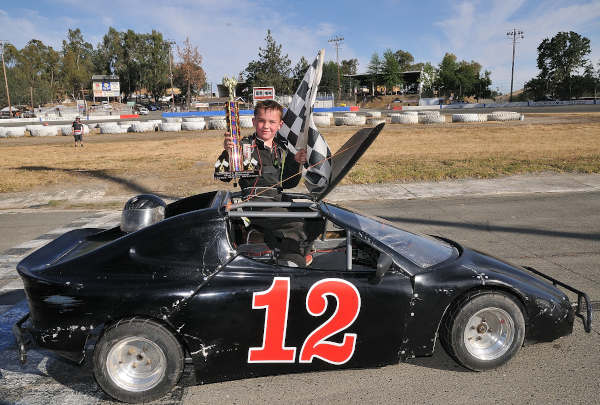
In the Bandolero division, #12 Travis Powers took home fast time with #15 Kai Lovell in second and #88 Jordan McClean in third.
In the heat race, #12 Travis Powers took home the win with #15 Kai Lovell in second, #88 Jordan McClean in third and #65 Alyssa Sorrels in fourth.
In the main event, #12 Travis Powers was able to hold off #15 Kai Lovell to take home another win. No. 65 Alyssa Sorrels was third and #88 Jordan McClean was fourth. Both had been involved in a caution and were unable to finish the race.
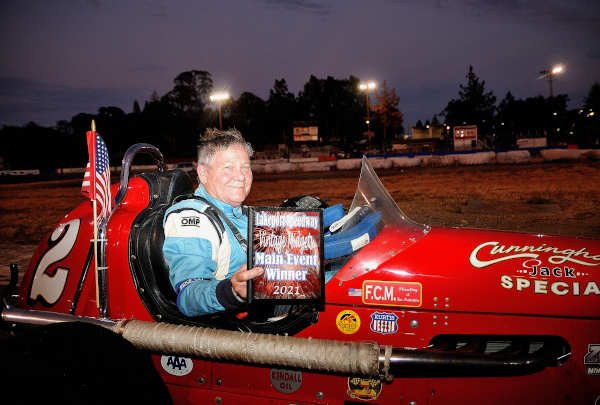
In the Vintage Midget division, #9 Rich Scettrini took home the heat race win with #2 Fred Maydole in second, #29 Don Cruse in third and #10 Tommy Belfiore in fourth.
In the main event, #2 Fred Maydole took home the win with #9 Rich Scettrini in second, #29 Don Cruse in third and #10 Tommy Belfiore in fourth.
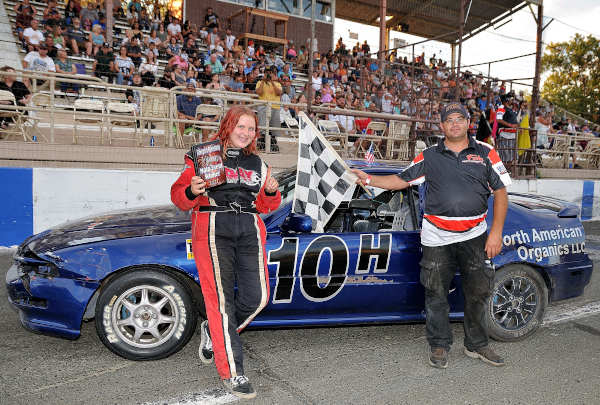
In the Junior Jammer division, #5 Charles French took home fast time with #10H Hailey Glass in second and #01 TJ Sorrels in third. In the heat race, #10H Hailey Glass was able to hold off #01 TJ Sorrels to take home the win, while #5 Charles French was third, and #9 Leland Cervelli was fourth.
In the main event, Glass went on to take home the win again with #01 TJ Sorrels in second, #9 Leland Cervalli in third and #5 Charles French in fourth.
In the Pro Jammer division, #D4 Donovan Arreguin took home fast time with #20 Danny Helm in second, and #0 Zuki Suzuki in third.
In the heat race, #D4 Donovan Arreguin was able to hold off #20 Danny Helm to take home the win, while #0 Zuki Suzuki was third, #7 Isaiah Rojas was fourth, #20F Christopher Fischer was fifth, #23 Christian Sanchez was sixth and #17 Billy Hammond was seventh.
In the main event, Arreguin took home another win for the night with #0 Zuki Suzuki in second, #7 Isaiah Rojas in third, #20F Christopher Fischer in fourth and #17 Billy Hammond rounded out the top five5. No. 23 Christian Sanchez was sixth and #20 Danny Helm was seventh.
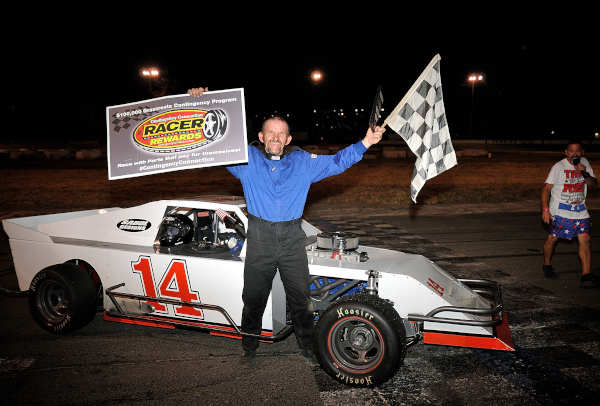
In the Pro 4 Modified division, #14 Johnny Barker was able to get fast time in front of #29 Mike Peterson and #87 Marty Lewis.
In the heat race, Barker also held off #87 Marty Lewis to take home the win. No. 07 James Gard was third, #29 Mike Peterson was fourth and #14A Anthony Gorrin was fifth.
In the main event, Barker continued his clean sweep and took home the win. No. 29 Mike Peterson was second, #07 James Gard was third, #14A Anthony Gorrin was fourth and #87 Marty Lewis rounded out the top five, while #4 Wade Eldredge was sixth.
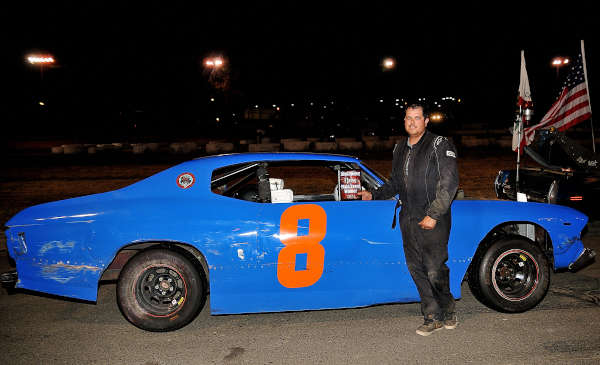
In the B Bomber division, #8 Seth Chew took home fast time with #23 William Byrne in second and #76 Jesse Frey in third.
In the heat race, #8 Seth Chew took home the win with #23 William Byrne in second and #18 Klinton Waite in third.
In the main event, #8 Seth Chew was able to take home the win with #76 Jesse Frey in second, #10 Jimmy Shankles in third and #23 William Byrne in fourth.
In the Limited Modified division, #15A Jason Philpot took home fast time with #77 Jeremy Nowlin in second and #12 Mike Neilson in third.
In heat race one, #21X Darrin Sullivan took home the win with #15 Richard Knight in second, #14 Mike Neilson in third, #67 Gary Lowblad in fourth and #17 Brandon Powers rounded out the top 5. No. 15A Jason Philpot finished sixth, #1L J.R Lane was seventh and #21 Tyler Manning was eighth.
In heat race two, #4 Raymond Taylor Jr. took home the win with #23 TJ Buzzard close behind in second. No. 37 Sierra Furia finished third, #77 Jeremy Nowlin in fourth and #51 Bo Robertson in fifth. No. 12C Codi Barba was sixth and #49 Tater Reich was seventh.
In the main event, #23 TJ Buzzard and #21X Darrin Sullivan were on the front row. Sullivan was able to break away from #23 TJ Buzzard after he settled into second.
No. 14 Mike Neilson was able to get by Buzzard on lap 10 and was trying to catch Sullivan. Sullivan had a big lead over the pack until the red flag came out after #67 Gary Lowblad was involved in a wreck with the #49 Tater Reich and #21 Tyler Manning.
Lowblad retired into the infield and Reich as well. Furia and Buzzard battled for over 20 laps until #15A Jason Philpot was able to get by Buzzard and Furia followed behind.
No. 12C Codi Barba had his eyes set on getting around Buzzard along with #77 Jeremy Nowlin but were unable to secure the spot before the checkered.
Furia and Philpot were also both on a mission to catch #14 Mike Neilson but were unable to gain any spots before the checkered came out.
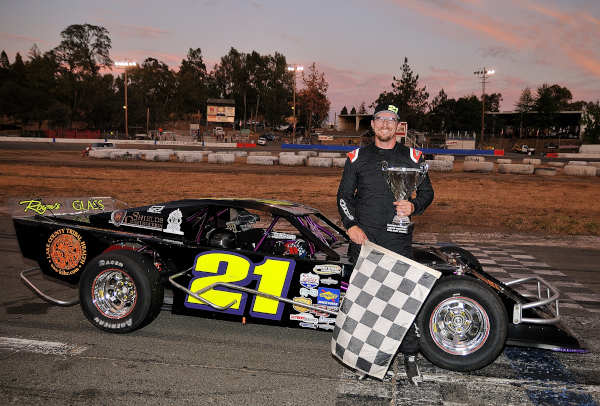
At the checkered, #21 Darrin Sullivan from Kelseyville took home the win with #14 Mike Neilson in second, #15A Jason Philpot in third, #37 Sierra Furia in fourth and #23 TJ Buzzard in fifth. No. 12C Codi Barba finished sixth, #77 Jeremy Nowlin was seventh, #15 Richard Knight was eighth, #4 Raymond Taylor JR was ninth and #1L J.R Lane rounded out the top 10. No. 51 Bo Robertson was 11th, #17 Brandon Powers was 12th, #21 Tyler Manning was 13th, #67 Gary Lowblad was 14th and #49 Tater Reich was 15th.
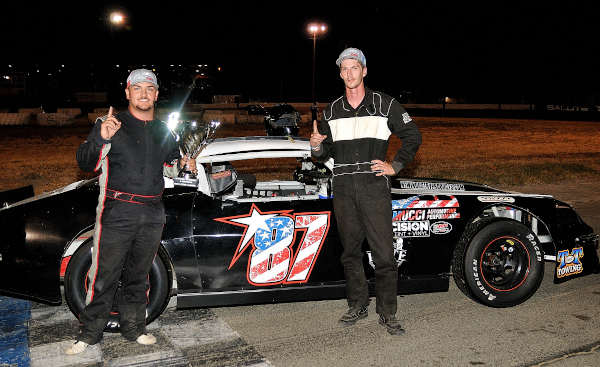
In the A Bomber division, #79 Mike Collins set fast time with #27 Loren Powers Jr. in second and #87 Trystan Mucci in third.
In the heat race, #87 Trystan Mucci was able to hold off #79 Mike Collins to take home the win with #27 Loren Powers JR in third, #66 Jimmy Sorrels in fourth and #96 Danny Helm in fifth. No. 77KC Kasey Horat was sixth.
In the main event, you seen #77KC Kasey Horat and #66 Jimmy Sorrels on the front row. By lap two, #87 Trystan Mucci had taken over the lead with #79 Mike Collins moving through the field to try to catch him.
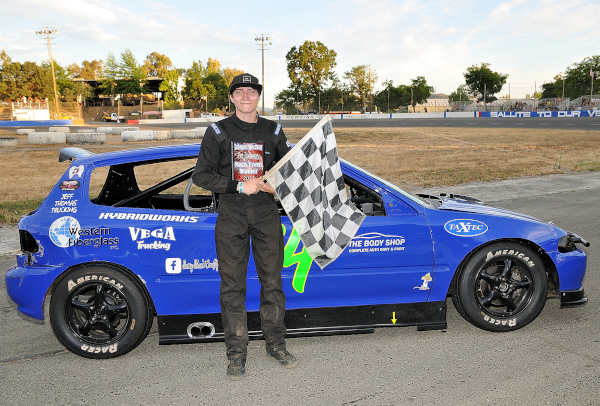
No. 27 Loren Powers Jr also was moving forward to try and catch Mucci. With a late restart after a yellow flag came out for #96 Danny Helm, Mucci and Collins lined up side by side once again with Collins only given one more chance to make a move on Mucci.
Mucci was able to pull away but with Collins close behind along with Powers. Collins made some moves on Mucci when they came up on lapped cars with Powers behind him trying to make a move on Collins. Both were unsuccessful and Mucci was able to gain some ground.
At the checkered flag, Mucci took home the win with #79 Mike Collins in second, #27 Loren Powers JR in third, #66 Jimmy Sorrels in fourth and #77KC Kasey Horat in fifth. No. 96 Danny Helm was sixth after he retired to the pits.
All these racers went on to race at Ukiah Speedway on July 4.
The next event is July 17 at Lakeport Speedway featuring the boat races.
The racing division will include the Limited Modifieds, Bombers, Legends, Jammers, Bandoleros and Jalopies.
Gates will open at 3:30 p.m. and racing will begin around 5 p.m.
Tickets will be available at the gate.
- Details
- Written by: Nadine Strauss
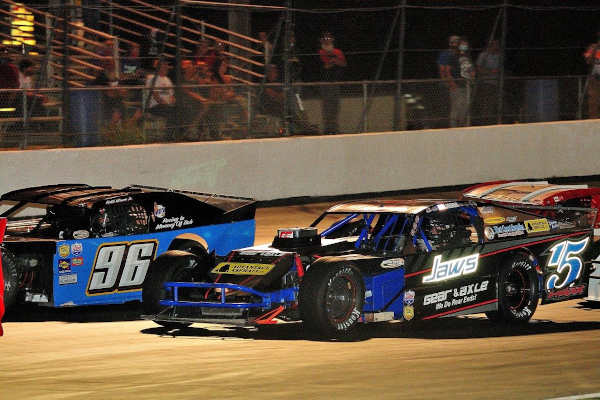
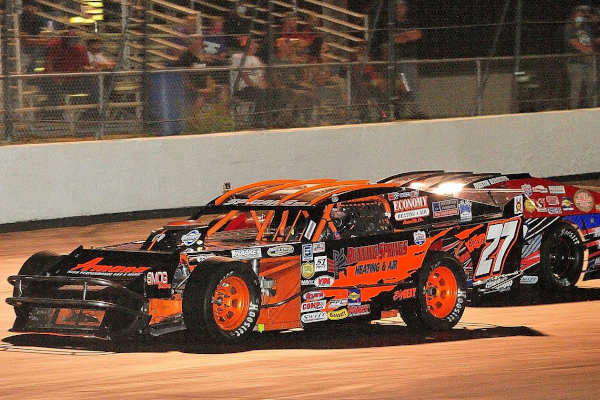
The North State Modifieds, presented by Protect the Harvest, return to the All American Speedway in Roseville Saturday for a 60-lap challenge against the NASCAR Jaws Gear & Axle Modifieds in the inaugural “Economy Heating & Air Modified Challenge.”
The last time the North State Modifieds, or NSMS, raced at Roseville was in July of 2019 where Santa Rosa’s Cameron Austin beat out Darrin Knight, Scott Winters, Darrin Sullivan and Jason Philpot for the win.
Both the North State Modifieds and the “Jaws” Modifieds will be running their own rules and tires, and will be awarded their own points.
Philpot, who previously raced with NSMS, now is the defending champion in the Jaws Series and is just coming off of a win at Ukiah Speedway.
In addition to the $1,000 to win the feature, Authority Heating and Air is putting up $250 to the leader on lap five with an additional $250 to the leader of the race on lap 55. And Lucas Oil continues with the Lucas Oil Dash for Cash that pays $100 to the winner and $50 to second place in this six lap event. Lucas Oil also pays tow money to the top competitors in the NSMS points battle.
Also competing the same night will be a Berco Redwood Late Model Twin-35, Riebes Auto Parts Super Stocks, F4s, Jr. Late Models, and Mini Cups/Bandoleros. The Riebes Auto Parts Trailer Bash closes out the night. Gates open at 5 p.m. and racing begins at 5:15 p.m.
The North State Modified Series would not be possible without the support of Protect the Harvest, Lucas Oil, Economy Heating & Air, Sullivan Construction and Masonry, Hoosier Tire West, Sunoco Race Fuels, Naake Suspension, Five Star Bodies, Racer Bling, Mark & Sharon Baldwin, Scribner Plastics, Mort Houston, McMurray & Sons Roofing, Frank’s Radios, Supercuts, Vogel’s RVs and Authority Heating & Air.
- Details
- Written by: California Department of Fish and Wildlife
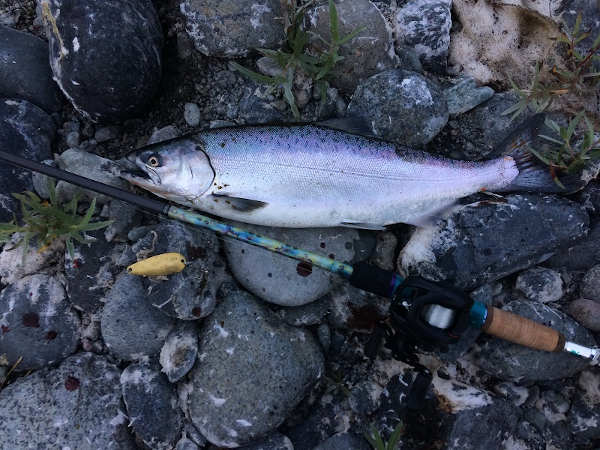
Fishing regulations for the spring Chinook fishery in the Klamath River Basin remain in effect following the June meeting of the California Fish and Game Commission.
The commission did vote to list Upper Klamath and Trinity River spring Chinook salmon as threatened under the California Endangered Species Act. Sport fishing regulatory changes implemented during species candidacy remain in effect. Additional regulatory changes were not made at the meeting and may be forthcoming in the future if warranted.
The spring Chinook salmon fishery on the lower Klamath River (downstream of the Highway 96 bridge at Weitchpec) and Trinity River (upstream of the confluence of the South Fork Trinity River) will open July 1 and run through August 14 on the Klamath River and through August 31 on the Trinity River.
The daily bag limit remains at one Chinook salmon (no size restrictions), and a possession limit set of two Chinook salmon.
The Fish and Game Commission adopted fall Chinook quota and fishery regulations during its May teleconference meeting. A summary of 2021 regulations are described below.
The fall Chinook fishery in the Klamath River will open Aug. 15, and in the Trinity River, the fall recreational Chinook salmon season begins Sept. 1. The Klamath Basin’s in-river quota is 1,221 adult fall Chinook salmon for 2021.
Fall Chinook regulations on length have changed since 2019, with the adult size now being greater than 23 inches in total length (previously 22 inches). Bag limits will remain the same as 2020, with a two-fish daily bag limit, with no more than one fish over 23 inches (such as one adult and one jack). The possession limit remains the same at six fish, with no more than three fish over 23 inches (effectively three daily bag limits).
The in-river recreational adult fall Chinook quota is divided among four sectors in the Klamath River basin:
KLAMATH RIVER
1) 3,500 feet downstream of Iron Gate Dam downstream to the Highway 96 bridge — 208 fish.
2) Highway 96 bridge downstream to the mouth of the Klamath River — 611 fish.
There is a subarea closure at the mouth of the Klamath River when 15 percent of the basin allocation has been harvested — 183 adult fall Chinook salmon harvested below the Highway 101 bridge triggers this closure.
TRINITY RIVER
3) Old Lewiston Bridge to Highway 299 West bridge at Cedar Flat — 201 fish.
4) Denny Road bridge downstream to the confluence with Klamath River — 201 fish.
Please see the 2021-2022 California Freshwater Sport Fishing Regulations (PDF) and the forthcoming 2021-2022 California Supplement Sport Fishing Regulations that will be posted to CDFW’s Inland Sport Fishing webpage for more information.
Additionally, anglers can obtain information on Klamath Basin regulations and fall Chinook quota updates by calling the Klamath-Trinity fishing hotline at 800-564-6479.
CDFW reminds anglers that California is in the midst of a drought, to fish responsibly, and to avoid fishing waters visibly suffering from the drought’s impacts where warm water and low water conditions already may be stressing fish populations.
- Details
- Written by: Nadine Strauss
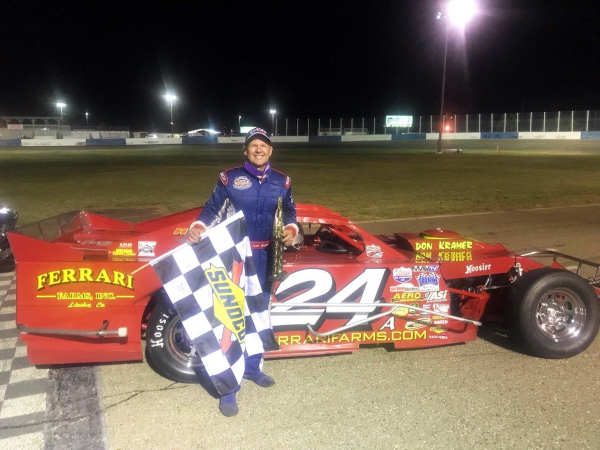
ANDERSON, Calif. — The excessive heat wave took its toll on auto racing in Northern California Saturday as only nine teams made the long hot tow to Shasta Speedway in Anderson for the North State Modified Series “Protect the Harvest 60.”
But when the final curtain fell it was Scott Winters of Tracy who collected his second consecutive NSMS victory over Keith Bloom of Anderson, Rich Cobb of Klamath Falls, Oregon, Dustin DeRosier of Cloverdale and Ian Elliott of Lakeport.
Winters also set the fast time of 16.104 on the hot, slick track and was awarded a special plaque courtesy of O’Reilly Auto Parts.
Mike Neilson of Lakeport clocked in second fastest at 16.209, Cody Braund of Redding was third quick at 16.274 and Keith Bloom turned a 16.296 second lap. The invert for the 60 lap feature was four, placing brothers Bloom and Braund, in the front row.
The first two laps saw Bloom and Braund run side-by-side until the race was slowed when Foryst Souza’s car suffered suspension failures and stalled in turn four.
When racing resumed the brothers continued their battle for the lead until the yellow flew again for contact between Kylei Keown and Neilson that resulted in Neilson spinning in turn one.
Braund chose the outside lane for the restart and held the number one spot for two laps before Bloom forged ahead and took control of the race.
Winters ran third and began his forward pursuit. On lap 14 Winters moved to the high side, and two rounds later he made the pass stick and moved into second place. Braund’s car overheated, ending his run on lap 21.
Meanwhile, Bloom was enjoying a healthy lead, but Winters was on a mission and slowly reeled the leader in until they were running nose-to-tail by lap 25. Winters gave Bloom a slight bump in the rear on 27, and tried to drive under, but Bloom did not waiver and continued his lead.
The battle continued another nine circuits until Winters finally went to the outside and made the winning pass on the 40th go round. With only four to go, Keown suffered rear-end problems and her car stopped at the exit gate.
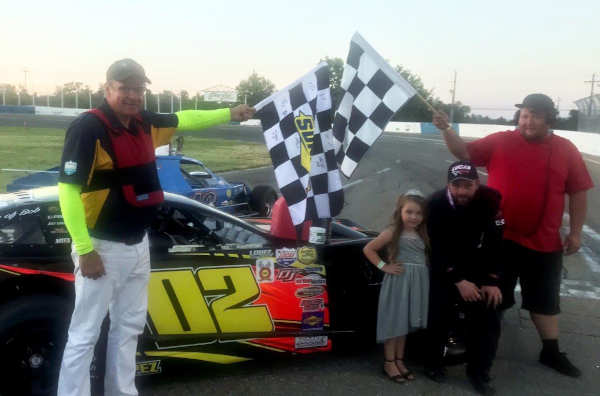
Winter forged ahead again at the final green and the 2019 NSMS champ sailed to the Sunoco checkered flag victory over Bloom, Cobb, DeRosier, Elliott and Neilson.
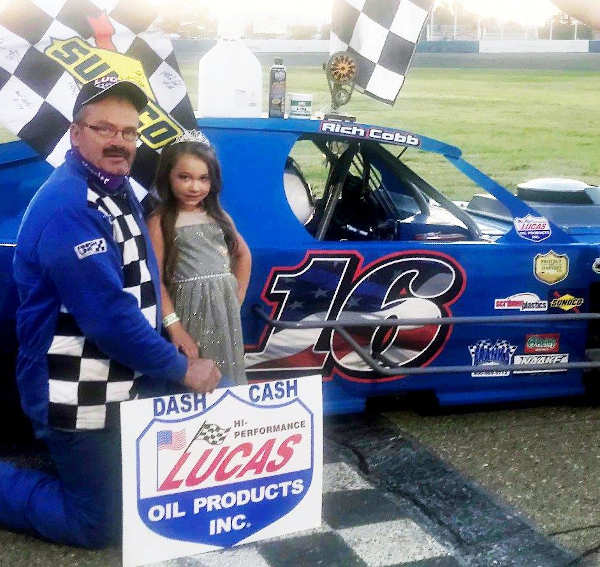
ReRosier earned the Naake Hard Charger Award for starting last and finishing fourth. Cobb collected $100 for his win in the Lucas Oil Dash for Cash and received a special-built clock trophy made from engine parts from Shasta Speedway promoter Dave Twyman.
Braund finished a $50 second in the dash. Both Cobb and Braund picked up the Scribner Plastics jugs.
The Frank’s Radios certificates went to Ian Elliott, Mike Neilson and Kylei Keown. All drivers received tow money from Lucas Oil and Vogel’s RVs of Ukiah.
Next the North State Modifieds return to All American Speedway in Roseville for a 60-lap challenge against the NASCAR Jaws Gear & Axle Modifieds on July 10. This will be the inaugural event featuring the two groups competing together for the $1000 win.
The North State Modified Series would not be possible without the support of Protect the Harvest, Lucas Oil, Economy Heating and Air, Sullivan Construction and Masonry, O’Reilly Auto Parts, Supercuts, Hoosier Tire West, Sunoco Race Fuels, Naake Suspension, Five Star Bodies, Racer Bling, Mark & Sharon Baldwin, Scribner Plastics, Mort Houston, McMurray & Sons Roofing and, Frank’s Radios.
RESULTS
PROTECT THE HARVEST 60 MAIN EVENT:
Scott Winters, Keith Bloom, Rich Cobb, Dustin DeRosier, Ian Elliott, Mike Neilson, Kylei Keown, Cody Braund, Foryst Souza
LUCAS OIL DASH FOR CASH:
Rich Cobb, Cody Braund, Keith Bloom, Foryst Souza, Kylei Keown, Ian Elliott
HOOSIER QUALIFYING:
Scott Winters (16.104), Mike Neilson (16.209), Cody Braund (16.274), Keith Bloom (16.296), Ian Elliott (16.387), Foryst Souza (16.412), Rich Cobb (16.436), Kylei Keown (16.453), Dustin DeRosier (16.478)