 How to resolve AdBlock issue?
Recreation
- Details
- Written by: Nadine Strauss
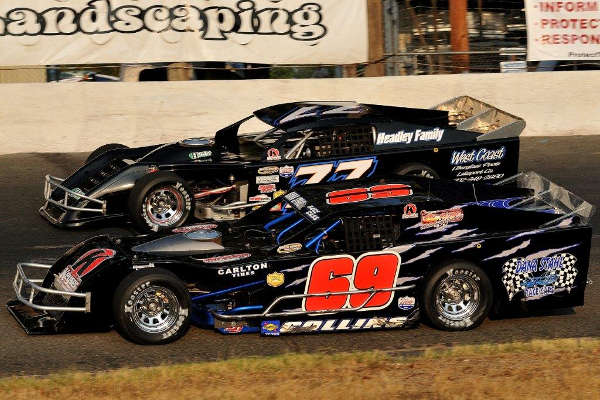
LAKEPORT, Calif. – The North State Modified Series, presented by Protect the Harvest, returned to Lakeport Speedway Saturday night for the second time in 2020, and when it was all done Charlie Collins of Upper Lake blew away his competition in the last 15 laps to win $2,000 in the Napa Lake Parts Fall Special.
Collins was followed across the finish line by Ukiah’s Kyle Tellstrom (July’s winner) and defending NSMS champion Scott Winters of Tracy.
The beautifully prepared race track was blistering fast with the current Hoosier tire track record of 12.578 seconds set by Tellstrom in July broken four times during qualifying.
Tellstrom holds the new record at 12.414. The other three drivers running under the old record were Winters (12.437), Jeremy Nowlin (12.513) and Collins (12.544.)
Tellstrom drew the No. 6 pill for the line-up inversion for the 60 lap feature, putting local drivers Darrin Sullivan and Ian Elliott in the first row. Collins and Nowlin shared the second row, and Winters and Tellstrom started in row three.
Sullivan forged ahead at the start, and when Elliott tucked in behind Sullivan, the side-by-side battle was on between Collins and Nowlin. Winters and Tellstrom also ran next to each other as Sullivan was pulling away.
The race was yellow-flagged on lap 10 when Noel McCormack made contact with Richard Knight causing Knight to spin in turn two. Nowlin beat Elliott to the line the previous lap setting up a Sullivan-Nowlin restart.
Sullivan shot out in front again, and just when it seemed Nowlin was losing ground on the high side, his car hooked up and he took over the lead on lap 17. Tellstrom also chose the outside groove and passed Sullivan for second the following go-round.
The race was slowed again on lap 21 when Elliott and three-time NSMS champion Darrin Knight hooked their cars together and crashed on the front stretch. Elliott’s car was towed to the infield and Knight limped to the pits.
When racing resumed, Tellstrom powered into the lead. Meanwhile, Collins and Cody Braund were gaining ground, and by the half-way mark it was Tellstrom, Nowlin, Collins, Braund, Winters, Darrin Sullivan, Dustin DeRosier, and 2020 Lakeport Speedway modified champion Mike Sullivan.
For the next 10 circuits, Braund and Winters swapped places back and forth, and on lap 42 Mike Sullivan snuck under DeRoiser for sixth. Nowlin was riding tight on Tellstrom’s bumper, but luck was not on Nowlin’s side as on lap 45 he lost a radiator hose, slid up the track in his own water and climbed the turn four concrete. Nowlin was uninjured, but his car suffered major damage.
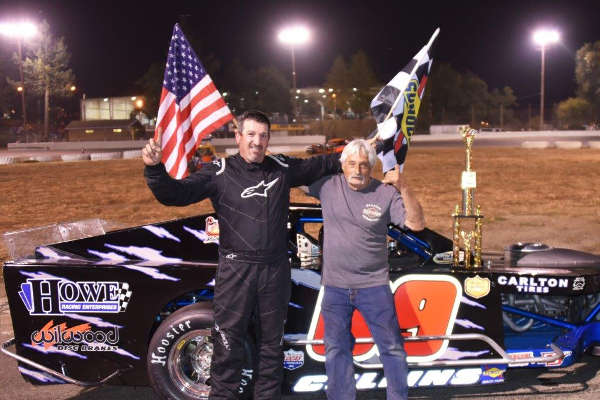
Tellstrom chose the outside lane for the restart, but his car did not hook up the same and Collins took over the lead. Collins pulled away from the pack, turning the fastest lap in the race to earn the Competition Carburetion Fast Lap Award of $50. Winters drove back by Braund in the closing laps, and at the Sunoco Racing Fuel checkered flag it was Collins, Tellstrom, Winters, Braund, Darrin Sullivan, Mike Sullivan, DeRosier, Chris Salmina and Richard Knight.
The Lucas Oil 6-car Dash for Cash was won by Darrin Sullivan. The Economy Heating and Air dash was won by DeRosier. Ecomony Heating and Air donated $550 to these two events so that all 12 competitors took home some cash.
Cody Braund won the Naake Suspension Hard Charger award for passing the most cars. Jeremy Nowlin was the recipient of the Mark and Sharon Hoosier Tire award. The Scribner jugs went to DeRosier and Keith Bloom. Unfortunately, Bloom later lost a transmission and was unable to start the feature.
North State Modified Series heads North to Redwood Acres Raceway in Eureka for its next event on Sept. 26. The McMurray and Sons Roofing 60 will also pay $2,000 to win. Then the following week will be the Lloyd Burton Against the Wind Modified Challenge at Shasta Speedway on Oct. 3. The final race of the series will be the Bob Lehman Classic at Stockton 99 Speedway on Oct. 14.
The North State Modified Series is presented by Protect the Harvest, Lucas Oil, Napa Lake Parts, Hoosier Tire West, Sunoco Race Fuels, Naake Suspension, Five Star Bodies, Racer Bling, Mark & Sharon Baldwin, Scribner Plastics, O’Reilly Auto Parts, Economy Heating and Air, and Competition Carburetion.
HOOSIER TIRE TIME TRIALS: Kyle Tellstrom (12.414 NTR), Scott Winters (12.437), Jeremy Nowlin (12.513), Charlie Collins (12.544), Ian Elliott (12.599), Darrin Sullivan (12.654), Chris Salmina (12.658), Robert Schmidt (12.670), Darrin Knight (12.692), Noel McCormack (12.729), Mike Sullivan (12.763), Cody Braund (12.785), Rich Cobb (12.846), Dustin DeRosier (12.859), Richard Knight (12.924), Keith Bloom (12.986), Sal Lopez (13.326)
LUCAS OIL DASH FOR CASH: Darrin Sullivan, Tellstrom, Winters, Nowlin, Elliott, Collins
ECONOMY HEATING & AIR DASH FOR CASH: Dustin DeRosier, Bloom, Richard Knight, Lopez, Cobb, Braund
NAPA LAKE PARTS FEATURE: Charlie Collins, Tellstrom, Winters, Braund, Darrin Sullivan, Mike Sullivan, DeRosier, Salmina, Richard Knight, McCormack, Schmidt, Cobb, Lopez, Nowlin, Darrin Knight, Elliott.
- Details
- Written by: California Department of Fish and Wildlife
The closures were put into place on Saturday, Sept. 12, due to unprecedented and historic fire conditions.
All closures are CDFW wildlife areas or ecological reserves, and they cover many parts of the state. They were closed following the USFS announcement of the temporary closure of all national forests in California.
Fire danger is extreme in California currently. Hunters and outdoor enthusiasts are strongly encouraged to check for closures before leaving on any recreational trip.
The following links show up-to-date closures.
CDFW Land Closure List
Map of Closed Ecological Reserves
Map of Closed Wildlife Areas
U. S. Forest Service Lands
Bureau of Land Management Lands
CDFW acknowledges that hunting opportunities will be impacted. Tag return and preference point eligibility requirements and additional information may be found on CDFW's website.
- Details
- Written by: Nadine Strauss
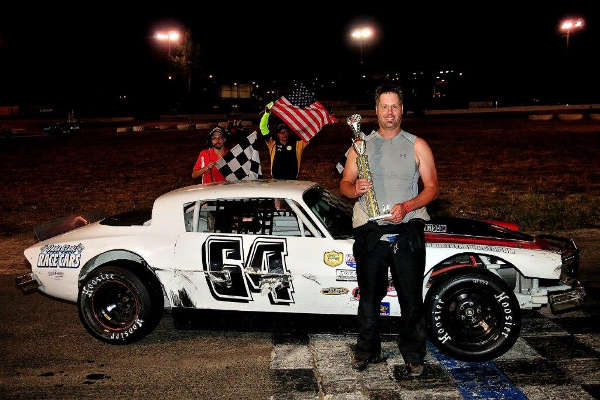
LAKEPORT, Calif. – Lakeport Speedway held its season finale Saturday night as NCRA competitors made things happen in front of the no-spectators crowd.
Simi Tour of Potter Valley out-powered Forrest Kuecker to win in the Taco Bell Bombers class.
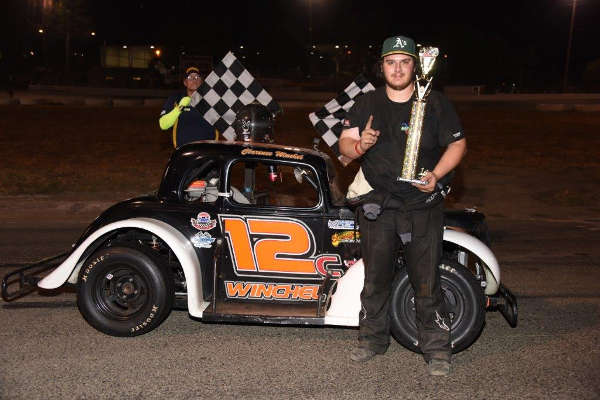
Cody Winchel of Sebastopol held off the challenges of Kylie Daniels to capture his third consecutive win in the Legends Cars ranks.
Johnny Barker of Upper Lake bought a new car and won his second season victory in the AAA Energy Solutions Pro-4 Modified division.
Noel McCormack Jr. of Lakeport beat veteran driver Bill Binns to lay claim to the late model feature.
And Landon Snider of Kelseyville was the victor in the Bandoleros.
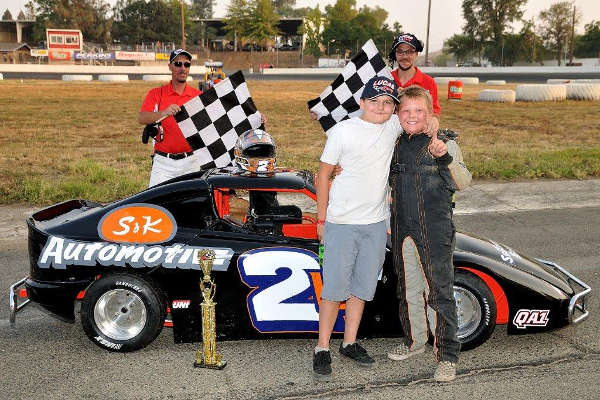
The conclusion to the evening was the recognition of Kylie Daniels of Fort Bragg as the NCRA Legends Car champion and Donovan Cox from Kelseyville as champion of the Taco Bell Bombers.
Forrest Kuecker, owner of the bomber that Mikey Collins had been driving, decided to pilot the car himself for the season finale. He set the fast time over the 10-car field with a 13.812 second lap and started 8th in the main.
Tour started sixth and it only took him two laps to steal the lead away from front row starter Jim Kollenborn when the outside row filed by pole setter Amber Portlock.
Both Kuecker and Mickey Snider passed Kollenborn on lap six and set their sights on the leader. Cox drove under Kollenborn three rounds later.
The 30 laps went non-stop with Tour the happy winner over Kuecker, Snider, Cox and Kollenborn. Next across the finish line were Trevor Abella, Klinton Waite, Portlock and Kasey Horat.
Heat wins went to Kollenborn and Kuecker. Horat won the trophy dash. Prize money was donated by JB Motorsports & Consulting and George Abella. Napa Lake Parts donated a floor jack to Trevor Abella.
Jeremy Doss set a new track record (13.736) in the Legends Cars class and took the lead away from Marc Burch on the second lap of the feature event. He held the lead all the way until the yellow flew on lap 24 when Winchel spun while running a strong second.
On the restart, Doss’ rear end broke sending him into a wild spin in front of the pack. All cars scattered to avoid Doss. This left Kylie Daniels out front, but Winchel moved up fast and stole the lead away from her on lap 25.
Winchel and Daniels lapped the rest of the competitors to finish first and second. Tom Summers was third followed by Burch, Dan Camacho, and Trey Daniels.
Doss was the winner of both the heat race and the trophy dash.
After Chris Straka set fast time over the 6-car Pro-4 Modified field, John Baker purchase Straka’s #22 and drove it in the rest of the competition. He led the 30 lapper wire-to-wire to claim the win.
Mike Peterson passed second-place runner Ron Portlock in the early stages of the race to finish second. Portlock settled for third with James Gard fourth.
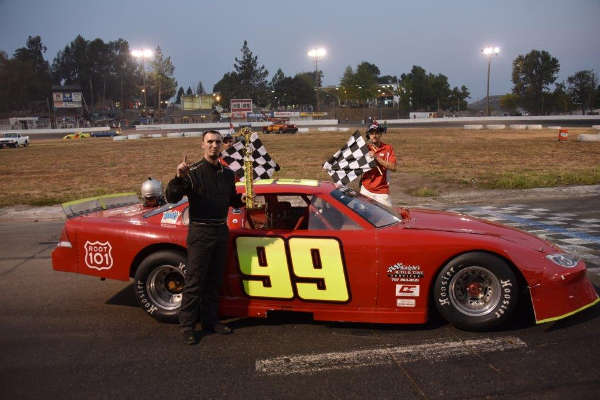
Both Wil Robertson and Wade Eldridge had problems and were not able to start the race. Barker had a near clean sweep by also taking the heat race and trophy dash win.
The newly-formed late model division was reduced to only two cars, but that did not stop the close competition. The “Kid,” Noel McCormack out-paced the “Old Guy,” Bill Binns, by 0.36 seconds in time trials, but Binns won the trophy dash.
Binns led the first four laps of the 20-lap feature, but McCormack’s car worked well on the outside and he inched by Binns on lap five. Binns made several attempts in the inside groove to regain the lead, but could make it stick. With only two laps to go, Binns’ car lost power and retired to the infield. McCormack accepted the trophy for the win.
Three Bandoleros gave the youngsters time on the track and it was 2019 Bando champ Landon Snider who stole the show with a clean sweep. Second place went to Courtney Portlock and Braydon White finished third.
NCRA will begin planning for the 2021 racing season with the hopes of bringing spectators back to the grandstands.
NCRA races at Lakeport Speedway are presented by Anderson Logging, Sullivan Const Masonry, Napa Lake Parts, Taco Bell, D&P Pools, Hillside Powersports, Clearlake Redi-Mix, Snap-On Tools, S&K Paving & Striping, O’Reilly Auto Parts, Lucerne Roofing, S & K Automotive, Under the Sun Garden Supply, Perkins Septic Tanks, Lake County Tribal Health, Don Anderson Attorney At Law, Coleman’s Custom Vinyl, Lake County Welders, Kelseyville Lions, Mike Sullivan Consulting, Lake Co. Waste Solutions, Gifford Backhoe Service and Majestic Landscaping.
- Details
- Written by: Lake County News Reports
These properties are closed to the public, effective immediately, and the California Department of Fish and Wildlife is urging hunters to keep their distance.
"We know that hunting opportunities will be impacted throughout the state, but no hunting opportunity is worth a human life," said Chief David Bess, deputy director and CDFW Law Enforcement Division chief.
California Code of Regulations Title 14, section 708(2)(b) prohibits CDFW from refunding deer tag application fees, but refunds may be issued for select elk, pronghorn antelope and bighorn sheep tags.
Additionally, some premium deer, elk, pronghorn antelope and bighorn sheep tags may be returned to CDFW with a request to have preference points reinstated and one preference point awarded for the species for the current hunt year. Tag return and preference point eligibility requirements and additional information may be found on CDFW's website.
CDFW will continue to monitor and close areas as needed. National forests and evacuation zones will remain closed until authorities allow them to re-open. Because the situation is rapidly changing,
CDFW strongly encourages hunters to use the following links to research closures and open areas prior to leaving for any hunt.
CDFW Land Closure List
Map of Closed Ecological Reserves
Map of Closed Wildlife Areas
USFS Lands
Bureau of Land Management Lands