 How to resolve AdBlock issue?
Recreation
- Details
- Written by: Elizabeth Larson
To celebrate one of the biggest Northern California entertainment deals and to kick off the inaugural event, the casino also announced that former two-time UFC Heavyweight Champion of the World Tim “The Maine-iac” Sylvia will join the casino’s fight fans to host the first pay per view show, UFC 246.
The televised main event of UFC 246 will offer a much-anticipated showdown featuring the colorful former unified featherweight and lightweight champion “The Notorious” Connor McGregor against Donald “Cowboy” Cerrone in an exciting welterweight matchup.
All of the MMA action, including the fights leading up to the main event will be broadcast throughout the casino and for free to Sherwood Valley Casino guests and players in attendance.
Doors open at 5 p.m. for the preliminary fights on Saturday, Jan. 18, and the main event is scheduled to begin at 7 p.m.
General admission to the meet and greet with the former champ is free with a Player’s Club card. There will be food and beverage specials at the Creekside Café as well as special cash drawings throughout the night.
As an added bonus, and for the first time ever in the Mendocino County area, Sherwood Valley Casino’s Players Club members will have the opportunity to meet and get a free picture and autograph with Tim Sylvia.
In addition, players who earn 100 points that evening will qualify to be entered into a drawing to win an authentic replica UFC championship belt autographed by Sylvia at the end of the fights.
Renowned for his size and striking ability, Sylvia had been consistently ranked as one of the top three fighters in the UFC Heavyweight division and went on to capture the belt two times. He was narrowly defeated by Randy Couture for a record third attempt.
Had the judges scored the bought his way he would have held the record in the UFC for recapturing a title belt three times. He went on to fight for other promotions including ONE Fighting Championships, ProElite and Affliction where he faced Russian Fedor Emelianenko.
"There is nothing like watching your favorite fighters battle it out on the big screen at your favorite “locals place to play,” said Michael J. Broderick, Sherwood Valley Casino’s general manager, "but it’s not just about the viewing; it’s about getting to meet a UFC champion in person and having an unforgettable experience. We are very happy to bring this event to the area for our valued customers and are grateful that the former champ will take time out to visit us and his fans way up here."
- Details
- Written by: Sierra Furia
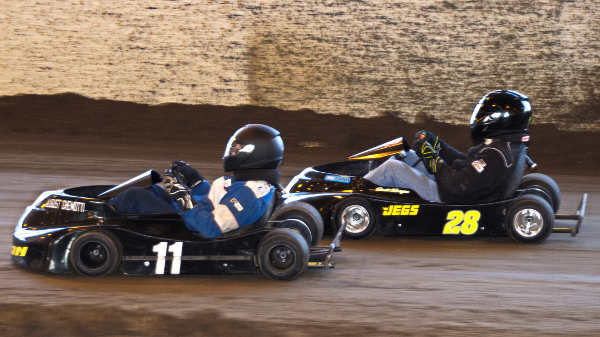
LAKEPORT, Calif. – The Lakeport Indoor Winter Series ran its fourth go-kart race of the season on Saturday, Jan. 4.
In the Predator division, the division was broken up into three different stages. No. 17J Jared Jensen won the trophy dash with #94 Nathan Thunder in second, #84 Ryan Skidmore in third and #44 Jacob Thomsen in fourth.
Heat race No. 1 was won by #17J Jared Jensen, #94 Nathan Thunder in second, #44 Jacob Thomsen in third, #84 Ryan Skidmore in fourth, #13 Karsyn Magenheimer in fifth and #5 Tuff Estep in sixth.
Heat race No. 2 was won by #3 Austin Comini, #3F Jax Fuchs in second, #33 Pennelope Jurrens in third, #57 Chandler Johnson in fourth and #8M Evin Manchester in fifth.
Heat race No. 3 was won by #1 Corvin Ritchey Varville, #71 Travis Powers in second, #3P Fisher Page in third, #100 Caily Powers in fourth, #65 Alyssa Sorrels in fifth and #4M Joey Silacci in sixth.
No. 17J Jared Jensen won main event 1 with #94 Nathan Thunder in second, #84 Ryan Skidmore in third, #44 Jacob Thomsen in fourth, #5 Tuff Estep in fifth and 13 Karsyn Magenheimer in sixth.
No. 3 Austin Comini won main event NO. 2 with #57 Chandler Johnson in second, #3F Jax Fuchs in third, #1 Corvin Ritchey Varville in fourth and #33 Pennelope Jurrens in fifth. No. 3P Fisher Page won main event 3 with #71 Travis Powers in second, #65 Alyssa Sorrels in third, #100 Caily Powers in fourth and #4M Joey Silacci in fifth.
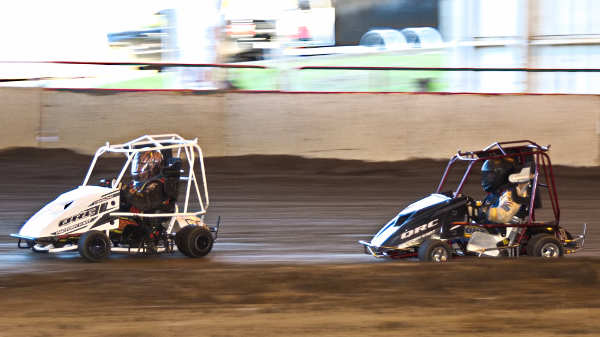
In the Beginner Box Stock division, #41 Logan Reeves won the trophy dash with #53 Carrie Osborne in second, #24JR Brody Reinolds in third and #29 Cole Croft in fourth. No. 41 Logan Reeves won heat race 1 with #03 Nataila Tour in second, #53 Carrie Osborne in third, #24 Riley Fuchs in fourth and #0 Blake Scovel in fifth.
No. 29 Cole Croft won heat race 2, with #24JR Brody Reinolds in second, #229 Logan Pike in third, #21 Gage Schramm in fourth and #1C Colby Kurtz in fifth.
No. 41 Logan Reeces won the main event with #24JR Brody Reinolds in second, #229 Logan Pike in third, #53 Carrie Osborne in fourth, #03 Natalia Tour in fifth, #24 Riley Fuchs in sixth, #1C Colby Kurtz in seventh, #21 Gage Schramm in eighth, #29 Cole Croft in ninth and #0 Blake
Scovel in 10th.
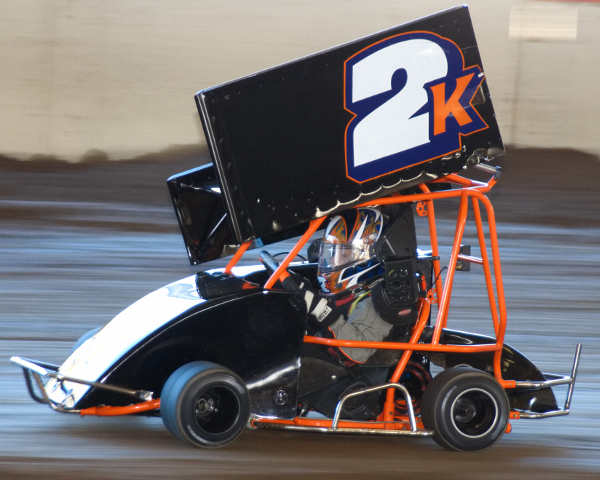
In the Box Stock division, #2K Landyn Snider won the trophy dash with #11 Deegan Kuecker in second, #8 Racin Gramps in third, and #31 Payton Gentry in fourth.
Landyn Snider drove his #2K to win the heat race with #8 Racin Gramps in second, #11 Deegan Kuecker in third, #31 Payton Gentry in fourth, and #75 Jaxon Hall rounded out the top 5. No. 12 Grant Proctor was sixth and #77S Tanner Swim was seventh.
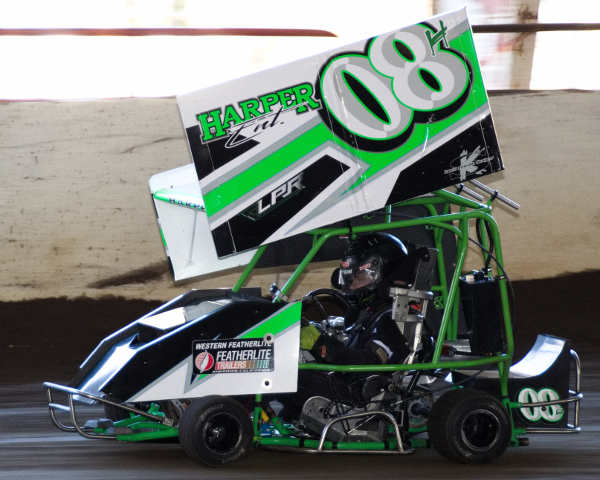
In the 250 division, #7DJ Dryver Dothage won the trophy dash with #16 Rylinn Renaud in second, #08H Samuel Harper in third, #9L Luke Hayes in fourth, #3T Tater Reich in fifth and #4R Gavin Restad in sixth.
Dothage went on to win heat race 1 with #08H Samuel Harper in second, #25 Seth Standley in third, #10 Jennifer Osborne in fourth and #1K Brodi Snider rounded out the top 5. No. 33 Josh Folk Jr finished sixth.
No. 4R Gavin Restad won heat race No. 2 with #3T Tater Reich in second, #3 Trey Daniels in third, #10V Elliott Vannucci in fourth and #10X Madeline Swim in fifth.
No. 16 Rylinn Renaud won heat race 3 with #7J Jack Kegg in second, #9L Luke Hayes in third, #14 Rowdy Gramps in fourth and #38 Melissa Winchel in fifth.
Tater Reich won the main event with #08H Samuel Harper in second, #7DJ Dryver Dothage in third, #16 Rylinn Renaud in fourth and #10 Jennifer Osborne in fifth. No. 25 Seth Standley in sixth, #7J Jack Kegg in seventh, #9L Luke Hayes in eighth, #3 Trey Daniels in ninth and #4R Gavin Restad rounded out the top 10. No. 33 Josh Folk Jr was 11th, #10X Madeline Swim was 12th, #14 Rowdy Gramps was 13th, #10V Elliott Vannucci was 1fourth and #1K Brodi Snider was 1fifth.
In the Caged Clone division, #24C Dan Camacho won the trophy dash with #45B Mark Burch in second, #48 Felix Molinn in third, and #33X Jonathan Beck in fourth. Camacho won the heat race with #45B Mark Burch in second, #48 Felix Molinn in third, #10H Hailey Glass in fourth, and #33X Jonathan Beck in fifth. No. 33 Joe Duran was sixth and #21 Dylan Combest in seventh.
No. 24C Dan Camacho won the main event with #45B Mark Burch in second, #10H Hailey Glass in third, #33 Joe Duran in fourth and #48 Felix Molinn in fifth. #33X Jonathan Beck finished sixth and #21 Dylan Combest finished seventh.
In the Clone division, #28 Scott Morgan won the trophy dash with #11 August Chemotti in second, #51 Jon Kirby in third, and #4 Eddie Poli in fourth. #28 Scott Morgan won the heat race with #11 August Chemotti in second, #51 Jon Kirby in third, #4 Eddie Poli in fourth and #51 Kris Robertson rounded out the top 5.
No. 11 August Chemotti won the main event with #51 Jon Kirby Jr in second, #4 Eddie Poli in third, #14 Kris Robertson in fourth.
In the Sportsman division, #75 Jeremy Doss won the trophy dash with #61M Mallory McGahan in second, #56S Rick Schamber in third, and #61 Jon Lovell in fourth.
Doss also won the heat race with #56S Rick Schamber in second, #61 Jon Lovell in third, and #61M Mallorie McGahan in fourth. Jeremy Doss also won the main event with #56S Rick Schamber in second, #61 Jon Lovell in third, #17DB Richard DeFransici in fourth, #4 Anthony Yzaguirre in fifth and #61M Mallorie McGahan in sixth.
In the 500 open division, #75 Jeremy Doss won the trophy dash with #55D Dawson Hammes in second, #56C Carson Hammes in third and #5K Kyle Tellstrom in fourth. No. 75 Jeremy Doss won heat race 1 with #9L Lucas Tellstrom in second, #5K Kyle Tellstrom in third, #8JR Brian McGahan in fourth and #1K Kera Tellstrom in fifth.
No. 55D Dawson Hammes won heat race 2 with #7 Kylie Daniels in second, #81K Keagan Medeiros in third, #56C Carson Hammes in fourth and #21 Drake Standley in fifth.
Kyle Tellstrom was able to hang onto the lead with an early tangle up with the front four cars. Tellstrom went on to the win the main event with #8JR Brian McGahan Jr in second, #7 Kylie Daniels in third, #75 Jeremy Doss in fourth and #21 Drake Standley in fifth.
No. 55D Dawson Hammes was sixth, #56C Carson Hammes was seventh, #81K Keagan Medeiros was eighth, #9L Lucas Tellstrom was ninth and #1K Kera Tellstrom rounded out the top 10.
- Details
- Written by: Elizabeth Larson
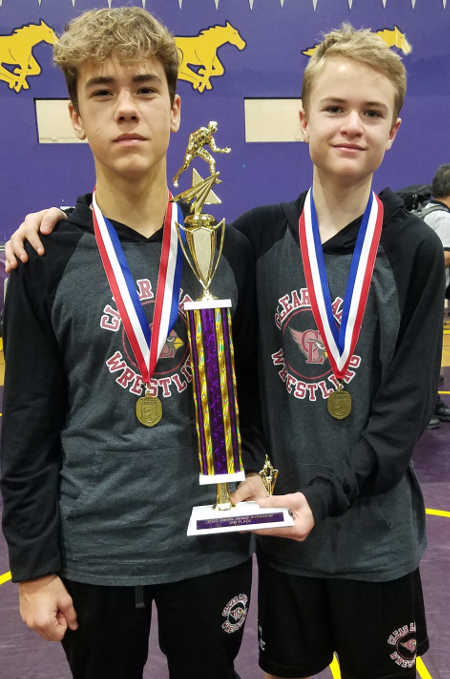
MIDDLETOWN, Calif. – On Friday, Jan. 3, and Saturday, Jan. 4, the Clear Lake Cardinals started the new year with a bang, bringing home another tournament team trophy.
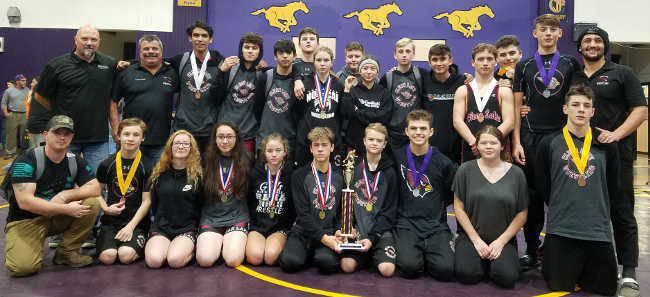
The Cardinals – down a couple more wrestlers, due to the holiday break – sent 20 wrestlers, 15 boys and five girls, to compete at the Dennis Jensen Invitational Wrestling Tournament.
As the Cardinals’ first tournament of 2020 came to an end, they finished with 14 medals: two firsts, five seconds, three thirds, three fourths, one fifth and a second-place team trophy, just behind Middletown and over teams from Lower Lake (third), Arcata (fourth) and Upper Lake (fifth).
Gold medalists:
Nathan “Bubba” Pyorre (106 lbs.) went 3-0 with two pins (one of which was a takedown pin to win in the finals overtime match, in an exciting on your feet thriller, as his team and spectators cheered him on).
Hayden Fowler (138 lbs.) was 3-0 with one pin. Both freshman boys came in as underdogs and battled through their brackets taking out the number two and number one seeds along each of their paths, to win their championship titles!
Silver medalists:
Boys: Elijah Alvarez (138 lbs.) was 2-1 with one pin. Anthony Gersalia (170 lbs.) went 1-1 with one pin.
Girls: Ashley Pyorre (108 lbs.), Ximena Soto (118 lbs.) and Mavis Pyorre (wrestling up at 128 lbs.) each went 2-1 with two pins.
Bronze medalists:
Boys: Nicholas Williamson (132 lbs.) went 3-1 with two pins. Vicente Ortega (138 lbs.) was 4-1 with one pin.
Girls: Keara Alonso-Lopez (wrestling up at 108 lbs.) went 1-2.
Fourth place medalist:
Liam Davis (145 lbs.) went 4-1 with three pins (the five match rule would not allow him to wrestle for third). Ayden Williamson (126 lbs.) was 2-2 with one pin. Raymond Gonzales-Shoaf (285 lbs.) went 2-2 with two pins.
Fifth place medalist:
Boys: Mohammad Akbari (120 lbs.) was 2-2 with two pins.
Also wrestling tough for the Cardinals was Asher Reese (113 lbs.) who went 1-2 with one pin and Drake Chesebro was at (285 lbs.). Mujtaba Akbari (120 lbs.) went 1-2 and won a fastest pin award (pinning his opponent in 15 seconds).
Getting some more wins and pins during the Friday matches of the tournament were Luis Aguilar (113 lbs.) went 1-3 with one pin, Isaac Vigil (120 lbs.) was 1-4 with one pin, Christopher Krack (220 lbs.) went 1-2 with one pin and Tara Wong for the girls (wrestling up at 108 lbs.) was 1-1 with one pin.
“This team continues to shine bright and dominate on the mat while showing great character and sportsmanship all around. We are extremely excited and will be training extra hard this week as we prepare for our very own Michael Kroppmann Memorial Tournament. Come support our team on Jan. 11. A big thanks to all of our parents and coaches for all of their dedication and support to the team,” said Head Coach Nathan Powers.
- Details
- Written by: CALIFORNIA DEPARTMENT OF FISH AND WILDLIFE
The dos and don'ts of clamming in California
Question: I am interested in clamming at some beaches in Santa Cruz County. I have seen clams on Sunset State Beach. Where can I find rules and regulations on clamming in Santa Cruz County or Monterey County? (Romeo)
Answer: Clamming is generally done from November to April during minus tide events. You'll find the general clamming regulations in the California Code of Regulations Title 14, section 29.20. That's immediately followed by additional rules and restrictions specific to certain subspecies: Gaper clams, Washington clams, littleneck clams, soft-shell clams, chiones, northern quahogs, cockles, Pismo clams, razor clams, etc.
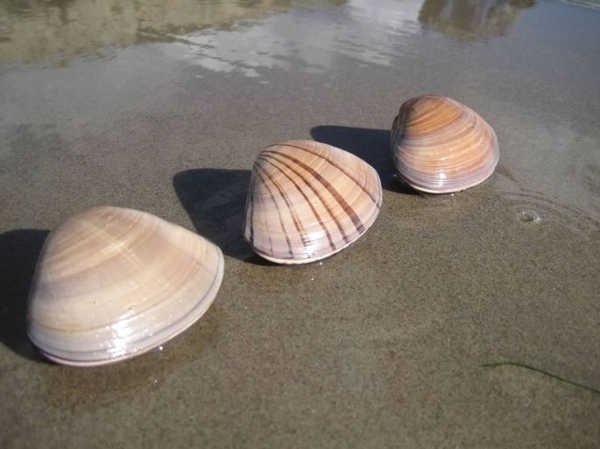
At Sunset State Beach, it's likely that you are encountering Pismo clams. There are restrictions specific to the harvest of Pismo clams in Monterey and Santa Cruz counties (CCR Title 14, section 29.40). In this area, there is an open season between Sept. 1 and April 30, with a daily bag limit of 10 clams that are at least a minimum size of 5 inches in greatest shell diameter.
Every clammer taking Pismo clams (or any clam that has a minimum size limit) is required to carry a device or gauge that can accurately measure the minimum legal size of clams.
The area was once a popular clamming site for clam bakes as reported by an early-1990s Sunset State Beach General Plan issued by the California Department of Parks and Recreation. Between 2008-2019, the California Department of Fish and Wildlife (CDFW) completed 21 semi-annual fishery-independent Pismo clam surveys at this location.
Among 484 clams observed, the largest ever seen measured only 3.9 inches - well short of the minimum legal size. This may be due to predation from sea otters. Occasionally 3-4 inch clamshells are found with the hinge intact and with one valve broken, a classic sign of this predation. We do not recommend sport clamming at Sunset State Beach because of the absence of legal-sized clams.
Gaper clams occur in Elkhorn Slough in Monterey County. Clamming is prohibited within the Elkhorn Slough State Marine Reserve, but within the Elkhorn Slough State Marine Conservation area, clamming is allowed on the north shore of the slough in the area adjacent to the Moss Landing State Wildlife Area. There is a bag limit of 10 gaper clams, but all clams dug, regardless of size or broken condition, must be retained until the bag limit is reached.
In addition to clamming restrictions, current health advisories issued by the California Department of Public Health (which monitors biotoxins caused by algal blooms in bivalves, including clams) can be accessed by calling (800) 553-4133.
An annual mussel shellfish quarantine is enforced from May 1 to Oct. 31. This is in place to protect the public against Paralytic Shellfish Poisoning and Domoic Acid Poisoning, also known as Amnesic Shellfish Poisoning. Even though mussels are a different species, we recommend taking similar precautions, and discourage the harvesting of Pismo clams during the annual mussel quarantine.
Please remember that any person 16 years of age or older who is participating in clamming is required to have a valid California sport fishing license. An Ocean Enhancement Stamp is also required for ocean fishing (including clamming) south of Point Arguello (northern Santa Barbara County) except when fishing with a one-day or two-day sport fishing license.
Transporting crab home
Question: I plan to go crab fishing with my wife and daughter. The limit of Dungeness is 10 per person, so 30 for the three of us. My daughter plans to fly home, and we plan to drive transporting all the crab. How do I transport my daughter's crab legally as I may have three limits and two fishermen on hand? (Walter)
Answer: CCR Title 14, section 29.85(3) specifies the daily limit of 10 Dungeness crabs – with no mention of possession limits. When possession limits aren't specifically mentioned in the regulations, the possession limit and the daily limit for that species are the same – 10 Dungeness crabs in this instance.
Some states have laws that allow transportation of fish or game by another sportsperson, but California does not (other than Fish and Game Code, section 2345-2348, which allows the crabs to be shipped by common carrier).
Two people driving with three limits of crab are overlimit. Don't risk a citation; keep your legal limit of 10 crabs each, and return the rest to the water.
Importing bison meat?
Question: My cousin in Wyoming invited me to go bison hunting next year in November. Are there any restrictions on bringing back bison meat to California? (Seth)
Answer: As bison are not of the family Cervidae, they are not subject to chronic wasting disease import restrictions. You will, however, need to fill out a Declaration of Entry form. Keep all licenses and/or tags required in Wyoming to take bison on your person and be ready to present them as you cross over any state lines.
If you have a question for the California Department of Fish and Wildlife, email