 How to resolve AdBlock issue?
Recreation
- Details
- Written by: Elizabeth Larson
The wet weather off-highway vehicle, or OHV, trail closures restrict the use of OHV trails when conditions are too wet to sustain use without causing soil loss, impacts to water quality, damage to trail tread and threats to public safety.
These temporary closures will remain in place until no measurable precipitation is recorded within 48 consecutive hours.
By issuing these closures as precipitation events occur, the forest is able to protect both the trails and resources during and after the storms and to allow for drying time prior to resuming use.
The restrictions may be implemented anytime from Nov. 25, 2019 to June, 2020.
Trail users can check the precipitation data on this information source before traveling to the forest: https://tinyurl.com/vzgrvn4 .
Look at MNF02 Portable (Howard Mill) rain gauge on the Upper Lake Ranger District and MNF03 Portable (Fouts Springs) on the Grindstone Ranger District.
If Howard Mill rain gauge is inoperable, the Konocti location will be used for the Upper Lake Ranger District.
Closure information will also be posted on the forest website, Facebook and Twitter: @MendocinoNF.
The restrictions prohibit the use of motor vehicles on National Forest System trails within the Upper Lake and Grindstone ranger districts on the Mendocino National Forest pursuant to 36 CFR 261.55(b).
Mendocino National Forest offices will close for the Thanksgiving holiday Nov. 28 and will resume regular business hours at 8 a.m. Friday, Nov. 29.
- Details
- Written by: Sierra Furia
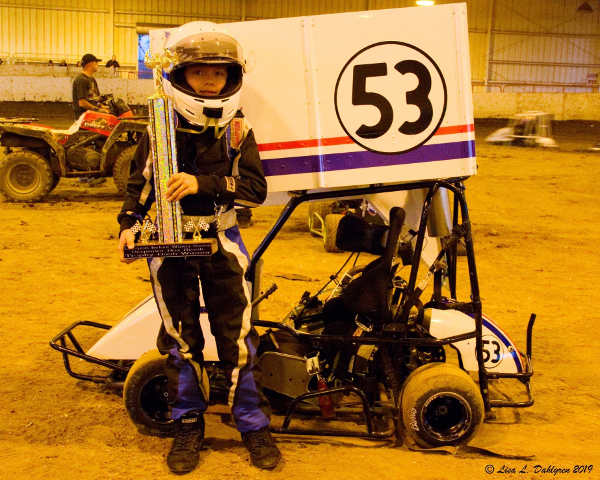
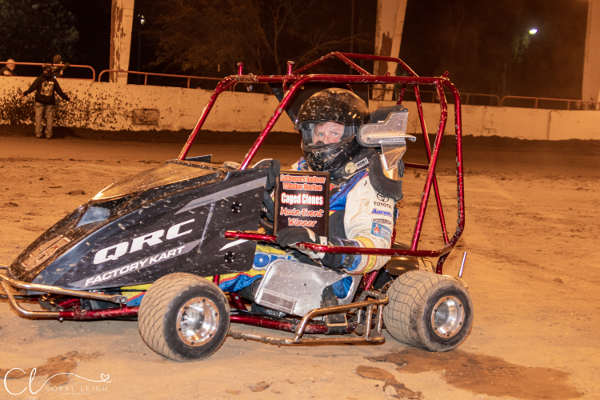
LAKEPORT, Calif. – Lakeport Indoor Winter Series kicked off their first go kart race of the season on Saturday, Nov. 16.
With a total of 93 entries, it made for an exciting day of racing.
In the predator division, the division was broken up into three different stages. Nathan Thunder, #99S, won the trophy dash with #17J Jared Jensen in second, #57 Chandler Johnson in third and #44 Jacob Thomsen in fourth.
Heat race one was won by #99S Nathan Thunder with #17J Jared Jensen in second, #44 Jacob Thomson in third and #57 Chandler Johnson in fourth.
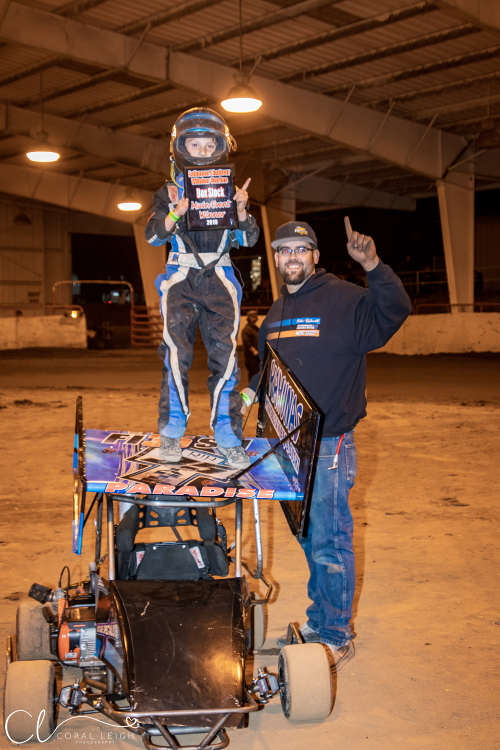
Heat race two was won by #88 Jordan Ray with #84 Ryan Skidmore in second, #3F Jax Fuchs in third and #3 Austin Comini in fourth.
Heat race three was won by #12 Karsyn Magenheimer with #3P Fisher Page in second, #3M Evin Manchester in third, #65 Alyssa Sorrels in fourth, and #15 Kai Lovell in fifth.
Thunder, #99S, won main event one with #17J Jared Jensen in second, #57 Chandler Johnson in third, and #44 Jacob Thomsen in fourth.
Main event two was won by #84 Ryan Skidmore with #88 Jordan Ray in second, #3 Austin Comini in third and #3F Jax Fuchs in fourth.
Main event three was won by #13 Karsyn Magenheimer with #8M Evin Manchester in second, #3P Fisher Page in third, #15 Kai Lovell in fourth and #65 Alyssa Sorrels in fifth.
In the beginner box stock division, #53 Carrie Osborne won the trophy dash with #29 Cole Croft in second, #21 Braxton Foster in third and #24JR Brody Reinolds in fourth.
Osborne took home heat race one, with #21 Braxton Foster in second, #21X Gage Schramm in third, #1C Colby Kurtz in fourth and #03 Nataila Tour in fifth, #24C Brantley Copeland in sixth and #66JR Tanner Prather in seventh.
Cole Croft, #29, won heat race two, with #24 Riley Fuchs in second, #08 Deakon Kamisky in third, #24JR Brody Reinolds in fourth, #0 Blake Scovel in fifth, and #18 Avery English in sixth.
Carrie Osborne, #53, won the main event with #21 Braxton Foster in second, #24JR Brody Reinolds in third, #03 Natalia Tour in fourth, #24 Riley Fuch in fifth, #08 Deakon Kamisky in
sixth, #29 Cole Croft in seventh, #24C Brantley Copeland in eighth, #1C Colby Kurtz in ninth and #0 Blake Scovel rounded out the top 10. Tanner Prather, #66JR, along with #21X Gage Schramm and #18 Avery English were 11th, 12th, and 13th, respectively.
In the box stock division, #57VS Jacob Nuxoll won the trophy dash with #45M Mason Dietz in second, #04 Braiden McKenzie in third, and #88 Sloan Selig in fourth.
Nuxoll went on to win heat race one with #04 Braiden McKenzie in second, #51 Justin Sabol in third, #11 Deegan Kuecker in fourth and #75 Jaxon Hall rounded out the top five.
In heat race two, #45M Mason Dietz won with #12 Grant Proctor in second, #2K Landyn Snider in 3rd, #88 Sloan Selig in fourth and #21 Dylan Combest in rounded out the top 5. Jacob Nuxoll drove his #57VS to win the main event with #45M Mason Dietz in second, #2K Landyn Snider in third, #04 Braiden McKenzie in fourth and #12 Grant Proctor rounded out the top five.
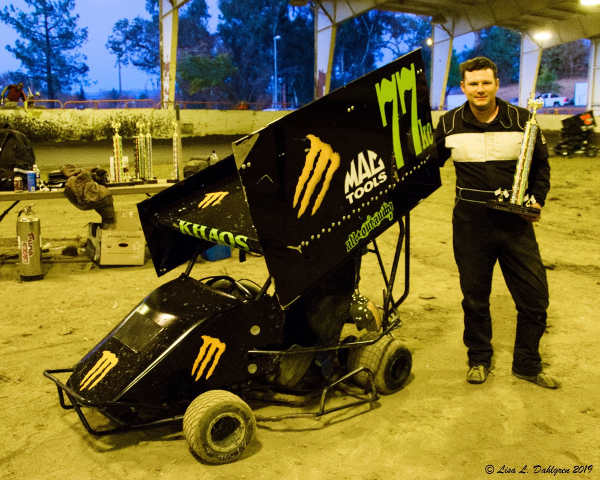
In the sportsman division, #77KC Kasey Horat won the trophy dash with #61 Johnny Reeves in second, #66 Nick Prather in third, and #53 Jordan Micletter in fourth.
Kasey Horat, #77KC, won heat race one with #22 Brandon Coates in second, #17DB Richard DeFranisci in third, #61M Mallorie McGahan in fourth.
Nick Prather, #66, won the heat race two, with #61 Johnny Reeves in second, #56S Rick Schamber in third, and #11H Koen Shaw in fourth.
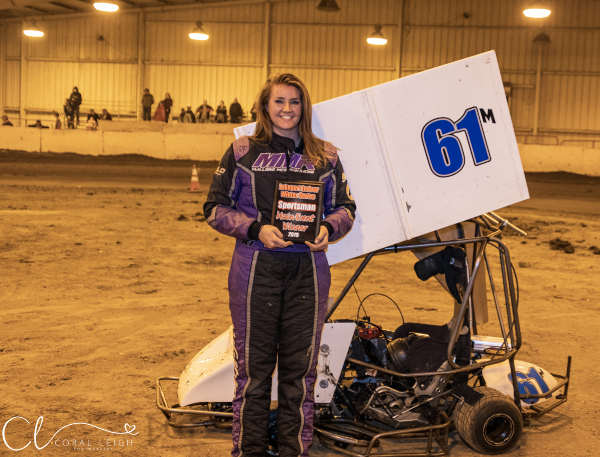
Mallorie McGahan, #61M, won the main event with #61 Johnny Reeves in second, #66 Nick
Prather in third, #11H Koen Shaw in fourth, #56S Rick Schamber rounded out the top 5. Brandon Coates, #22, and #53 Jordan Miclette were sixth and seventh, respectively.
In the 250 division, #7DJ Dryver Dothage won the trophy dash with #3T Tater Reich in second, #4R Gavin Rested in third, and #9L Luke Hayes in fourth.
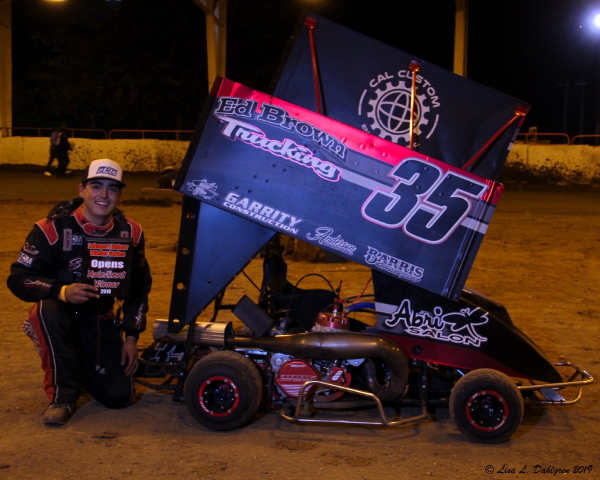
In heat race one, #7DJ Dryver Dothage took home the win with #9L Luke Hayes in second, #3 Trey Daniels in third, #7J Jack Kegg in fourth, and #10 Jennifer Osborne rounded out the top five.
In heat race two, #4R Gavin Restad won with #10V Elliott Vannucci in second, #08H Samuel
Harper in third, #11J Jackson O’Ferrall in fourth and #3T Tater Reich rounded out the top five.
Tater Reich, #3T, won the main event with #10V Elliott Vannucci in second, #08H Samuel Harper in third, #9L Luke Hayes in fourth and #10 Jennifer Osborne rounded out the top five.
In the caged clone division, #24C Dan Camacho won the trophy dash with #45B Mark Burch in second, #88 Koen Shaw in third, and #10H Hailey Glass in fourth.
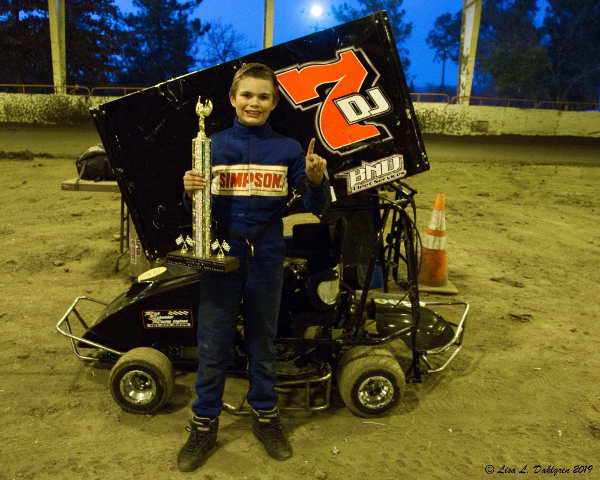
Dan Camacho won the heat race with Burch in second, #10H Hailey Glass in third, #88 Koen Shaw in fourth and #33 Joe Duran in fifth.
Burch won the trophy dash with Camacho in second, #88 Koen Shaw in third, #10H Hailey
Glass in fourth and #33 Joe Duran in fifth.
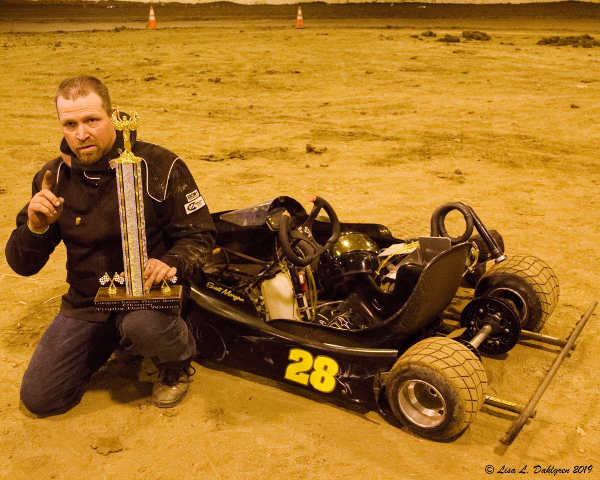
In the clone division, #28 Scott Morgan won the trophy dash with #52 Pete Miclette in second and #11 August Chemotti in third.
Morgan won the heat race with Chemotti in second, #19K Kris Robertson in third, #14 Jered Hinton in fourth, #4 Eddie Poli in fifth, #52 Pete Miclette in sixth and #69 Jake Acevedo in seventh.
Morgan went on to win the main event with Chemotti in second, Robertson in third, Miclette in fourth and Hinton rounded out the top five. Jake Azevedo, #69, and #4 Eddie Poli were sixth and seventh, respectively.
In the open division, #35 Casey Schmitz won the trophy dash with #56C Carson Hammes in second, #81X Jayden Bartlett in third, #2 Garrett Brown in fourth, #81K Keagan Medeiros in fifth and #54 Carson Hall in sixth.
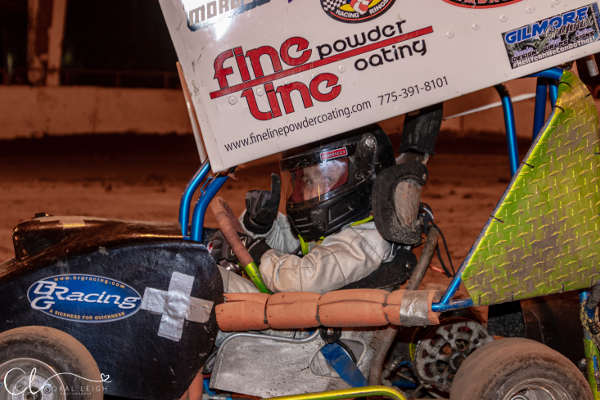
Schmitz went on to win heat race one with #54 Carson Hall in second, #22K Kaiden Butler in third, #7 Dylan Holmes in fourth, #15 Mikey Lovell in fifth and #22M Tess Mellor in sixth.
Carson Hammes, #56C, won heat race two, #81K Keagan Medeiros in second, #8JR Brian McGahan Jr. in third, #81 Cameron Bartlett in fourth and #18P Jack Phillips in fifth.
Jayden Bartlett, #81X, won heat race three with #2 Garrett Brown in second, #7K Kylie
Daniels in third, #7D Daniel Dekeyser in fourth, #17 Tyler Shipley in fifth and #55D Dawson Hammes in 6th.
Casey Schmitz, #35, won the main event with #56C Carson Hammes in second, #81X Jayden Bartlett in 3rd, #2 Garrett Brown in fourth and #8JR Brian McGahan Jr rounded out the top five.
Daniel Dekeyser, #7D, was in sixth, #18P Jack Phillips in seventh, #55D Dawson Hammes in eighth, #7K Kylie Daniels in ninth and #15 Mikey Lovell in 10th.
Tess Mellor, #22m, along with #7 Dylan Holmes, #81K Keagan Medeiros, #54 Carson Hall, #22K Kaiden Butler, #81 Cameron Bartlett and #17 Tyler Shipley finished out the field.
The next go kart race is Dec. 7.
- Details
- Written by: CALIFORNIA DEPARTMENT OF FISH AND WILDLIFE
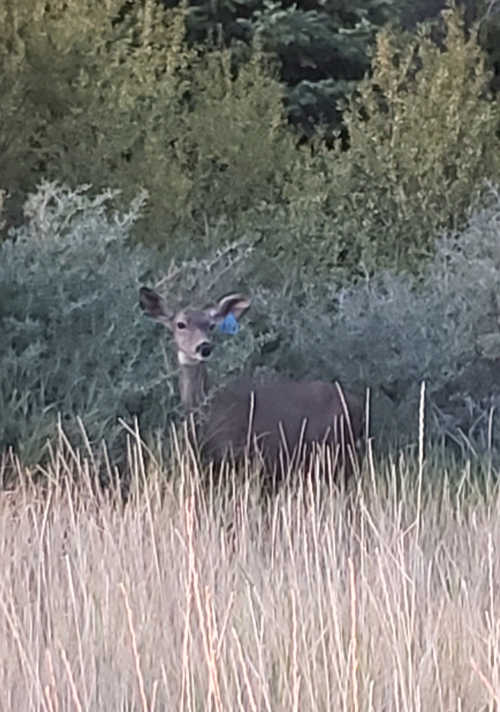
Blue ear tag on a doe?
Question: I was hunting up in the Mendocino National Forest and saw a doe with a blue ear tag on her left ear. I have never seen this before and was curious as to whether or not you may know what the tag means. I have attached a picture that I took of the deer. I hope you satisfy my curiosity! (Rosanna)
Answer: Thank you for the photo! We shared it with our Deer Program biologists, who were tickled to see that one of their study deer – aka 7303 with the blue left ear tag 804 – was alive and well in the Mendocino National Forest, almost eight years after she was captured and tagged there by our biologists. She is estimated to be 14 years old today.
Deer 7303 is a survivor for sure. She was part of a five-year population assessment – from 2009 to 2013 – of Columbian black-tailed deer in the Mendocino National Forest conducted by the California Department of Fish and Wildlife and researchers from UC Davis. The 2014 Final Project Report is still available online.
Deer 7303 was one of 57 adult female deer captured as part of the study, along with 137 fawns and seven mountain lions. Deer 7303 was captured by tranquilizer dart on June 6, 2012, and determined to be 7 years old at the time. She also had a fawn with her.
In addition to the blue ear tag, deer 7303 was outfitted with a GPS tracking collar, which she wore for 453 days before the collar dropped off. All collars were fitted with automatic releases to drop off after a certain amount of time.
Deer 7303 has fared much better than many of the other study deer. The study found that while Columbian black-tailed deer in the Mendocino National Forest were abundant with average pregnancy and birth rates, their population was on the decline primarily as a result of low adult female survival.
Researchers investigated deer mortalities and confirmed predation accounted for approximately 57 percent of the 21 deaths investigated by staff. Most of the predation was from mountain lions, one was killed by a black bear, poachers took two of the does, and seven died from unknown causes. Black bears, however, were the main predators of fawns, particularly within 30 days of birth. The researchers also found that habitat quality - or lack thereof - played a role in low fawn and doe survival.
The assessment of deer in the Mendocino National Forest is just one of many studies conducted by CDFW deer biologists to better understand the mechanisms that drive deer populations throughout California.
Illegal to feed feral cats?
Question: I've seen a couple of feral cat feeding stations located around urban areas. I thought that feeding feral cats was illegal under the California Code of Regulations Title 14, section 251.1, "Harassment of Animals." I know you folks have a lot more important things to do, but is this something we should notify our local game warden about? (Mark G.)
Answer: Section 251.1 states that "no person shall harass, herd or drive any game or nongame bird or mammal or furbearing mammal. For the purposes of this section, harass is defined as an intentional act which disrupts an animal's normal behavior patterns, which includes, but is not limited to breeding, feeding or sheltering." But feral cats do not meet the definition of "game or nongame mammal" or "furbearing mammal" - and as they are still technically domesticated, they are not considered to be wildlife.
Even though the code does not apply to domestic animals, there may be local (city) ordinances that prohibit feeding feral cats. Large cat colonies can attract larger predators, including coyotes and mountain lions, which is never a good idea in an urban area. Your local animal control office will be able to answer questions about feral cat management in your area.
Keeping an eye out for quagga
Question: Do you have a map of California waters that are infested with quagga mussels? (Walter)
Answer: CDFW's Fishing Guide is updated in real time. Just select the filter for "Quagga Infested Areas" on the left.
You can also find a printable map of infested waters on our website. It is current, including the most recent quagga discovery in the Upper San Gabriel River in October 2017. However, it does not indicate all of the waters without mussels, nor does it depict stretches of flowing waters that are infested (e.g., the lower Colorado River).
CDFW works to monitor for new infestations of quagga and zebra mussels and other invasive species, but it is possible an infestation may be present but not yet detected. In order to prevent spreading mussels and other aquatic invasive species, watercraft and equipment that comes into contact with the waterbody should be cleaned, drained and dried after every outing.
Visit CDFW's website to learn more about quagga and zebra mussel management in California, and the precautions you can take to help prevent the spread of these invasive species. If you have specific questions, you are welcome to contact CDFW's Invasive Species Program at (866) 440-9530 or
If you have a question for the California Department of Fish and Wildlife, email
- Details
- Written by: California Department of Fish and Wildlife
The California Wildlife Officers Foundation will recognize one grand-prize winner with a lifetime California hunting license with a bird hunting privilege package valued at up to $1,250. Second and third place winners will also be selected and prize packages will be awarded.
This year's contest challenges kids to answer the questions, "What can CDFW do to get more people involved in hunting? And what can you do, personally, to get more people involved in hunting?"
CDFW is actively expanding its efforts to recruit, retain and reactivate anglers and hunters in California. These efforts – known as the "R3 program" – are currently a high priority of the department, and the Hunter Education Program in particular.
"It will be interesting to read about the R3 ideas these young hunters present in their essays," said CDFW Hunter Education Program Administrator Capt. Robert Pelzman.
The essay contest is open to all junior hunting license holders, as well as youths under 18 who have earned a hunter education certificate. Essays should be no more than 500 words, double spaced.
Entries should be submitted via email to Capt. Pelzman at
Along with their essay, entrants must also provide their date of birth, place of residence and a contact telephone number and email address.
Essays will be reviewed and scored by CDFW wildlife officers and other CDFW representatives. The winners will be notified by telephone on or near Dec. 24.
The grand prize will be awarded during a special ceremony at the International Sportsmen's Exposition show scheduled in Sacramento on Saturday, Jan. 18, 2020, at 11:30 a.m.
Contest winners must be present and accompanied by a parent or guardian.
For information on becoming a Hunter Education Instructor to help "Pass on the Tradition" to others, please visit www.wildlife.ca.gov/hunter-education .