 How to resolve AdBlock issue?
Recreation
California Outdoors: Beaver observation survey, engaging diverse groups, wildlife officer employment
- Details
- Written by: California Department of Fish and Wildlife
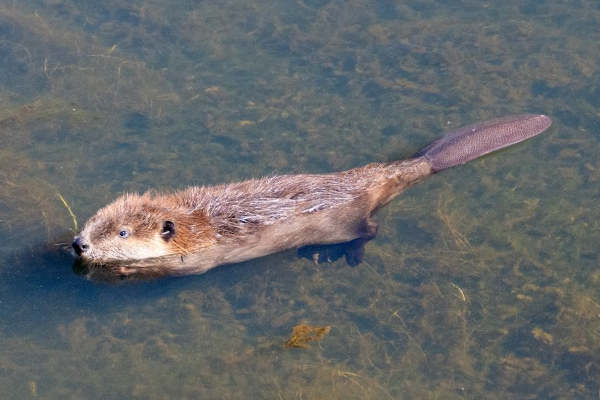
Is there a way for the public to get involved in CDFW’s beaver restoration program?
Q: Is there a way for the public to get involved in CDFW’s beaver restoration program?
A: CDFW welcomes information from the public as the department strives to gain a better understanding of the current range of beavers in California. The first comprehensive beaver population survey conducted in California can be found on CDFW's website. The California Beaver Observation Survey includes questions on the date, location, type of activity, and the number and size of the beavers observed. Photos of the beaver activity, location and lodge can be submitted through the survey page as well.
The Beaver Restoration Program is a result of shifting attitudes toward the benefits of beaver families in the environment. There’s a growing recognition of the ecological improvements linked to beaver activity, as opposed to the animal being considered a potential nuisance species by some in the past.
CDFW considers these animals ecosystem engineers by playing a role in restoring watersheds while increasing resiliency to climate change and wildfire.
The development of the survey comes after CDFW launched the initial phase of its beaver translocation activities, recently conducting the first beaver conservation release in nearly 75 years with the goal of re-establishing a breeding population.
For more information on the beaver translocation read the news release here.
Justice, equity, diversity and inclusion
Q: What’s an example of how CDFW engages diverse groups in the state of California?
A: In 2022, CDFW created a Deputy Director position overseeing Justice, Equity, Diversity and Inclusion (JEDI) to help the department better understand the cultural needs of different population groups living in California. It’s also a CDFW goal to have our workforce better reflect California’s diversity. Meaningful engagement with communities is an essential part of building trust and relationships with diverse groups across California.
One example was a CDFW outreach event led in Spanish and English at the popular 1,700-acre Elkhorn Slough National Estuarine Research Reserve in Monterey County, which is owned and managed by CDFW and operated in partnership with the National Oceanic and Atmospheric Administration and the Elkhorn Slough Foundation. Celebrating the 2023 Latino Heritage Month in September, the JEDI office with support from Latino Outdoors held an open house at the reserve, featuring a day of family friendly events including a nature walk and bird viewing. Many who attended the event were from the surrounding communities like Pajaro, Castroville and Watsonville, which have large percentages of Spanish-speaking households.
In 2024, CDFW will be celebrating Black History Month in February, Women’s History Month in April, Asian American and Pacific Islander Heritage Month in May, Pride Month in June, Latino Heritage Month in September, Filipino Heritage Month and Native American Heritage Month in October.
Wildlife officer employment
Q: I’ve seen on social media CDFW is hiring for its law enforcement division. Are there any helpful tips for breaking into that line of work?
A: CDFW Captain Patrick Foy is well equipped to help with this topic since he’s served as a biologist, wildlife officer and information officer with the department. The following are several helpful tips for prospective applicants from Capt. Foy.
First, having the ability to speak a second language is incredibly helpful. Spanish is the second leading language spoken in California followed by Cantonese, Mandarin and Tagalog. It is also helpful to continue learning outdoor skills such as hunting, fishing, boating, hiking and backpacking, to name a few. Those skills contribute to effective patrols for poachers and polluters.
Also, there are minimum requirements before someone can be hired as a wildlife officer. A potential candidate must be at least 21 before they can join the department and the applicant must have finished 60 units of college courses. It’s not a requirement that someone have a degree in a criminal justice related field. There are wildlife officers in the department whose college degrees are in English, communications and chemistry.
For more information go here to learn more on becoming a CDFW wildlife officer.
- Details
- Written by: California Department of Fish and Wildlife
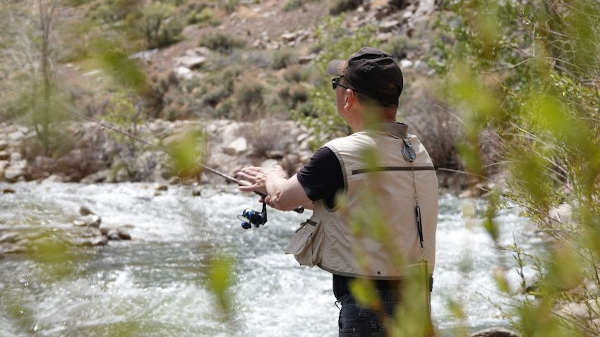
Fishing licenses
Q: Do I understand it’s possible to renew my fishing license automatically?
A: Yes, that’s possible through the California Department of Fish and Wildlife auto-renewal program, which allows customers to authorize CDFW to automatically charge their credit card for annual sport fishing licenses, report cards and validations prior to their expiration dates. This convenient option means that anglers no longer need to worry about lapses in licensure occurring during transitions to new license years. Because auto-renewal is a pilot program, it’s limited to sport fishing items. Hunting licenses, commercial fishing licenses, falconry licenses etc., are not yet included. All the information you’ll need on this option is available under the auto-renewal section of the Online License Sales Frequently Asked Questions webpage.
Water for wildlife
Q: With the drought being over is it less urgent or necessary to provide water guzzlers to Desert Bighorn Sheep?
A: Even though California experienced substantial rainfall and runoff in 2023, southern California’s Sonoran Desert still received below-average precipitation.
For more than 40 years, CDFW and volunteer groups like the Society for the Conservation of Bighorn Sheep and Desert Wildlife Unlimited, have assisted desert-roaming wildlife with ensuring water is available to desert wildlife by maintaining wildlife water developments (WWDs), also known as guzzlers. These large tanks are designed to refill on their own with rainfall that’s collected and then stored for drinking during hot and dry summer months.
Because desert water supplies are always a challenge, CDFW and its partners work with land management agencies to explore improvements to the WWD system. Those improvements would increase the capacity and collection efficiency of the tanks and rain collection system. While bighorn sheep are the largest consumers of desert water systems, golden eagles, badgers, bobcats and mountain lions also benefit. Dozens of WWDs are in use in both the Sonoran and Mojave deserts, as natural water sources have become increasingly unreliable due to drought and climate change.
Call before consuming tags
Q: I harvested an animal with a tag on its ear that reads “call before consuming.” What should I do?
A: Those tags are placed on deer, bear, pronghorn, elk and bighorn sheep that have been treated with a drug by CDFW and have the potential to be harvested. Drugs may leave residues in the animal’s system that make it unsafe for human consumption for a given period of time. Eventually the drugs are metabolized by the animal. The time between use of a drug and when it is no longer in the animal’s system is called the withdrawal period.
If hunters harvest an animal with a “call before consuming” tag, they should call the phone number listed, (916) 358-2790, prior to consuming any part of a carcass to confirm that it was outside of the withdrawal period. CDFW avoids using drugs in game species close to the hunt season but occasionally the need for chemical immobilization during this time does occur. Calling the CDFW number also helps us better understand the fate of an animal that may be part of a study.
Bullfrog hunting
Q: Can Bullfrogs be taken with an air rifle? The California Code of Regulations specifies no firearm can be used to take any aquatic creatures but doesn't specifically spell out air rifles.
A: The take of bullfrogs is regulated in two primary sections of the California Code of Regulations (CCR). To begin by answering your question directly, regulations do not authorize take of bullfrogs or any other amphibian by air rifle. CCR, section 5.05(e)(1) defines methods of take for amphibians: Amphibians may be taken only by hand, hand-held dip net or hook and line, except bullfrogs may also be taken by lights, spears, gigs, grabs, paddles, bow and arrow or fishing tackle.
FYI, pursuant to CCR Section 5.05(b)(23) and Section 5.05(d), there is no limit on the take of American bullfrogs (Lithobates catesbianus) and they may be taken at any time, day or night.
- Details
- Written by: California Department of Fish and Wildlife
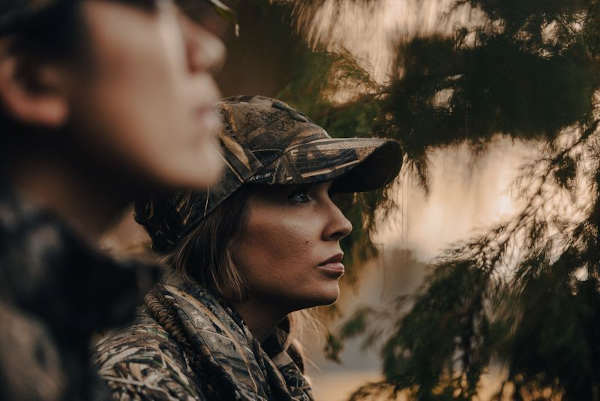
It’s the thrill of seeing a high-octane pointing dog slam to a standstill. It’s having a front-row seat as a wetland comes to life at dawn.
It’s the chaos of a valley quail covey erupting from cover; the heart-pounding excitement of a tom turkey somewhere in the distance answering your call.
It’s the chance to share with friends and family a wild game meal they can’t get in any grocery store, farmer’s market or five-star restaurant.
Californians will have two ideal opportunities to acquaint themselves with the hunting experience during California’s Free Hunting Days.
Stemming from a revised California law newly implemented this year, each year the California Department of Fish and Wildlife Director will designate two Free Hunting Days.
In this license year, they are Nov. 25, 2023, and April 13, 2024.
On these days, eligible California residents may hunt without purchasing a California hunting license, provided other requirements are met.
Those requirements include proof of completion of a hunter education course, possession of a valid Free Hunt Days Registration, and any required tags, federal entitlements, and entry permits.
All hunting participants in Free Hunting Days must be accompanied by a mentor at least 21 years of age who holds a valid California hunting license.
“The dates were chosen carefully and intentionally to provide the widest variety of hunting opportunities and options for anyone interested in hunting a try,” said Taylor Williams, the Recruit, Retain, Reactivate (R3) Manager at CDFW.
“On Nov. 25, waterfowl seasons and many upland game seasons, from rabbit and squirrel to dove, pheasant, quail and fall wild turkey, will be open in various zones throughout the state,” Williams said. “It’s also a holiday weekend when friends and family get together so it can be a great time to take out a friend or relative who has been interested in giving hunting a try.”
California’s second Free Hunting Day will be April 13, 2024. This date was chosen with wild pig and wild turkey in mind, two popular species to hunt in the spring.
“We encourage California residents to try Free Hunting Days and discover their own connection to nature and wild food in our state,” Williams said. “Free Hunting Days provide opportunities for people interested in hunting to finally give it a try at little cost, and experienced hunters the chance to mentor someone new.”
With the possession of a valid Free Hunt Day Registration, residents wishing to hunt on the two designated days are not required to possess a California Hunting License, a California Duck Validation or a California Upland Validation.
All hunting regulations, including bag limits, gear restrictions and shooting times remain in effect for Free Hunting Days.
Participants must also possess any additional requirements, including passes for state-operated wildlife areas, tags and federal entitlements such as a Federal Duck Stamp for those hunting waterfowl who are 16 and older.
Those choosing to hunt wild pigs will need to purchase and possess a Wild Pig Tag.
More information is available at CDFW’s Free Hunting Days webpage.
The Free Hunting Days Registration is available at no cost at CDFW license sales offices, from license agents and through CDFW’s Online License Sales and Services website. Hunting seasons, regulations, places to hunt and other resources are available at CDFW’s Hunting in California webpage.
For additional information on participants hoping to get started hunting this season, please visit CDFW’s R3 webpage for a variety of resources.
- Details
- Written by: Anderson Marsh State Historic Park
This will be the final Guided Nature walk for 2023.
The November nature walk will be led by Henry Bornstein, a volunteer State Parks docent and a Certified California Naturalist.
The route taken on the walk will depend on the condition of the trails. The hike should last between an hour and a half and two hours.
Bring binoculars and meet in the parking lot at 8:15 a.m. for time to experience the early morning wildlife that can be found in the Ranch House and Barn complex yard; the walk will begin at 8:30 a.m.
Sturdy shoes, a hat and water are also suggested.
There is no charge for the guided nature walk and parking is free for those attending.
Anderson Marsh State Historic Park is located on Highway 53, between Lower Lake and Clearlake.
For more information about the guided walk, email