 How to resolve AdBlock issue?
Recreation
- Details
- Written by: BoatUS
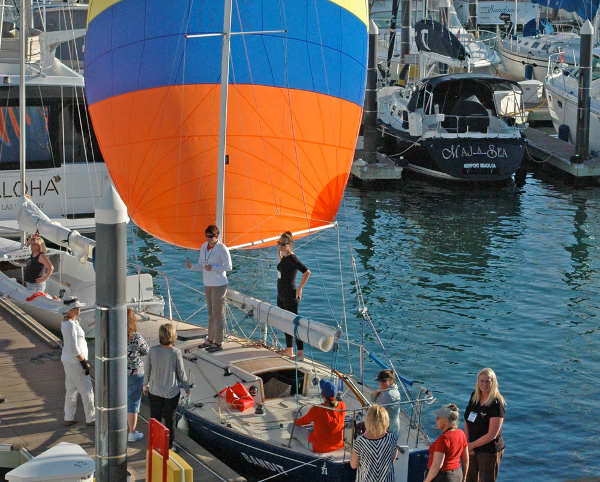
CORONA DEL MAR, Calif. – The Sailing Convention for Women presented by Gail Hine will be held on Saturday, Feb. 2, 2019, at the Bahia Corinthian Yacht Club in Corona del Mar.
Sponsored by BoatUS, the daylong event is a series of 33 workshops for ladies-only, and include shore- and-boat-based sessions that offer beginners to experts a welcoming environment to learn more about all things sailing.
“This is where women sailors go to learn,” said Convention Creator/Director Gail Hine. “The Convention gives women an opportunity to meet other women sailors, discuss options for more cruising and daysailing, find out about existing women’s sailing organizations in their area as well as instructional programs available. We have something meaningful for everyone,” she added.
Attendees select a combination of workshops in areas that best fit their interests and abilities. Course instructors are top women sailors, many of whom are U.S. Coast Guard-licensed captains.
Workshops include welcome aboard for beginners, diesels, going up the mast, docking, suddenly singlehanded, weather, sail trim, basic navigation, electronic navigation, electrical systems, DIY canvas projects, how to heave a line, nighttime navigation, winch workshop, spinnaker rigging, offshore cruising, emergency equipment and life raft demo, and introduction to sailing.
To top off the event, dinner’s featured speaker is Melody Kanschat, a sailor with 40 years of sailing experience beginning in the Midwest on small boats and now in California aboard her C&C 40, Harmony.
Throughout those four decades, Kanschat has applied the lessons she learned as a female skipper to her professional career in public radio, in art museums as president of the Los Angeles County Museum of Art and as executive director of the Getty Leadership Institute.
Kanschat will talk about the styles and characteristics of women leaders and those pivotal moments when both skippers and crew embrace their leadership.
She also will share tips for women sailors in exerting their own leadership to be happy and productive members of any sailing crew.
The convention registration fee of $200 (early bird price) includes workshops, breakfast, lunch, dinner, souvenirs and handouts. Prepaid registrations are required as space is limited to approximately 250 attendees.
To obtain a reservation form, email gail@sailingconventionforwomen or call 951-677-8121.
Bookings can be made online at www.SailingConventionforWomen.com beginning Dec. 10, 2018.
- Details
- Written by: Tuleyome
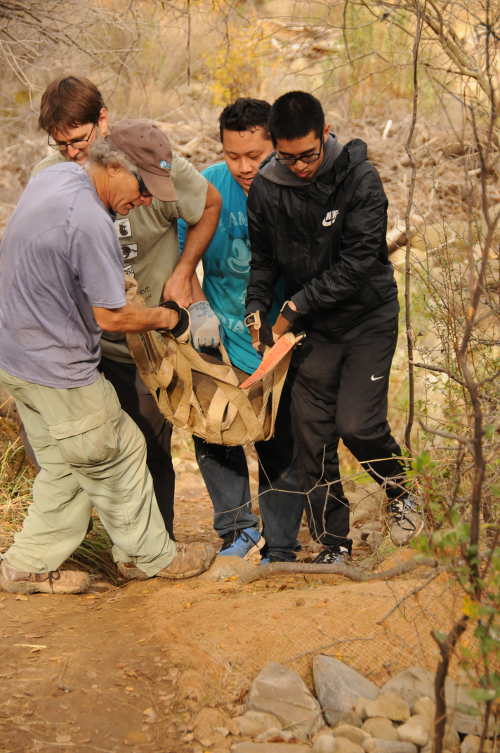
NORTH COAST, Calif. – Tuleyome will be hosting many activities for the public this fall.
The locations of the activities were chosen to give the public a greater understanding of the Northern Inner Coast Range and Berryessa Snow Mountain National Monument region.
Tuleyome’s scheduled activities include something for everyone.
For those interested in an easy, stress-free walk, the guided hike on Nov. 7 at Lake Solano will provide participants the opportunity to enjoy a riparian habitat and the waterfowl in the area.
Experienced hikers will enjoy hiking the High Bridge Trail to “Road Kill Café” in Colusa County and the Oat Hill Mine Trail in Napa County. While people of all ages are welcome at Tuleyome events, a couple of “Family Friendly” hikes are specifically designed with younger hikers in mind.
In addition to hikes, Tuleyome will continue its work with the UC Natural Reserve System to help restore Stebbins Cold Canyon. This popular hiking spot outside of Winters is one of the most accessible “entrances” to the Berryessa Snow Mountain National Monument and offers unparalleled views of Lake Berryessa as well as Berryessa Peak and – on a clear day – Snow Mountain.
Additional trail maintenance and restoration work days will be held to help protect areas and trails impacted by this summer’s numerous wildfires.
By maintaining trails in the burned areas, the landscapes adjacent to the trails can regenerate quickly and naturally.
For more information about Tuleyome’s events keep an eye on their online calendar at http://tuleyome.org/events/.
Tuleyome is a 501(c)(3) nonprofit conservation organization based in Woodland.
Tuleyome Hikes and Activities (September through December):
October:
Oct. 20: Trail maintenance
November:
Nov. 7: Wednesday Walk at Lake Solano Park
Nov. 23: Family friendly hike
Nov. 24: Stebbins Cold Canyon restoration
December:
Dec. 1: Judge Davis Trail hike
Dec. 5: Wednesday Walk – Putah Creek Riparian Reserve
Dec. 15: Trail maintenance
- Details
- Written by: California Department of Fish and Wildlife

How does the National Archery in the Schools Program work?
Question: I heard that the California Department of Fish and Wildlife will provide bows and arrows to schools that want to add archery to their physical education curriculum. Is that safe?
Archery is a lot of fun but it's also probably more dangerous than something like soccer or dodgeball, right? What kind of teacher training is offered or required? (Amy)
Answer: Archery is terrific activity that is accessible to any student, regardless of popularity, athletic skill, gender, size or academic ability.
CDFW is proud to be a partner of the National Archery in the Schools Program (NASP). This is an international-style archery program taught by teachers and delivered to students in physical education classes in grades fourth through 12th.
In addition to the fundamentals of archery, NASP students learn focus, self-control, discipline, patience and other life lessons that lead them down the path to success, both inside and outside the classroom.
The NASP program is designed to be delivered to students in a very concise, controlled manner. The range is usually set up indoors, with great precautions taken to prevent anyone from walking onto the range. Your school district's Office of Risk Management will have information regarding insurance and the district's general liability policy. The safety record of archery is exemplary, and in fact you might be surprised to learn that the National Safety Council and the insurance industry both consider archery safer than most school contact sports and all ball sports, including tennis and golf!
The first step to starting a NASP program in your school is to get the school administration to agree to offer the program in the school during the school day (typically as part of a gym class). The NASP startup archery kit runs around $3,000 depending on the equipment ordered. This typically includes 12 Genesis compound bows, five bullseye targets, one arrow-resistant net, one or two bow racks, five dozen arrows and an equipment maintenance kit. CDFW does offer grants to help cover the cost of the equipment, and most schools that apply do receive financial aid. Approved schools will also need to send a credentialed teacher to a NASP Basic Archery Instructor training class. These are offered regularly throughout the year at many locations throughout the state.
For more information about how to get started, please contact our California NASP Coordinator, Bridget Kennedy, at
Controlling coyotes
Question: I live in Oceanside, and many of my neighbors report having their pets snatched from them, often in the middle of the day. I lost one of my cats who scooted out before I could stop him. While I know the heartache of losing a pet to coyotes, I'm still concerned about some of the methods neighbors are using to keep coyotes from their properties. What is a good source of not only what's recommended to do when faced with coyotes but also what you cannot do to protect property and pets? (Mary)
Answer: Information and tips about managing coyotes in urban neighborhoods can be found at www.wildlife.ca.gov/keepmewild. Most human/wildlife conflicts are caused by providing access to food, water or shelter. Keep small pets indoors at night, dusk and dawn. Do not leave pet food or water bowls outside. Make sure fences, animal pens and dog runs are secure.
Coyotes are a native non-game species that form family groups, rather than packs. Coyotes may be hunted at any time of year and in any number under the authority of a hunting license.
Although we advocate taking preventative measures when possible, coyotes may also be killed at any time if they are a public safety threat or harassing, harming or killing pets and livestock - no state permit required. Local county/city firearms ordinances and laws must be followed and some areas may restrict or prohibit the discharge of a firearm or other activities like setting traps.
Resolving coyote conflicts and protecting pets or livestock on private property are the responsibility of the landowner (or local jurisdiction). You may want to check with your city to see if they have developed their own coyote management plan specific to the community.
CDFW does not trap and relocate coyotes that are causing human/wildlife conflicts. Relocation does not solve the issue, it only moves the problem to another location and it is likely that other wildlife will take its place or the same animal will return. However, if a coyote is perceived as a threat to public safety, please notify local law enforcement or contact a CDFW office in your area.
If you have a question for the California Department of Fish and Wildlife, email
- Details
- Written by: Boat Owners Association of The United States
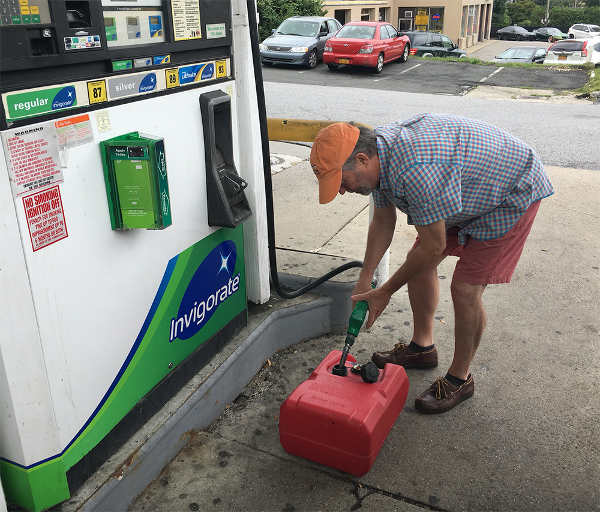
ALEXANDRIA, Va. – A survey of recreational boaters’ experience with refueling their vessels this past summer shows little love for corn-ethanol fuel blends mandated by the federal government’s Renewable Fuel Standard, or RFS.
The survey was completed by Boat Owners Association of The United States, or BoatUS, the national advocacy, services and safety group for recreational boaters, to gauge boaters’ use of ethanol-free and ethanol-fuel blends during the peak 2018 boating season.
The results identify potential misfueling issues and allow recreational boaters to be heard as RFS policy is being debated on Capitol Hill.
Only fuels containing up to 10-percent ethanol (E10) are permitted for use in recreational boats, and anything greater has been shown to damage marine engines and will void warranties.
The BoatUS Summer Fueling Survey identified
About half (49 percent) of respondents said they filled up their boats with E0 (ethanol-free) fuel this summer. However, if they had their choice of fuel, more than four in five (83 percent) would choose E0 (ethanol-free) fuel – if it was available.
Forty-one percent reported the availability of E0 has stayed about the same over the last three years. However, by a margin of more than two to one (31 percent to 14 percent), some respondents said the availability of E0 was becoming more difficult to locate over the last three years.
The survey reported that boaters refuel their boats at a combination of locations both off and on the water. Fifty-three percent of respondents said they refuel their boat at roadside gas stations, followed by on-water fuel docks (50 percent) and filling gas cans or portable gas tanks at roadside gas stations (32 percent).
BoatUS has concerns over potential consumer misfueling as E15 (15 percent ethanol) pump-labeling requirements are minimal with just a small orange warning label on roadside gas station pumps.
About half (49 percent) of survey respondents reported being unaware that the use of E15 gasoline in marine engines was prohibited under federal law and will void the engine warranty.
More than 4 in 5 survey respondents (84 percent) could not correctly identify the color of the small misfueling warning label required on gas station dispenser pumps that sell E15. Both may be indications that current pump labels are not effective and misfueling could occur.
About one in three of those surveyed (36 percent) reported having been advised that repairs to their boats’ engines and/or fuel systems were required as a result of ethanol fuel.
When it was passed in 2005, RFS assumed that America’s use of gasoline would continue to grow.
Since then, however, gasoline usage has not increased as forecast, which today forces more ethanol into each gallon of gas.
To keep up with the RFS mandate and avoid hitting a “blend wall” in which the volume of ethanol production would exceed consumption and infrastructure constraints, in 2010 the EPA granted a waiver to allow E15 into the marketplace.
For more information, go to http://Advocacy.BoatUS.com. BoatUS is a member of SmarterFuelFuture.