 How to resolve AdBlock issue?
Recreation
- Details
- Written by: Lake County Milers
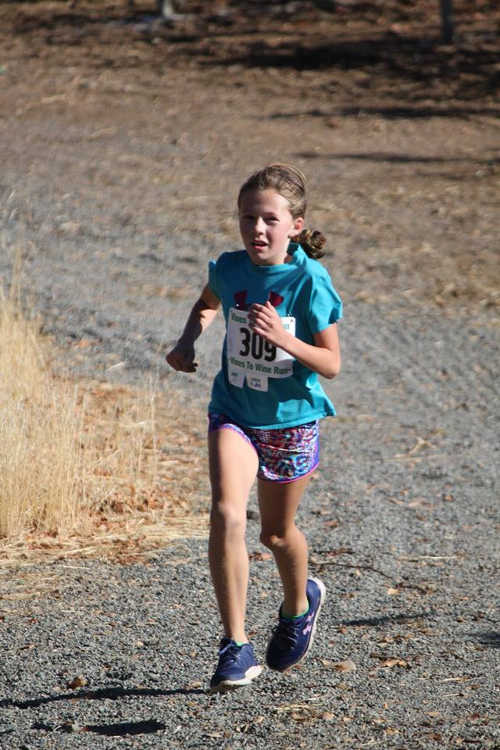
LAKE COUNTY, Calif. – The Lake County Milers Walking and Running Club is hosting its unique and breathtaking Vine to Wine Run at Cache Creek Vineyards for the third year in a row, on Sunday, Oct. 21, at 10:30 a.m.
Registration available at www.runsignup.com/vinetowinerun.
This upscale 5K and 10K event will include chip timing, a beautiful long sleeve tech shirt with event logo, a logo Wineglass and 5 oz pour of wine if you are 21 or older, and a flavorful wine country lunch complete with dessert created by Rosey Cooks Catering.
The current price for adults is $65, ages 8 through 13, $25 (no shirt) but kids lunch included, ages 14-20 $40 includes, shirt and adult lunch.
There is also an adult team option for four or more registrants that offers a $5 discount per person. Questions can be directed to
Longer distance runners are encouraged to register for the 10k distance to vie for the top prize.
The first-place male and female winner of the 10k will be awarded a free entry into the 2019 Napa Valley Marathon Half Marathon distance happening on March 3.
The Napa Valley Marathon is in its 41th year and is recognized as a top small marathon in the United States.
Walkers, joggers and shorter distance runners are encouraged to register for the 5K distance.
The male and female winners of the 5K will win a free entry into the Napa Valley Resolution Run, a Lake County Milers favorite that happens on New Year’s Day in Yountville.
The Milers will support Lower Lake, Upper Lake, Lakeport High School Cross Country/Track track and cross country programs with net proceeds from this event.
The Milers have teamed up with the Middletown High School girls’ basketball coach, Anthony Bazzano and his players to man the technical 5k/10k course. Coach Bazzano and his team has helped at many of the Miler events over the years. For their help they will also receive a donation benefitting this year’s team. To register go to www.runsignup.com/vinetowinerun. Register by Oct. 10 for best price and shirt options.
The 5K walk/run (3.1 mile) and 10K run (6.2 mile) will offer participants a beautiful vineyard road experience among the vines and the surrounding countryside.
Because Cache Creek Vineyards is in a mountainous area, participants in both distances will traverse varying terrain including some hills and witness pristine views of the winery property on hard pack vineyard roads and some trail.
This event will be chip timed by NorCal timing and Medals will be awarded three-deep (male and female) in each age divisions.
The Lake County Milers Walking and Running Club is a 501(c)(3) nonprofit running club that is dedicated to promoting physical fitness in Lake County through running and walking.
- Details
- Written by: California Department of Fish and Wildlife
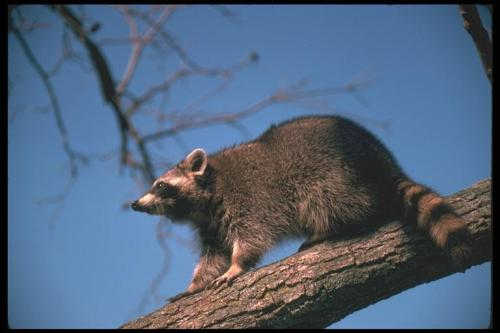
Question: My neighbor has been feeding the stray cats in the neighborhood, and now the raccoons have been coming to eat the cat food.
Recently the raccoons have been coming out during the day. There are many children in the area and I fear someone will get hurt. Many people also walk their dogs in the area.
Do you have advice? (Carmen)
Answer: Unfortunately, you are in a tough situation. Your neighbor may not understand the importance of managing food sources that are attracting wildlife to your neighborhood.
Depending on the relationship you have with your neighbor, you might try to explain that feeding stray cats is creating a secondary problem. Perhaps you can negotiate a feeding schedule for the cats in which the uneaten food is picked up immediately.
Although raccoons are chiefly nocturnal, their behavior is dependent on foraging opportunities, so it is not uncommon to see them out in the daylight hours if pet food and other food sources are readily available.
Raccoons usually pose little danger to people and pets – unless they are harassed, cornered or with young. But raccoons can carry diseases, some of which – like rabies or raccoon roundworm (Baylisascaris procyonis) – can be transmitted to humans and pets.
While such infections are not common, there have been verified cases in California. Anywhere raccoons live and defecate, the potential for disease transmission exists.
The most important step is to remove all food and garbage attractants, but you can also deter raccoons around your home by spraying them with a garden hose (referred to as hazing).
Raccoons are very good climbers and have been known to take up residence in chimneys and attics, so keep trees trimmed and block off access points to your home.
Secure garbage cans with bungee cords and only put garbage out on pickup day. Lock your pet doors at night and keep an eye on small pets.
Typically, nuisance raccoon situations are the responsibility of the landowner but may be handled by your local animal control office or county agriculture commissioner's office, depending on what county you live in. If animal control cannot respond directly, they might be able to refer you to a private wildlife removal service. It is highly recommended that people do not attempt to remove or trap unwanted wildlife without professional assistance.
Relocating wildlife is both prohibited and pointless – it only moves the problem to another neighborhood. CDFW staff typically cannot respond to nuisance raccoon calls. However, you may contact the local CDFW office for your county if you need additional information.
For more information and links to other resources about living with wildlife, please visit www.wildlife.ca.gov/living-with-wildlife.
For public health information, please visit CDC's Web site at www.cdc.gov/dpdx/baylisascariasis/index.html.
Followup on bean clams
Question: I saw your Jan. 25 column regarding the bean clam population explosion on Newport Beach shores, and have a follow up question.
My husband and I have been witnessing the masses of bean clams on the beach for over a year now, and today, as were walking upon the low-tide shoreline, we noticed that all of a sudden, many of them were opened up. This happened overnight.
What made them die so suddenly? (Jeannine)
Answer: It's impossible to be sure from a photo alone, but it's likely that either the bean clams (Donax gouldii) recently spawned or an infectious agent was to blame.
Microscopic examination of the tissues could perhaps further detect whether the gonad shows signs of recent release of gametes for spawning or whether there are active infections from bacteria, viruses or parasites, such as trematodes that use this species of clam as an intermediate host.
Unfortunately, this kind of testing (known as histology) can't be performed on necrotic (dead) tissue, so samples would have had to have been collected and tested immediately after the event.
Mass mortalities are natural occurrences among this species, and are known to occur in similar species found worldwide.
Our native bean clam populations have been observed to decline following a spawning event during the warmer summer months (June through September).
Bean clams become reproductively viable around 1-1.5 years old and have been observed to die shortly after spawning. Their spawning season occurs June through November, although some clams can continue to spawn up to their third summer.
Almost 70 years ago, biologists determined that an infectious organism was the cause of a mass mortality of bean clams they were monitoring on the shores of La Jolla, when that population that had numbered in the millions fell to less than a dozen individuals several months later.
These naturally occurring phenomena shed light on how these species seem to disappear from our shore until the next large recruitment event.
If you have a question for the California Department of Fish and Wildlife, please email
- Details
- Written by: California Department of Fish and Wildlife
The reserve includes former commercial salt ponds now managed by CDFW as low-salinity water bird habitat and areas restored to full tidal action. Access to ELER for waterfowl hunting will be open for 100 hunters on a first-come, first-served basis for each hunt only on the dates listed below.
Eden Landing waterfowl hunts are unique in that there are no fees charged and hunting is offered on some Tuesday and Thursday dates when many other public waterfowl hunting areas are closed.
2018 Hunt Dates (Check-in at 5 a.m. on each of the following dates)
Saturday, Nov. 17
Tuesday, Nov. 20
Saturday, Dec. 1
Thursday, Dec. 6
Saturday, Dec. 15
Thursday, Dec. 20
2019 Hunt Dates (Check-in at 5:30 a.m. on each of the following dates)
Saturday, Jan. 5
Thursday, Jan. 10
Saturday, Jan.19
Thursday, Jan. 24
All adult hunters must possess a valid California Hunting License, federal duck stamp, state duck and HIP validations. Hunters younger than 18 must have a junior hunting license and, if 16 or older, must also possess a federal duck stamp. Junior hunting license holders must be accompanied by an adult 18 years or older (hunter or non-hunter).
Vehicles may only drive on designated levees, must use approved parking areas and are allowed only on the hunt dates specified above. To participate, hunters must check in with CDFW staff and provide the above licenses, stamps and validations. Hunters will also be required to check out upon leaving and allow inspection of game to evaluate hunter success and collect harvest data.
Improvements have been made to ELER, including a boat launch on Mount Eden Creek allowing access to tidal areas on specified hunt days.
Boaters are advised to consult local tide charts before launching and should be aware that extensive mud flats may be exposed and even shallow draft vessels can be subject to hidden underwater hazards during low tides, including riprap at the launch.
There is a 25-shell limit in the field. Nonlead ammunition is required for hunting waterfowl and when hunting on all state wildlife areas and ecological reserves.
A small boat, canoe or other floatation device is highly recommended to access ponds and blinds, navigable sloughs, and for game retrieval. A hunting dog is also recommended for retrieving birds. Be aware that water depths can be shallow and pond bottoms are soft.
Hunters may request additional information, including area rules, regulations and maps at the time of check-in. Hunters are responsible for avoiding closed areas.
To get to ELER from Interstate 880, exit at Alvarado Boulevard, continue west on Alvarado Boulevard, turn right onto Union City Boulevard, left onto Bettencourt Road (sign for Union Sanitary District), left on Whipple Road, right on Horner Street, then right on Veasy Street. Enter at the yellow gate to the check station.
Formal plans for public access opportunities at the reserve in addition to hunting are being developed as part of the South Bay Salt Ponds Restoration Project. More information is available at www.southbayrestoration.org.
- Details
- Written by: Elizabeth Larson
The trail would extend from the glistening shores of San Francisco Bay to the panoramic waters of Humboldt Bay and would run through some of the most dramatic landscapes on earth including wine country, alongside the banks of the Russian and Eel rivers and into the stunning old growth Redwood forests of the North Coast.
“We couldn’t be more thrilled about the Governor’s action, which will launch one of the most significant positive transformations we've seen in a generation here on the North Coast – taking a crumbling rail line, managed by a functionally bankrupt public agency, and turning it into a world-wide wonder of a trail and economic driver for Northern California,” said McGuire. “It’s time for us to move beyond the old debates and begin the process of turning this 300 mile rail line into a world class trail and destination that generations will enjoy.”
The State Transportation Agency, along with the California Natural Resources Agency, will begin the all-important master planning process for the Great Redwood Trail by examining potential trail alignment, trail construction and long-term management costs, terrain suitability, rail banking potential, property easements and the possible governance structure of the trail. The planning process could take two years to complete.
McGuire is thrilled to now have the Natural Resources Agency as part of the study, since they specialize in trails and park issues, and could potentially be part of the eventual ownership of the Trail.
The State Transportation Agency will also complete a study of Northern California Railroad Authority’s significant debts and liabilities while developing a road map to closing the agency down. This process could also take up to two years to complete.
In the meantime, NCRA’s freight rail mission is dramatically reduced. They are now simply charged with cooperating with state authorities on the study and creating an agency shut-down plan while preparing for the transitioning of the right of way for trails.
The Great Redwood Trail will become a significant economic driver for the rural North Coast communities it winds through. California outdoor recreation is one of the fastest growing economic sectors of the Golden State’s economy.
It generates more than $92 billion a year here in California, is responsible for nearly 700,000 jobs with over $30 billion in wages, and brings over $6 billion in tax revenues back to state and local communities.
Once completed, the trail could attract hundreds of thousands of locals and visitors alike to hike this spectacular landscape and inject needed funds into our small, rural economies.
The new law also gives the Sonoma Marin Area Rail Transit agency, or SMART, the ability and funding to negotiate for the take-over of the complex, long-term freight contract that NCRA sold to Northwestern Pacific Co. over a decade ago. This could provide SMART with full control of the rail line from Marin to Willits in Mendocino County.
This will help SMART as they would now manage both passenger and freight operations, which would aid SMART's long-term scheduling and expansion needs.
The State Secretary of Transportation and the Director of the Department of Finance would have to approve any takeover plan of freight operations between Willits and Marin.
“An enormous amount of work has taken place over the past year on this legislation, meeting with hundreds of groups and residents from every corner of the North Coast. That said, we know that the real work is about to be kicked off – the initial master planning process for this spectacular trail,” Sen. McGuire said. “This public process will be done right, not fast. It will be inclusive of all voices, detailed and data driven. We'll be hosting public meetings in early 2019 to inform the community on the planning process, receive critical input from neighbors and residents and talk about how we can work together in the months and years to come on the development of the Great Redwood Trail.”