 How to resolve AdBlock issue?
Recreation
- Details
- Written by: Elizabeth Larson
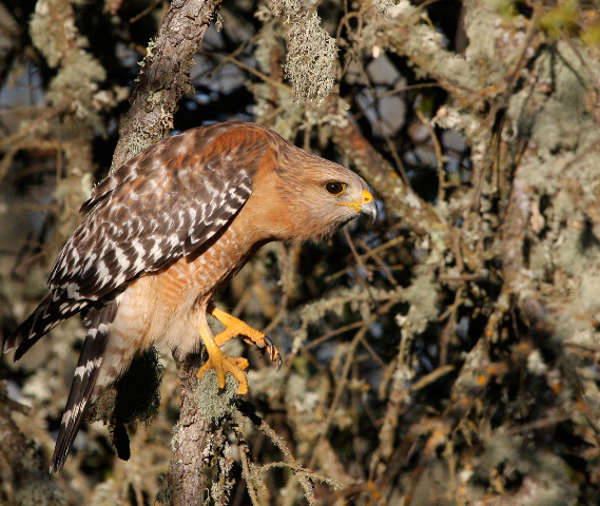
UPPER LAKE, Calif. – The Lake County Land Trust is offering nature walks at the Rodman Preserve on Saturday, Oct. 13, and Saturday, Oct. 27, at 9 a.m.
The guided walks at Rodman Preserve offer visitors of all ages an opportunity to enjoy wildlife and the beauty of Lake County.
Each Saturday walk is led by a different Land Trust volunteer.
The Oct. 13 walk will be led by Brad Barnwell. Barnwell enjoys sharing his knowledge of Lake County birds and photography.
On Oct. 27 the walk will be guided by Roberta Lyons. Lyons enjoys birding, sharing about the land, and identifying wild grasses.
The public is invited to come out and enjoy fall with these early morning cool walks along the slough.
Participants should meet at the Rodman Preserve and Nature Education Center at 9 a.m.
The preserve is located at 6350 Westlake Road, Upper Lake.
To get there take the Nice-Lucerne Cut-off from Highway 29, between Lakeport and Upper Lake. Turn east onto the Nice-Lucerne Cut-off, then left on to Westlake Road. The preserve entry is to the immediate right after turning on to Westlake Road.
The preserve is owned and operated by the Lake County Land Trust, a local, 501(c)(3) charitable nonprofit organization directly involved in protecting important land resources; wetlands, wildlife habitats, parks, forests, watersheds, riparian stream corridors, lakeside areas and trails.
- Details
- Written by: California Department of Fish and Wildlife
This is the first year that SHARE has offered opportunities at Hart Ranch, which includes 975 acres of rolling oak woodland 15 miles northeast of Porterville. The hunts will take place October 2018 through April 2019.
Hunters with a valid California hunting license may apply for these hunts through the Automated License Data System.
An $11.62 non-refundable application fee will be charged for each hunt choice. Application deadlines are 17 days before each hunt.
To apply for these hunts, visit www.ca.wildlifelicense.com/internetsales, log in to your account and select "Purchase Licenses." Then select "2018 - Hunting, 2018 - SHARE Hunts Multi Choice Application" and select specific hunt periods.
The SHARE program offers private landowners liability protection and compensation for providing public access to or through their land for wildlife-dependent recreational activities.
The goal of the program is to provide additional hunting, fishing and other recreational access on private lands in California.
For more information about SHARE opportunities, please visit www.wildlife.ca.gov/hunting/share.
- Details
- Written by: California Department of Fish and Wildlife
The course will be held from 6 to 9 p.m. Monday, Oct. 29, Tuesday, Oct. 30, and Wednesday, Oct. 31, and 8 a.m. to noon Saturday, Nov. 3, at the Riviera Heights Homeowners Association Clubhouse, 3034 Riviera Heights Drive, Kelseyville.
Training topics will include hunter and firearms safety, ethics and hunter responsibility, basic survival and first aid, wildlife identification and management, hunting techniques and equipment, and wild game care.
This class is required to be eligible to hunt in California.
Students are required to attend all days and hours to receive full credit and must pass the required written and practical tests for certification of completion.
Registration must be completed online by visiting the CDFW Web site at www.wildlife.ca.gov/Hunter-Education and following the step-by-step instructions.
Class space is limited and on a first-come, first-served basis. Additional course dates and locations are also located at this site.
For additional information or if your organization would like to host a course, please contact Lt. Mike Pascoe at 707-263-1044 or Roland LeDoux at 707-994-0637.
- Details
- Written by: California Department of Fish and Wildlife
With this recognition, the Elkhorn Slough joins 38 other wetland sites in the United States - including the San Francisco Bay estuary – and more than 2,330 sites worldwide, in a network of globally important wetlands designated under the world's oldest international environmental treaty.
The convention was signed in Ramsar, Iran in 1971, and almost 90 percent of U.N. member states have since adopted the treaty.
"I am proud that Elkhorn Slough is being recognized internationally for what we on the central coast of California have long known, that this wetland is an environmental crown jewel. This designation is a reminder of the importance of protecting the diverse wildlife and conserving these waters for future generations to enjoy," said Congressman Panetta.
The Elkhorn Slough, which enters Monterey Bay at Moss Landing and is partially located in NOAA's Monterey Bay National Marine Sanctuary, has long been recognized by local, state, and federal organizations as exceptional for its biologically rich diversity and unique scientific research studies, as well as the estuary's recreation, tourism, and education opportunities.
"Elkhorn Slough is a spectacular wetland on the central California coast, hosting a rich diversity of plants and animals and beloved by the local community," said Mark Silberstein, executive director of the Elkhorn Slough Foundation. "Every day, hundreds of people from kayakers to birdwatchers and other visitors enjoy the sea otters, seals, fish, shorebirds, eelgrass beds, and marshes of the Elkhorn Slough. We're pleased these wetlands have now earned international recognition."
To be designated as part of the Ramsar Convention on Wetlands of International Importance, a wetland site must fulfill at least one of nine criteria, including hosting more than 20,000 shorebirds at a time, serving as fish nursery habitat, and supporting threatened species. Elkhorn Slough met all nine criteria.
The designation was approved by the U.S. Department of State and the U.S. Fish and Wildlife Service this year.
The Elkhorn Slough is a seasonal estuary rich with intertidal marshes, mudflats, eelgrass beds and oyster communities that nourish wildlife.
More than 340 species of birds, 100 species of fish, including bat rays and leopard sharks, and more than 500 species of invertebrates have been documented in the watershed. Its distinctive estuarine communities are among the rarest and most threatened habitats in California, and are home to more than 140 Southern sea otters that feed, rest, and raise their pups in these wetlands.
"Healthy wetlands help support healthy economies," said Paul Souza, regional director of the U.S. Fish and Wildlife Service's Pacific Southwest Region. "The rich and diverse ecosystems of Elkhorn Slough help both our wildlife and our local communities thrive. Visitors from across the globe come to the slough to immerse themselves in its serene beauty and observe the wildlife that call the area home, including the southern sea otter, a species that once thrived but faced near extinction in the last century."
Wetlands like Elkhorn Slough serve key functions in pollution control and food provision, offering green, sustainable, low cost and efficient ways to clean wastewater of impurities and recycle nutrients, and also serve as cradles of biodiversity by hosting young fish and other marine species as well as rice paddies - all of which are critical to the food chain for humans and wildlife worldwide.
The Elkhorn Slough National Estuarine Research Reserve and Elkhorn Slough Foundation hosted the designation ceremony at the Hester Marsh Restoration site, a $6.5 million, 61-acre wetland restoration project nearing completion.
Like many of the marshes of the Elkhorn Slough, Hester Marsh was diked and drained for farming during the last century, resulting in a marsh plain elevation too low to support salt marsh.
The restoration project provides the elevation needed to support tidal marsh habitat that will withstand changes in sea level over the next century and continue to provide important habitat for fish, plants and wildlife.
"This project is an example of the intensive investment required to restore estuarine functions once lost, while incorporating a design that enhances resilience for future challenges," said Dave Feliz, manager of Elkhorn Slough National Estuarine Research Reserve for CDFW, which owns the property.
More than 90 percent of California's wetlands have been lost over the past century. Though today the Elkhorn Slough features the most extensive salt marshes in California south of San Francisco Bay, without restoration its remaining marshes are projected to drown within 50 years due to sea level rise. The current project at Hester Marsh is reviving one of these drowning marshes.
The Hester Marsh restoration project illustrates why the Elkhorn Slough is receiving this prestigious designation as a Wetland of International Importance.
Once complete, the project will double salt marsh habitat in a part of the slough frequented by Southern sea otters and their pups – underscoring the Ramsar Convention's mission for the conservation and sustainable use of wetland ecosystems.
"Few places embody NOAA's mission of 'science, service and stewardship' more fully than Elkhorn Slough," said Nicole LeBoeuf, acting director of NOAA's National Ocean Service. "As part of our system of 29 National Estuarine Research Reserves, it offers opportunities for scientific research, community recreation and tourism, and provides habitat for many species. Today's Ramsar designation shows how we have all joined forces to protect this extraordinary place. Along with our many partners here today, we will continue to protect it and the communities that depend on it."