 How to resolve AdBlock issue?
Recreation
- Details
- Written by: BoatUS
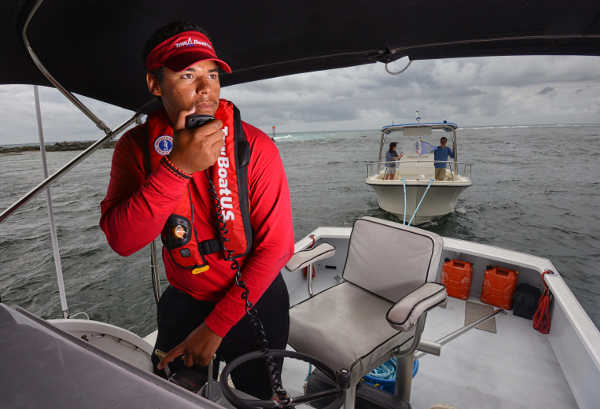
ALEXANDRIA, Va – With their low battery draw, cooler operation and sturdy construction, LED lights have been popular with recreational boaters.
The lights may also be causing poor VHF radio and Automatic Identification System, or AIS, reception, according to a Marine Safety Alert issued by the U.S. Coast Guard on Aug. 15.
The BoatUS Foundation for Boating Safety and Clean Water is urging boat owners to follow the Coast Guard’s simple test procedures for LED interference and report any instances to the Coast Guard Navigation Center.
The alert, issued for informational purposes, outlines reports received from mariners concerning radio frequency interference caused by LED lamps that “were found to create potential safety hazards.”
In some cases, the Coast Guard says, the interference may cause problems if mariners need to call for help.
The interference can affect VHF voice communications as well as Digital Selective Calling (DSC) messages, and it may also affect AIS because they also use VHF radio.
In particular, masthead LED navigation lights on sailboats may cause problems due to their close proximity to antennas.
The Coast Guard advises that it is possible to test for the presence of LED interference by using the following procedures:
– Turn off LED light(s).
– Tune the VHF radio to a quiet channel (for example, channel 13).
– Adjust the VHF radio's squelch control until the radio outputs audio noise.
– Re-adjust the VHF radio's squelch control until the audio noise is quiet, only slightly above the noise threshold.
– Turn on the LED light(s).
If the radio now outputs audio noise, then the LED lights are causing interference and it is likely that both shipboard VHF marine radio and AIS reception are being degraded by LED lighting.
Potential solutions include contacting an electronics repair facility to address the problem, changing the LED bulb to incandescent bulb or fixture, or increasing the separation between the LED light and antenna.
The Coast Guard also requests those experiencing this problem to report their experiences to the Coast Guard Navigation Center by selecting “Maritime Telecommunications” on the subject drop-down list, then briefly describing the make and model of LED lighting and radios affected, the distance from lighting to any antennas and radios affected, and any other information that may help them understand the scope of the problem.
If you’d like to learn more about VHF DSC radio or AIS operation, BoatUS Foundation has online courses and a free DSC VHF tutorial at www.BoatUS.org.
- Details
- Written by: Mendocino National Forest
The area is closed due to fire suppression and rehabilitation activities that create a hazard to the public, including the use of heavy equipment, the falling of hazard trees weakened by the fire and the construction, rehabilitation, and maintenance of fuels breaks.
Forest Supervisor Ann Carlson reminds the public, “The closure of the fire area is necessary to help ensure that no one is injured within or near the fire area. We appreciate your cooperation to keep the area clear so that our firefighters can perform their job safely.”
The closure will remain in place until hazards to the public are diminished. Forest Order No. 08-18-15 supersedes Order No. 08-18-14 dated Aug. 14.
The order and exhibits are posted here: https://www.fs.usda.gov/Internet/FSE_DOCUMENTS/fseprd594338.pdf.
- Details
- Written by: California Department of Fish and Wildlife
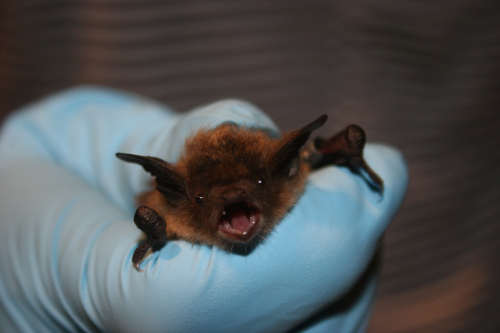
There's a bat in my house!
Question: Late one night recently, a bat flew into my house through an open window! I was sitting at the table and it flew right at me with its huge webbed wings. I swear it looked like it was in full in attack mode. I hid in another room for a while, and then opened the door to find it hanging upside down from the smoke detector. Eventually we caught it with a dustpan and a broom and let it go. I like bats, but not in my house. Please tell me this aggressive behavior doesn't mean it was rabid! (Rebecca M., Davis)
Answer: You certainly had an interesting encounter! While it's possible the bat's apparently aggressive behavior could have been caused by rabies infection, it's far more likely the bat was simply disoriented from entering your home, encountering bright lights (and you!) and could not easily find an exit. The prevalence of rabies in bat populations is generally quite low (typically lower than in other wild animals that are carriers of the disease, such as gray foxes, striped skunks and raccoons).
When a bat enters a home or other building, it's best to stay calm, move deliberately, and open more windows and doors leading to the outside. The bat will eventually use its echolocation ability to find an exit.
If the bat is obviously sick and unable to fly, do not pick it up with your bare hands! It is best to use tongs or other means to place it in a container. Contact your local public health department and request they test it for rabies.
One other possible cause of sickness in bats is the fungal disease white nose syndrome, or WNS. WNS recently arrived on the West Coast in Washington state and has killed more than 6 million bats in the eastern U.S. and Canada.
The disease affects hibernating bats, causing them to wake up in the winter and burn energy reserves needed to sustain them through the cold season when their insect prey is unavailable.
So, if you see a sick or weak, emaciated bat in winter that is unable to fly, please notify the California Department of Fish and Wildlife at its "Report a Sick Bat" Web page for possible follow-up, in addition to your local public health department.
Such reports are an important part of our efforts to understand WNS and its impacts on bat populations.
Trading a sport-caught fish
Question: I know I can't sell a salmon if I catch it with my normal fishing license but is it technically illegal to trade something for it? (Rich, Oroville)
Answer: California Fish and Game Code (FGC), section 7121 states that it is unlawful to sell or purchase any fish or amphibia taken in, or brought into, the waters of the state, or brought ashore at any point in the state.
There are exceptions for those who fish under the authority of a commercial fishing license and those who purchase fish from the commercial fishing industry, commercial vendors, grocery stores, etc. If you caught your salmon with a recreational fishing license you are not in the commercial fishing category and you cannot sell your fish.
You also cannot trade something for your fish. The definition of "sell" per FGC, section 75, includes to offer or possess for sale, barter, exchange or trade. And to close the loop, it would be unlawful to "buy" recreationally caught fish. FGC, section 24, defines "buy" as an offer to buy, purchase, barter, exchange or trade.
Fishing license for a disabled veteran
Question: How much does it cost for a 100 percent disabled vet to fish? What documents are needed to obtain the license? (Stephanie)
Answer: CDFW sincerely appreciates the sacrifices our veterans have made in service to our country and we crafted a process to make it possible for disabled veterans to purchase a fishing license at a significantly reduced rate.
An annual Disabled Veteran Sport Fishing license costs $7.56 if you purchase from a license agent or online, or $7.21 if you purchase directly from a CDFW office. They are available to any honorably discharged veteran with a disability rating of 50 percent or greater.
To prequalify, you will need to submit a letter from the Veteran's Administration documenting your honorable discharge and service-connected disability rating.
You can submit a photocopy of this document by mail or in person to any CDFW license sales office, by fax at 916-419-7585, or by secure document upload.
To upload documentation, please send a request to
In addition to your eligibility documentation, you will need to provide your driver license, GO ID number (if you do not have one, you can create your customer record online first), telephone number and email address.
After your eligibility has been verified, your customer record will be updated and you can purchase a Disabled Veteran Sport Fishing License anywhere licenses are sold, but CDFW recommends buying online for convenience.
If you have a question for the California Department of Fish and Wildlife, email
- Details
- Written by: California Department of Fish and Wildlife
CDFW annually offers two Free Fishing Days, typically around the Fourth of July and Labor Day weekends (the first in 2018 was held July 7).
On these two designated days, people can fish without having to buy a sport fishing license.
Free Fishing Days also provide an easy opportunity for licensed anglers to introduce non-angling friends and children to fishing and the outdoors.
All fishing regulations, such as bag and size limits, gear restrictions, report card requirements and fishing hours and stream closures, remain in effect.
Every angler must have an appropriate report card if they are fishing for steelhead, sturgeon or spiny lobster anywhere in the state, or for salmon in the Smith and Klamath-Trinity river systems.
Anglers residing in urban areas also have opportunities to fish close to home. Some CDFW regions also offer Fishing in the City, a program that allows children to learn to fish in major metropolitan areas.
For more information on the Fishing in the City program, please visit www.wildlife.ca.gov/fishing-in-the-city.
All anglers should also check the rules and regulations at www.wildlife.ca.gov/regulations for the waters they plan to fish because wildlife officers will be on duty to enforce them.
In addition, information on fish planting is available at https://nrm.dfg.ca.gov/fishplants and a fishing guide can be viewed at www.wildlife.ca.gov/fishing/guide.
For more information on Free Fishing Days, please visit www.wildlife.ca.gov/licensing/fishing/free-fishing-days.