 How to resolve AdBlock issue?
Recreation
- Details
- Written by: Editor
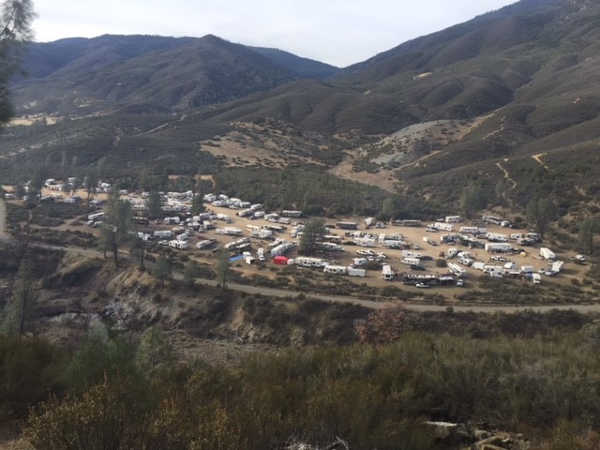
WILLOWS, Calif. – The Mendocino National Forest (MNF) is seeking input on the forest’s upcoming grant applications for the state’s 2017-2018 grant cycle.
These grants will support ongoing Off-Highway Vehicle (OHV) law enforcement management activities involving education, resource protection and enforcement as well as ground operations such as maintaining trails and equipment, operating water systems and monitoring trail conditions.
The state of California Department of Parks and Recreation and the MNF have maintained a successful partnership for over 30 years.
This partnership has provided funding assistance for OHV recreation on National Forest System lands through the California OHV Grants and Cooperative Agreements Program.
Public participation is a requirement of the fund allocation process and is an important part of the forest’s OHV program.
The MNF offers over 200 miles of designated OHV trails, providing exciting riding opportunities for a wide range of ability levels and vehicle types.
In addition, more than 1,300 miles of roughly graded roads are available for use by OHV enthusiasts.
“We appreciate your support and comments on our grant request. Your input regarding the Forest’s application for state OHV grant funding for the current Grants and Cooperative Agreements cycle is very important and will help the state determine the level of funding to provide the MNF for OHV management activities,” said Forest Engineer Shannon Pozas.
In order to view and comment on the MNF’s preliminary grant application, please visit the state of California Web site at www.ohv.parks.ca.gov then click on the grants tab.
Additionally, a link to the state’s website may be found on the forest Web site at www.fs.usda.gov/mendocino.
Comments may be provided between March 6 and April 2, 2018.
Instructions for providing comments can be found on the state of California Web site.
- Details
- Written by: California Department of Fish and Wildlife
Answer: Those are seemingly simple questions, but the answers are complicated and detailed.
The basic answer is: it depends.
It depends on the California Sport Fishing District where you will be fishing, the individual body of water you plan to fish and the species of live bait you intend to use.
For starters, review the “Bait Regulations for Inland Waters” published in the 2017-2018 California Freshwater Sport Fishing Regulations.
On page 2 of the regulations booklet, you’ll find a map of the seven different California Sport Fishing Districts. Each sport fishing district will have its own additional regulations on what kind of live bait is allowed along with water-specific, area-specific and bait-specific regulations.
There are variables between districts to authorize or prohibit movement of live fish from the location where captured so pay close attention.
In the Valley Sport Fishing District, for example, which covers all or parts of 25 counties in the middle part of the state, live or dead fin fish (which includes sunfish) generally cannot be used as bait (California Code of Regulations Title 14, section 4.20).
However, there are exceptions to the general prohibition, and certain waters where live fin fish lawfully caught can be used for live bait in the waters where they were caught (CCR Title 14, section 4.20(a)-(f)).
In the Southern Sport Fishing District, by contrast, which covers all or part of seven Southern California counties, sunfish may never be used as live bait though some other fish species may be used (CCR Title 14, section 4.10).
So it’s imperative to check the Bait Fish Use regulations in the sport fishing district you plan to fish before using any live bait.
All of these regulations are available in the 2017-2018 California Sport Fishing Regulations booklet.
Catching grass shrimp for bait?
Question: My friend and I recently found out how to catch grass shrimp for bait, and we are wondering what the regulations are. I see on the CDFW Web site that the limit is 5 pounds. Does that mean we can take 5 pounds of grass shrimp home alive?
I also saw a commercial license for harvest of grass shrimp. Would we need that as well? We don’t plan on selling them. We just want to use them for fishing as they are larger than store-bought ones and native to the area. (Pean S.)
Answer: Congratulations on your new skill. Catching and fishing with your own bait, where legal to do so, adds yet another dimension to the fishing experience.
Grass shrimp – also known as bay shrimp – are an effective and popular bait in some areas. One of the reasons why they can be so effective when used in the area where caught is that they are most likely a natural food preference of the target fish.
Grass shrimp are crustaceans, and a sport fishing license is required of any person who is 16 or older to take any kind of crustacean in California, except when taken from a public pier in ocean or bay waters.
You do not need a commercial fishing license or shrimp permit since the grass shrimp are for your own recreational use.
You are correct in that the sport fishing limit is five pounds per angler (CCR Title 14, section 29.86). Grass shrimp may be kept and used alive or dead as the law makes no distinction.
Please note that there are several restrictions and regulations on the gear and methods that can be used to take grass shrimp and other crustaceans (CCR Title 14, section 29.80).
These regulations can be found on pages 36-37 of the 2017-2018 California Saltwater Sport Fishing Regulations booklet.
We wish you the best of luck and encourage you to teach others the skills you have developed to share a more holistic fishing experience.
What is a ‘resident?’
Question: I just bought a fishing license. How do the regulations define who a “resident” is in reference to buying a fishing license? (Michael)
Answer: Section 70 of the Fish and Game Code defines “resident” as any person who has resided continuously in the state of California for six months or more immediately prior to the date of his application for a license or permit, any person on active military duty with the Armed Forces of the United States or auxiliary branch thereof, or any person enrolled in the Job Corps established pursuant to section 2883 of Title 29 of the United States Code.
If you have a question you would like to see answered in the California Outdoors Q and A column, email it to
- Details
- Written by: BoatUS
Now with the Department of Commerce’s Bureau of Economic Analysis (BEA) February announcement that the outdoor recreation industry’s 2016 annual gross output is 2 percent, or $373.7 billion, of the US gross domestic product, Boat Owners Association of The United States believes boaters stand to gain from the news.
“Having a strong industry behind you is important when working in the halls of government,” said BoatUS Manager of Government Affairs David Kennedy. “It can ultimately influence legislation that makes boating better, such as improving boating access by funding new launch ramps, providing budgets to maintain boating infrastructure or navigation aids, improving fishing habitat, and helping support boating safety efforts.”
The analysis was a result of passage of the Outdoor Recreation Jobs and Economic Impact Act of 2016, which required the Department of Commerce, acting through the BEA, to enter into a joint memorandum with the Department of Agriculture and the Department of the Interior to conduct, assess and analyze the outdoor recreation economy of the United States and its effects on the overall US economy.
The outdoor industry grew 3.8 percent in 2016, compared to 2.8 percent for the overall economy. Boating and fishing activities totaled $38.2 billion, an increase of 4 percent over 2015.
The BEA report also noted that the outdoor recreation industry, which includes boating, fishing, RVing, hunting, camping, hiking, bicycling and supporting activities, surpassed the US agriculture and petroleum industries.
BoatUS remains part of a coalition of outdoor groups, organizations and businesses under the Outdoor Recreation Roundtable that urged the federal government to recognize the industry’s economic importance.
The “prototype” statistics covering 2012 to 2016 from the newly established Department of Commerce Outdoor Recreation Satellite Account allow the public to comment before the BEA releases the final statistics this fall.
The full report can be found at https://www.bea.gov/newsreleases/industry/orsa/orsanewsrelease.htm.
The Outdoor Recreation Roundtable advocates for bipartisan support for improved access to public lands and waters, increasing public-private partnerships to help modernize infrastructure and reduce decades-old maintenance backlogs that can provide a better visitor experience, support for responsible conservation efforts, and growth of outdoor recreation participation.
Visit www.BoatUS.com.
- Details
- Written by: California Department of Fish and Wildlife
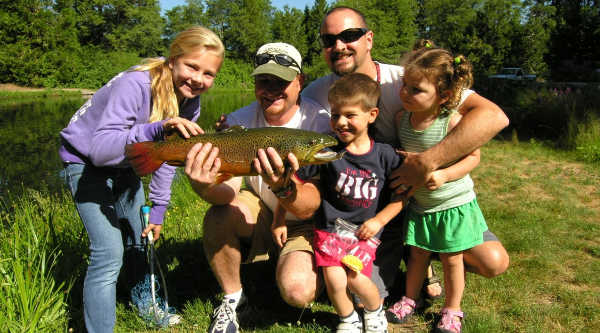
Every year, California Department of Fish and Wildlife (CDFW) trout hatcheries release trophy-sized trout to approved waters for public recreational angling and a chance to “catch a big one.”
Trophy trout are categorized by CDFW as larger than 2.99 pounds each, but can be much larger.
Another category of large trout released by CDFW each year is “super-catchable,” which are fish between 1.1 and 2.99 pounds each.
Some of these large fish are raised specifically to provide public anglers with a chance to catch a big one, and others are released to approved waters once they have fulfilled their role in providing fertilized eggs for populating fish of all life stages in CDFW’s statewide program of trout hatcheries.
Trophy and super-catchable trout require more resources than catchable-size trout. Younger trout (fingerling to catchable size) grow quickly and efficiently convert fish food to body size, and that efficiency drops with age.
By weight, 93 percent of all trout released by CDFW trout hatcheries are in the “catchable” size category (most often 1/2 pound fish, or approximately 12 inches in length). In 2018, approximately 100,000 pounds of trout released for public recreational angling will be in the trophy or super-catchable size.
The following locations are scheduled for trophy and super-catchable size trout releases in 2018:
Northern releases
Hat Creek, Shasta County (late April to early May)
Burney Creek, Shasta County (late April to early May)
Baum Lake, Shasta County (late April to early May)
Iron Canyon Reservoir, Shasta County (May)
Browns Pond, Modoc County (May)
Rainbow Pond, Modoc County (May)
Ash Creek, Lassen County (May)
Shasta Lake, Shasta County (May through August)
Lake Siskiyou, Siskiyou County (May through August)
Juanita Lake, Siskiyou County (May through June)
North central releases
Red Lake, Alpine County (May)
Indian Creek Reservoir, Alpine County (May)
Sawmill Pond (children’s fishing pond), El Dorado County (May)
Pillsbury Reservoir, Lake County: (May)
Various locations for Kid’s Fishing Day events (November through May)
Central releases
Kern River, Tulare County (February through April)
Kings River, Fresno County (January through April)
Stanislaus River, Tuolumne County (June and July)
Pinecrest Lake, Tuolumne County (June and July)
Shaver Lake, Fresno County (February through March)
South Coast Releases
Pyramid Lake, Los Angeles County (November through May)
Inland deserts releases
35 waters in Inyo and Mono counties, including but not limited to Bishop Creek, Bridgeport Reservoir, Convict Lake, Diaz Lake, Ellery Lake, the June Lake Loop, Lake Sabrina, Lee Vining Creek, Lundy Lake, the Mammoth Lakes, the Owens River, Pleasant Valley Reservoir, Twin Lakes Bridgeport, Rock Creek Lake, Saddlebag Lake, South Lake, Tioga Lake, Virginia Lakes and the West Walker River (March through September)
Silverwood Lake, San Bernardino County (November through May)
Trophy fish are regularly added to weekly plants of regular sized “catchable” fish in Inyo and Mono counties.
The trophy sized fish are tagged for identification as originating from CDFW hatcheries and released to approved waters determined to have the ability to sustain the larger fish.
Trophy fish will be stocked in Diaz Lake for the early trout opener and in Pleasant Valley Reservoir and in Owens River Section II for the Blake Jones Derby.
Trophy fish have been stocked in Pleasant Valley Reservoir, Owens River Section II, Owens River below Tinemaha and Diaz Lake since January and these waters will continue to receive trophy fish over the next few months.
Updated information on trophy and super-catchable trout releases for recreational angling is released early each calendar year and will be posted to the CDFW fish stocking Web site (http://nrm.dfg.ca.gov/FishPlants/).
Anglers can also call the following lines for region-specific information:
Northern Region: 530-225-2146
North Central Region: 916-351-0832
Central Region: 559-243-4005, Extension 183
South Coast Region: 855-887-1275
Inland Deserts Region: 855-887-1275
CDFW trout hatcheries are dedicated to providing millions of additional trout angling opportunities in approved, public waters throughout the state every year, using the best available science, and ecological, hatchery and resource management principles.