 How to resolve AdBlock issue?
Recreation
- Details
- Written by: Editor
The California Department of Fish and Wildlife (CDFW) invites all Californians to celebrate summer by fishing this Saturday.
July 4 is the first of two Free Fishing Days in 2015, when people can try their hand at fishing without having to buy a sport fishing license.
Free Fishing Days are also a great opportunity for licensed anglers to introduce non-angling friends and children to fishing and the outdoors.
All fishing regulations, such as bag and size limits, gear restrictions, report card requirements, fishing hours and stream closures remain in effect.
Every angler must have an appropriate report card if they are fishing for steelhead or sturgeon anywhere in the state, or salmon in the Smith and Klamath-Trinity river systems.
CDFW offers two Free Fishing Days each year – usually around July 4 and Labor Day weekend – when it's legal to fish without a sport fishing license.
This year, the Free Fishing Days are set for Independence Day and Labor Day weekend (July 4 and Sept. 5).
Free Fishing Days provide a low-cost way to give fishing a try. Some CDFW regions offer Fishing in the City, a program where children can learn to fish in major metropolitan areas.
Fishing in the City and Free Fishing Day clinics are designed to educate novice anglers about fishing ethics, fish habits, effective methods for catching fish and fishing tackle.
Anglers can even learn how to clean and prepare fish for eating.
Anglers should check the rules and regulations at www.wildlife.ca.gov/regulations for the waters they plan to fish because wildlife officers will be on duty to enforce them.
For more information on Free Fishing Days, please visit www.wildlife.ca.gov/licensing/fishing/free-fishing-days .
- Details
- Written by: Editor
The California Department of Fish and Wildlife's (CDFW) Shared Habitat Alliance for Recreational Enhancement (SHARE) program is offering elk hunting opportunities on six new properties.
The SHARE program is now taking applications for new elk hunting opportunities taking place in September and October.
Three bull elk, eight antlerless and two junior-only antlerless elk tags will be available through a random draw process.
These hunts are in addition to those issued through the big game drawing and no preference points will be considered or used.
Applications will be on sale through Aug. 17.
Sibley Ranch and Magruder Ranch in Mendocino County will offer one bull and one antlerless elk hunt each.
Each hunter will coordinate with the landowners for five days of access between Sept. 23 and Oct. 4. Sylva Ranch in Siskiyou County will also offer one bull and one antlerless elk hunt.
Each hunter will coordinate with the landowners for five days of access between Sept. 24 and Oct. 4. Successful applicants will need to purchase an elk tag within one week after being drawn.
Three ranches under the Private Lands Management (PLM) program have donated antlerless elk tags to the SHARE program. Hunters drawn for these hunts will not have to purchase the elk tag.
Stover Ranch and Wiggins Ranch in Humboldt County will offer one junior-only antlerless elk hunt each. Stover Ranch is 7,000 acres of perennial grassland and oak/pine woodland located approximately 25 miles from Blue Lake.
Wiggins Ranch is 17,000 acres of mixed conifer forest located 15 miles south east of Korbel. Each hunter will coordinate with the landowner for two days of access in October.
The Smith River PLM Area is 25,000 acres of mixed conifer forest located one mile east of Smith River in Del Norte County. The property will offer five antlerless elk tags for the week of Oct. 1 to 7. There will be a mandatory orientation on Sept. 30.
For more information about each SHARE property, please visit www.wildlife.ca.gov/Hunting/SHARE .
Hunters with a valid California hunting license may apply through the Automated License Data System through Aug. 17. Successful applicants will be notified on Aug. 19. An $11.37 non-refundable application fee will be charged for each hunt choice.
Elk hunters are reminded it is legal to take only one elk in California per year.
To apply for these hunts, please visit www.wildlife.ca.gov/Licensing/Online-Sales .
These opportunities were made possible by the SHARE Program, which offers incentives to private landowners who allow wildlife-dependent recreational opportunities on their property.
Participating landowners receive liability protection and compensation for providing public access to or through their land for wildlife-dependent recreational activities.
The goal of the SHARE Program is to provide additional hunting, fishing and other recreational access on private lands in California.
- Details
- Written by: Editor
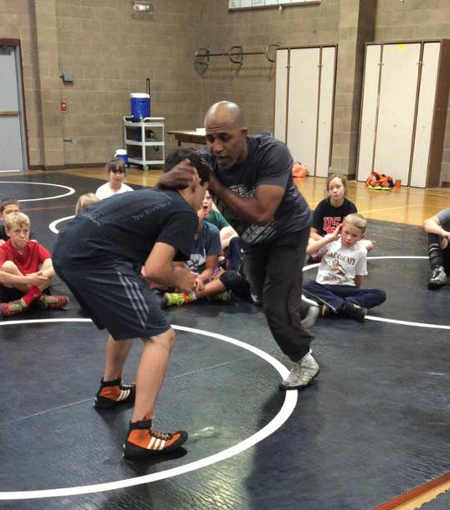
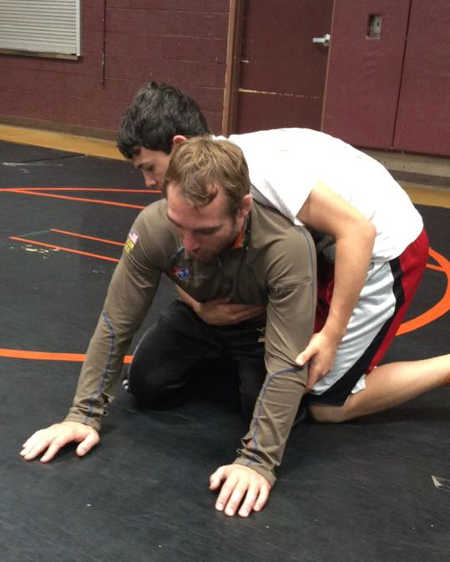
KELSEYVILLE, Calif. – The Lake County Wrestling Club hosted a camp featuring NCAA All-Americans Braumon Creighton and Daniel Dennis June 18 through 21.
During the four-day camp the wrestlers received 20 hours of instruction.
The club thanked the following local businesses and individuals who made this camp possible: Mountain Vista Middle School and staff, BSG & Co., Chevron Food-Gas-Go, Northlake Pharmacy Group, Konocti Vista Casino & Resort, Chernoh Excavating, Fossa's Backhoe Service, Milano Marine Construction, Bruno's Foods, Michele Malm, Lesa Koloff, Rob Brown, Caroline Morris, Mathew and Christine Howard, Eric and Marlene Hoefler, Dennis and Molly Keithly, and Barbara Gonzalez.
- Details
- Written by: Editor
Starting July 1, nonlead ammunition will be required when hunting on all California Department of Fish and Wildlife (CDFW) lands and for all Nelson bighorn sheep hunts anywhere in the state.
CDFW reminds hunters who plan to hunt bighorn sheep or at any CDFW wildlife area or ecological reserve where hunting is allowed on or after July 1, 2015 to acquire nonlead ammunition well ahead of their hunt.
Hunters also are encouraged to practice shooting nonlead ammunition to make sure firearms are sighted-in properly and shoot accurately with nonlead ammunition.
Nonlead ammunition for some firearm calibers may be in short supply so hunters should plan accordingly.
In October 2013, Assembly Bill 711 was signed into law requiring the phase-out of lead ammunition for hunting anywhere in the state by July 1, 2019.
The bill also required an implementation plan designed to impose the least burden on California's hunters while adhering to the intent of the law.
In order to determine what was least disruptive to hunters, CDFW coordinated question and answer sessions at sportsmen's shows, held meetings with hunting organizations and hosted a series of eight public workshops throughout the state.
CDFW then presented draft regulations, as modified by public input from these workshops, to the Fish and Game Commission.
In April 2015, the Fish and Game Commission adopted CDFW's proposed regulations and implementation plan.
Further phase-out of lead ammunition for hunting in California will continue on July 1, 2016, when nonlead ammunition will be required when hunting with shotguns for upland game birds (except for dove, quail and snipe), small game mammals, fur-bearing mammals and nongame birds except for when hunting at licensed game bird clubs.
Nonlead ammunition will also be required when taking wildlife with shotguns for depredation purposes anywhere in the state.
Starting July 1, 2019, hunters must use nonlead ammunition when taking any animal anywhere in the state for any purpose.
Lead ammunition may still be used for target shooting. Existing restrictions on the use of lead ammunition in the California condor range remain in effect while implementation proceeds.
Hunting is not allowed at all CDFW wildlife areas and ecological reserves. For those areas where hunting is allowed, nonlead ammunition will be required starting July 1, 2015.
Hunters are reminded to be familiar with all hunting regulations before going into the field.
More information on the phase-out of lead ammunition for hunting in California can be found at www.wildlife.ca.gov/Hunting/Nonlead-Ammunition .