How to resolve AdBlock issue?
Recreation
- Details
- Written by: Editor
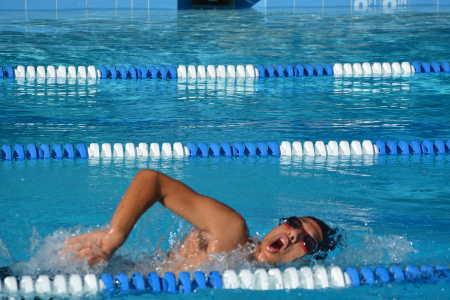
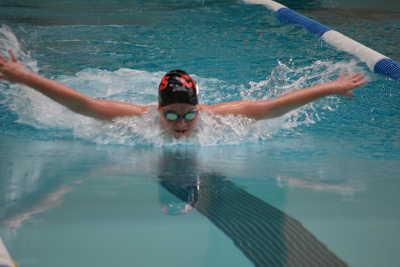
LAKE COUNTY, Calif. – The combined Clear Lake and Kelseyville High School Swim Team made another strong showing at their second high school swim meet on March 19 in Calistoga.
The girls placed first in every single race and the boys won nine of 11 races.
New league rules this year are requiring the two schools to swim as separate teams if they want to compete for an overall team score.
In protest of this new rule, the combined swim team will forfeit as a team and swim as one entity.
According to Agustin Merodio, head coach for both teams, “We are making this stand because it is in the best interest of the swimmers. They practice together, travel together, and celebrate together – we will not split them up. Our relay teams will continue to be made up of swimmers from both schools and they will be able to say they won or lost by the times they achieve in the water. We have struggled too hard to get this team into the water to let the competitive nature of other schools dictate how we run our races.”
Individual victories will still be recognized with first place finishes for the boys going to Max Madrzyk in the 200 Free and 100 Butterfly, Diego Tejeda in the 200 Individual Medley and 100 Breaststroke, Alberto Sturr in the 500 Free and 100 Back and Alberto Sturr, Diego Tejeda, Max Madrzyk and Ethan Smith in the 200 Medley Relay and the 200 Free Relay.
In the girls’ meet, first place honors go to Liz Fricker in the 100 Breaststroke, 200 Medley Relay and 400 Free Relay, Paige LaVrar in the 100 Free, 100 Backstroke and 200 Free Relay, Lauren Rudnick in the 500 Free, 200 Individual Medley, 200 Medley Relay and 400 Free Relay, Shannon Fronsman in the 100 Butterfly, 50 Free, 200 Medley Relay and 400 Free Relay, Nikki Hanson in the 200 Free and 200 Free Relay, Tasia Jardstrom in the 200 Medley Relay, and Hallie Holmes in the 200 Free Relay.
- Details
- Written by: Editor
The California Department of Fish and Wildlife (CDFW) has posted the 2015 Big Game Digest to its Web site.
The 64-page document can be downloaded online for free at www.dfg.ca.gov/publications/digest/ .
The popular guide contains season, quota and harvest information for deer, elk, pronghorn antelope and bighorn sheep, as well as tag drawing information, bear and wild pig hunting information and big game hunting regulations for the 2015-16 seasons.
Printed copies of the Big Game Digest will automatically be mailed in late April to hunters who purchased a big game tag or applied for the Big Game Drawing in California in 2014.
"As printing costs continue to rise, more funding for big game conservation will be available if the department reduces printing and mailing costs," said Dan Yparraguirre, CDFW's deputy director of wildlife and fisheries. "Making the Big Game Digest available online also means that hunters can access this information sooner."
Hunting licenses, tags and drawing applications will be available on April 15.
Purchases may be made through the Online License Service, at any CDFW License Sales Office or license agent, or by telephone at 800-565-1458.
The deadline to apply for the big game drawing is midnight on June 2.
- Details
- Written by: Carrie Wilson
Wildlife feeders to attract turkeys before the season?
Question: A buddy of mine has a feeder on his ranch that he loads up with feed to attract turkeys to his property. He intends to hunt them once the season opens.
I told him this was illegal baiting but he said he would pull the feed out before hunting the area.
What do you think? Is this really legal? (Anonymous)
Answer: No. It is illegal to harass any game or nongame bird unless authorized by a regulation or the Fish and Game Code (California Code of Regulations, Title 14, section 251.1).
Under this section, “harass” is defined as an intentional act which disrupts an animal’s normal behavior patterns, which includes, but it is not limited to, breeding, feeding and sheltering.
Consequently, if your friend’s feeder disrupts the normal behavior pattern of the turkeys, it would be a violation of the law to feed the turkeys even if he/she pulls the feeder out before hunting the area.
Also, please note that a person may not take resident game birds, such as turkeys, within 400 yards of any baited area unless an exception in CCR Title 14, section 257.5, has been met.
Legal sturgeon in tow?
Question: While out sturgeon fishing, we noticed a smaller boat with a legal sturgeon in tow. The rope was double hitched and wrapped around the fish just behind the gills.
As ropes and snares are now illegal, where does this technique fall into the rules? (Bill A.)
Answer: If the "double hitch" you saw was a flexible loop made from any material that can be tightened like a noose around any part of the fish, then what you saw was not legal (CCR Title 14, section 5.80(d) and 5.81(a)).
The no-snare regulation is to reduce harm to sturgeon. Oversized white sturgeon and all green sturgeon may not be removed from the water and shall be released immediately (CCR Title 14, section 5.80(c) and (e) and 5.81(b)).
Legal-sized white sturgeon that anglers choose to release must be released immediately without taking them out of the water.
If the person in possession of the fish you saw had not recorded the fish on a Sturgeon Fishing Report Card, it was also illegal under CCR Title 14, section 5.80(f).
The tagging requirement is to prevent waste of white sturgeon through "high grading" (releasing a smaller fish when a larger one is caught) as well as to enforce the daily and annual bag limits.
If you see something like this again, I recommend calling the 24-hour Californians Turn in Poachers and Polluters (CalTIP) hotline at (888) 334-2258.
Tipsters also can text anonymous information, including photographs, to CalTIP via “tip411” (numerically, 847411).
Wildlife officers can respond directly, resulting in an anonymous two-way conversation. Users must start the text message with the word “Caltip.” Phone number line, type: 847411, message line, type: Caltip (followed by the message/tip).
Diving and crabbing at the same time?
Question: I live in Monterey County and freedive/spearfish in the approved areas frequently. I see crab while I'm down on the bottom and have decided maybe I'd like to try and grab a few.
I've read through the rules and regs and think I have a pretty good idea of what's expected of me. Would it be possible (and legal) for me to purchase a crab trap, place it out before my spearing, then go dive for a few hours and return to collect it once I'm done diving?
It would all be done in one trip and from a kayak. Just a thought. For now I'm just going to get a measuring devise and try my luck by hand.
Answer: Yes, if you are north of Point Argulello (Santa Barbara County), you may legally set traps for crabs and have them fishing while you're diving. Then after you have finished diving, you may return to collect crabs from the trap.
You cannot service traps while still diving because while diving for crustaceans, you are restricted to taking crabs only by hand (CCR Title 14, section 29.80(g)). Note that for hoop nets, the limit between setting and pulling is two hours.
Passengers netting fish?
Question: Can a person net fish for others without having their own California Sport Fishing License? (Pete)
Answer: Yes, as long as you are referring to using a “landing net” to net another angler’s fish that is unable to use the landing net them self for some obvious reason, then it’s OK.
Assisting someone with the use of a landing net in this way would not require a license, but using other types of nets, such as gill nets, seines, dip nets for catching baitfish in the ocean would require a license.
Carrie Wilson is a marine environmental scientist with the California Department of Fish and Wildlife. While she cannot personally answer everyone’s questions, she will select a few to answer each week in this column. Please contact her at
- Details
- Written by: Tami Cramer
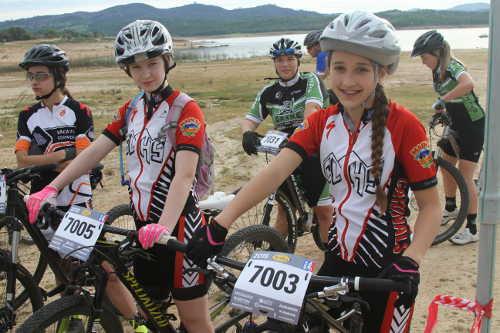
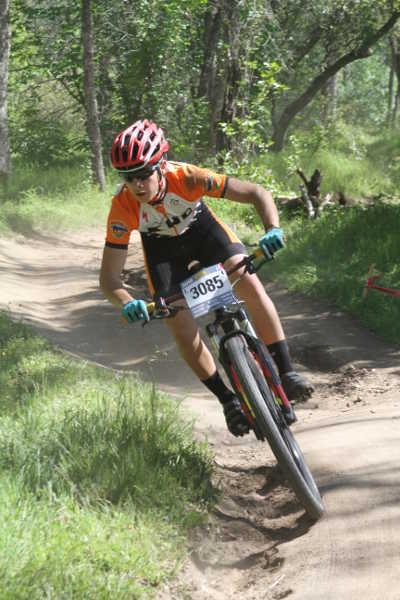
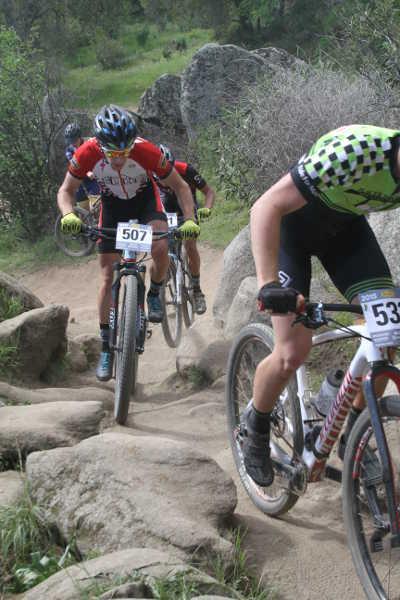
GRANITE BAY, Calif. – “Perfect” describes both trail and weather conditions at the Granite Bay Grinder, the second race of the season for the Clear Lake and Kelseyville High School Mountain Bike Teams.
On March 14, six riders from each of the two schools managed to maneuver their bikes successfully amongst the rolling oaks and granite boulders situated along the sandy shores of Folsom Lake.
A favorite among riders, the six-mile course is known for being smooth, super fast and flowy.
Competitors rode two to four laps, totaling between 12 and 24 miles, based on their category placement.
Of the two schools, Clear Lake High celebrated the most success with three riders standing atop the podium; the top five are recognized.
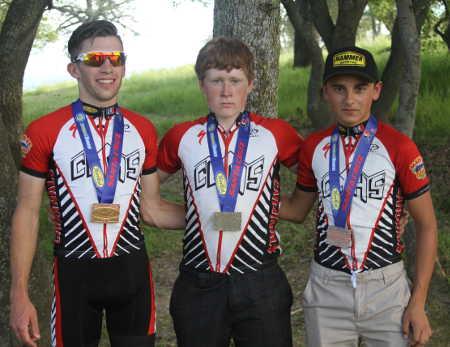
Nathan Barnett (CLHS Varsity) placed third out of 25 riders, Jeffrey “Mark” Morton (CLHS Junior Varsity Division 2) fourth out of 67 and Solano Dominguez (CLHS Sophomore Division 2) got his first top five, placing fifth out of 59.
Responding to the race, Morton stated, “I had a good start to the race and was able to maintain despite a mechanical error.”
Unfortunately this was the second race in a row that Morton’s chain had come off during a race, but he was able to fix it and jump back on to make back up his positioning and then some.
These three young men helped immensely to maintain Clear Lake High Schools current fifth place standing in the Northern NorCal Cycling Leagues Division 2 lineup that includes 33 schools.
All other competitors – besides the two who raced for their first time – were able to improve their placing from the first race including Kelseyville’s Jadon Lindsey (KHS Junior Varsity Division 2) who moved up to seventh out of 67 and Kia Kohler (KHS Sophomore girls) 14th of 27.
Other riders included Clear Lake’s Taylor Buchholz, Zoë Cramer and Gabe Wind, and Kelseyville’s Brandon Anderson, Craig Andre, Zachary Kemp and Mike Pease.
The KHS team is comprised of seniors Craig Andre and Mike Pease, junior Jadon Lindsey, sophomores Brandon Anderson and Kia Kohler and Freshman Zachary Kemp.
The CLHS team includes senior Nathan Barnett, juniors Jeffrey Morton and Gabe Wind, sophomore Solano Dominguez and freshmen Taylor Buchholz and Zoë Cramer.
The teams compete independently but train together under Coaches Tami and Jeff Cramer and David Garzoli.
They train three days per week, riding Boggs Demonstration Forest in Cobb, the Toll Road/Highland Springs area around Lakeport as well as riding “spin” bikes at City Fitness.
A club sport not funded through the schools; all monies are raised by fundraising, donations and sponsors.
The 2015 sponsors include Main Street Bicycles, City Fitness, Wasson Memorial Hospital, Conser Land Surveying, Maherajah Water Skiis and Longboards, Mountain High Coffee and Books, Disney’s Boat Rentals and Edward Jones Investing.
Like them on Facebook at https://www.facebook.com/pages/Lake-County-High-School-Mountain-Bike-Teams/445252418916518 .