 How to resolve AdBlock issue?
Regional
- Details
- Written by: California Transportation Commission
The allocation includes more than $1.6 billion in funding from the federal Infrastructure Investment and Jobs Act of 2021, or IIJA, and nearly $336 million in funding from Senate Bill (SB) 1, the Road Repair and Accountability Act of 2017.
“Thanks to a historic influx of federal funding and our ongoing investments powered by SB 1, California continues to make major progress in rebuilding, revitalizing and reimagining our infrastructure to support a cleaner, safer and more equitable transportation system,” said Caltrans Director Tony Tavares.
Projects approved this week include:
• Approximately $9.6 million toward pavement and roadway improvements along U.S. 101 from Fortuna to Alton in Humboldt County. The $9.6 million allocation includes more than $8.7 million in federal IIJA funding.
• Approximately $22.4 million toward improvements on Route 36 at Hely Creek Bridge, Little Larabee Creek Bridge and Butte Creek Bridge near Bridgeville in Humboldt County. The $22.4 million allocation includes more than $19.9 million in federal IIJA funding.
• Approximately $7.8 million toward the construction of a retaining wall and roadway improvements on Route 96 near Weitchpec in Humboldt County. The $7.8 million allocation includes more than $7 million in federal IIJA funding.
• Approximately $7.5 million toward roadway and sidewalk improvements in Humboldt County along U.S. 101 in Eureka from McCullen Avenue to Commercial Street and the installation of fiber optic communications from traffic signals to the Caltrans District 1 Office. The $7.5 million allocation includes more than $6.7 million in federal IIJA funding.
• Approximately $8.7 million toward roadway improvements in Humboldt County along U.S. 101 in Eureka from north of V Street to 6th Street. The $8.7 million allocation includes more than $7.8 million in federal IIJA funding.
• Approximately $5.4 million toward storm damage roadway repairs and the construction of retaining walls at four locations on Route 169 between Pecwan and Weitchpec in Humboldt County. The $5.4 million allocation includes more than $4.8 million in federal IIJA funding.
• Approximately $6.7 million toward the construction of a bridge for fish-passage improvements along Route 254 from south of Maple Hills Road near Phillipsville in Humboldt County. The $6.7 million allocation includes more than $5.9 million in federal IIJA funding.
• Approximately $32 million toward roadway improvements and the construction of retaining walls along Route 299 near Willow Creek from East Fork Bridge to east of Cedar Creek Road in Humboldt County. The $32 million allocation includes more than $28 million in federal IIJA funding.
• Approximately $616,000 in support allocations toward roadway, drainage and guardrail upgrades near Albion north of Route 128 to South of Navarro Ridge Road in Mendocino County.
• Approximately $1.9 million in support allocations toward roadway improvements along U.S. 101 from the Hopland Overhead to Mountain House Road near Hopland in Mendocino County.
• Approximately $2.2 million in support allocations toward roadway, guardrail and other improvements along U.S. 101 near Hopland from Felix Creek Bridge to First Street in Mendocino County.
• Approximately $1.8 million in support allocations toward roadway improvements on U.S. 101 from Willits to south of Black Bart Road in Mendocino County.
The CTC also adopted the 2022 California Transportation Asset Management Plan at the meeting.
The plan lays out the needs and investment strategies for Caltrans and its partner agencies to maintain the state’s highway infrastructure — including pavement, bridges and other assets — over the next decade.
California’s plan was the first in the nation to be certified by the Federal Highway Administration. The CTC’s adoption finalizes the plan.
SB 1 provides $5 billion in transportation funding annually that is shared equally between the state and local agencies.
Road projects progress through construction phases more quickly based on the availability of SB 1 funds, including projects that are partially funded by SB 1.
For more information about transportation projects funded by SB 1, visit http://RebuildingCA.ca.gov.
- Details
- Written by: Cal Fire
Pile burning will only be conducted during cool weather conditions and with ample fire-suppression resources available at the site.
The fire agencies will provide fire engines and crews to manage the burning process throughout the day, and Regional Parks staff will work in collaboration with the fire agencies.
To reduce smoke and air pollution, we are following best management practices. The burn piles have been cured over several months, reducing the moisture content of the woody material and providing the conditions for a more complete and efficient burn.
The upcoming pile burning at Gualala Regional Park is a continuation of fuels reduction work that began earlier this year with the California Conservation Corps providing the workforce to thin vegetation along the forested windrows and stack the material into burn piles.
This work will help reduce wildfire severity by thinning vegetation to minimize surface and ladder fuels and help protect the remaining trees and adjacent communities from wildfire.
It will also help build and foster collaboration between Parks and fire agency personnel.
For more information about fire safety or controlled burning and its benefits, visit the Cal Fire website at www.fire.ca.gov or call your local Cal Fire facility.
- Details
- Written by: GOVERNOR’S OFFICE
The Community Development Block Grant-Disaster Recovery, or CDBG-DR, funds announced Friday are for foundational infrastructure projects that must be completed as communities work to build and rebuild needed housing, especially housing for low- and moderate-income Californians, and ensure that every household that was displaced in these disasters has the opportunity to return home.
“California remains committed to uplifting and supporting every community impacted by devastating wildfires as they work to rebuild,'' said Gov. Newsom. “Rebuilding after communities are tragically destroyed due to extreme weather is an opportunity to restore economic opportunities and strengthen communities giving them an opportunity to heal.”
In August 2018, the Carr Fire and the Mendocino Complex fire erupted in Northern California, followed in November 2018 by the Camp and Woolsey fires.
These were the most destructive and deadly fires to hit California that year. In total, more than 1.6 million acres burned during 2018.
“We are inspired by residents coming together and working in partnership with the state to rebuild their lives, restore economic opportunities and create a more resilient future,” said Business, Consumer Services and Housing Agency Secretary Lourdes Castro Ramírez. “These dollars represent a major milestone for communities that withstood unimaginable tragedy because of these devastating wildfires. We will continue to work closely with our federal partners in the Biden Administration to bring resources to communities faster and more equitably when disasters hit.”
Communities were awarded funding based on their unmet infrastructure needs and have the flexibility to use the grants to support projects based on their priorities to rebuild in a safe, sustainable, and resilient way.
The Town of Paradise has been awarded nearly $200 million, which will be used to construct critical projects that will accelerate their capacity to rebuild higher density and more affordable housing, business corridors, and critical evacuation routes in the event they face future disasters.
“Rebuilding together is the foundation of the ongoing recovery effort in the Town of Paradise,” said CA Department of Housing and Community Development Director Gustavo Velasquez. “This award of nearly $200 million will support critical infrastructure for the Town as it rebuilds with resilience and climate mitigation central to its goals. We remain committed to supporting the residents of Paradise to recover and rebuild.”
CDBG-DR funds are administered by HCD after receiving the federal allocation by the U.S. Department of Housing and Urban Development (HUD) through the federal CDBG-DR program.
Following is a list of awards announced today:
• Butte County: $72,722,679.61
• City of Chico: $12,388,409.65
• City of Malibu: $47,276.93
• City of Redding: $22,563,043.51
• City of Shasta Lake: $6,326,184.69
• Los Angeles County: $3,788,157.86
• Town of Paradise: $199,592,735.75
Total: $317,428,488
- Details
- Written by: Caltrans
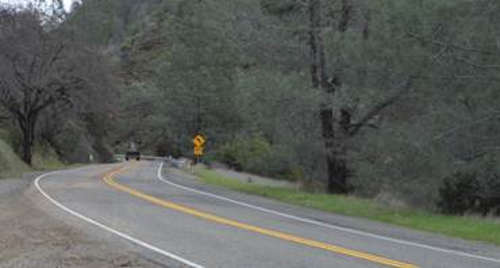
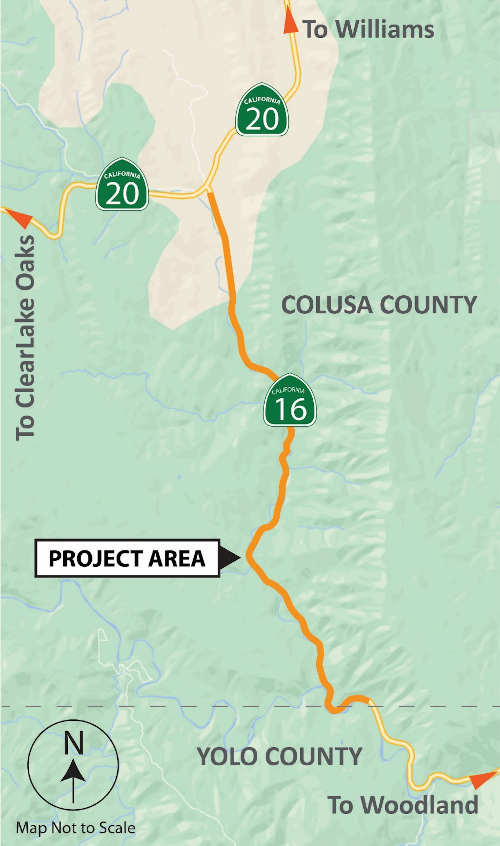
COLUSA COUNTY, Calif. — Caltrans is alerting motorists to expect around-the-clock one-way traffic control next week on State Highway 16 in Colusa County.
Motorists are advised to allow additional travel time when driving on a 7-mile segment of roadway between the Highway 16/Highway 20 junction and the Colusa-Yolo county line.
Construction crews are scheduled to conduct continuous reversing one-way traffic control at various locations from 6 a.m. Monday, Aug. 22, through 6 p.m. Friday, Aug. 26, for pavement work.
From Aug. 29 through the end of October, motorists can expect one-way traffic control in the construction area from 6 a.m. to 6 p.m. Monday through Friday, with possible roadwork occurring on Saturdays.
Flaggers will be stationed at each end of the construction zone during traffic control.
The schedule is subject to change due to weather, equipment or material availability or other unexpected events. Knife River Construction of Chico is the contractor for the $6 million paving project.
Caltrans advises motorists to “Be Work Zone Alert.” The department will issue construction updates on Twitter @CaltransDist3 and on Facebook at CaltransDistrict3. For real-time traffic, click on Caltrans’ QuickMap quickmap.dot.ca.gov/ or download the QuickMap app from the App Store or Google Play.
- California Demonstration State Forest System adds 2,500 acres to statewide total for research, restoration and conservation
- Caltrans and Eureka kick off Clean California Samoa Bridge Murals project at Eureka Street Art Festival
- Huffman, Schiff, Feinstein and DelBene introduce legislation to end future capture and breeding of whales for public display