 How to resolve AdBlock issue?
Veterans
- Details
- Written by: Elizabeth Larson
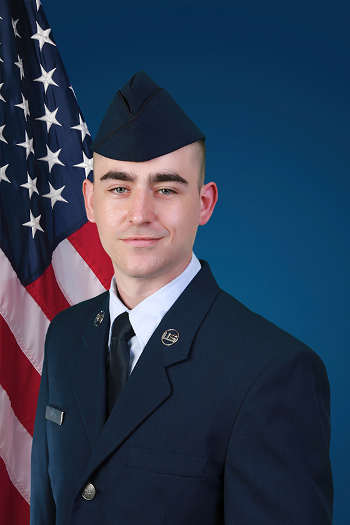
U.S. Air Force Airman Timothy B. Beffa graduated from basic military training at Joint Base San Antonio-Lackland, San Antonio, Texas.
The airman completed an intensive, eight-week program that included training in military discipline and studies, Air Force core values, physical fitness, and basic warfare principles and skills.
Airmen who complete basic training also earn four credits toward an associate in applied science degree through the Community College of the Air Force.
He is a 2017 graduate of Upper Lake High School in Upper Lake, California.
- Details
- Written by: Department of Veterans Affairs
The campaign aims to demystify mental health treatment, build awareness of available mental health resources, and encourage family members and friends to start the conversation with a veteran going through a hard time.
“VA continues to be the nation’s vanguard in reshaping the conversation around mental health treatment and recovery,” said VA Secretary Robert Wilkie. “Since May is Mental Health Month, make this the moment you start the conversation with a loved one or reach out for support if you need it.”
The Moment When campaign will highlight many moments in the broader mental health recovery process: from the moment when a Veteran reached out for support, to the moment when the Veteran realized treatment was working.
Throughout the month of May and beyond, VA encourages veterans and their families to visit www.MaketheConnection.net/MHM to explore stories of recovery and find local resources.
Veterans who are in crisis or having thoughts of suicide, and those who know a veteran in crisis, can call VCL for confidential support 24 hours a day, seven days a week, 365 days a year.
Call 800-273-8255 and press 1, send a text message to 838255 or chat online at www.VeteransCrisisLine.net/Chat.
- Details
- Written by: Department of Veterans Affairs
“VA is serving nearly a half million women veterans and we want to take care of even more,” said VA Secretary Robert Wilkie. “Events like these get them through the doors, so they meet VA health providers and learn firsthand about the comprehensive services and quality care VA provides to women who have served.”
Women are among the fastest growing veteran demographics, accounting for more than 30 percent of the increase in veterans who served between 2014 and 2018.
The number of women using VA health services has tripled since 2000, growing from about 160,000 to nearly 500,000 today.
VA offers a wide range of primary care and specialty services for women veterans, such as health screenings, preconception counseling, maternity care, menopausal support and more.
VA Medical Centers with dedicated women’s health clinics will celebrate National Women’s Health Week by hosting either an open house or outreach events.
Veterans attending these events can speak with health providers about the broad range of services offered at their medical centers and hear from experts on topics such as maternity care and child safe homes. Tours of the clinics and educational materials will be available.
VA is seeking broad public participation and encourages veteran service organization members to participate.
VA encourages women veterans not currently using VA health care services to enroll and use the benefits they have earned.
Call the Women Veteran Call Center for information at 855-VA-Women (855-829-6636) for information or visit https://www.womenshealth.va.gov/.
- Details
- Written by: Elizabeth Larson
Specifically, SB 312 will award grants to certified veteran service dog providers to help veterans with PTSD receive the financial assistance needed – including the cost of service training, equipment and veterinary services – to acquire and keep a service dog.
Studies show that pairing veterans with service dogs has a significant effect on reducing symptoms of PTSD. Unfortunately, accessing service dogs can be extremely difficult for veterans due to cost and a general lack of state or local programs.
“SB 312 will help to eliminate barriers for veterans living with PTSD to get and keep a service dog that will ultimately help to improve the veteran’s mental health and quality of life,” Senator Leyva said. “The need is clear for the many brave veterans seeking to return to their daily lives with the assistance of a faithful canine companion. I thank the members of the Senate Veterans Affairs Committee for standing with our veteran community in California and offering them an important avenue for accessing a service dog.”
California is home to nearly two million veterans, the highest of any state in the nation. These brave men and women risked their lives during their military service and, in some cases, suffered severe trauma that resulted in PTSD.
For veterans, there is an ongoing lack of adequate access to mental health services, which has made reintegration into normal civilian life challenging for these veterans and their families.
The trauma that some veterans endure as a result of combat service has also led to increased rates of suicide.
Sadly, 5 to 20 percent of veterans suffer from PTSD and, on average, 20 veterans per day or 1 every 65 minutes end their lives, a rate higher than non-veterans.
SB 312 is sponsored by USA Strong for Veterans and supported by many organizations, including several American Legion Posts, American Legion District 18, city Of Glendora, Freedom Dogs, Girl Scout Troop 6674, John D. Baca (Medal of Honor Recipient, Army MOH), Kiwanis International Glendora, Rotary Club of Pomona, Town of Bedford, NY and Veterans Canine Intelligence Academy.
This measure will next proceed to the Senate Appropriations Committee for consideration.
- Details
- Written by: Department of Veterans Affairs
Women veterans can now text 855-829-6636 to receive answers and guidance about VA services.
“We want to make it as easy as possible for women veterans to get answers about eligibility requirements, benefits, services and more,” said VA Secretary Robert Wilkie. “By offering new methods of communication, such as texting, we can reach more women Veterans and support their health care needs more quickly.”
The Women Veterans Call Center is staffed by trained, compassionate female VA employees, who can provide and link callers to available resources, such as health care, benefits and cemetery information via phone, chat and now text.
The new texting feature aligns this service with other VA call centers that provide information and assistance to Veterans who are in crisis, at risk for suicide and becoming homeless.
VA works to meet the unique requirements of women, while offering privacy, dignity and sensitivity to gender-specific needs.
Since April 2013, the call center has received nearly 83,000 inbound calls and has initiated almost 1.3 million outbound calls.
As the number of women veterans continues to grow, VA is expanding its outreach to ensure they receive enrollment and benefit information through means that are user-friendly and responsive.
Women are among the fastest-growing Veteran demographics, accounting for more than 30 percent of the increase in veterans who served between 2014 and 2018.
The number of women using VA health care services has tripled since 2000, growing from about 160,000 to over 500,000 today.
This continued growth underscores VA’s commitment to enhancing communication and outreach to the growing population of women veterans.
For more information about the Women Veterans Call Center, visit Women Veterans Health.
- Details
- Written by: Department of Veterans Affairs
“Providing same-day 24/7 access to mental health crisis intervention and support for veterans, service members and their families is our top clinical priority,” said VA Secretary Robert Wilkie. “It’s important that all veterans, their family and friends know that help is easily available.”
VA’s Office of Mental Health and Suicide Prevention is the national leader in making high-quality mental health care and suicide prevention resources available to veterans through a full spectrum of outpatient, inpatient and telemental health services.
Additionally, VA has developed the National Strategy for Preventing Veteran Suicide, which reflects the department’s vision for a coordinated effort to prevent suicide among all service members and Veterans.
This strategy maintains VA’s focus on high-risk individuals in health care settings, while also adopting a broad public health approach to suicide prevention.
VA has supported numerous veterans and has the capacity to assist more. In fiscal year (FY) 2018, 1.7 million veterans received Veterans Health Administration mental health services. These patients received more than 84,000 psychiatric hospital stays, about 41,700 residential stays and more than 21 million outpatient encounters.
Nationally, in the first quarter of FY 2019, 90 percent of new patients completed an appointment in a mental health clinic within 30 days of scheduling an appointment, and 96.8 percent of established patients completed a mental health appointment within 30 days of the day they requested.
For FY 2018, 48% of initial, in-person Primary Care — Mental Health Integration, or PC-MHI, encounters were on the same day as the patient’s PC encounter. During the first quarter of FY 2019, 51 percent of initial, in-person PC-MHI encounters were on the same day as the patient’s PC encounter.
Veterans in crisis – or those concerned about one – should call the Veterans Crisis Line at 800-273-8255 and press 1, send a text message to 838255 or chat online at www.VeteransCrisisLine.net.
- Details
- Written by: Department of Veterans Affairs
NCA will participate in Carry The Load’s Memorial May awareness campaign, which covers 40 states, leading up to Memorial Day 2019.
Participants will march or ride bicycles in an 11,500-mile national relay along three routes – East Coast, West Coast and Midwest – handing off an American flag every few miles.
Each participant walks or rides to “carry the load” for a deceased military service member or veteran, remembering them and honoring their sacrifice. Twenty-six VA national cemeteries in 17 states will serve as relay points for Carry The Load memorial marches.
“The VA is delighted to partner with Carry The Load in this important initiative of honoring those who sacrificed for our freedom to ensure no veteran ever dies,” said VA Secretary Robert Wilkie. “It’s a mindset that every one of VA’s employees emulates. And nowhere is the sacrifice made by our veterans more evident than in our national cemeteries.”
In conjunction with the Carry The Load national relay, each VA national cemetery along the three routes will host a brief ceremony unveiling a commemorative plaque dedicated to America’s fallen veterans and their families.
To view the list of the 26 participating VA national cemeteries and the dates and times they will host the Carry The Load relay and “Tribute to the Fallen and Their Families” plaque dedication ceremonies, download the calendar.
VA operates 136 national cemeteries and 33 soldiers’ lots and monument sites in 40 states and Puerto Rico.
For veterans not buried in a VA national cemetery, VA provides headstones, markers or medallions to commemorate their service.
Information on VA burial benefits is available from local VA national cemetery offices, online at https://www.va.gov/burials-memorials/ or by calling VA regional offices toll-free at 800-827-1000.
To make burial arrangements at any open VA national cemetery at the time of need, call the National Cemetery Scheduling Office at 800-535-1117.
- Details
- Written by: Elizabeth Larson
The funds will be used by the California Department of Veterans Affairs to provide home loans to veterans in California.
"Today’s veterans have answered our nation’s call in unimaginable ways," Treasurer Ma said. "Multiple deployments, families placed on hold, injuries – these are among the many important reasons we would want to offer a special salute to the dedicated men and women of the armed forces. It is an honor to play a part in the continuation of this critical program that ensures homeownership opportunities."
The bonds were competitively offered in two separate bid groups, Bid Group A was awarded to Raymond James & Associates, Inc. at a true interest cost of 3.52 percent and Bid Group B was awarded to J.P. Morgan Securities LLC at a true interest cost of 3 percent.
Since its establishment in 1921, the CalVet Home Loan program has provided loans to more than 425,000 veterans in California.
The program’s guiding principle is to provide the best product for the lowest possible cost, without costing California taxpayers a penny.
For more information about the CalVet Home Loans, call 1-916-503-8318 or visit www.calvet.ca.gov/HomeLoans.
A calendar of all upcoming state bond sales is available at www.BuyCaliforniaBonds.com.
- Details
- Written by: Department of Veterans Affairs
Dr. Patrick Feeney was presented the 2019 Jerger Career Award for research in audiology at the American Academy of Audiology’s annual meeting March 29.
The Jerger Award is given annually to an investigator whose research contributions have significantly impacted the practice of audiology. Over the past 30 years, Feeney’s research has focused on peripheral and central auditory function in Veterans and others.
“Hearing loss and tinnitus have long been among the disabilities affecting Veterans,” said VA Secretary Robert Wilkie. “The innovative research conducted by Dr. Feeney and his team is critical in finding ways to address these issues.”
Feeney directs the National Center for Rehabilitative Auditory Research, or NCRAR, at the VA Portland Health Care System in Oregon.
NCRAR, funded by VA Rehabilitation Research and Development, is the only VA research center dedicated to the discovery and delivery of innovative solutions for Veterans with hearing impairments.
The center educates Veterans and the public about preventing hearing loss and coping with tinnitus – or ringing in the ears. It partners with institutions in the community to promote education, share clinical information, and train auditory researchers and clinicians.
Feeney has worked as a clinical audiologist and served on the faculty at several research institutions.
He is a professor at Oregon Health and Science University, is active in several professional organizations and was past president of the American Academy of Audiology from 2008 to 2009. He also has been a faculty member at Ohio State University and the University of Washington.
Feeney has contributed to more than 50 publications in peer-reviewed journals, 11 textbook chapters for the profession of audiology and more than 50 published abstracts.
To learn more about VA research on hearing loss, visit www.research.va.gov/topics/hearing.cfm.