 How to resolve AdBlock issue?
News
- Details
- Written by: Elizabeth Larson
The Clearlake Oaks Post Office is located at 13280 E. Highway 20.
“A runaway vehicle crashed through the building yesterday, forcing retail operations to be temporarily suspended,” a Friday statement from the US Postal Services’ San Francisco office said.
Sgt. Joel Skeen of the California Highway Patrol’s Clear Lake Area office said the crash occurred when a young woman accidentally stepped on her vehicle’s gas pedal rather than the brake pedal.
He said it caused a wall collapse and resulted in minor injuries to a little girl and an older man inside the building.
“Nobody was in need of medical transport so pretty minor overall, other than the building damage,” Skeen said, adding that no drugs or alcohol were suspected as factors in the crash.
Postal Service spokesperson Kristina Uppal said the vehicle hit the front entry portion of the building where the postal lobby is located, causing damage to a window, walls and postal equipment, and making it unsafe on Friday to open for retail services.
“Efforts are underway to make the building accessible and safe. We appreciate our customers' patience as we recover from this accident,” said Uppal.
Uppal said PO Box mail and packages were available for pick up at the rear entrance of the building during normal business hours on Friday, while retail operations were available at the Clearlake Post Office, 14500 Olympic Drive.
“This is again just a temporary closure of retail services only for the safety of our customers and staff,” Uppal said Friday.
Later on Friday, the Postal Service reported that the Clearlake Oaks Post Office would resume retail services and lobby access on Saturday on its regular schedule.
The Clearlake Oaks Post Office is open for retail operations and PO Box pickup from Monday through Friday, 8:30 a.m. to 4:30 p.m., and Saturday, 8:30 a.m. to noon.
Many retail services including temporary forwards, stamps and more are also available anytime, online at https://www.usps.com/.
Email Elizabeth Larson at
- Details
- Written by: Elizabeth Larson
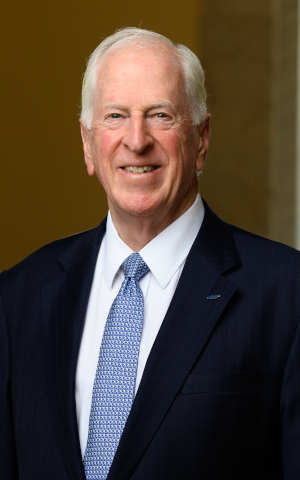
On Friday, U.S. Representative Mike Thompson (CA-04) was sworn in as a member of the United States House of Representatives by Speaker of the House Mike Johnson.
The swearing-in ceremony for Thompson and hundreds of other recently elected House members took place after Johnson was reelected as speaker.
“It’s the honor of my life to serve the people of the community where I was born, grew up, raised my own family and live today,” said Thompson. “Over the next two years, my priority will remain the same: To deliver for the constituents of the Fourth District. That includes working to lower costs, improve community safety, fight climate change, and protect your fundamental rights and freedoms.”
Thompson was reelected on Nov. 5 to serve California’s Fourth Congressional District, which includes all of Lake and Napa counties, and parts of Solano, Sonoma and Yolo counties.
An Army veteran who reached the rank of staff sergeant in the 173rd Airborne Brigade and received the Purple Heart while serving in Vietnam, he became the first Vietnam veteran elected to the California Senate in 1990.
Thompson then ran successfully in 1998 for Congress, where he has served ever since.
On Friday, he was once again added to the rolls of the House upon executing the oath of office.
Thompson, a Democrat, is a senior member of the House Committee on Ways and Means, chairman of the House Gun Violence Prevention Task Force, co-chair of the bipartisan, bicameral Congressional Wine Caucus and a member of the fiscally-responsible Blue Dog Coalition.
Email Elizabeth Larson at
- Details
- Written by: LAKE COUNTY NEWS REPORTS
Also known as pertussis, whooping cough is a highly contagious bacterial disease that can be spread though coughing and can cause severe illness, especially in infants.
The California Department of Public Health, or CDPH, is urging all Californians — especially those who are pregnant and those who provide care to infants — to be up to date on their Tdap (tetanus, diphtheria, pertussis) vaccine to help prevent whooping cough.
Individuals vaccinated against whooping cough are protected against severe illness and complications due to whooping cough.
These complications can be most severe in infants, causing apnea (dangerous pauses in breathing) and can be fatal.
More than 2,000 cases of whooping cough were reported statewide between January and October 2024. 62 of those cases were infants less than four months of age who were hospitalized, including one infant who tragically died. During the same time range in 2023, there were less than 400 whooping cough cases reported in the state.
“Since the COVID-19 pandemic has subsided, many practices that had lowered instances of whooping cough are no longer in place, and we’re seeing the disease return to pre-pandemic levels,” said Dr. Tomás J. Aragón, CDPH director and State Public Health officer. “Infants are particularly vulnerable and that’s why CDPH especially encourages people who are pregnant to receive the Tdap vaccine in their third trimester which will pass along protective antibodies to the baby.”
Health officials’ recommendations
With whooping cough cases rising, ensure you are up to date on your whooping cough vaccine. Vaccination is recommended for all:
• Pregnant people between 27 and 36 weeks of pregnancy, even if they have received Tdap in the past.
• Adults, every 10 years.
• Adolescents aged 11 or 12 years (Tdap vaccine is also required for 7th grade advancement in California).
• Infants and young children receive their own whooping cough (DTaP) vaccines starting at 2 months through 4-6 years of age. Babies and children who haven't had all recommended doses are more likely to have serious complications.
Talk to your doctor or pharmacist about which vaccines are right for you and your family.
People with whooping cough have severe coughing attacks that can last for months. Infants too young for vaccination are at greatest risk for hospitalization and death.
Early signs of whooping cough are similar to symptoms of the common cold such as a runny or stuffy nose and low-grade fever. Babies with whooping cough may have trouble breathing, turn blue or stop breathing.
To protect infants from whooping cough, CDPH strongly urges maternal immunization with Tdap (tetanus, diphtheria, pertussis) vaccine in the last trimester (between 27 and 36 weeks) of every pregnancy.
When given during pregnancy, Tdap is approximately 90% effective in preventing infant hospitalizations due to whooping cough. It is also beneficial for all family members and caregivers of newborns to receive either the Tdap (for adults and children older than seven) or DTaP (for those seven years of age or younger) vaccines to prevent spreading whooping cough to infants.
CDPH said these vaccines are safe and effective and can be received at the same time as flu, COVID or RSV vaccines.
Tdap vaccines are widely available at many doctor offices and pharmacies. Schedule a vaccine appointment by visiting https://myturn.ca.gov/ or contacting your local pharmacy or health care provider.
Most health insurance plans, including Medi-Cal, cover Tdap vaccines. Individuals experiencing difficulty finding a place to get immunized may contact their health care provider or local health department for help.
The Vaccines For Children, or VFC, program is a federally funded program that provides vaccines at no cost to children (18 and younger) who might not otherwise be vaccinated because of an inability to pay. Contact your doctor to learn if they are enrolled in VFC or visit MyTurn to find a location based on your eligibility.
Get more information about whooping cough or pertussis by visiting CDPH’s Pertussis (Whooping Cough) webpage or CDC’s Whooping Cough Vaccination webpage.
- Details
- Written by: DENNIS FORDHAM
Under California’s new Uniform Directed Trust Act, trusted advisors can be granted control of certain aspects of the trust administration as trust directors.
Also, settlors now can allow co-trustees to divide (compartmentalize) the trust administration between themselves such that co-trustees are no longer responsible for each other’s administration.
Thus, California now allows the trustee’s duties and powers to be segmented and allocated amongst two or more fiduciaries (legal representatives of the trust) who collectively administer the trust.
Until recently, the administration of the trust was always controlled and managed by one or more trustees with full authority and powers over the trust in their hands alone.
Trustees can still hire agents and delegate certain functions. Nonetheless, under Probate Code Section 16012 (a), “The trustee [still] has a duty not to delegate to others the performance of acts that the trustee can reasonably be required personally to perform and may not transfer the office of trustee to another person nor delegate the entire administration of the trust to a co-trustee or other person.”
That is, the trustee has certain non-delegable duties and even if there is a co-trustee involved, neither co-trustee could transfer all responsibility to the other co-trustee.
Now, however, a settlor can establish a trust that divides the trust administration across two or more fiduciaries and diminishes the trustee’s role; perhaps even reducing the trustee to simply holding title to trust assets and performing ministerial duties.
That is, advisors whom the trustee once might have appointed as agents under the trustee’s supervision may now be nominated by the settlor when establishing the trust as “trust directors” to oversee aspects of the trust administration.
As implied, the trust director directs (tells) the trustee to take action within the scope of the trust director’s authority. The directed trustee, as implied, is a trustee whose actions are directed (governed) by one or more trust directors, provided such directions are given within the trust director’s authorized scope of authority.
A trusted financial advisor might be appointed by the settlor as trust director for Investments. The financial advisor might be allowed to make certain investment choices that a trustee would otherwise not be allowed to perform such as investments that would violate the duty to diversify and/or not to invest in speculative / risky assets.
For example, the settlor may want the trust director for Investments to invest in certain possibly high gain / high risk assets (e.g., crypto currency) that the trustee could not do. Naturally, the trust instrument would need to waive California’s statutory diversification and risky asset rules that prohibit such trust investments.
Importantly, the directed trustee has no duty to supervise or to second guess the trust director’s own judgment in either using or not using the trust director’s authority and powers. Nonetheless, the directed trustee still cannot implement a direction given by the trust director if doing so would be a willful breach of the trustee’s fiduciary duty.
Furthermore, the directed trust act also allows co-trustees to control different aspects of a trust’s administration separately.
For example, a special co-trustee with a professional license may be given exclusive authority to control and to manage the settlor’s professional (licensed) practice (e.g., a dentistry), if the professional settlor became incapacitated or died.
The settlor’s spouse might be the other co-trustee with general control over all other trust assets. The settlor’s spouse still has authority to receive assets from the co-trustee managing the settlor’s professional practice (such as money if the practice were sold).
The spouse as general co-trustee would administer the trust for the benefit of the settlor’s family while the special co-trustee winds up the professional practice.
In sum, California law allows for responsibilities for a trust administration to be segmented amongst a variety of fiduciaries (representatives), with unequal and compartmentalized powers, in order to achieve more desired results.
The foregoing discussion is not legal advice. Anyone confronting such estate planning issues should consult with a qualified attorney.
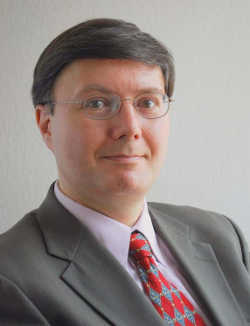
Dennis A. Fordham, attorney, is a State Bar-Certified Specialist in estate planning, probate and trust law. His office is at 870 S. Main St., Lakeport, Calif. He can be reached at