 How to resolve AdBlock issue?
News
- Details
- Written by: Diana Drips
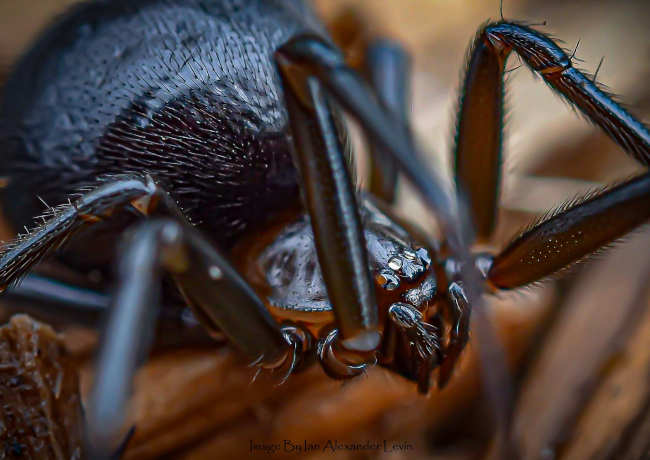
For many, the autumnal equinox brings a sense of hope and the promise of relief from the heat. For others, it is a reminder that the spooky season is inching closer, one cobweb at a time.
As the days shorten and the weather cools, we will indeed begin to see more spiders in their webs, and one spider takes center stage when it comes to the spooky: the infamous Western black widow.
They are one of the most feared spider species and one of the most misunderstood.
You have no doubt heard horror stories about them lurking in garages and woodpiles, waiting for an opportunity to jump out and bite you.
Very spooky indeed, but spoiler alert, they can’t jump, and they only bite under very specific circumstances. More on this later.
While I love a scary story at Halloween, I think this villain deserves a bit of a rebrand. So, allow me to reintroduce you to one of our fascinating and misunderstood neighbors.
The Western black widow, Latrodectus hesperus, is a species of spider native to western North America and is one of 32 known species of Latrodectus spiders worldwide.
Females are identifiable by their shiny black exoskeleton, bulbous abdomen and red hourglass on their underside, growing up to 1.5 inches in length.
In contrast, males are light brown or gray with white and orange markings and are only about half the size of females.
Female black widows can live up to three years, but a typical lifespan is one year. Males, in contrast, live only one to two months after reaching adulthood.
Females will not venture more than a foot or two from their web during their lifetime. This makes for interesting nature watching; if you know where one lives, you can pretty much be guaranteed to find her again tomorrow evening and the evening after that. If she survives the winter, she will come out in the same spot in spring.
They make their irregular, messy webs about 1 to 2 feet off the ground, and unlike spiders that make new webs daily, Latrodectus hesperus works on the same web throughout their lives, often eating damaged parts of the web to reuse the silk. During web maintenance we can really see their beauty, as they seem to dance, pirouetting upside down as they strengthen their web.
Being primarily nocturnal, they have very poor vision, using their eyes to sense motion and light. They are, however, highly perceptive to the slightest movement and have tiny cracks called slit sensilla on their legs that allow them to sense movement and soundwaves, prompting scientists to compare their legs to ears. Fascinatingly, spiders’ webs have been theorized to be a sort of external mind, an extension of the spider’s sensory experience.
You may have heard the distinct crackling sound of a black widow web being broken, a sign of the unique strength of their silk among spiders. Their silk is stronger than steel by weight. Highly effective predators, they use their powerful web to capture insects like mosquitoes, flies, wasps, cicadas and even cockroaches, helping to keep our ecosystem in balance.
While they are fierce predators, they are otherwise quite docile. For spiders, it is nearly always better to flee rather than fight when faced with a threat. Their telltale red hourglass is meant as a silent warning to potential predators to keep our distance. Venom is metabolically expensive, a precious resource used to immobilize prey, it is rarely used for defense.
Researchers Nelsen, Kelln and Hayes conducted a study in 2013 at the University of Loma Linda in which Western black widows exhibited decision making about resource use when assessing a threat, choosing to use venom only when deemed absolutely necessary.
In the study, 43 Western black widow spiders were “poked” and “pinched” using artificial fingers to assess frequency of biting behavior when threatened. The findings: not a single spider bit after one poke by an artificial finger, instead fleeing or moving away from the threat.
Surprisingly, none of them bit even after 60 repeated pokes! It was only after being pinched between two fingers that 60% of the spiders did bite, but of those bites only 50% contained venom.
A bite without venom, or a “dry bite,” is meant to cause initial pain and deter the threat, and while painful, it does not pose a health risk. (Do not try this at home!)
According to Merri Lynn Casem, professor and spider researcher at Cal State Fullerton, the symptoms resulting from a venom-containing bite are caused by the protein alpha latrotoxin. Symptoms can include nausea, vomiting, pain and abnormal heart rate.
Modern treatments for bites focus primarily on pain relief. An antivenom can be used in severe cases. In cases where serious symptoms occur, it is usually due to an allergy, rather than the venom itself. The reality is that humans rarely die from a black widow bite. In fact, the last documented case of a death by a black widow bite in the US was in 1983.
Female black widows also have the reputation of being the femme fatale; the story goes that they habitually feast on males after mating.
The truth is that most male black widows live to mate again. In fact, according to natural history scientists at Seattle’s Burke Museum, there has never been an observed incident of a Latrodectus hesperus female eating a male after mating outside of captivity. There are other species of widow spiders that do habitually eat their mates, but in this species, the namesake is largely a myth based on behavior in captivity.
Males identify themselves with pheromones and with a specific set of movements as they enter the web of a potential mate to avoid being mistaken for prey. Males are known to occupy and guard the webs of females from other males, sometimes tearing down sections of her web to deter other males, a behavior called “web reduction.” Once mating has occurred, he then leaves her web, most often unscathed and in search of another mate.
Latrodectus hesperus are protective mothers. They are more prone to bite when their egg sac is threatened.
The abdomen of a gravid (pregnant) widow swells before her eggs are laid. Those big widows you have seen are not more fearsome, they are simply pregnant. In spring and summer, they lay tiny pink eggs and spin a protective silk egg sac.
They can have multiple egg sacs in a year, each containing hundreds of eggs, but only one to 12 of the hatchlings from a sac survive longer than 30 days.
Like many tall tales told around Halloween, the truth is much less spooky when we learn the details.
I hope that when you see a beautiful Western black widow this fall, that you think twice about squishing her, and that you maybe even compliment her on her fabulous dance moves and thank her for keeping our fly numbers in check.
Diana Drips is a Certified California Naturalist. Tuleyome is a 501(c)(3) nonprofit conservation organization based in Woodland, California. For more information go to www.tuleyome.org.
- Details
- Written by: LAKE COUNTY NEWS REPORTS

LAKE COUNTY, Calif. — Next year, a new partnership amongst animal welfare organizations is planning to bring more low-cost spay/neuter clinics to Lake County.
Pet Fix – Lake County recently made its debut on Facebook, announcing badly needed affordable spay/neuter services for Lake County dog and cat owners.
Pet Fix is the result of a partnership between the Clearlake Animal Association, SPCA of Lake County and Dogwood Animal Rescue Project, based in Santa Rosa. All three organizations are 501 (c) 3 animal welfare nonprofits.
“The core team from the three nonprofits have been working on the logistics for these clinics with Animal Balance for a few months now, and are very pleased to be able to offer low-cost spay/neuter programs to the community,” said Charmaine Weldon, president of Clearlake Animal Association.
Animal Balance is a global organization that provides logistics and veterinary services in support of local low-cost spay/neuter clinics.
The first clinic is scheduled for February 2025 and will serve 200 cats and dogs. The plan is to hold five clinics during 2025, potentially serving hundreds more owned dogs and cats.
Spaying and neutering will considerably reduce the number of puppies and kittens and positively impact the pet overpopulation in Lake County.
“As a veterinarian holding spay-neuter clinics in Lake County since 2015, I'm so excited and proud for this coalition of Lake County animal groups to be coming together to increase the access to spay and neuter for all Lake County animals in 2025,” said Dr Jennifer Eisley DVM from Lake County SPCA.
“I am also thrilled that we are partnering with Animal Balance, a group with over 20 years of experience bringing spay-neuter campaigns to underserved communities internationally and nationally,” Eisley added. “These campaigns, plus the ongoing efforts of the SPCA of Lake County, will hopefully help us to make a bigger impact to improve the lives and health of Lake County Animals going forward.”
“Dogwood has long recognized the desperate need for low-cost spay/neuter in Lake County, we're thrilled to be partnering with Clearlake Animal Association and the SPCA to curb the overpopulation crisis and end suffering," said Charlotte Pearce, Dogwood Animal Rescue, co-founder and board member.
“What we are seeing,” said Denise Gilmer, administrator of the Clearlake Community Canine Coalition Facebook page, “is the number of loose, intact dogs with an increase during peak female heat seasons of spring and fall guarantees an increase in litters of puppies being posted for rehoming and reports of abandoned puppies on social media two to three months later.”
A recent survey of puppies needing homes, or found abandoned tallied 319 puppies from mid-August until Oct. 2, and that number is growing daily.
From December 2023 through April 2024, 1,355 individual loose dogs reported on social media in Lake County were counted by a Clearlake Animal Association volunteer.
That tally included 116 puppies and 12 nursing mothers. Only a few nursing mothers had puppies with them, indicating there were unidentified litters of puppies somewhere near where the mothers were sighted.
Over 60% of the loose dogs were observed within the approximately 10 square miles of the city of Clearlake.
“This is a community project and an example of what can be accomplished when local animal welfare organizations work together for solutions,” said Weldon. “Successful spay/neuter clinics depend on volunteers and donations.”
Volunteers can help make the day of a clinic go smoothly by helping with various jobs. Donations help offset the cost of the clinics.
Interested community members are encouraged to follow Pet Fix – Lake County on Facebook. There is a current call for volunteers to help at the upcoming clinics.
The minimum cost to support reduced-fee spay/neuter services is $37,000 per clinic. Pet Fix – Lake County aims to raise a total of $185,000 to fund all five clinics.
Donations to Pet Fix are being accepted through the Dogwood Animal Rescue Project at their website.

- Details
- Written by: Elizabeth Larson
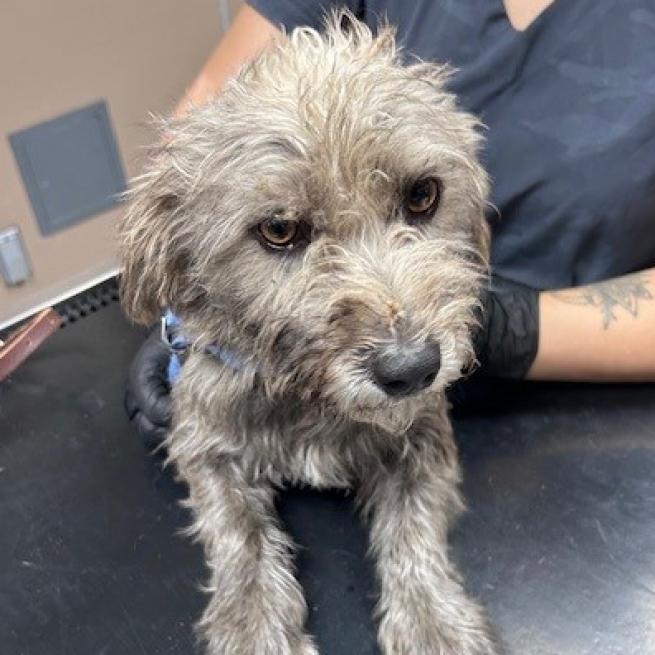
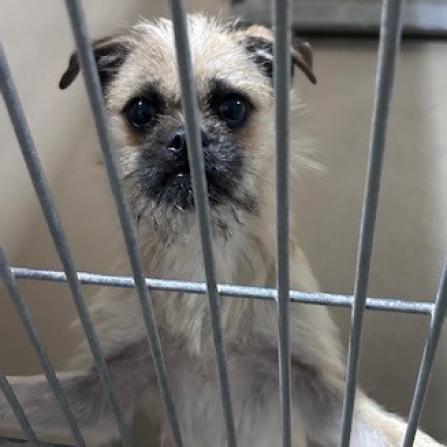
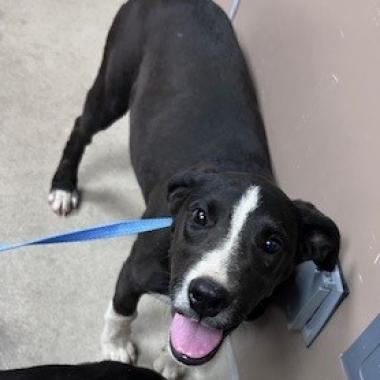
The dogs available for adoption this week include mixes of Australian shepherd, border collie, boxer, cane corso, Chihuahua, German shepherd, husky, Labrador Retriever, pit bull terrier and terrier.
Dogs that are adopted from Lake County Animal Care and Control are either neutered or spayed, microchipped and, if old enough, given a rabies shot and county license before being released to their new owner. License fees do not apply to residents of the cities of Lakeport or Clearlake.
Those dogs and the others shown on this page at the Lake County Animal Care and Control shelter have been cleared for adoption.
Call Lake County Animal Care and Control at 707-263-0278 or visit the shelter online for information on visiting or adopting.
The shelter is located at 4949 Helbush in Lakeport.
Email Elizabeth Larson at




















- Details
- Written by: Jane Gifkins, Griffith University
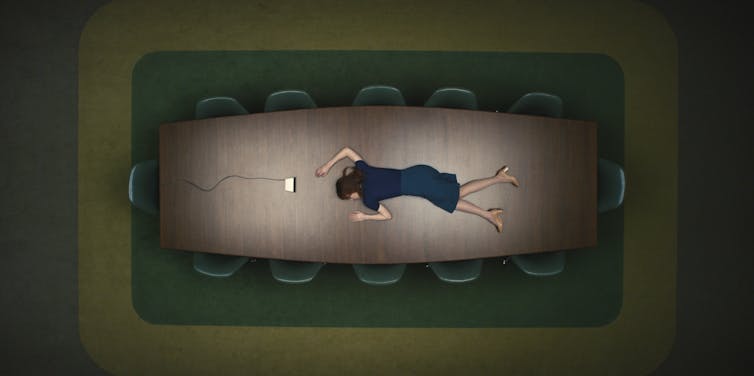
In the hit dystopian TV series Severance, employees at biotech corporation Lumon Industries find it easy to separate work and home life. A computer chip is inserted in their brains to act as a “mindwipe”. They leave all thoughts of home behind while at work, and completely forget about their work when at home.
While the show explores the pitfalls of such a split in consciousness, there’s no denying it’s a tantalising prospect to be able to “flick the off switch” and forget about work whenever you’re not actually supposed to be working.
This is known as “psychological detachment”. People who can do it are happier and healthier, and experience less fatigue. But many of us struggle to detach and disconnect mentally from work, particularly when our jobs are demanding and stressful.
It may not be enough simply to be physically away from work, particularly in an era when so many of us work from home. We also have to stop thinking about work when we’re not there – whether it’s fretting over your to-do list while out at dinner, thinking about your unanswered emails while you’re at your daughter’s soccer game, or lying in bed pondering what you’ll say at tomorrow’s board meeting.
The art of detachment
Your choice of activity outside work can be crucial to this process of psychological detachment. To learn more about what strategies are most effective, my research surveyed nurses who were working shifts in hospital emergency departments in 2020, a highly stressful work environment.
My colleagues and I collected data from 166 nurses, using a survey called the Recovery Experience Questionnaire. This included collecting information about the underlying psychological experiences associated with home-time activities, such as feeling relaxed while reading a book or going for a walk.
Importantly, our survey results also showed nurses who were better able to forget about work had less fatigue and better physical and mental health.
Our results identified three key strategies that helped our survey participants to reduce fatigue and mentally recover from work:
- exercise
- spending time with family and friends
- leisure pursuits.

The physical benefits of exercise are well known. But exercising – whether it’s doing yoga, going for a run or playing netball – also brings mental benefits by encouraging you to focus deeply on what you’re doing rather than dwelling on outside thoughts.
Friendship and social connection are also good for our wellbeing. Research suggests people who have plenty of friends and confidants are less likely to die from chronic disease. And one study found people who undertake a difficult task with the help of a friend have fewer abrupt changes in heart rate than those who tackle the task alone.
Deliberately making time to spend with family, friends or pets can help us forget about work at home, and to centre our attention instead on what is important to us besides work.
Many of the nurses in our study reduced the effects of fatigue during home time by pursuing hobbies and interests such as sewing or gardening. But you shouldn’t worry too much about what specific activity you pursue – the main thing is to pick something you find pleasurable and engaging, and which fits comfortably around your existing commitments.
Leave your work at work
Finally, switching off from work also means not letting your work come home with you. Where possible, complete all your daily tasks so these aren’t on your mind at home. Unplug from work-related technology by not checking work emails or texts.
Of course, technology and working from home have now made separating work and home even harder. But setting healthy routines can help put mental as well as physical boundaries around your work time – even when your workplace is in the next room.
Jane Gifkins, Researcher, Centre for Work, Organisation and Wellbeing, Griffith University
This article is republished from The Conversation under a Creative Commons license. Read the original article.