 How to resolve AdBlock issue?
News
- Details
- Written by: Lake County News reports
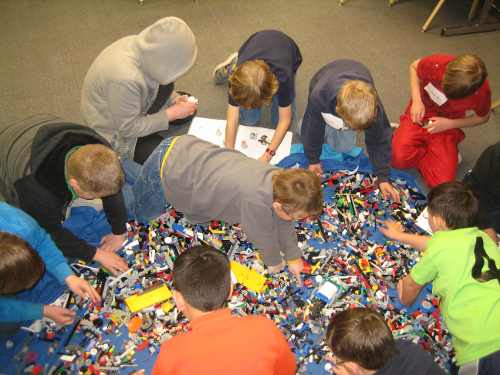
KELSEYVILLE, Calif. – The Lake County Office of Education’s Science Center at Taylor Observatory recently organized the first countywide robotics workshop.
The workshop took place on Saturday, Feb. 18, at the center's facility in Kelseyville, under the direction of Facility Coordinator Barbara McIntyre.
Michael Schenck, director of technology for Konocti Unified School District and his third grade son Alex, who has been working with Lego robots for more than three years, helped to support the effort.
The workshop was run by members of an award-winning robotics team from Folsom; ninth grader Akshay Rathish and eleventh grader Saiyeesh Rathish along with their father, Rathish Jayabharathi, an engineer for Intel.
After nearly a decade of supporting his sons’ interest in robotics, Rathish became inspired to help other robotics groups develop. He says that “robotics is one way for kids to learn engineering concepts without knowing that they are actually learning.”
This was the first in what is planned to become an ongoing series of workshops for children and adults throughout the community.
In each of the two-hour sessions, 20 students, ages 9 to 14 worked in teams. Each group included two roboticists, one laptop and one Lego MindStorm NXT 2.0 robotics kit.
During the first session, facilitators provided a brief overview of robots in our world today, leading into the hands-on construction of a robot and finishing with general programming techniques.
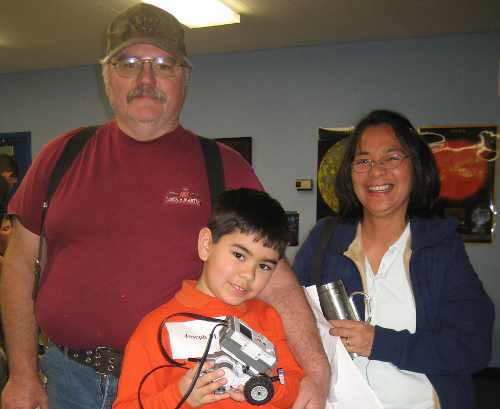
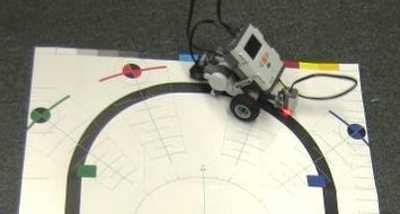
In the second session participants utilized these robots and programmed them to perform various goals; move in a square or triangle pattern from a series of scripted commands, move forward or backward when the sound sensor detects a loud noise and follow a line using the reflected light sensor.
Children and adults were equally excited about bringing Legos “to life” with these fun and intriguing robotics kits.
This interactive learning modality inspires interest in Science, Technology, Engineering and Mathematics (STEM) skills in a rich, experiential environment.
Children's Museum of Art and Science (CMAS), in partnership with Konocti Unified School District, is piloting a program at Lower Lake Elementary this year.
CMAS' goal is to act as a facilitator to bring students together with these kinds of materials, increase awareness and support for kids having access to experiences like these.
Upper Lake High School has been working with advanced robotics concepts and programming skills for several years, with students attending state and national competitions.
The Taylor Observatory has developed a strong interest in integrating robotics into core curricular areas, after-school programs, weekend and summer workshops and science camps throughout Lake County.
Several countywide K-12 staff members were in attendance as parents, community members and interested
supporters.
“My son would not stop talking about the workshop all evening long. We hit upon something that I think he would like to continue working on,” said Bill Grossner, network systems analyst of Kelseyville Unified School District commented.
If you would like additional information about the Taylor Observatory's venture into the exciting world of robotics, or would like to have your child added to the list of future participants, please contact Barbara McIntyre at 707-262-4121 or via e-mail at
The Taylor Observatory-Norton Planetarium Web site can be found at www.taylorobservatory.org .
Follow Lake County News on Twitter at http://twitter.com/LakeCoNews, on Tumblr at www.lakeconews.tumblr.com , on Google+, on Facebook at www.facebook.com/pages/Lake-County-News/143156775604?ref=mf and on YouTube at www.youtube.com/user/LakeCoNews .
- Details
- Written by: Lake County News reports
After years of increases in the rates of childhood obesity, a new UC Davis study shows that the increase slowed from 2003 to 2008 among California school children.
While encouraged by the results, the authors expressed concern about a group of youngsters currently driving the increase in obesity: children under age 10.
“Children who were obese entering the fifth grade remained obese in subsequent years as well, despite improvements in school nutrition and fitness standards,” said William Bommer, professor of cardiovascular medicine at UC Davis and senior author of the study. “And we suspect that this trend begins before kindergarten.”
Published in the February 2012 issue of the American Heart Journal, the results indicate a major turning point in efforts to reduce the impact of a chronic condition linked with a host of serious adult health issues that can begin in childhood, including heart disease, diabetes, breathing issues and some cancers.
Bommer served on a state task force that recommended standards to help protect K-12 children and teens from diseases related to sedentary living and unhealthy eating.
As a result, new laws in 2005 expanded fitness programs, nutrition education and alternatives to high-fat, high-sugar foods and beverages in California schools.
Since 1996, California schools have reported to the state Department of Education the results of a variety of fitness and body composition evaluations for fifth, seventh and ninth graders.
Body composition evaluations included body mass index – or BMI – measures, which determine if a child has a healthy weight or is overweight or obese.
Data on all students from 2003 to 2008 were provided to Bommer to evaluate and gauge the success of the new standards. For the current study, he and his colleagues included data on a total of 6.3 million students for whom complete fitness test results and body composition evaluations were available.
There were some encouraging results.
While childhood obesity is still on the rise – 2 percent more children were overweight and obese in 2008 than in 2003 – the rate of increase is slowing.
National studies in prior decades showed annual increases in obesity among children and teens between 0.8 percent and 1.7 percent each year.
For the current study, the rate of increase in California was an average of 0.33 percent per year.
In addition, while the results of fitness tests varied – abdominal strength and trunk extensor strength worsened overall, while upper body strength and flexibility improved overall – there was a significant increase in the percent of children with healthy aerobic capacity.
“This was particularly heartening, because cardiovascular and respiratory endurance directly correlate with reduced risks of heart disease and diabetes later in life, especially if it is maintained over time,” said Bommer.
One concern, however, was that students with lower aerobic capacity and upper body strength fitness scores and higher BMIs tended to live in counties with lower median household incomes (less than $40,000 per year) or with higher unemployment.
“We clearly need to do more to ensure that children, regardless of where they go to school, are benefiting from the recommended health standards,” said study lead author Melanie Aryana, a UC Davis researcher in cardiovascular medicine. “Expanding efforts to ensure that all California schools have the resources they need to make healthy changes will help.”
The team's strongest recommendation related to reducing the trend toward early onset, persistent obesity among younger school children.
This generation could eventually reverse recent advances in reducing heart disease risks and mortality, according to Bommer. He advises earlier fitness testing, including during preschool, to better monitor this increase together with interventions that specifically address unhealthy weight prior to age 10.
“Our study proves that nutrition and physical activity standards can help fewer children become obese during a critical time in their lives for establishing long-term healthy habits,” said Bommer. “But just imagine how much more we can do to reduce the impact of obesity if we are just as successful much earlier in children's lives.”
In addition to Bommer and Aryana, Zhongmin Li, UC Davis associate professor of internal medicine, was a study coauthor.
Follow Lake County News on Twitter at http://twitter.com/LakeCoNews, on Tumblr at www.lakeconews.tumblr.com , on Google+, on Facebook at www.facebook.com/pages/Lake-County-News/143156775604?ref=mf and on YouTube at www.youtube.com/user/LakeCoNews .
- Details
- Written by: Lake County News reports
After drawing much public attention for his historic trek into California, the gray wolf designated as OR7 has turned north and crossed back into Oregon.
Originally part of a wolfpack in northeastern Oregon, OR7 wandered more than 1,062 miles in Oregon in September through December of last year before crossing into California last Dec. 28.
Gray wolves were extirpated in California the 1920s, leading to speculation that OR7 might be the first wolf to reestablish roots in the Golden State.
While in California, the wolf trekked south through eastern Siskiyou County, traveled through northeastern Shasta County and then resided in Lassen County for a few weeks, wildlife officials reported Friday.
On Feb. 11 he reentered Shasta County and then, about a week later, he crossed north into Siskiyou County, the Friday report explained.
The Department of Fish and Game (DFG) has continued to monitor his whereabouts through the use of a satellite tracking collar, and has been updating his status at www.dfg.ca.gov/wolf/ .
DFG biologists who have been closely monitoring the wolf’s position and progress say they have been impressed with his ability to travel considerable distances into new territory and then return, following a different route, to locations he has previously visited (possibly through his use of scent-marking), sometimes after a few weeks have passed.
Over the past two months, DFG has received many telephone calls and e-mails reporting sightings of OR7, but nearly all of these reports were inconsistent with the satellite location data.
Photographs and physical descriptions provided to DFG by the public were consistently determined to be an animal other than a wolf (usually a coyote in winter pelt).
In some cases, the available information was insufficient to make any confident determination of the species observed. However, in the past few days OR7 may have been observed in northern Siskiyou County.
In at least one instance, private citizens photographed tracks likely to have been made by OR7. Some of those photographs are available for viewing on DFG’s website.
After traveling 900 miles in California (calculated as air miles, not the actual distance traveled, which was greater), OR7 crossed the state line from Siskiyou County and back into Oregon on March 1.
DFG biologists have described his behavior as dispersal, where a young wolf seeks to find a mate or another wolf pack. That search has not been resolved for OR7 in California and his next movements cannot be predicted with any certainty.
It remains possible he will return to California in the future, officials said.
Follow Lake County News on Twitter at http://twitter.com/LakeCoNews, on Tumblr at www.lakeconews.tumblr.com , on Google+, on Facebook at www.facebook.com/pages/Lake-County-News/143156775604?ref=mf and on YouTube at www.youtube.com/user/LakeCoNews .
- Details
- Written by: Dauna Coulter
When you read the following paragraph, consider the following: Tornado season hasn't even started yet.
On Jan. 22 and 23, 2012, more than 37 tornadoes struck the southern USA. Ten of them tore across the Lower Mississippi Valley into Alabama.
Worst hit were St. Clair and Jefferson County, Ala., where 2 people were killed, about 100 others injured, and at least $30 million in damage was done. It was a chilling reminder of the April 2011 onslaught of deadly tornadoes that took a staggering toll across southern and Midwestern states.1
In southern parts of the USA, tornado season tends to peak in springtime. Yet January 2012 produced 73 winter tornadoes – third most of any January in recorded history.
Most of them struck southern states. And since over a quarter of the incredible 1,688 twisters confirmed across the US in 2011 occurred in the four-state region of Alabama, Georgia, Mississippi and Tennessee, residents there are becoming ever more wary of darkening skies.
“Even with our advances in science and communications, we can still be surprised by the deadliest storms,” said NOAA scientist Steve Goodman. “But NOAA is working with NASA and university researchers to give more lead time in tornado warnings.”
Southern tornadoes are especially insidious and challenging to track. The hilly, forested terrain in southern states makes an approaching twister harder to spot than in the flat Midwest. In the south you might not see the first evidence of an approaching tornado until it's almost in your back yard.
An Alabama resident describes the scene just before one of the April 2011 twisters struck near his home: “Suddenly, all the trees in my back yard corkscrewed violently, in unison, toward the northwest.” Moments later, the storm was there.
Rain wrapped tornadoes are especially hard to see, as are night-time tornadoes. And records indicate that southern tornadoes often strike at night.
To reduce the surprise, NOAA and NASA2 are developing the Geostationary Operational Environmental Satellite-R, or “GOES-R series,” with the first expected to launch in late 2015.
These next-generation weather satellites bristle with state-of-the-art instruments for improved scouting of these killer storms, even at night.
Tornadoes are, by their very nature, difficult to pin down. The Advanced Baseline Imager (ABI) on GOES-R will improve meteorologists' ability to assess conditions that spawn twisters.
Compared to current GOES imagers, the ABI provides twice the spatial resolution, three times as many channels of information, and more than five times the update rate.
“ABI will give us a much clearer picture of the clouds – where and how tall they are, how much and what kind of moisture they hold, and how they are moving and intensifying,” said NOAA research meteorologist Tim Schmit.
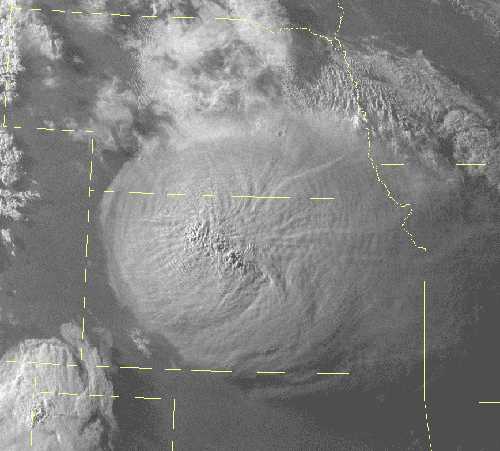
Most importantly, ABI can better detect the super-cold “overshooting tops” that mean severe weather is imminent. “Overshooting tops portend huge energy inside the cloud – it takes tremendous energy and upward velocity to poke through the lid of the tropopause,” explained Schmit.
“During episodes of severe weather, ABI can show conditions every 30 to 60 seconds. The system in use now only shows them every 7.5 minutes. And in normal mode, ABI will send readings over the continental U.S. every 5 minutes as opposed to every 15-30 minutes,” Schmit said.
Lightning is another key to tornadoes.
“Studies show that sudden changes in the total lightning correlate with [the onset of] tornadoes,” said Goodman.
Detecting lightning is a new specialty of GOES-R.
“GOES-R's Geostationary Lightning Mapper, or GLM, will see all the lightning: cloud-to-ground, cloud-to-cloud, and inside each cloud. And since this is the first time we'll have lightning detection from geostationary orbit, it means GOES-R will constantly monitor and map the lightning across the western hemisphere,” Goodman said.
The GLM is expected to give seven more minutes of lead time in tornado warnings. Average lead time now is 13 minutes.
“With GOES-R you'll have upwards of 20 minutes to get to a safe haven,” said Goodman.
That sure beats standing in your back yard, in the dark, waiting for the trees to twist.
Dauna Coulter writes for the National Aeronautics and Space Administration.
Follow Lake County News on Twitter at http://twitter.com/LakeCoNews, on Tumblr at www.lakeconews.tumblr.com , on Google+, on Facebook at www.facebook.com/pages/Lake-County-News/143156775604?ref=mf and on YouTube at www.youtube.com/user/LakeCoNews .