 How to resolve AdBlock issue?
News
- Details
- Written by: Elizabeth Larson
The Employment Development Department’s unemployment report, released Friday, said Lake County’s November rate was 16.7 percent, up 0.5 percentage points over the month, but down 2.5 percent from November 2010, when the county's rate reached 19.2 percent.
California’s unemployment rate dropped to 11.3 percent in November, down from 11.7 percent in October, and 12.5 percent in November 2010, according to the report.
The state’s job’s increased by 6,600 during the month for a total gain of 211,400 jobs since 2011 began, according to data from two separate surveys used in the California Employment Development Department’s report.
The number of people unemployed in California was 2,058,000 – down by 64,000 over the month, and down by 212,000 compared with November of last year, the report showed.
The US Bureau of Labor Statistics reported that the nationwide unemployment rate in November was 8.6 percent, down from 9 percent in October and 9.8 percent in November 2010.
Lake’s statewide ranking slipped from 53rd to 54th among the 58 counties statewide because of its November rate, noted Dennis Mullins of the Employment Development Department’s Labor Market Information Division.
Unemployment rates for surrounding counties included Colusa, 19.7 percent, No. 57; Glenn, 13.8 percent, No. 39; Mendocino, 10.1 percent, No. 17; Napa, 8.6 percent, No. 6; Sonoma, 8.9 percent, No. 8; and Yolo, 12.2 percent, No. 29.
Marin County, with 6.9 percent, had the lowest unemployment in the state, with Imperial County, 27.2 percent, having the highest, the report showed.
Mullins said that in Lake County wage and salary jobs declined by a total of 730 between October and November.
Seasonal farm and leisure and hospitality/tourism – down by 540 and 170 jobs, respectively – accounted for more than 97 percent of the month-over downturn, Mullins reported.
He said total industry jobs were down 230 over the year with overall government cutbacks, number 120 cut jobs, accounting for more than half the downturn. Six sectors gained or were unchanged over the year, and five declined.
Year-over job growth occurred in farm; manufacturing; trade, transportation and utilities; and other services, with each category adding 10 jobs, Mullins reported.
Industries with no change over the year were information and professional and business services, he said.
Mullins said industry sectors with declines over the year included mining, logging and construction, down 40 jobs; financial activities, 20; private educational and health services, 70; leisure and hospitality, 20; and government, 120.
Within Lake County, Employment Development Department statistics showed the following unemployment rates, from greatest to least: Clearlake Oaks, 24.9 percent; Nice, 24.3 percent; city of Clearlake, 23.9 percent; Lucerne, 17.6 percent; Middletown and Kelseyville, each with 17 percent; city of Lakeport, 16.1 percent; Cobb, 15 percent; Lower Lake, 14.1 percent; Hidden Valley Lake, 13.8 percent; north Lakeport, 13.3 percent; and Upper Lake, 8.8 percent.
Lake County’s November workforce consisted of 23,830 people, with 3,990 of them out of work, compared to the 24,340 people in the October workforce, when there were 3,950 unemployed.
Statewide, there were 536,294 people receiving regular unemployment insurance benefits during the November survey week, the state said, compared with 494,752 last month and 600,196 last year.
New claims for unemployment insurance were 74,082 in November 2011, compared with 68,724 in October and 72,768 in November of last year, according to the state report.
State sees small job gains in November
The federal survey of 5,500 households showed an increase in the number of employed people. It estimated the number of Californians holding jobs in November was 16,124,000, an increase of 116,000 from October, and up 246,000 from the employment total in November of last year, the state said.
The Employment Development Department’s report on payroll employment – wage and salary jobs – in the nonfarm industries of California totaled 14,170,100 in November, a net gain of 6,600 jobs, according to a survey of 42,000 businesses. This followed a gain of 37,600 jobs in October.
The agency said eight categories – mining and logging; trade, transportation and utilities; information; financial activities; educational and health services; leisure and hospitality; other services; and government – added jobs over the month, gaining 34,800 jobs. Trade, transportation and utilities posted the largest increase over the month, adding 18,000 jobs.
The report showed that three categories – construction; manufacturing; and professional and business services – reported job declines over the month, down 28,200 jobs. Professional and business services posted the largest decrease over the month, down 13,200 jobs.
In a year-over-year comparison – November 2010 to November 2011 – nonfarm payroll employment in California increased by 233,100 jobs, up 1.7 percent, the Employment Development Department reported.
Ten categories – mining and logging; construction; trade, transportation and utilities; information; financial activities; professional and business services; educational and health services; leisure and hospitality; other services; and government – posted job gains over the year, adding 233,200 jobs, the report showed.
Of those categories, professional and business services posted the largest gain on a numerical basis, adding 53,700 jobs, up 2.6 percent. Information posted the largest gain on a percentage basis, up by 4.1 percent, an increase of 18,000 jobs, the Employment Development Department said. One category, manufacturing, posted job declines over the year, down 100 jobs, small enough to register as a zero-percent decrease.
E-mail Elizabeth Larson at
- Details
- Written by: Lake County News Reports

I may have kept this a secret until now, but my husband and I have a mixed marriage. Yes, a dividing line exists between us regarding a very important subject.
He’s a broccoli hater. I happen to think it’s one of the most incredible foods on the planet.
How can someone hate this amazing vegetable, I wonder? But many do.
Broccoli seems to evoke strong emotions. I don’t recall encountering anyone who, when the subject arose, didn’t have a vigorous opinion. While broccoli haters exist, this verdure also has its ardent followers, including me.
Even the elder President Bush got into the act. He famously said, “I do not like broccoli. I haven’t liked it since I was a little kid and my mother made me eat it. I’m president of the United States and I’m not going to eat any more broccoli!”
The truth is that broccoli is a nutritional powerhouse and remains a regular on every super foods list I’ve seen.
It’s a versatile vegetable that’s favored in pasta dishes, cream soups, casseroles and stir-fries. When steamed or boiled and served with butter, garlic and lemon, it becomes a comfort food to me.
Broccoli, with its thick stalks, branch-like appendages and heads that resemble forest canopies, is a member of the cabbage family. Native to Italy, it was developed from wild cabbage in ancient Rome.
Its large head is actually a bundle of unopened florets. When in bloom, the compact green buds give way to tiny yellow flowers.
Its Italian name, broccolo -- meaning “cabbage sprout” -- is derived from the Latin term brachium, which means branch or arm, a reference to broccoli’s tree-like shape.
While it was introduced to the United States in colonial times, chiefly through Thomas Jefferson’s European contacts, it didn’t become well-known here until Italian immigrants brought it with them from their homeland.
Varieties of broccoli include popular calabrese, named for Calibri, the region in Italy were it was first cultivated, and sprouting broccoli, with a larger number of heads on many thin stalks. White and purple varieties also exist, with the purple turning mostly green when cooked.
Romanesco broccoli, with lime green coloration and a unique spiral pattern, is actually a variant form of cauliflower, as is light green broccoflower.
Broccoli may be enjoyed in its crunchy, raw state (such as shredded in a slaw or on a vegetable platter), oven roasted, boiled, steamed, sautéed or stir-fried. Steaming it quickly is considered the most healthful cooking method, as it preserves most of the nutrients.
In addition, broccoli can provide special cholesterol-lowering benefits when steamed. Its fiber-related components do a better job of binding with bile acids for excretion of cholesterol when cooked in this way.
Raw broccoli also has this ability, though at a lower level. Raw broccoli and broccoli sprouts have been shown to support the health of the stomach.
Broccoli stems may be peeled prior to use, if desired, especially if they appear to be tough or woody.
The fibrous stems cook more slowly than the florets, so should be added to the sauté pan, steamer, or water a few minutes before florets are added.
If cooking broccoli with florets and stems intact, slits may be made in the stem after peeling to quicken the cooking process.
Interestingly, allowing cut broccoli to rest for five minutes before cooking can increase its health benefits by allowing health-promoting enzymes to become activated.
Roasting broccoli brings out a deep, rich, nutty flavor. To prepare it this way, toss cut broccoli in olive oil and garlic, add salt and pepper to taste, spread it out in one layer on a baking sheet, and slip it into an oven set at 350 degrees Fahrenheit to cook until tender and caramelized. If desired, sprinkle on a bit of freshly grated Parmesan cheese when it comes out of the oven.
Broccoli is a wonderful addition to pasta dishes and is especially popular with farfalle, also known as bow-tie pasta.
To make a meal that’s delicious in its simplicity, blanch broccoli florets in boiling salted water until tender-crisp and cook pasta until al dente (meaning not too soft, but with a bit of chew). Combine them together in a bowl.
Meanwhile, sauté a generous amount of sliced garlic in extra virgin olive oil and when the garlic’s tender, pour the mixture over the hot pasta and broccoli. Toss to combine, adding salt, pepper, and fresh Parmesan cheese to taste. A squeeze of lemon juice or a light touch of lemon zest may be added for balance.
Now that’s dinner in a hurry!
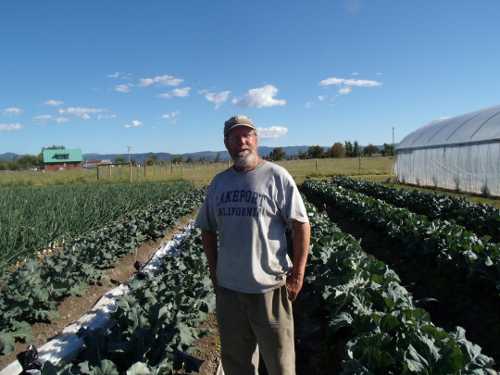
Lightly steamed broccoli is wonderful when tossed with extra virgin olive oil, garlic, a bit of lemon juice, salt and pepper to taste, and any of a myriad of additions, such as kalamata olives, feta cheese, toasted pine nuts, thinly sliced red onions (soak them in water for 20 minutes or so to soften their pungency), finely diced red bell pepper or bits of marinated sundried tomatoes.
Broccoli’s health benefits are legendary. It has antioxidant, anti-inflammatory and detoxification properties, and has been shown to be a cancer preventative.
According to the “World’s Healthiest Foods” Web site, broccoli is an excellent source of immune-supportive vitamin C, anti-inflammatory vitamin K, and heart-healthy folate.
It’s a very good source of free-radical-scavenging vitamin A, enzyme-activating manganese and molybdenum, digestive-health-supporting fiber, heart-healthy potassium and vitamin B6, and energy-producing vitamin B2 and phosphorus.
As well, it’s a good source of energy-producing vitamin B1, vitamin B3, vitamin B5, protein, and iron; bone-healthy magnesium and calcium; and antioxidant-supportive vitamin E and selenium.
Anchovies and broccoli is a traditional kitchen marriage, and today’s recipe, Chef Mario Batali’s “Christmas Broccoli,” highlights that match.
Its flavor base is what is known in Italy as a “soffriti,” meaning a fat, such as butter or olive oil, in which garlic or onion has been cooked.
If you’d like, sauté a bit of diced red bell pepper in the oil along with the garlic to add a touch of red, enhancing its Christmas appeal.
Enjoy!
Christmas Broccoli
3 pounds fresh broccoli, with leaves
¼ cup extra virgin olive oil
8 cloves garlic, peeled and sliced in half
10 salted anchovies, cleaned, filleted, and roughly chopped
Trim the broccoli into long stalks, removing the bottom two inches and leaving the stems attached.
Bring six quarts of water to a boil.
Meanwhile, place a 12- to 14-inch sauté pan over medium heat and add the olive oil. Add the garlic and anchovies and cook five minutes, until just golden brown and very fragrant.
While the garlic and anchovies cook, plunge broccoli into boiling water and cook for one minutes. Remove from water, drain well, and add to the pan with the garlic and anchovies. Cook ten to twelve minutes, until tender and yet holding its shape.
Remove from heat and season aggressively with pepper and timidly with salt.
This dish may be served hot or at room temperature.
Recipe by Mario Batali and courtesy of www.FoodNetwork.com.
Esther Oertel, the “Veggie Girl,” is a culinary coach and educator and is passionate about local produce. Oertel gives private cooking lessons. She welcomes your questions and comments; e-mail her at
Follow Lake County News on Twitter at http://twitter.com/LakeCoNews, on Tumblr at www.lakeconews.tumblr.com, on Google+, on Facebook at www.facebook.com/pages/Lake-County-News/143156775604?ref=mf and on YouTube at www.youtube.com/user/LakeCoNews .
- Details
- Written by: Lake County News reports
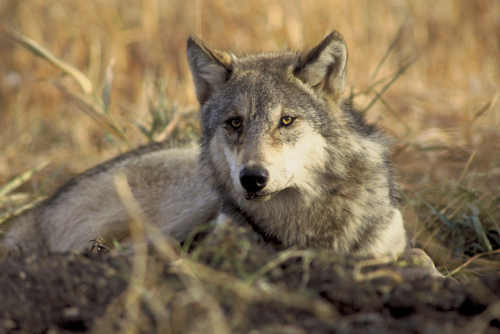
Recent news accounts have reported that a gray wolf has been wandering in southern Oregon.
According to the Oregon Department of Fish and Wildlife, this animal is a 2 and a half year old male formerly from a pack in northeast Oregon.
Since the animal has been collared with a global positioning system device that periodically transmits its location, biologists have been able to document its travels since early September. Based on the GPS data, he is now more than 300 miles from where his journey began.
As of yet, there are no direct observations confirming his presence, or that of any other wolves, in California.
“It’s too early to say with any certainty whether wolves will again become a resident species in California,” Department of Fish and Game Director Charlton Bonham said. “But it is definitely an historic predator surrounded by legend and lore.”
Any wild gray wolf that returns to California is protected as endangered under the Federal Endangered Species Act, administered by the U.S. Fish and Wildlife Service.
DFG has been following the recovery and migration of gray wolves in western states with the expectation that at some point they will likely reach California.
The last confirmed wild gray wolf in California was killed in Lassen County in 1924.
The available historic information on wolves in California suggests that while they were widely distributed, they were not abundant.
DFG has been compiling historic records, life history information, reviewing studies on wolf populations in other western states, enhancing communication with other agencies and training biologists on field techniques specific to wolves.
This effort is to ensure that DFG has all necessary information available when needed, it is not a wolf management plan and DFG does not intend to reintroduce wolves into California.
There are more than 1,600 wolves in the northern Rocky Mountains following a federal reintroduction effort which occurred in the mid-1990s.
In 1999 a single wolf crossed into Oregon from Idaho, after nearly a 60-year absence in that state.
There are now at least 23 wolves in Oregon in four reproducing packs. It has taken an additional 12 years for the first wolf to now approach the California border.
This particular animal is exhibiting normal dispersal behavior for a young male and there is no way to predict whether he will enter California, stay in Oregon, or travel east into Nevada.
Eventually, DFG expects that wolves will reach California. Whether this will lead to the establishment of packs or simply transient individual animals is unknown.
Gray wolf recovery in other Western states has been controversial, particularly regarding impacts on prey populations, livestock depredation and human safety.
There have been instances where gray wolf predation has contributed to declines in deer and elk populations, however, in most cases, predation has had little effect.
Some gray wolves have killed livestock – mostly cattle and sheep – while others rely entirely on wild prey.
In other Western states the impact of depredation on livestock has been very small, certainly less than predation by coyotes and mountain lions, although the effect on an individual livestock producer can be important, particularly when sheep are killed.
Concerns about human safety are largely based on folklore and unsubstantiated in North America.
In recent years there was one human mortality in Canada caused either by wolves or bears and one confirmed human mortality in Alaska by wolves.
Based on experience from states where substantial wolf populations now exist, wolves pose little risk to humans.
In the near future DFG expects to add information to its Web site, www.dfg.ca.gov, to provide extensive information on wolves to the public.
Follow Lake County News on Twitter at http://twitter.com/LakeCoNews, on Tumblr at www.lakeconews.tumblr.com, on Google+, on Facebook at www.facebook.com/pages/Lake-County-News/143156775604?ref=mf and on YouTube at www.youtube.com/user/LakeCoNews .
- Details
- Written by: Lake County News reports
The anti-speed enforcement efforts of the “Focused Attention Towards Enforcing Speed” (FATES) continue through Sept. 30, 2012.
“We all know speeding is very, very dangerous. Leave a little extra time to get to your destination,” said CHP Commissioner Joe Farrow. “It isn’t worth the consequences of injuries or worse yet, the death of your friends and loved ones.”
The objectives of the grant are to reduce the number of speed-related collisions occurring throughout the state, save lives, and prevent serious injury.
Some of the strategies that the CHP will employ to achieve these goals include enhanced enforcement and radar trailer deployments.
In addition to the enforcement efforts, public awareness campaigns and safety presentations will be held at schools, employee safety days, local auto events and other community functions throughout the state.
The consistent message to each audience is that speed kills.
“Nearly one-third of fatal and injury collisions in California are a direct result of speed,” added Commissioner Farrow. “Drivers need to be aware of the current conditions and the posted speed limit.”
Funding for the FATES project is provided by a grant awarded by the California Office of Traffic Safety through the National Highway Traffic Safety Administration.
Follow Lake County News on Twitter at http://twitter.com/LakeCoNews, on Tumblr at www.lakeconews.tumblr.com, on Google+, on Facebook at www.facebook.com/pages/Lake-County-News/143156775604?ref=mf and on YouTube at www.youtube.com/user/LakeCoNews .