 How to resolve AdBlock issue?
News
- Details
- Written by: Lake County News reports
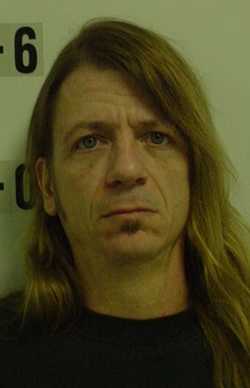
KELSEYVILLE, Calif. – The service of a search warrant by the Sheriff’s Narcotics Task Force and the Napa County Special Investigation Bureau on Friday, Dec. 9, has resulted in two arrests, the seizure of marijuana, methamphetamine and drug paraphernalia.
William Henry Holman, 43, of Kelseyville was arrested during the search warrant service, and more than $500 was seized for asset forfeiture, according to Sgt. Steve Brooks of the Lake County Sheriff’s Office.
On Dec. 9 at approximately 5 p.m., narcotics detectives assisted the Napa County Special Investigation Bureau with the service of a search warrant for Holman’s person and his home, according to Brooks.
When narcotics detectives entered the home, Holman was located and detained without incident, Brooks said.
During a search of the residence, detectives located methamphetamine, a glass “meth” pipe, approximately 2.3 pounds of processed marijuana, a digital scale and over $50 in currency, Brooks reported.
Brooks said Holman was arrested for possession of marijuana for sales, possession of a controlled substance and possession of narcotics paraphernalia. Holman was transported to the Lake County Hill Road Correctional Facility and booked, with bail set at $15,000. He later posted bail and was released.
The Sheriff’s Narcotics Task Force can be contacted through its anonymous tip line at 707-263-3663.
Follow Lake County News on Twitter at http://twitter.com/LakeCoNews, on Tumblr at www.lakeconews.tumblr.com, on Google+, on Facebook at www.facebook.com/pages/Lake-County-News/143156775604?ref=mf and on YouTube at www.youtube.com/user/LakeCoNews .
- Details
- Written by: Lake County News reports
The safety recommendation specifically calls for the 50 states and the District of Columbia to ban the nonemergency use of portable electronic devices – other than those designed to support the driving task – for all drivers.
The safety recommendation also urges use of the National Highway Traffic Safety Administration model of high-visibility enforcement to support these bans and implementation of targeted communication campaigns to inform motorists of the new law and heightened enforcement.
"According to NHTSA, more than 3,000 people lost their lives last year in distraction-related accidents", said Chairman Deborah A.P. Hersman. "It is time for all of us to stand up for safety by turning off electronic devices when driving."
Hersman added, "No call, no text, no update, is worth a human life."
On Aug. 5, 2010, on a section of Interstate 44 in Gray Summit, Missouri, a pickup truck ran into the back of a truck-tractor that had slowed due to an active construction zone. The pickup truck, in turn, was struck from behind by a school bus.
That school bus was then hit by a second school bus that had been following. As a result, two people died and 38 others were injured.
The NTSB's investigation revealed that the pickup driver sent and received 11 text messages in the 11 minutes preceding the accident. The last text was received moments before the pickup struck the truck-tractor.
The Missouri accident is the most recent distraction accident the NTSB has investigated.
However, the first investigation involving distraction from a wireless electronic device occurred in 2002, when a novice driver, distracted by a conversation on her cell phone, veered off the roadway in Largo, Maryland, crossed the median, flipped the car over, and killed five people.
Since then, the NTSB has seen the deadliness of distraction across all modes of transportation.
In 2004, an experienced motorcoach driver, distracted on his hands-free cell phone, failed to move to the center lane and struck the underside of an arched stone bridge on the George Washington Parkway in Alexandria, Virginia. Eleven of the 27 high school students were injured.
In the 2008 collision of a commuter train with a freight train in Chatsworth, Calif., the commuter train engineer, who had a history of using his cell phone for personal communications while on duty, ran a red signal while texting. That train collided head on with a freight train – killing 25 and injuring dozens.
In 2009, two airline pilots were out of radio communication with air traffic control for more than an hour because they were distracted by their personal laptops. They overflew their destination by more than 100 miles, only realizing their error when a flight attendant inquired about preparing for arrival.
In Philadelphia in 2010, a barge being towed by a tugboat ran over an amphibious "duck" boat in the Delaware River, killing two Hungarian tourists. The tugboat mate failed to maintain a proper lookout due to repeated use of a cell-phone and laptop computer.
In 2010, near Munfordville, Kentucky, a truck-tractor in combination with a 53-foot-long trailer, left its lane, crossed the median and collided with a 15-passenger van. The truck driver failed to maintain control of his vehicle because he was distracted by use of his cell-phone. The accident resulted in 11 fatalities.
In the last two decades, there has been exponential growth in the use of cell-phone and personal electronic devices.
Globally, there are 5.3 billion mobile phone subscribers or 77 percent of the world population. In the United States, that percentage is even higher – it exceeds 100 percent.
Further, a Virginia Tech Transportation Institute study of commercial drivers found that a safety-critical event is 163 times more likely if a driver is texting, e-mailing or accessing the Internet.
"The data is clear; the time to act is now. How many more lives will be lost before we, as a society, change our attitudes about the deadliness of distractions?" Hersman said.
Follow Lake County News on Twitter at http://twitter.com/LakeCoNews, on Tumblr at www.lakeconews.tumblr.com, on Google+, on Facebook at www.facebook.com/pages/Lake-County-News/143156775604?ref=mf and on YouTube at www.youtube.com/user/LakeCoNews .
- Details
- Written by: Lake County News reports
"Today's criminals increasingly use the Internet, smartphones, and other digital devices to victimize people online and offline," said Attorney General Harris. "I am creating the eCrime Unit so that California can be a leader in using innovative law enforcement techniques to target these criminals. The eCrime Unit will be comprised of investigators and prosecutors charged with working across jurisdictions and leading task forces to protect California consumers and businesses."
The eCrime Unit investigates and prosecutes crimes that include a substantial technology component.
Examples and descriptions of the kinds of crimes that the unit will prosecute are:
Identity theft: The Internet provides new ways for criminals to steal personal information and identities whether through email phishing scams or trolling the Internet for personal information about others.
Fraud committed using the Internet: This includes scams perpetrated via email and on Internet auction Web sites.
Theft of computer components or services: Burglary and robbery of computers or other electronic devices by highly-organized gangs at manufacturing sites, storage facilities and retail stores.
Intellectual property crimes, such as counterfeiting or piracy: Large numbers of Web sites and online networks exist solely for the unauthorized distribution of copyrighted material, such as movies, music and software.
Child exploitation: Disrupting online child pornography networks and those who commit sex crimes against children using the Internet or social media.
Many of these crimes are multi-jurisdictional and are better suited for prosecution on a statewide level.
The eCrime Unit, which began operations in August, consists of 20 attorneys and investigators, many of whom have spent years working on complex technology crimes.
Technology crimes affect consumers, businesses and the state government's operations. California had 10 of the top 25 metropolitan areas for identity-theft related consumer complaints in 2010.
According to the Federal Trade Commission, California has the most identity theft complaints of any state and third highest per capita. In fact, every year, more than 1 million Californians are victims of identity theft. Total losses throughout the state exceeded $46 million last year.
"Every year, California loses millions of dollars because the intellectual capital of our state is being hijacked by criminal elements," said Assemblywoman Nora Campos, D-San Jose. "The addition of the eCrime Unit to California's fight against technology crimes sends a clear message that we are determined to root out this type of illegal activity."
The eCrime Unit will also provide investigative and prosecutorial support to the five California regional high-tech task forces funded through the High Technology Theft Apprehension and Prosecution Trust Fund Program and provide coordination for out-of-state technology-crime investigation requests.
The eCrime Unit also will develop and provide training for law enforcement officers, prosecutors, the judiciary, and the public on cyber safety and the importance of strong information-security practices.
"As the importance of the Internet to our economy has grown, criminals have moved online to steal valuable information and goods from individuals and businesses," said Santa Clara District Attorney Jeffrey Rosen. "In the 21st Century, law enforcement will be increasingly combating online criminal activity. The Attorney General's eCrime Unit will provide much needed resources and expertise to thwart and prosecute online criminals who cause billions of dollars in damage every year."
Attorney General Harris outlined several cases that exemplify the work of the eCrime Unit.
In July, George Bronk, a Sacramento-area man was sentenced to more than four years in state prison after hacking into email addresses and Facebook accounts of victims by finding answers to email security questions. He found indecent pictures and video and then blackmailed the victims. The victims in this case were located in at least 17 states and United Kingdom. More information on the case can be found http://www.oag.ca.gov/news/press_release?id=2541&y=&m=6.
Attorney General Harris also announced the filing of five felony charges against Chen Zhang on Dec. 8 in San Joaquin Superior Court.
Zhang is being charged with possession of unauthorized and counterfeit jewelry from five different companies. Investigators for the Attorney General's Office seized an estimated $1.5 million of counterfeit goods from her residence in Tracy, California on Nov. 3.
In another case, defendants allegedly ran an identity theft scam at ATM vestibules across seven counties. They allegedly used a card reader to capture victims' card numbers and a hidden camera to capture the PIN numbers. Total losses are estimated to be $2 million.
The case (California v. Aroutiounyan) originated in San Luis Obispo County, but the Department of Justice eCrime Unit was able to investigate and charge the entirety of the scheme across all seven counties.
Harris also announced the launch of a new web site devoted to cyber safety, which can be found at http://oag.ca.gov/cybersafety. The Web site contains information about online child safety, identity theft prevention tips and help for victims.
Follow Lake County News on Twitter at http://twitter.com/LakeCoNews, on Tumblr at www.lakeconews.tumblr.com, on Google+, on Facebook at www.facebook.com/pages/Lake-County-News/143156775604?ref=mf and on YouTube at www.youtube.com/user/LakeCoNews .
- Details
- Written by: Elizabeth Larson
With the economy making public transit a more affordable and reliable option for many community members, Lake Transit Authority is continuing to see a growing demand for its services.
Transit General Manager Mark Wall said the 2010-11 fiscal year was a record year for ridership, with 326,000 passengers.
The 2011-12 fiscal year promises to be bigger. Wall said they’ve seen a 25-percent increase, and are projecting that by the fiscal year’s end they will have had 400,000 passengers.
Wall said that is comparable to neighboring Mendocino County’s transit agency, which has 400,000 passengers a year and a population of more than 100,000 people, compared to Lake County’s 65,000 residents.
Lake Transit’s Route 1, which runs from Clearlake to Lakeport along the Northshore, is the busiest, having carried 86,000 passengers in the last fiscal year. It also runs the longest hours and brings in the most revenue, according to Lake Transit statistics.
The other routes include Route 2, Kit’s Corner to Middletown; Route 3, Clearlake to Deer Park; Route 4, Clearlake to Lakeport; Route 4A, Kit’s Corner to Lakeport; Route 5, Clearlake city north loop; Route 6, Clearlake city south loop; and Route 7, Lakeport/Ukiah.
According to Lake Transit statistics, Route 5 is in second place for ridership, followed by Route 6.
While Lake Transit would like to add services and routes, Wall said they don’t have the revenue to do it.
He said the transit system is funded by a number of sources. Passenger fares constitute 25 percent, while the rest comes from state funds and federal grants.
This fall, Lake Transit Authority received $309,288 in state transportation bond funds to purchase five replacement buses, as Lake County News has reported.
Lake Transit has avoided the kinds of cuts other transit agencies have experienced, said Wall. The only cut that’s planned is the elimination of a 6:30 a.m. Saturday-only run from Clearlake to Lucerne, and the 7:17 a.m. return from Lucerne to Clearlake.
In light of the economy, “We’re pretty much where we can be with operations,” according to Wall.
Wall said the new year will see fare increases, which go into effect Jan. 2.
Among the changes, local bus fare will go from $1 to $1.25 for the general public, and from $.50 to $.75 for seniors and disabled riders, Wall said.
That local fare covers “local areas,” which Lake Transit designates as Clearlake, including Glenhaven, Clearlake Oaks and Lower Lake; Lakeport, including north Lakeport and Kelseyville; Lucerne, including Nice, Upper Lake and Blue Lakes; Middletown, including Twin Lakes, Hidden Valley, Cobb and Loch Lomond; and the Rivieras, including Buckingham, Soda Bay, Riviera West and Clearlake Riviera.
Regional bus fare, which covers a trip through two or more of those local areas, will stay at $2.25 for the general public, but will rise from $1.50 to $2.25 for Lake Transit’s senior and disabled riders, Wall said.
Out-of-county fare for trips to destinations including Calistoga, St. Helena, Deer Park and Ukiah will increase from $3.50 to $5 for all riders, and monthly passes – which offer unlimited ridership – will increase from $35 to $40.
Other changes riders will see include the rerouting of eastbound service in Lucerne from Country Club Drive to Highway 20, a move based on a traffic calming study. The transit agency said the change is meant to improve bus schedules and travel times.
Community members also should notice the new bus shelters and benches along the routes, along with increased wheelchair accessibility.
Wall said the transit authority has raised $500,000 in grant funding over the last several years that is helping fund those shelters and benches. They’ve also partnered with Konocti Unified School District to have students install the structures.
Lake Transit will be closed on Christmas Eve and New Year’s Eve, Wall said.
For more about routes and schedules, visit www.laketransit.org.
E-mail Elizabeth Larson at