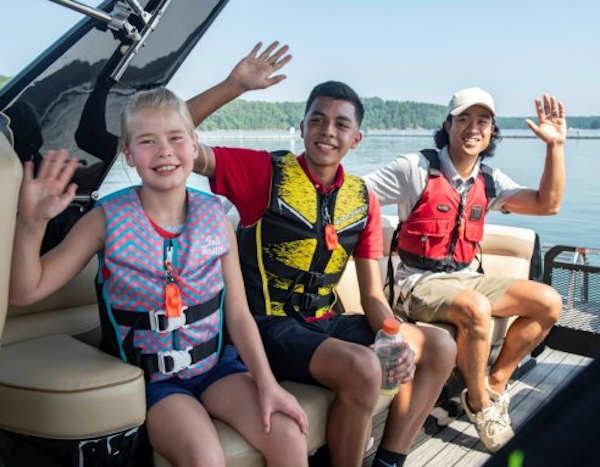
National Safe Boating Week, May 18 to 24, offers the opportunity to learn more about how to enjoy fun on the water in the safest way possible. Photo from National Safe Boating Council. LAKE COUNTY, Calif. — California State Parks’ Division of Boating and Waterways is inviting new and experienced boating enthusiasts to celebrate National Safe Boating Week from May 18 to 24.
This week is a time to emphasize the importance of responsible boating practices and water safety awareness as boaters head out to California’s waterways during Memorial Day weekend.
As boaters across the country gear up for the summer season of adventure, the U.S. Coast Guard and the Division of Boating and Waterways, or DBW, are sharing the top seven tips for safe and enjoyable boating experiences.
“National Safe Boating Week serves as a reminder of the simple yet critical steps boaters can take to protect themselves, their family and others while enjoying our beautiful waterways,” said DBW’s Deputy Director Ramona Fernandez. “By following these safety tips, boaters can ensure a safe and enjoyable experience on the water for all."
Here are the essential tips when heading out on the water:
Wear a life jacket: Life jackets save lives. Make sure you and all passengers have a properly fitted U.S. Coast Guard-approved life jacket onboard and always wear it while on the water. Remember, life jackets are the most effective means of preventing drowning in the event of an emergency. Life jackets are required to be worn for those under 13 years old while on a moving vessel.
Boat sober: Alcohol and boating do not mix. Operating a boat under the influence of alcohol or drugs is not only illegal but also significantly impairs judgment and reaction times. Alcohol is dangerous for passengers too. Intoxication can cause slips, falling overboard, and other dangerous accidents.
Take a safe boating course and get your California Boater Card: Familiarize yourself with local boating laws, regulations, and navigation rules before heading out. Understanding right-of-way, speed limits, and navigational aids will help prevent accidents and ensure smooth sailing. Boaters 60 years and younger are required to carry a California Boater Card while operating a motorized vessel on California waterways. More information is available at https://californiaboatercard.com/.
Have the proper safety equipment: Ensure you have all the required equipment onboard and in good working condition for a safe and fun day on the water. Review the ABCs of California Boating for more details.
Stay weather aware: Check the weather forecast and be prepared for changing conditions. Sudden storms or rough waters can pose significant dangers. Always have a reliable means of communication onboard to receive weather updates.
File a float plan: Let someone know your boating plans before you depart. File a float plan with a friend or family member detailing your itinerary, expected return time, and contact information. In the event of an emergency, this information can be crucial for rescuers.
Implement clean and green practices: Get your 2024 California Boater Kit. Always carry oil absorbents on board and in your bilge to prevent oily discharges. To prevent fuel spills, use fuel bibs. Dispose of them as hazardous waste at your County Household Hazardous Waste Collection Center. Never throw garbage into waterways. Take advantage of shore-side facilities to recycle plastic, glass, metal, and paper. Used fishing line can be deposited at fishing-line recycling stations.
During National Safe Boating Week and throughout the boating season, the Division of Boating and Waterways encourages boaters to prioritize safety, stay informed, and always be prepared. Whether you're sailing, cruising, fishing, or paddling, safe and environmentally responsible boating practices benefit everyone on the water.
Wanda Lee Brewer. Photo courtesy of the Lake County Sheriff’s Office. LAKE COUNTY, Calif. — Decades after her remains were found in a remote part of Lake County, a young woman who authorities believe was the victim of murder has been given back her name.
The Jane Doe, discovered along Highway 175 in 1979, has been identified as Wanda Lee Brewer from Carson, California, said Lauren Berlinn, spokesperson for the Lake County Sheriff’s Office.
With the new information about the victim's identity, detectives are hoping to find new leads so they can finally solve the case, Berlinn said.
The effort to identify Brewer and discover what happened to her recently took on new life thanks to developments in DNA testing.
That, along with persistent detective work, helped put a name to the bones found 45 years ago in a case that quickly went cold due to lack of leads and information.
“It was almost a two-year project,” said Sgt. Gary Frace, who leads the sheriff’s coroner division.
“I couldn’t have done it without the help of everybody in the department,” said Frace, who said detectives and coroners’ division staff were crucial to the work. “It was a huge group effort.”
The work that Frace and department detectives did to follow up on the leads from Othram, a company specializing in DNA analysis, resulted in multiple interviews and additional DNA testing of living relatives, and in April it was determined that Jane Doe was Brewer. She had been born in Arkansas but later made her home in California.
The California Department of Justice’s missing persons database lists nine missing men and women from Lake County, the oldest case going back to 1980 and the most recent to December 2023. Brewer, however, wasn’t among them.
The number of active missing person cases averages around 20,000 in California, the state Department of Justice reported.
There are others, however, who are never reported missing. That was the situation in Brewer’s case.
A decades-old case
The story of the Lake County Sheriff’s Office’s involvement in the case stretches back to Sept. 18, 1979.
It was on that date that a couple stumbled upon skeletal remains off of Highway 175 between the Lake and Mendocino county lines, Berlinn said.
Berlinn said Deputy Mike Powers responded to the area to begin the homicide investigation.
“Yeah, I remember the case,” Powers, a 55-year veteran of the sheriff’s office, told Lake County News in a Thursday interview. “We knew it was a homicide.”
He began working for the agency on May 1, 1969, retired in December of 1998 and the following year he was asked to come back to work on a part-time basis.
“And I’ve worked part-time for them ever since,” said Powers, who is a part-time deputy sheriff, working on background investigations, as well as a board member of the Sheriff’s Activity League.
Powers had been with the sheriff’s office just over 10 years when he got the call in September of 1979 about the remains.
He recalled that the individuals who found Brewer’s remains were from Mendocino County and found the bones in a very remote area off Highway 175 toward the top of the Hopland Grade, near what is today a large turnout.
The Lake County Sheriff’s Office said a man and woman were looking for bottles and cans in a brushy area about 20 feet from the roadway when they found the body, according to a newspaper clipping from the time.
Powers said the remains were skeletal, with no signs of clothing or other physical evidence.
“She’d been there a long time,” he said of Brewer. “Her remains were scattered around.”
Powers said the sheriff’s office set about trying to identify the victim, and consulted with the San Francisco Coroner’s Office. They worked with a pathologist to try to get as much information as they could about the victim.
“They gave us some basic information,” he said, explaining that the pathologist could tell them the remains belonged to a female and a possible nationality. But based on the technology of the time, the forensic examination offered little other information that was conclusive.
Based on case information, the victim was estimated to be between 25 and 35 years old at her time of death, the range of which was between 1976 and 1979. She also was believed to be between 5’1’’ and 5’4” in height.
Deputies used what information they could get to try to find any missing persons who might have matched. However, “We weren’t successful at all,” Powers said.
“We couldn't identify the victim, we didn’t know anything about the victim,” he said.
There was also the reach of communications technology available to law enforcement in the late 1970s. Powers said they could put out a teletype on a missing person, but it didn’t have the near-global coverage that such alerts and messages do now. In this case, it may have gone no farther than the Bay Area.
“The technology back then was pretty limited on what we could do,” he said, noting it was further complicated because they had no idea where the victim was from.
“The case itself went cold fairly soon after the fact,” Powers said.
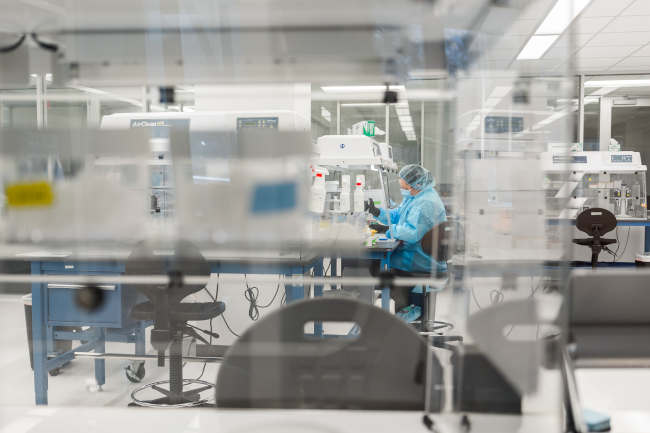
An Othram employee works in the company’s Texas laboratory. Photo courtesy of Othram.
New technology, new efforts
Berlinn said that, throughout the years, the Lake County Sheriff’s Office followed up with the California Department of Justice to use emerging technology to identify the woman known at that time as the 1979 Jane Doe.
Officials said details of the case were entered into the National Missing and Unidentified Persons System in June 2019.
It was in March of last year that a California Department of Justice representative suggested that Frace contact a private DNA lab, Othram, to find out if their state-of-the-art procedures could help identify Jane Doe.
Frace told Lake County News that when he moved into the coroner’s unit, he began working on the case. Ilona Porter, the longtime evidence and property supervisor, was trying to get the case started again before she retired.
Late last year, Frace and other sheriff’s office detectives also contacted Powers to ask him about the case. They had to pull the original one-page report from microfilm, and it was difficult to read.
Power said he went over his old report again and concluded that there wasn’t much else he could tell them outside of what he had originally reported.
As part of that work, Frace said he contacted the California Department of Justice, but the agency responded to say that it didn’t have the ability to do ancestral DNA, and that the DNA sample they did have wasn’t adequate.
However, they suggested he contact Othram, which could do the testing work through a grant.
Othram is based in The Woodlands, north of Houston, Texas, and has worked on thousands of cases like Lake County’s. Othram's casework costs for the case were provided by the Roads to Justice program.
Frace said the DOJ even sent the case and materials over to Othram for the sheriff’s office.
A week later, Frace said he started getting emails from Othram. Later, they sent him a DNA profile and a detailed family tree profile for the decedent which included names and contact information, and even employers.
In a statement to Lake County News, the company said that its Forensic-Grade Genome Sequencing “represents a significant leap forward in forensic DNA analysis compared to traditional methods like STR or CODIS testing. Unlike these conventional techniques, which typically analyze around 20 genetic markers, our technology collects hundreds of thousands of markers from DNA evidence. This comprehensive approach provides a much more detailed genetic profile, enhancing the accuracy and reliability of forensic identifications.”
The company said it also has the ability to work with evidence that may not be usable by traditional forensic DNA methods. “This means that even in cases where conventional techniques have failed to yield results due to degraded or limited DNA samples, Othram's technology can still extract valuable genetic information.”
As a result, “These cases generally resolve in weeks to months, instead of years to decades (or never),” the company said.
Othram said its scientists successfully developed a DNA extract from the forensic evidence and used its Forensic-Grade Genome Sequencing to build a comprehensive DNA profile for the then-unknown woman. Once the profile was successfully built, Othram said its in-house forensic genetic genealogy team produced new investigative leads that were provided to the Lake County Sheriff’s Office.
Thanks to those efforts, in January, a potential match for a living relative of Jane Doe was identified, a woman in the Midwest. Frace called her, but she didn’t have much information, outside of family stories she had heard growing up.
Frace called Othram which rechecked its information. Then, an important break: In March, a second match was found, and Othram sent another familial contact, this time a woman who lives in Texas.
“The cool thing that Othram does, and I just think that it’s phenomenal, they give you names, dates of birth, addresses, most recent phone numbers,” said Frace, explaining that they also had searched newspapers and found an obituary for the decedent’s mother.
He said they even sent him a list of questions for the relative to assist in the process.
Frace called the Texas relative and explained the situation. The woman said her relative had simply disappeared but that she had a daughter. With the information she shared, a coroner technician was able to look up the daughter on Facebook while Frace was still on the phone with the relative from Texas.
They then sent her a photo of Brewer, who the woman from Texas identified as her cousin.
She explained that her father had raised Brewer’s daughter. A week after her child was born, Brewer left her daughter, who stayed with her family members in Texas until she was around age 10 to 12. That’s when Brewer showed up and took her to Southern California.
The woman’s father who raised Brewer’s daughter and who also spoke with Frace, said he believed Brewer had been involved with prostitution and working the docks in Southern California.
“They never even filed a missing person’s report back then,” said Frace, explaining that they thought she had run off with someone.
Nobody could remember Brewer’s birthday, which Frace said they concluded was around 1935.
Frace was able to contact Brewer’s daughter through her work, and when he told her the story that he had pieced together, she started crying because she had wondered her whole life where her mother had gone.
She said she had lived with her mother for a few years before her disappearance. The last thing she remembered her mom saying was that she was going down the hall to speak to a guy, a trucker.
After her mother disappeared, Brewer’s daughter didn’t return to her family in Texas. Instead, Frace said she was placed in the foster care system.
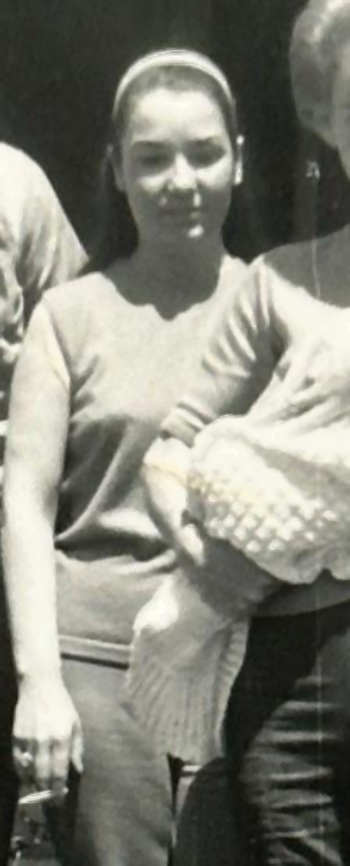
Brewer’s daughter shared the only photo she had of her mother, in a family group, which is the image of her shown in this article.
There is still much that isn’t known about the case, such as who killed Brewer.
“How Wanda got up to Lake County, I have no idea,” said Frace.
He said they believe Brewer’s body had been dumped sometime in 1977 to 1978, and that her remains “were there for awhile” before their discovery.
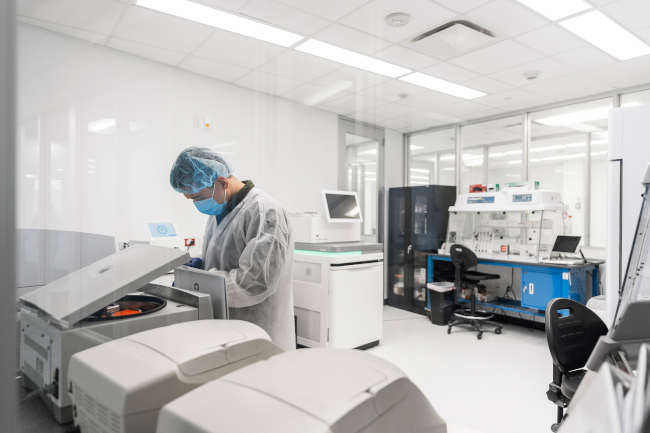
An Othram employee works in the company’s Texas laboratory. Photo courtesy of Othram.
Reconnecting family
Frace said he received Brewers’ remains back from Othram and they were then taken to Chapel of the Lakes Mortuary in Lakeport, where they were cremated. They are being sent to her daughter.
“She will be able to put her mom to rest now,” Frace said.
He said he’s never done a case this in-depth. “Putting it all together like a story is kind of cool.”
Frace said he is now working on another case involving a Clearlake murder from 2010.
A longtime sheriff’s deputy, Frace said he loves his job with the coroner’s office, because he gets to make a difference. “I feel like, for the first time in a long time, that I get to help people.”
In the case of Brewer’s family, he was able to reconnect her daughter and cousin who had been raised together but separated for decades. They live four hours apart.
Powers is pleased to see a case he worked on decades ago come to at least a partial conclusion with her identification.
He’s also amazed by the changes in technology and what it now allows law enforcement to do with cases like Brewer’s.
Powers said he’s excited that they can reunite Brewer with her family. While that will offer them some closure, it doesn’t address her murder.
“It would be nice to have a suspect in the case,” he said, but added, “There’s a good chance the suspect isn’t even alive at this point.”
Today, advances in DNA technology and greater ability to communicate to other agencies and communities have given law enforcement important tools.
During his time as a deputy, “It was shoe leather that we worked off of,” Powers said, explaining that their main tools were knocking on doors and meeting people.
Along with technology, Power said detectives still use that shoe leather approach today. In Brewer’s case, that was true as well, with Frace and the agency’s detectives meeting and interviewing people to help put Brewer’s story together.
Berlinn said this investigation is ongoing, and while it’s an old cold case, detectives still hope to finally solve it.
Anyone with information about the Brewer homicide is asked to come forward. Please reach out to Sgt. Jeffrey Mora at This email address is being protected from spambots. You need JavaScript enabled to view it./.
Frace said he wants Brewer’s daughter and family to finally get some closure and rest.
“I want Wanda to go where she needs to go with her name. That kind of stuff is important to me,” he said.
Email Elizabeth Larson at This email address is being protected from spambots. You need JavaScript enabled to view it.. Follow her on Twitter, @ERLarson, or Lake County News, @LakeCoNews.
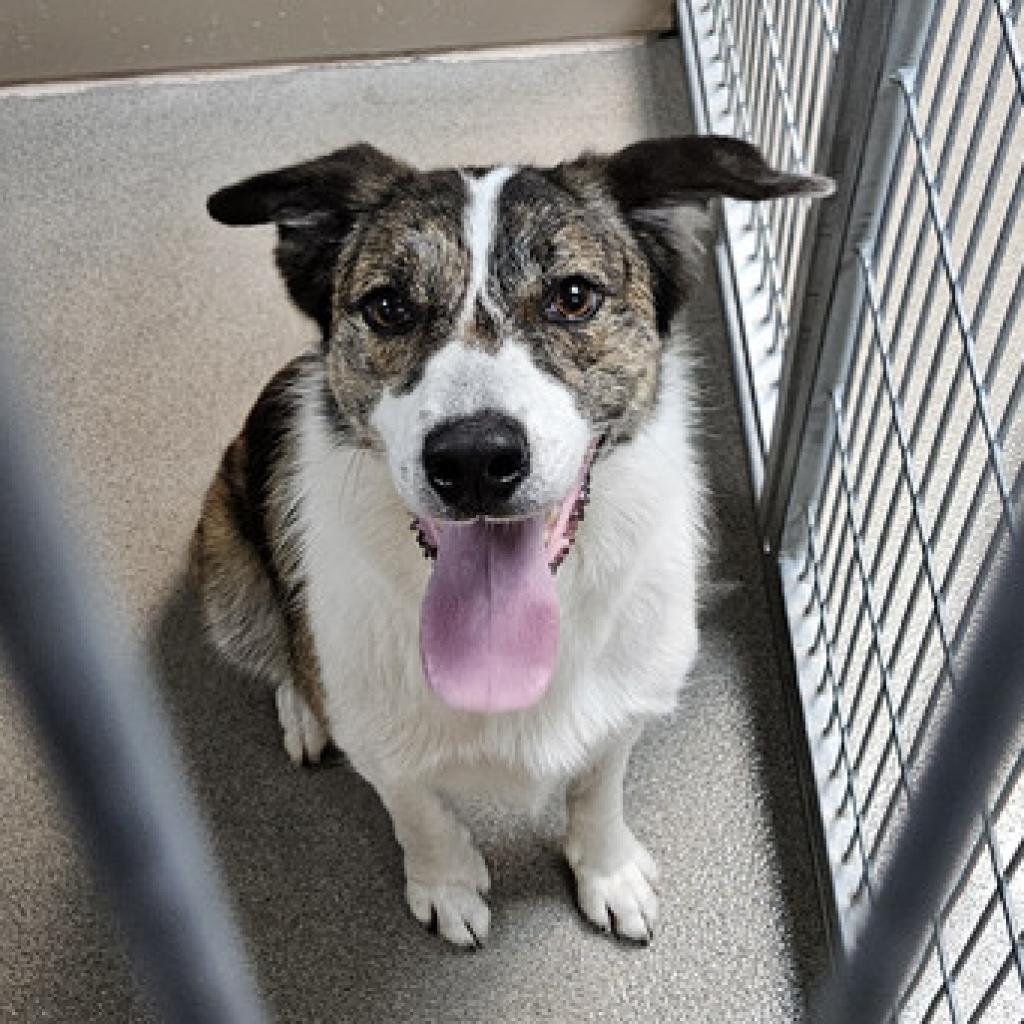
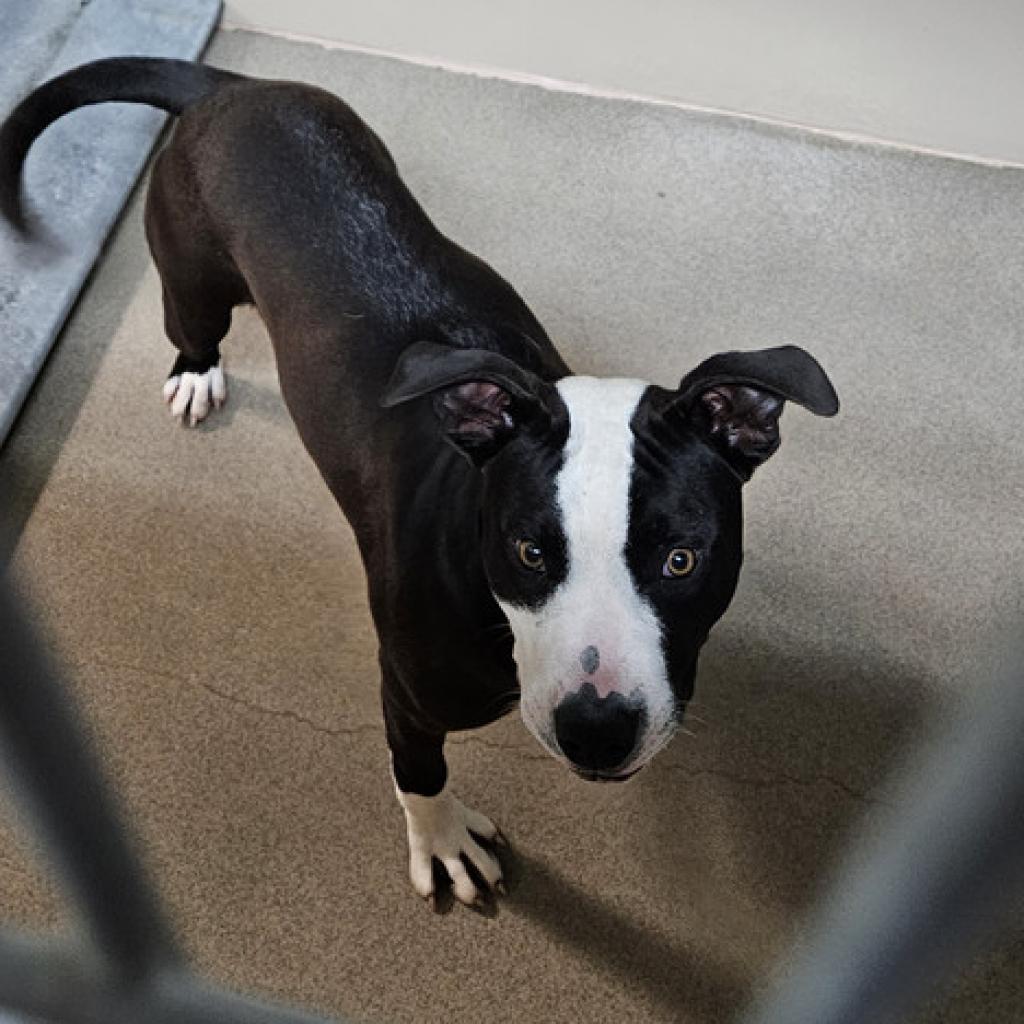
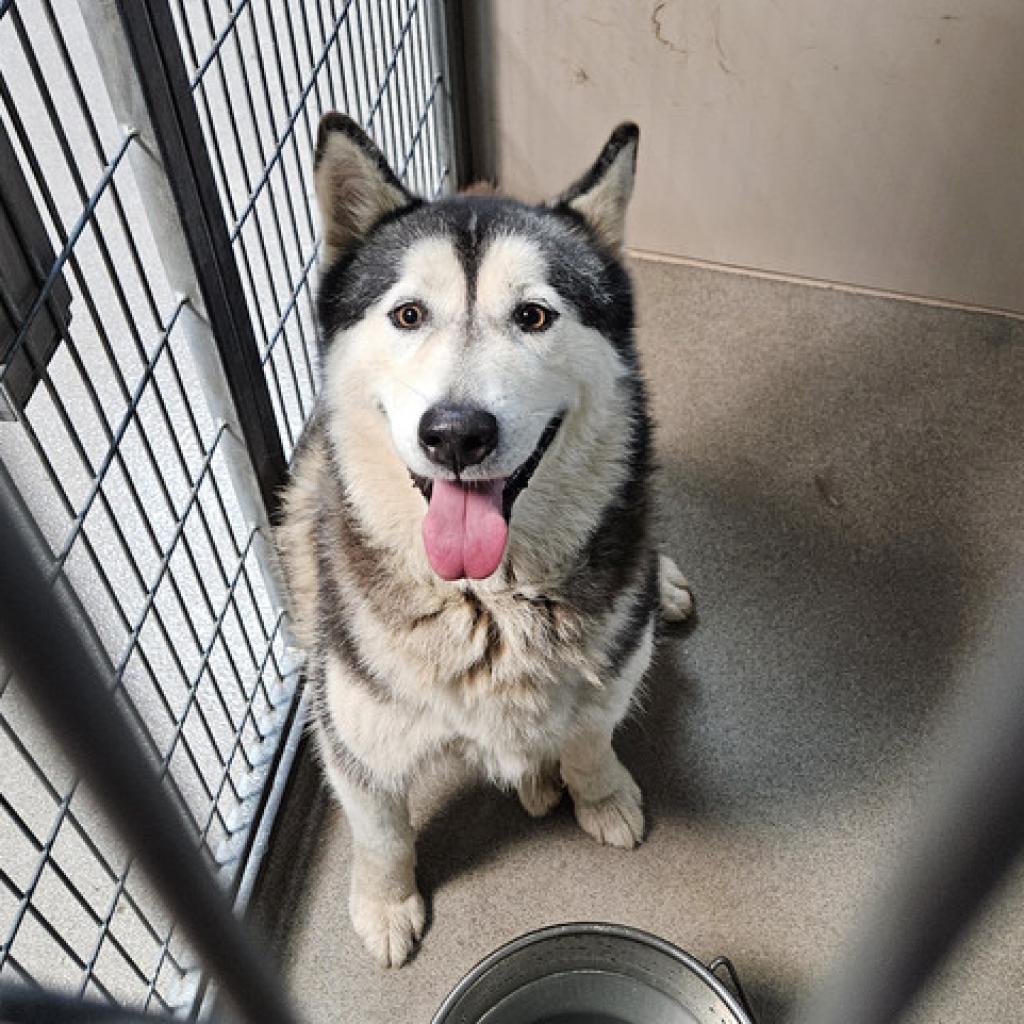
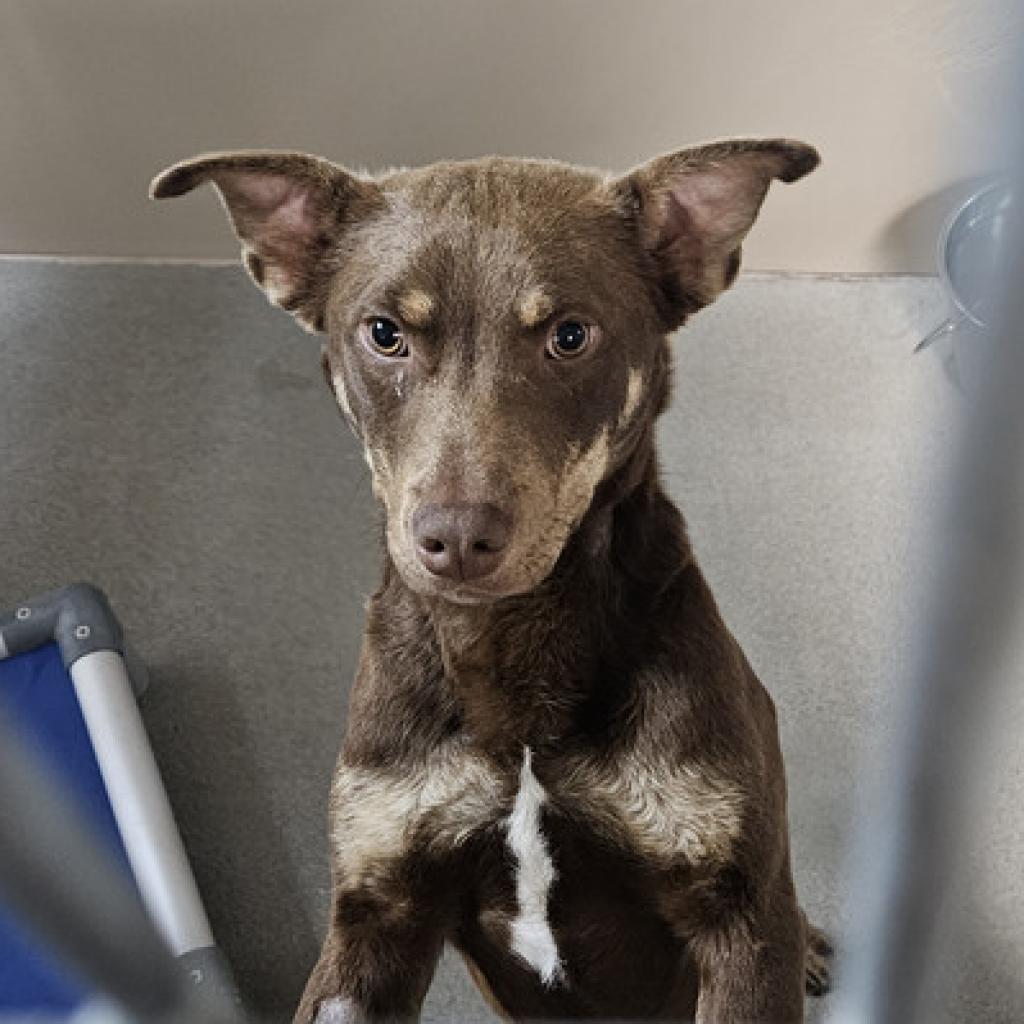
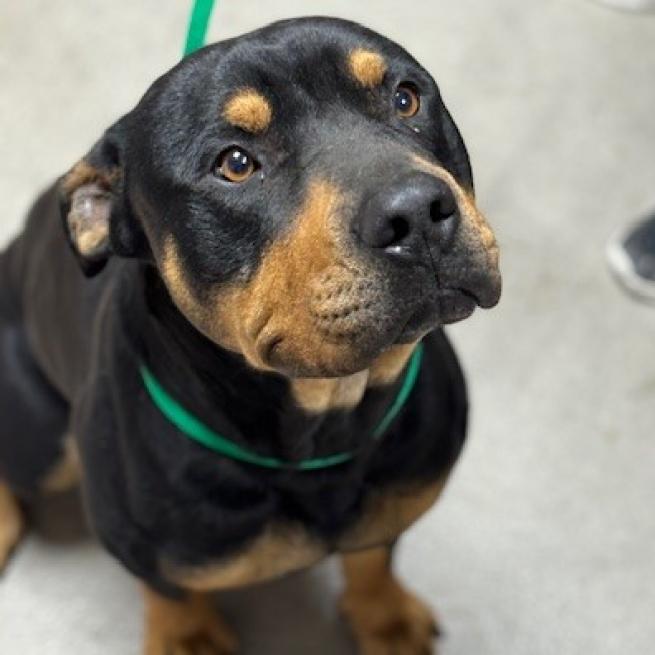
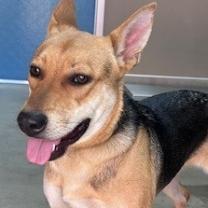
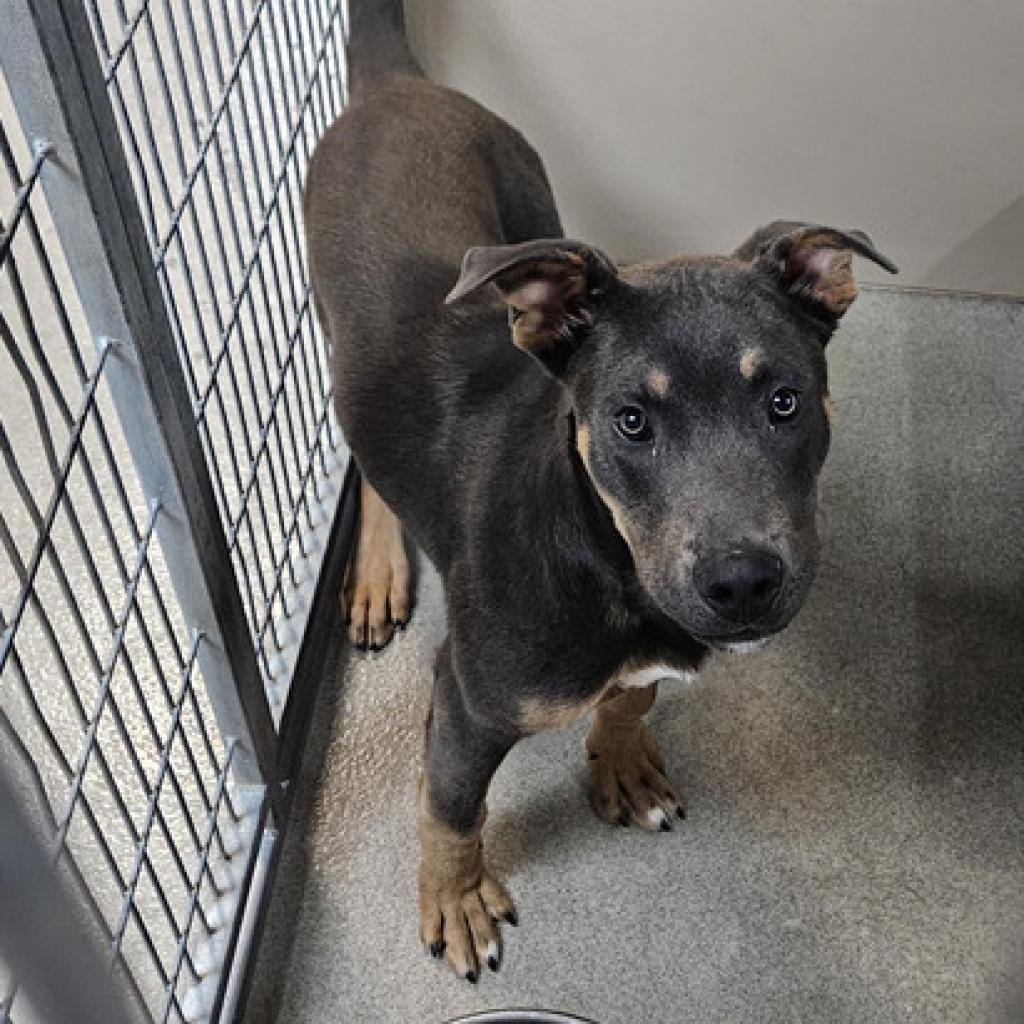
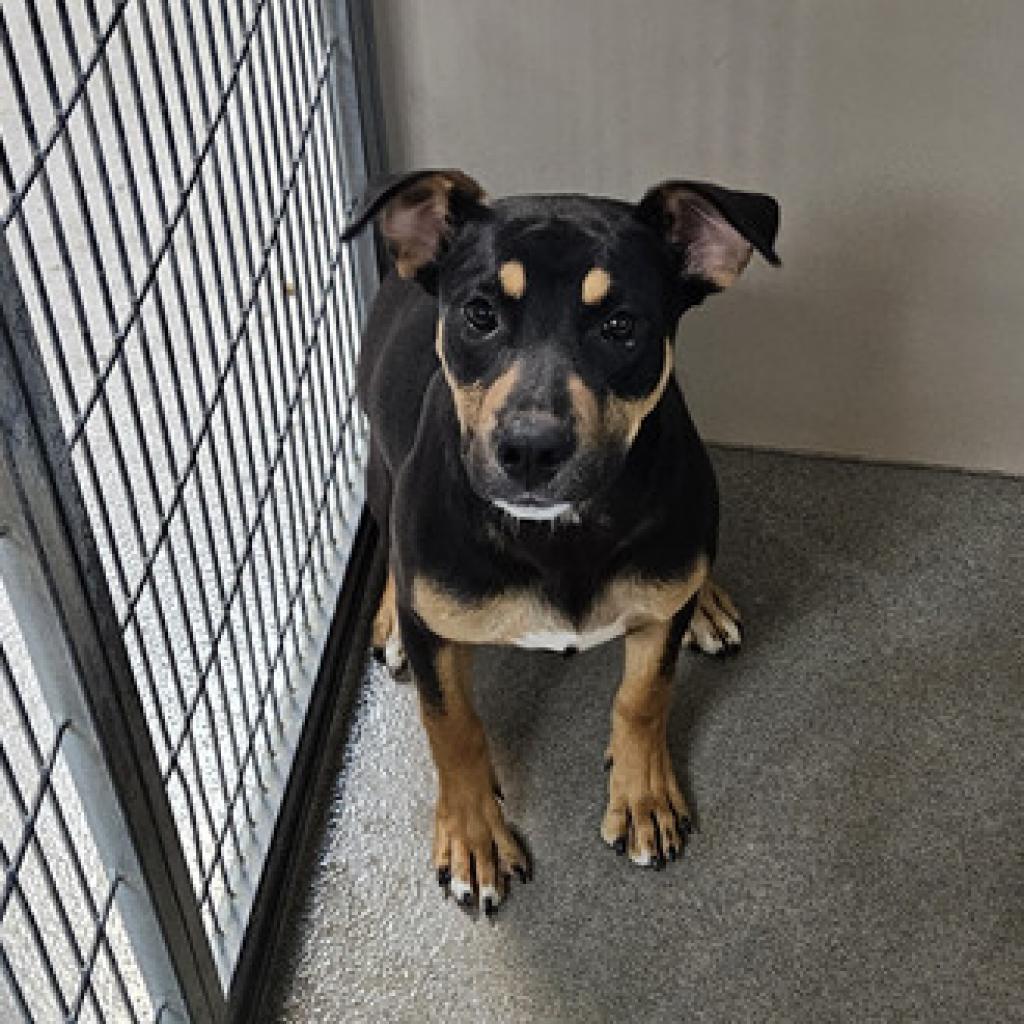
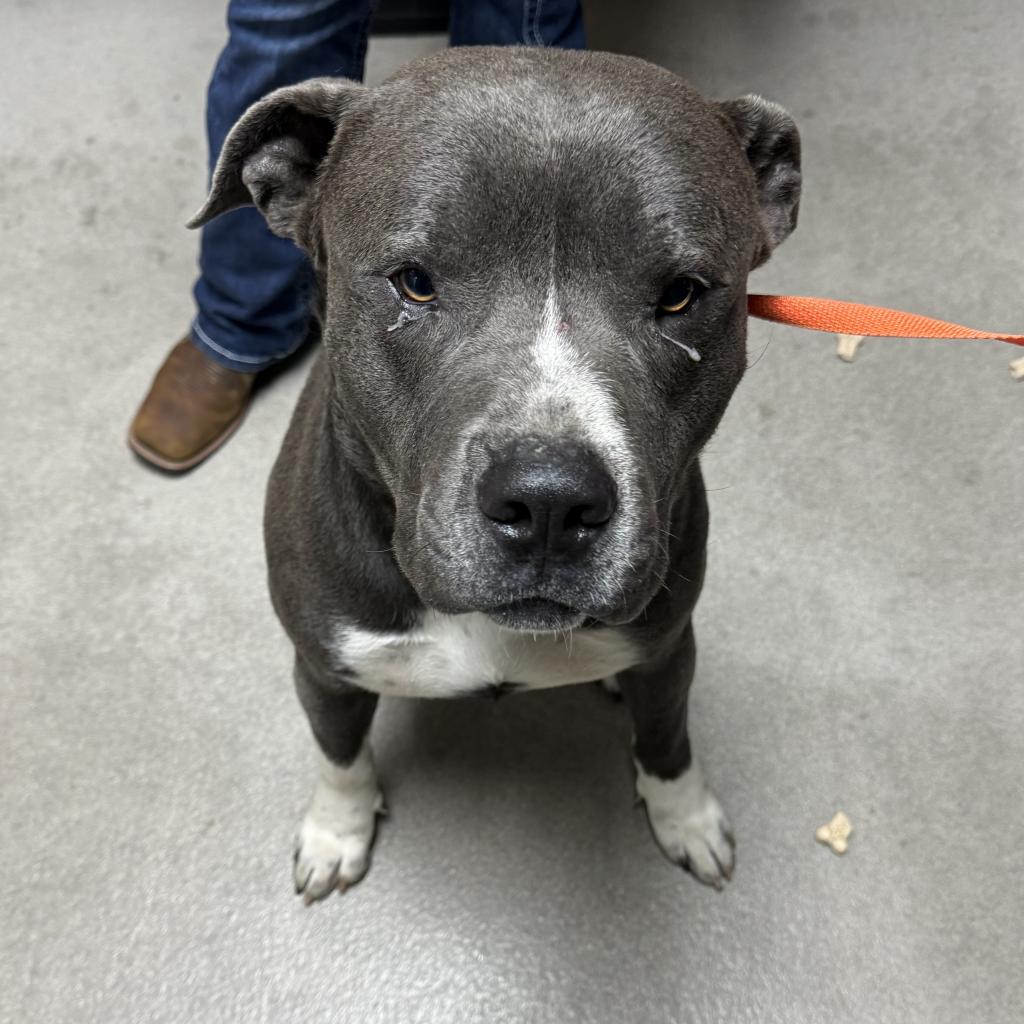
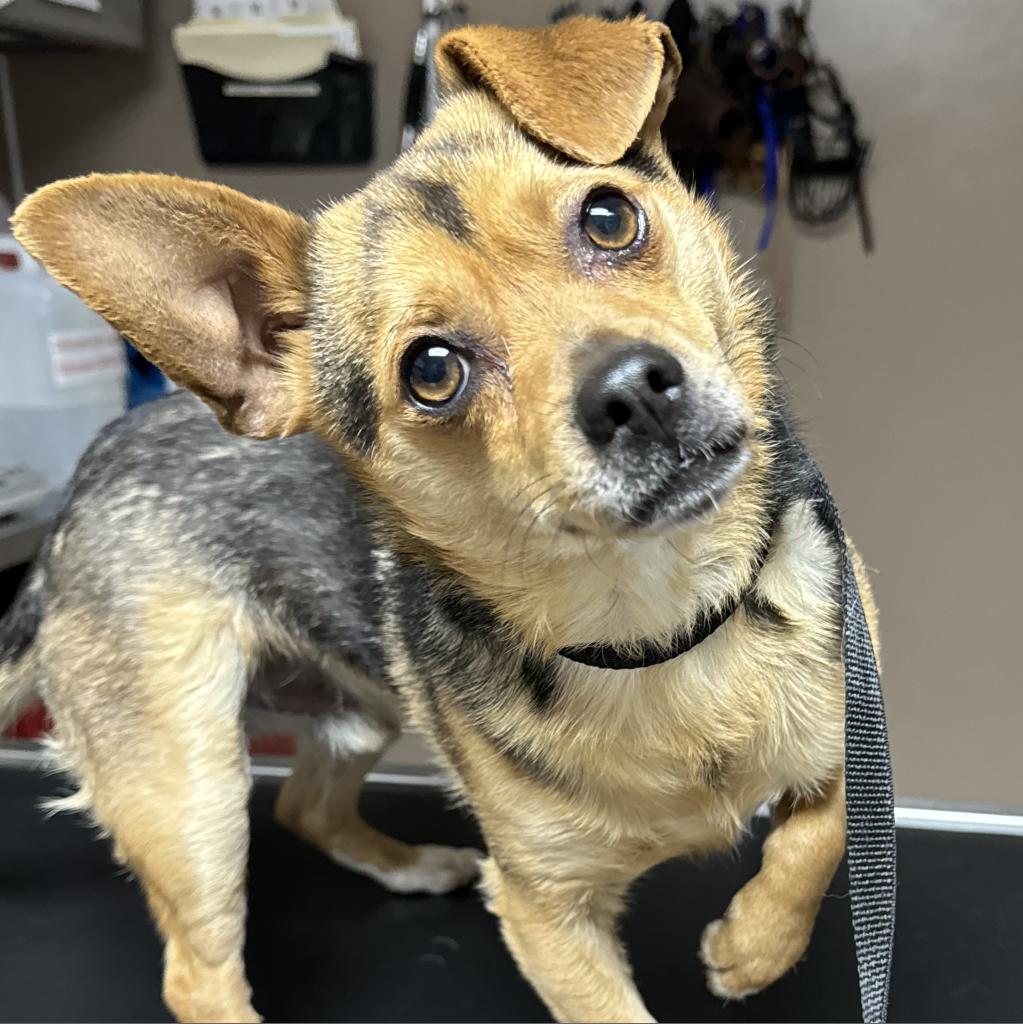
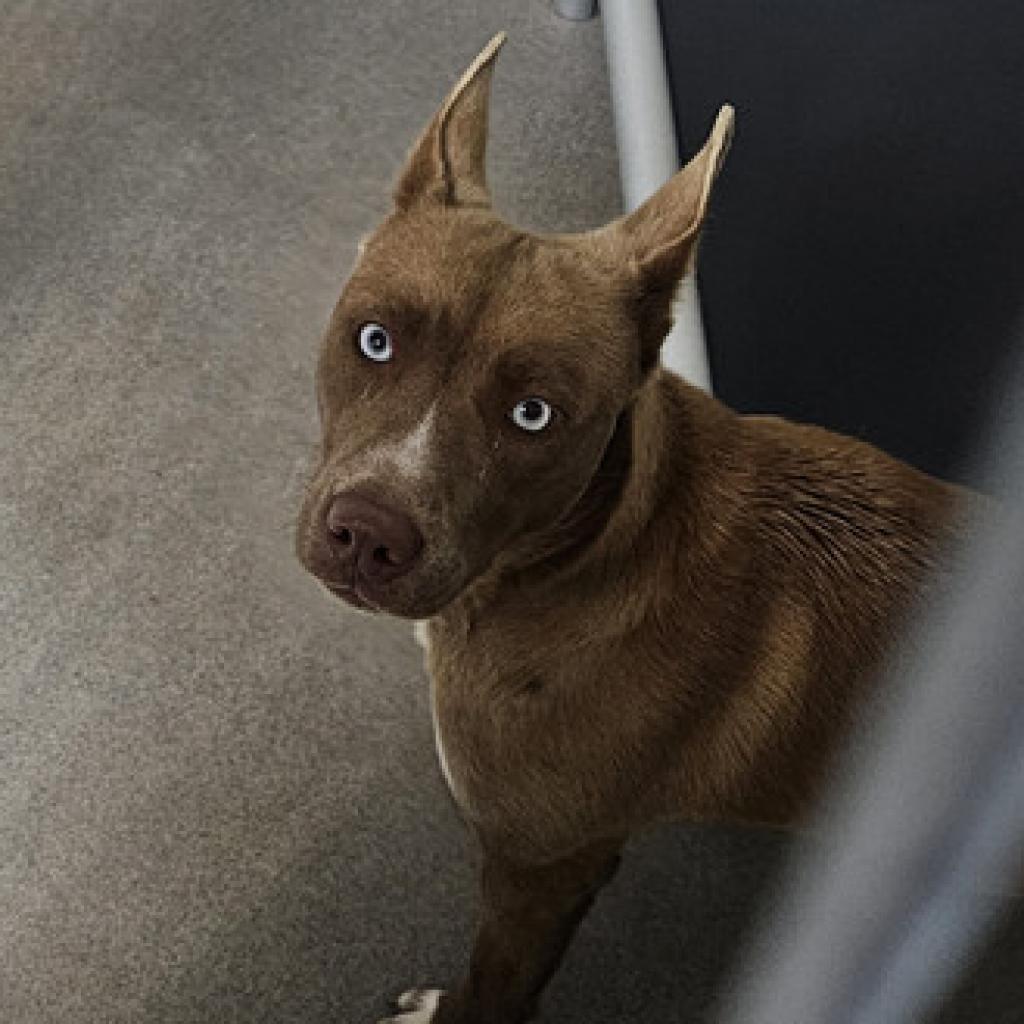
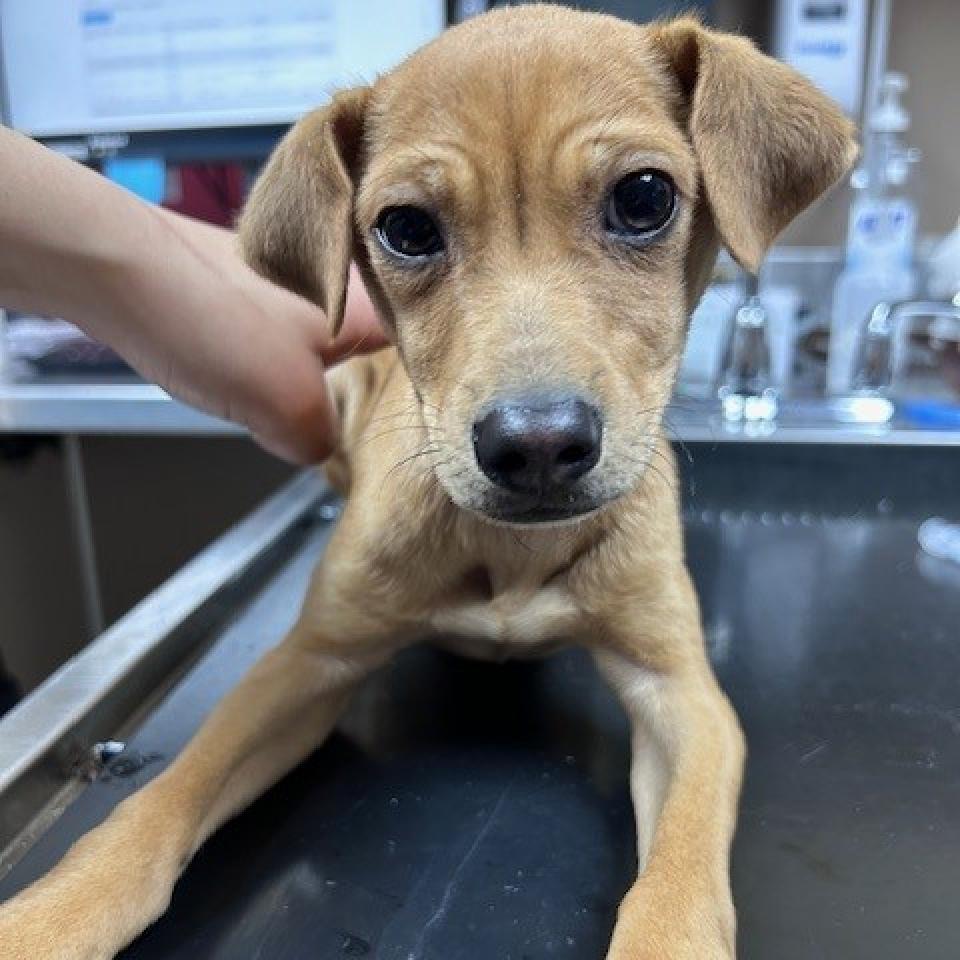
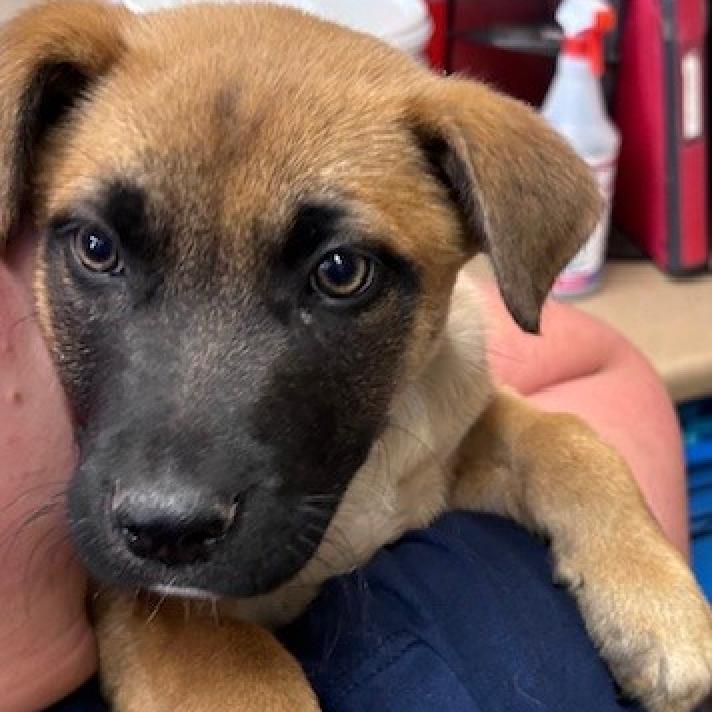
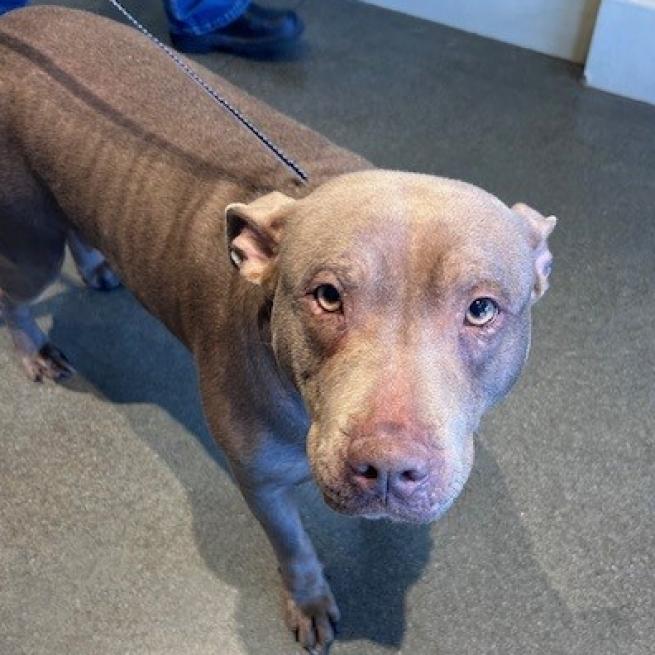
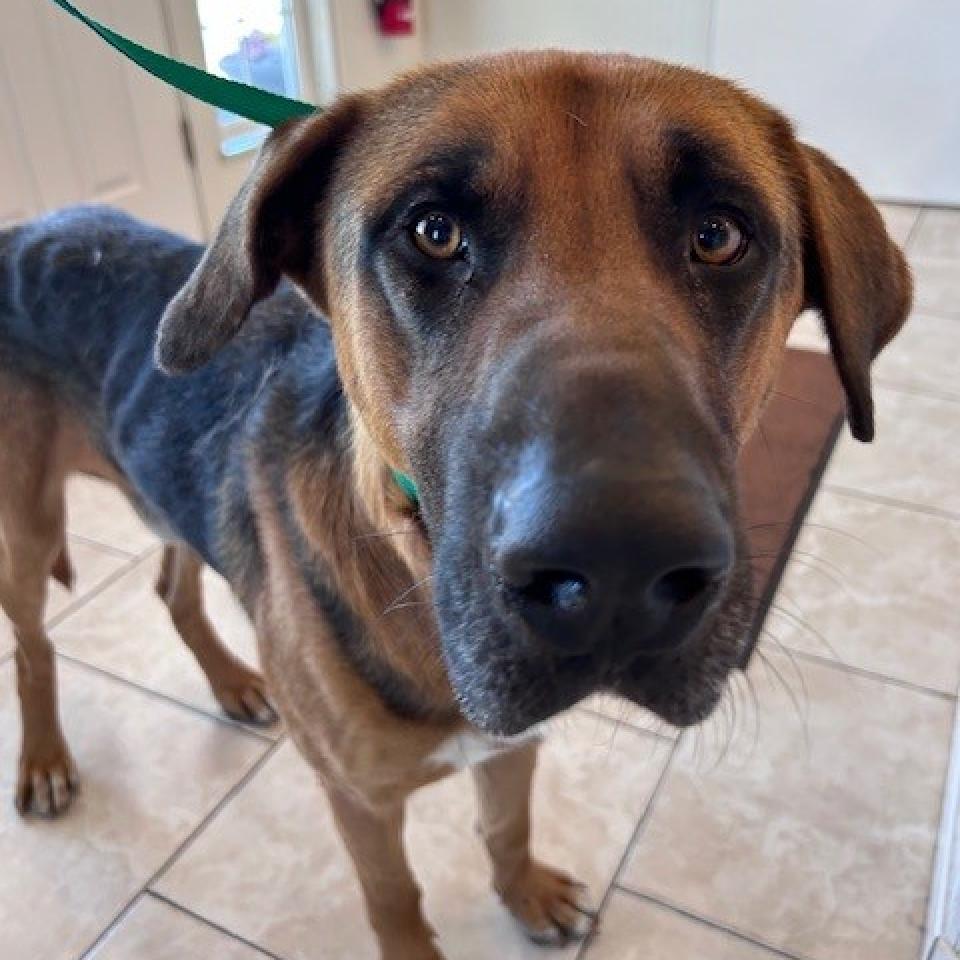
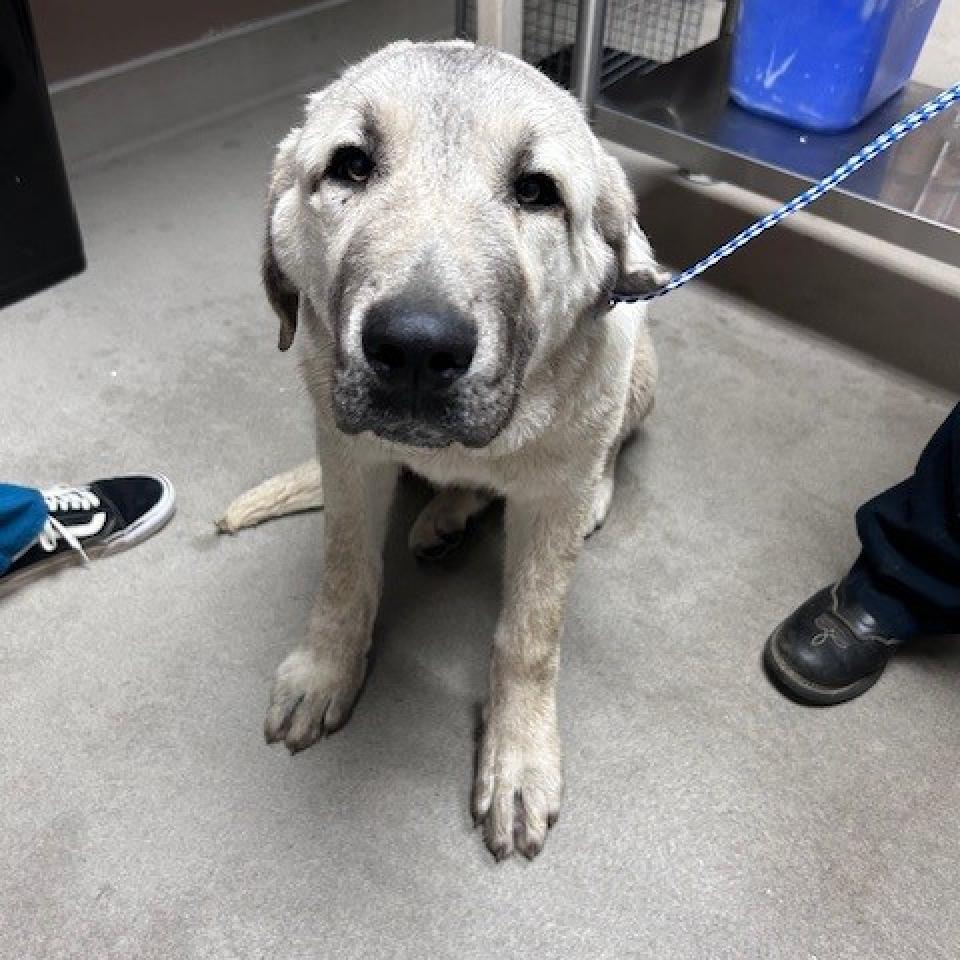
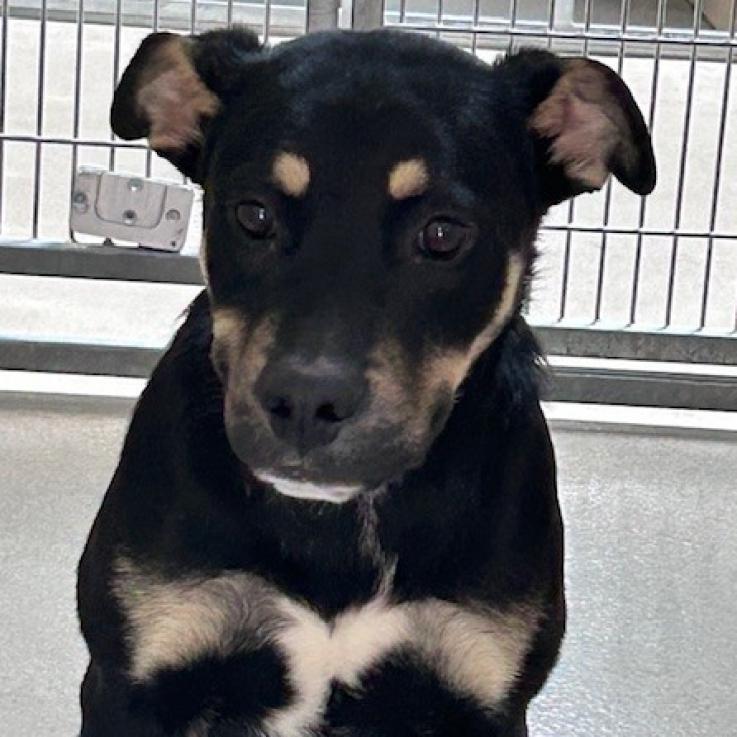
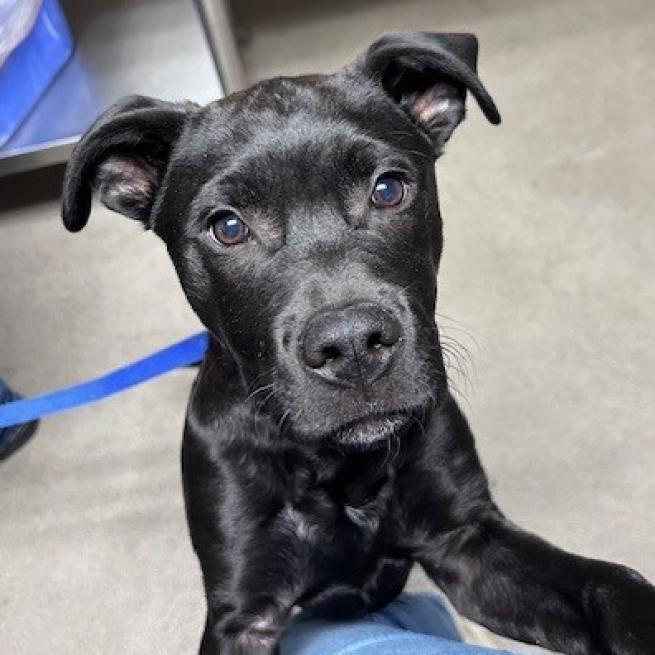
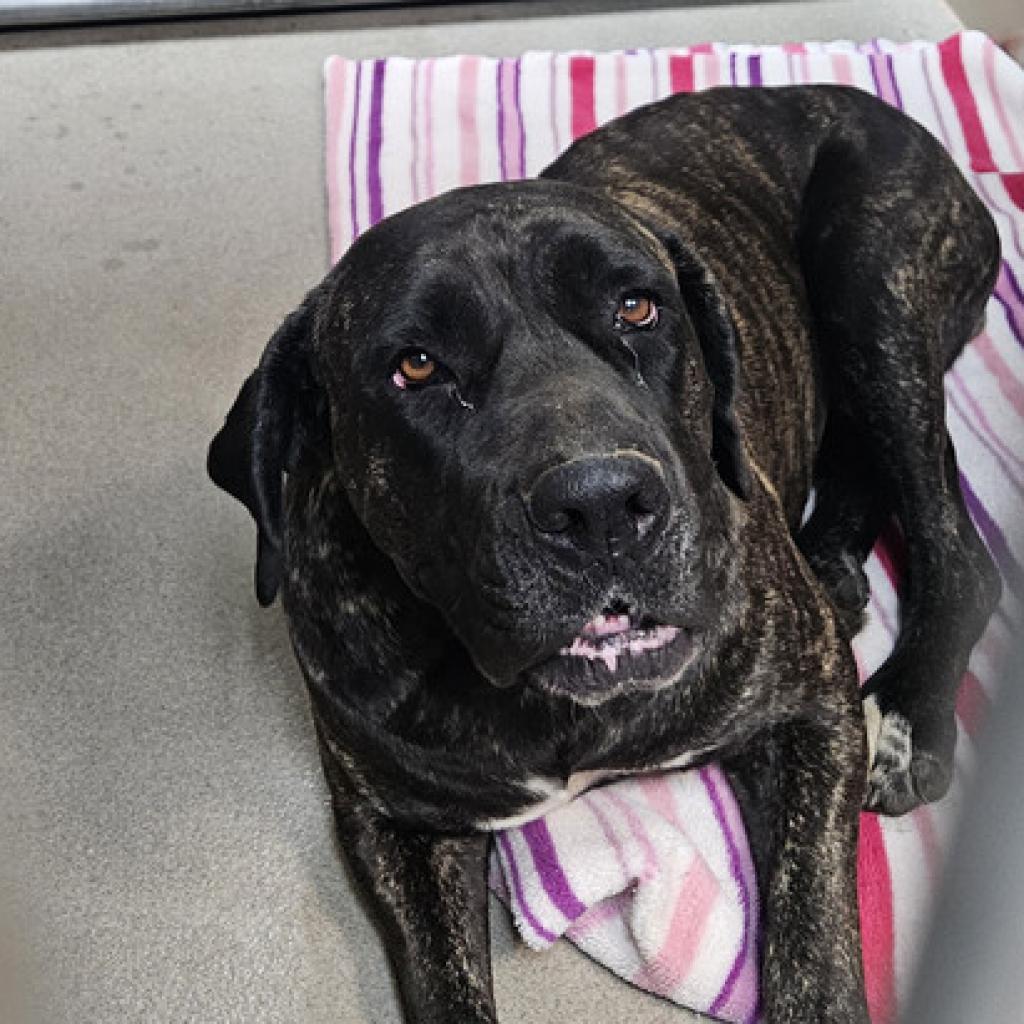
LAKE COUNTY, Calif. — Lake County Animal Care and Control has many dogs in need of news homes waiting in its shelter this week.
Dogs available for adoption this week include mixes of Alaskan husky, Anatolian shepherd, Australian terrier, Cane Corso, Chesapeake Bay retriever, Chihuahua, German shepherd, hound, Labrador Retriever, pit bull terrier, Rottweiler and terrier.
Dogs that are adopted from Lake County Animal Care and Control are either neutered or spayed, microchipped and, if old enough, given a rabies shot and county license before being released to their new owner. License fees do not apply to residents of the cities of Lakeport or Clearlake.
Those dogs and the others shown on this page at the Lake County Animal Care and Control shelter have been cleared for adoption.
Call Lake County Animal Care and Control at 707-263-0278 or visit the shelter online for information on visiting or adopting.
The shelter is located at 4949 Helbush in Lakeport.
Email Elizabeth Larson at This email address is being protected from spambots. You need JavaScript enabled to view it.. Follow her on Twitter, @ERLarson, or Lake County News, @LakeCoNews.
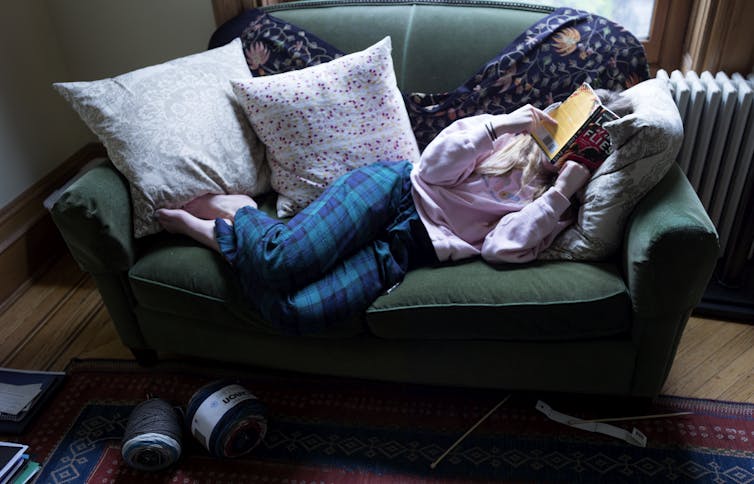
Identifying with an activity is different from actually doing it.
For example, 49% of Americans play video games, but only 10% identify as gamers.
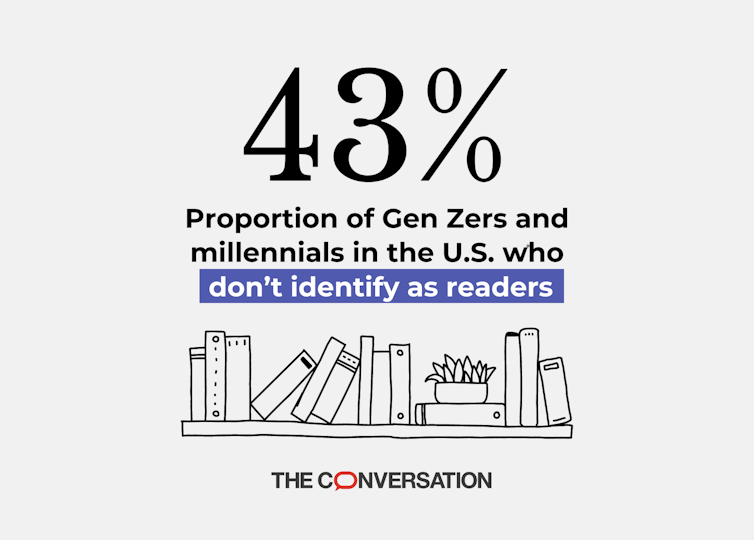
According to a recent survey we conducted, there’s also a small gap between reading activity and identity for younger readers: 61% of Generation Z and millennials have read a print book, e-book or audiobook in the past 12 months, but only 57% identify as readers.
And yet there was a puzzling aspect of our results: The 43% of Gen Z and millennials who didn’t identify as readers actually said they read more print books per month than Gen Z and millennials overall.
In other words, young people who don’t identify as readers are reading books at a higher rate than their generational cohorts as a whole.
Why?
Our best guess is that “reader” is an identity, not a behavior. And that identity is buttressed by involvement in book clubs, engagement with social media communities such as Booktok and Bookstagram, and access to libraries and bookstores.
Building bookish communities
Identities of reader, writer and fan seem to reinforce each other.
Millennials and members of Gen Z who identify as readers are also more likely to be writers and participate in fandom.
Community is key to all of these identities. For example, two of the top reasons millennials and members of Gen Z identify as fans are the fact that they’re “part of a fan community” and are able to “meet others like me.”
Every August, the Edinburgh Book International Book Festival in Scotland – the largest book festival in the world – puts on an entire month of events around books, authors and readers.
We heard fans waiting in that line talking about how Oseman’s series featured the first queer characters they’d encountered in a book. Readers came to the festival with friends and family, and made new friends and connections at the event. The passion was palpable.
What ‘counts’ as reading
But does a graphic novel like “Heartstopper” even count as “real” reading?
If the National Endowment for the Arts definitions from the early 2000s are to be believed, then no – unless it’s reading literature for leisure, it must not be “real” reading.
And some millennials and members of Gen Z may believe that the reading they are doing isn’t real reading. But a narrow definition of what counts as reading ignores the love Gen Zers and millennials have for content such as graphic novels, manga and comics.
In our study, 59% said they would prefer a graphic version of a story over text-only. And let’s not forget audiobooks, which 34% of Gen Zers and millennials prefer over text-only. Millennials and members of Gen Z are also reading nonfiction or reading for school and work, rather than pleasure.
In a separate study from 2020, we found that 83% of American readers read books for reasons other than entertainment, such as school, work or self-improvement.
What makes a reader?
More Gen Z and millennial women identify as readers, so there could be gender differences at play: Perhaps young men, no matter how much they read, are hesitant to closely identify with an activity they see as the purview of women.
Socioeconomic status may also factor into whether someone feels they can claim a readerly identity. Gen Zers and millennials who didn’t identify as readers were less likely to have a job in the past 12 months and earned less money.
So it turns out that identifying as a reader is often about community, wealth and gender – and what counts as reading – than it is about how much someone actually reads.
Perhaps there can be an effort to broaden the definition of “reading” – yes, audiobooks and comics count – and to build bookish communities beyond places such as Bookstagram and BookTok. And being a reader can be more than loving classic literature, though certain social media trends, such as “Reading Like Rory” – a BookTok phenomenon centered on the literary classics read by Rory Gilmore of “Gilmore Girls” – amounted to just that.
If young people were to see being a reader as simply enjoying and engaging with stories, how many of them would start to call themselves readers after all?
 How to resolve AdBlock issue?