How to resolve AdBlock issue?
News
- Details
- Written by: Lake County News reports
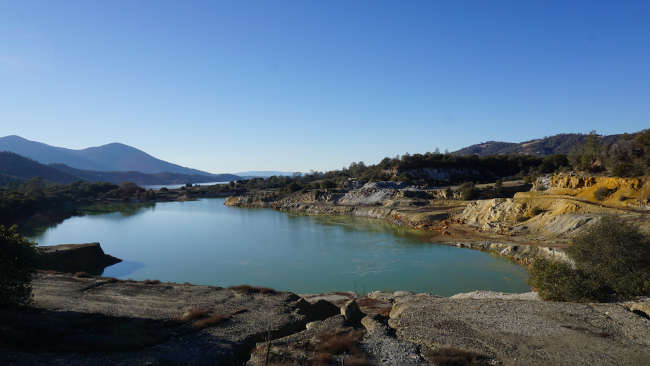
LAKE COUNTY, Calif. — The U.S. Environmental Protection Agency has announced a third and final wave of more than $1 billion for cleanup projects nationwide at over 100 Superfund sites as part of President Biden’s Investing in America agenda, one of them in Lake County.
This funding is made possible by the President’s Bipartisan Infrastructure Law and will launch new cleanup projects at 25 Superfund sites nationwide, including California’s Sulphur Bank Mercury Mine in Clearlake Oaks, Lava Cap Mine in Nevada City, and Southern Avenue Industrial Area in South Gate.
“Thanks to unprecedented funding from President Biden’s Bipartisan Infrastructure Law, EPA is delivering significant investment to achieving the goal of long-term protection for communities living closest to contaminated sites,” said EPA Pacific Southwest Regional Administrator Martha Guzman. “With our Superfund cleanups, we are taking firm action to protect the health, safety, and environment of communities throughout California and the Pacific Southwest.”
“Californians shouldn’t have to worry about the safety of their drinking water, soil, or food supply, but residents near mining and manufacturing sites face significant health risks,” said U.S. Sen. Alex Padilla. “Thanks to the Bipartisan Infrastructure Law, millions of dollars are coming to California to help clean up hazardous waste in these communities — and I will keep fighting to hold polluters responsible so that taxpayers aren’t footing the bill for cleanups.”
Thanks to the Bipartisan Infrastructure Law funding announced today, three new cleanup projects in California will start.
Today’s announcement will fund mining waste cleanup at the Sulphur Bank Mercury Mine site in Clearlake Oaks, located on Elem Colony of Pomo Indians land.
This cleanup will help protect nearby residential areas, safeguard residents’ long-term safety and health and make on-site mine areas safe for limited use by Elem Indian Colony residents for hunting, fishing, foraging, and transit to nearby lands.
The site was mined intermittently for sulfur and mercury between 1865 and 1957 and now contains about 2.5 million cubic yards of mine waste, which stretches along 1,300 feet of shoreline in the Oaks Arm area of Clear Lake.
Mine waste at the site has contaminated soils, surface water, and groundwater and has left mercury in sediments at the bottom of Clear Lake that have built up in fish.
EPA told Lake County News that its Region 9 requested $30 million for the Sulphur Bank cleanup, but the final allocation has not yet been determined.
Superfund breaks projects into “Operable Units,” or OUs, to delineate geographic areas/stages of the project.
For Sulphur Bank, there are 3 OUs. They include:
OU-1: the mine itself, Herman Impoundment (the flooded mine pit in the center of the site), and the impacted residential soil areas on the Elem Indian Colony and to the south of the site. This has a cost estimate of $94 million.
OU-2: Clear Lake and its sediments: EPA continues to study Clear Lake (OU-2) to understand how it might best address the mercury contamination in the lake. EPA anticipates the proposed plan for the lake and sediment cleanup is several years away.
OU-4: the North Wetlands and study area. OU-4 was created in 2021. EPA said it is still evaluating the contamination in this area and anticipates a cleanup plan in several years.
In other projects, at the Lava Cap Mine site in Nevada City, California, funding will be used to construct a wetland treatment plant to treat water discharging from the former mine area. The chemicals of concern at this site are arsenic, manganese, and iron. Arsenic is a known carcinogen. Iron and manganese are not considered risks to human health but can cause taste, odor, color, and staining problems when carried in water. The treatment plant will use processes, including metal precipitation, settling ponds, and lime addition, before downstream discharge. Lava Cap is a 33-acre former gold and silver mine just east of Grass Valley, California, operated from 1861 to 1943.
Finally, cleanup will begin at the Southern Avenue Industrial Area site in South Gate, where approximately 1,400 cubic yards of contaminated soil pollute the soil and groundwater. For decades, the now sectioned-off parking lot served as the site of an industrial facility for hot-melt carpet adhesive tape, contaminating the nearby soil with volatile organic compounds (VOC) like lead and polychlorinated biphenyls (PCBs). These VOCs linger in the soil to this day. Cleanup will prevent future VOC exposure, which can cause a variety of health effects including: eye, nose, and throat irritation; headaches and loss of coordination; nausea; and damage to the liver, kidneys, or central nervous system. Some VOCs are suspected or proven carcinogens. PCBs exposure can alter thyroid and reproductive function and increase the risk of developing cardiovascular and liver disease and diabetes.
In addition to the new cleanup projects, this investment supports the continued operation of a cleanup effort initially funded by prior Bipartisan Infrastructure Law – investment at the Argonaut Mine Superfund site in California.
At the Argonaut Mine site in Jackson, California, mining operations occurred from the 1850s to 1942. Portions of the site's soil still have high levels of arsenic, lead, mercury, and other metals and remain off-limits to the public.
Since 2013, EPA has been working to understand and address the contamination at the site, removing the soil from a nearby lot and several residential yards in 2013 and removing soil in addition to capping a slope at Jackson Junior High School in 2015. Thanks to earlier funding from President Biden’s Bipartisan Infrastructure Law, EPA undertook a short-term cleanup known as a removal action at Argonaut from June 1, 2022, to November 2023. This removal action addressed the highest concentrations of contamination, which posed a risk to nearby community members if they accessed the site.
That prior cleanup cost approximately $25 million and moved 130,000 cubic yards of mine waste and contaminated soil/bedrock. The area of work covered 28 acres and consolidated all tailings and contaminated soil into a landfill on top of existing tailings and was capped with layers of clay, rodent barrier (gravel or stainless-steel wool), and composted soil that is 3.5 feet thick. Other areas not part of the landfill were also capped to prevent water percolation into the subsurface and as a barrier to remaining place waste.
Thousands of contaminated sites exist nationally due to hazardous waste being dumped, left out in the open, or otherwise improperly managed. These sites can include toxic chemicals from manufacturing facilities, processing plants, landfills, and mining and can harm the health and well-being of local communities in urban and rural areas.
This new investment is the final wave of funding from the $3.5 billion allocated for Superfund cleanup work in the President’s Bipartisan Infrastructure Law.
So far, EPA has deployed over $2 billion for cleanup activities at over 150 Superfund National Priorities List sites. EPA has been able to provide as much funding for cleanup work in the past two years as it did in the previous five years while delivering on President Biden’s Justice40 Initiative, which set a goal to deliver 40% of the overall benefits of certain federal investments to disadvantaged communities that are marginalized by underinvestment and overburdened by pollution.
EPA is committed to continuing this work, advancing environmental justice, and incorporating equity considerations into all aspects of the Superfund cleanup process. More than one in four Black and Hispanic Americans live within three miles of a Superfund site.
These investments are restoring the health and economic vitality of communities exposed to pervasive legacy pollution. Thus far, nearly 80% of the funding from the Bipartisan Infrastructure Law has gone to sites in communities with potential environmental justice concerns. Out of the 25 sites to receive funding for new cleanup projects, more than 75% are in communities with potential environmental justice concerns based on data from EJSCREEN.
- Details
- Written by: Elizabeth Larson
The National Weather Service has issued a winter storm warning and high wind advisory for Lake County, where rain showers are expected through Sunday.
Snow also is in the Lake County forecast for Sunday, when snow could fall as low as the 2,000 foot elevation mark.
The severity of the incoming storm has prompted the National Weather Service to issue a rare blizzard warning for the Sierras from Thursday through Saturday.
Pacific Gas and Electric Co. said itscrews are readying to respond to expected power outages.
The company reported that an initial wave of moderate to heavy rain and gusty winds is expected in the northern part of its service territory during the day Thursday, with more widespread rain and gusty conditions on Friday.
Low- and middle-elevation snow impacts are expected Saturday into Sunday, with several feet of snow above 5,000 feet and six-to-12-inches possible down to 2,000 feet, PG&E reported.
PG&E said it is pre-staging crews and materials and is prepared to use helicopters, snow cats and four-wheel drive to gain access to hard hit areas. However, the company said customers in remote areas should prepare for extended outages given the unique circumstances of this storm.
The company urged people to be prepared, including remembering not to touch downed wires, to use generators safely, use flashlights and not candles, have a backup phone, have fresh drinking water and ice on hand, secure outdoor furniture, turn off appliances and wait until after the storm has passed to conduct clean up.
Email Elizabeth Larson at
- Details
- Written by: Victoria Colliver
The study found that people who used cannabis daily had a 25% increased risk of heart attack and a 42% increased risk of stroke compared to non-users.
Cannabis has become more popular with legalization. Recreational use is now permitted in 24 states, and as of 2019, nearly 4% said they used it daily and 18% used it annually. That is a significant increase since 2002, when 1.3% said they used it daily and 10.4% used it annually.
“Cannabis use is increasing in both prevalence and frequency, while conventional tobacco smoking is declining,” said Salomeh Keyhani, MD, MPH, professor of medicine at UCSF and senior author of the study, which appears Feb. 28, 2024, in the Journal of the American Heart Association. “Cannabis use by itself might, over time, become the more important risk factor.”
Cardiac risks for those who never used tobacco
The researchers used data from the Behavioral Risk Factor Surveillance System, a national cross-sectional survey conducted by the Centers for Disease Control and Prevention to examine the association between cannabis use and adverse cardiovascular outcomes including coronary heart disease, heart attack and stroke.
They examined whether cannabis use was associated with coronary heart disease, acute myocardial infarction and stroke among the general adult population and among people who had never smoked tobacco.
Among the 434,104 respondents, about 4% were daily users, 7.1% were non-daily (about five days in the month) and 88.9% had not used any marijuana in the past 30 days. Among current users, about three-fourths said they mostly smoked it.
The study found that cannabis use was independently associated with adverse cardiovascular outcomes, and the odds rose with the number of days per month that a person used it.
The study also examined the effects for those who had never smoked or vaped tobacco, finding that just smoking cannabis was associated both with stroke, and with the combination of coronary heart disease, heart attack and stroke.
“This is an important public health finding, particularly given our ongoing efforts to reduce the burden of heart disease in this country,” said David C. Goff, M.D., Ph.D., director of the Division of Cardiovascular Sciences at the National Heart, Lung, and Blood Institute (NHLBI), which is part of the National Institutes of Health.
The perception of risk needs to change
People who smoke cannabis often hesitate to disclose it to their physicians, in part because they don’t consider it as harmful as smoking tobacco, and many states, like California, first approved it for medical uses. The researchers noted it will be an uphill battle to change these attitudes.
“There is a multibillion-dollar cannabis industry that markets cannabis use as not only harmless, but good for you,” Keyhani said. “It can be a challenging discussion to have with patients because there is evidence that cannabis has some therapeutic properties. However, as suggested by this study, cannabis use also has significant cardiovascular risks.”
Co-authors: Additional UCSF co-authors include Stanton Glantz, PhD, and Amy L. Byers, PhD, MPH.
Funding: NHLBI 1R01HL130484-01A1 and National Cancer Institute (grant T32 CA113710).
Victoria Colliver writes for the University of California, San Francisco.
- Details
- Written by: Kathleen Merrigan, Arizona State University

After several years of pandemic-driven price spikes at the grocery store, retail food price inflation is slowing down. That’s good news for consumers, especially those in low-income households, who spend a proportionally larger share of their income on food.
But there’s more to the cost of food than what we pay at the store. Producing, processing, transporting and marketing food creates costs all along the value chain. Many are borne by society as a whole or by communities and regions.
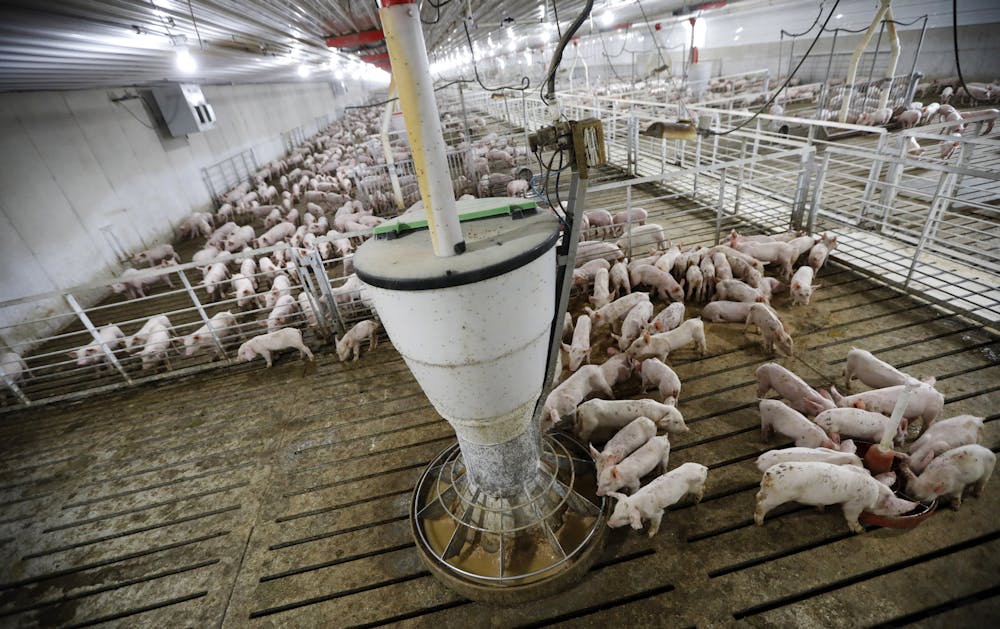
For example, farm runoff is a top cause of algae blooms and dead zones in rivers, lakes and bays. And food waste takes up one-fourth of the space in U.S. landfills, where it rots, generating methane that warms Earth’s climate.
Exploring these lesser-known costs is the first step toward reducing them. The key is a method called true cost accounting, which examines the economic, environmental, social and health impacts of food production and consumption to produce a broader picture of its costs and benefits.
Trillions of dollars in uncounted costs
Every year since 1947, the United Nations Food and Agriculture Organization has released an important and widely read report called The State of Food and Agriculture, known in the food sector as SOFA. SOFA 2023 examines how much more our food costs beyond what consumers pay at the grocery store.
Using true cost accounting, the report calculates that the global cost of the agrifood system in 2020 was up to US$12.7 trillion more than consumers paid at retail. That’s equivalent to about 10% of global gross domestic product, or $5 per person per day worldwide.
In traditional economics-speak, hidden costs are known as externalities – spillover effects from production that are caused by one party but paid for by another. Some externalities are positive. For example, birds, butterflies and insects pollinate crops at no charge, and everyone who eats those crops benefits. Others, such as pollution, are negative. Delivery trucks emit pollution, and everyone nearby breathes dirtier air.
True cost accounting seeks to make those externalities visible. To do this, scholars analyze data related to environmental, health, social and other costs and benefits, add them together and calculate a price tag that represents what food really costs.
The Swette Center for Sustainable Food Systems at Arizona State University, which I direct, recently conducted a true cost accounting study of cow-calf operations in the Western U.S., in partnership with Colorado State University. It found that the climate costs of these operations are very high – but that solving for climate change alone could threaten the livelihoods of 70,000 ranchers and the rural communities in which they live. A true cost accounting approach can illuminate the need for multidimensional solutions.
I study sustainable food systems and am one of 150 scholars across 33 countries who worked together over several years to design and test this new methodology. Our work was led by the U.N. Environment Program and partially funded by the Global Alliance for the Future of Food, a coalition of philanthropic foundations.
In many ways, true cost accounting is a modern and improved version of cost-benefit analysis, a method embedded in governmental decision-making in most advanced economies around the world. This approach quantifies expected rewards and costs associated with taking a particular action and then compares them to see whether the action is likely to produce a net gain or loss for the public.
Advocates of true cost accounting assert that its more nuanced approach will address shortcomings in traditional cost-benefit analysis – particularly, failing to consider social and health externalities in depth. The hope is that because these two methods have many similarities, it should be relatively easy for governments to upgrade to true cost accounting as it becomes more widely adopted.
True costs of food vary across countries
The 2023 State of Food and Agriculture report reveals some clear patterns. Of the $12.7 trillion in worldwide hidden costs that it tallies, 39% are generated by upper-middle-income countries and 36% by high-income countries.
For wealthy countries, 84% of hidden costs derive from unhealthy dietary patterns, such as eating large quantities of red meat and heavily processed foods, which is associated with elevated risk of heart disease, cancer and other illnesses. Getting sick takes people away from work, so these health effects also reduce productivity, which affects the economy.
In contrast, 50% of the hidden costs of food in low-income countries are social costs that stem from poverty and undernourishment. SOFA 2023 estimates that incomes of poor people who produce food in low-income countries would need to increase by 57% for these workers to obtain sufficient revenue and calories for productive lives.
Food insecurity on farms is also an issue in the U.S., where the people who produce our food sometimes go hungry themselves. The food system’s reliance on undocumented and low-paid workers yields undernourished children who often are unable to learn.
The fact that many U.S. farmworkers lack access to health insurance also generates costs, since hospitals treat them at public expense when these workers fall sick or are injured.
Food production also has environmental costs. Nitrogen runoff, ammonia emissions, deforestation, water pollution and greenhouse gas emissions combined represent about 20% of the global hidden costs of food production. Other environmental costs, such as those associated with species loss and pesticide exposure, are not included in the SOFA analysis.
Should food cost more?
The first question people ask me about true cost accounting is whether using it will make food more expensive. Some advocates do argue for pricing food at a level that internalizes its hidden costs.
For example, a Dutch organization called True Price works with food companies to help them charge more accurate prices. The group operates a grocery store in Amsterdam that charges conventional prices but provides receipts that also display “true” prices, reflecting the goods’ hidden costs.
Consumers are encouraged to pay these higher prices. When they do, the store shares the proceeds with two nonprofit organizations that promote land and wildlife conservation and poverty reduction in Africa.
Rather than raising prices, I believe the most effective way to address the hidden costs of food would be to change government policies that provide $540 billion in agricultural subsidies worldwide every year. Of this amount, 87% goes to support production systems that produce cheap food, fiber and biofuels but also generate social and environmental harms. Examples include subsides that promote chemical fertilizer and pesticide use, overuse of natural resources and cultivation of emission-intensive products such as rice.
U.N. agencies have urged world leaders to redirect these subsidies to reduce negative impacts – a strategy they call “a multibillion-dollar opportunity to transform food systems.” While it may seem that eliminating subsidies would raise retail prices, that’s not necessarily true – especially if they are repurposed to support sustainable, equitable and efficient production.
Using true cost accounting as a guide, policymakers could reallocate some of these vast sums of money toward production methods that deliver net-positive benefits, such as expanding organic agriculture, agroforestry and sustainable fisheries. They also could invest in training and supporting next-generation food and agriculture leaders.
By creating transparency, true cost accounting can help shift money away from harmful food production systems and toward alternatives that protect resources and rural communities. Doing so could reduce the hidden costs of feeding the world.
Kathleen Merrigan, Executive Director, Swette Center for Sustainable Food Systems, Arizona State University
This article is republished from The Conversation under a Creative Commons license. Read the original article.