How to resolve AdBlock issue?
Refresh this page
How to resolve AdBlock issue?
Refresh this page
Lake County News,California
  • Home
    • Registration Form
  • News
    • Education
    • Veterans
    • Community
      • Obituaries
      • Letters
      • Commentary
    • Police Logs
    • Business
    • Recreation
    • Health
    • Religion
    • Legals
    • Arts & Life
    • Regional
  • Calendar
  • Contact us
    • FAQs
    • Phones, E-Mail
    • Subscribe
  • Advertise Here
  • Login
How to resolve AdBlock issue?
Refresh this page

News

Space News: Most normal matter in the universe isn’t found in planets, stars or galaxies – an astronomer explains where it’s distributed

Details
Written by: Chris Impey, University of Arizona
Published: 07 December 2025

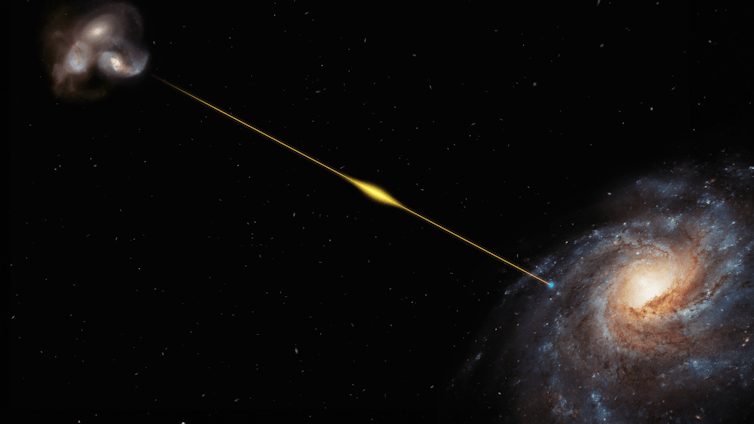
Mysterious blasts of radio waves from across the universe called fast radio bursts help astronomers catalog matter. ESO/M. Kornmesser, CC BY-SA

If you look across space with a telescope, you’ll see countless galaxies, most of which host large central black holes, billions of stars and their attendant planets. The universe teems with huge, spectacular objects, and it might seem like these massive objects should hold most of the universe’s matter.

But the Big Bang theory predicts that about 5% of the universe’s contents should be atoms made of protons, neutrons and electrons. Most of those atoms cannot be found in stars and galaxies – a discrepancy that has puzzled astronomers.

If not in visible stars and galaxies, the most likely hiding place for the matter is in the dark space between galaxies. While space is often referred to as a vacuum, it isn’t completely empty. Individual particles and atoms are dispersed throughout the space between stars and galaxies, forming a dark, filamentary network called the “cosmic web.”

Throughout my career as an astronomer, I’ve studied this cosmic web, and I know how difficult it is to account for the matter spread throughout space.

In a study published in June 2025, a team of scientists used a unique radio technique to complete the census of normal matter in the universe.

The census of normal matter

The most obvious place to look for normal matter is in the form of stars. Gravity gathers stars together into galaxies, and astronomers can count galaxies throughout the observable universe.

The census comes to several hundred billion galaxies, each made of several hundred billion stars. The numbers are uncertain because many stars lurk outside of galaxies. That’s an estimated 1023 stars in the universe, or hundreds of times more than the number of sand grains on all of Earth’s beaches. There are an estimated 1082 atoms in the universe.

However, this prodigious number falls far short of accounting for all the matter predicted by the Big Bang. Careful accounting indicates that stars contain only 0.5% of the matter in the universe. Ten times more atoms are presumably floating freely in space. Just 0.03% of the matter is elements other than hydrogen and helium, including carbon and all the building blocks of life.

Looking between galaxies

The intergalactic medium – the space between galaxies – is near-total vacuum, with a density of one atom per cubic meter, or one atom every 35 cubic feet. That’s less than a billionth of a billionth of the density of air on Earth. Even at this very low density, this diffuse medium adds up to a lot of matter, given the enormous, 92-billion-light-year diameter of the universe.

The intergalactic medium is very hot, with a temperature of millions of degrees. That makes it difficult to observe except with X-ray telescopes, since very hot gas radiates out through the universe at very short X-ray wavelengths. X-ray telescopes have limited sensitivity because they are smaller than most optical telescopes.

Deploying a new tool

Astronomers recently used a new tool to solve this missing matter problem. Fast radio bursts are intense blasts of radio waves that can put out as much energy in a millisecond as the Sun puts out in three days. First discovered in 2007, scientists found that the bursts are caused by compact stellar remnants in distant galaxies. Their energy peters out as the bursts travel through space, and by the time that energy reaches the Earth, it is a thousand times weaker than a mobile phone signal would be if emitted on the Moon, then detected on Earth.

Research from early 2025 suggests the source of the bursts is the highly magnetic region around an ultra-compact neutron star. Neutron stars are incredibly dense remnants of massive stars that have collapsed under their own gravity after a supernova explosion. The particular type of neutron star that emits radio bursts is called a magnetar, with a magnetic field a thousand trillion times stronger than the Earth’s.

An illustration of a bright star with circular rings around it representing magnetic field lines
A magnetar is a rare type of neutron star with an extremely strong magnetic field. ESO/L. Calçada, CC BY-ND

Even though astronomers don’t fully understand fast radio bursts, they can use them to probe the spaces between galaxies. As the bursts travel through space, interactions with electrons in the hot intergalactic gas preferentially slow down longer wavelengths. The radio signal is spread out, analogous to the way a prism turns sunlight into a rainbow. Astronomers use the amount of spreading to calculate how much gas the burst has passed through on its way to Earth.

Puzzle solved

In the new study, published in June 2025, a team of astronomers from Caltech and the Harvard Center for Astrophysics studied 69 fast radio bursts using an array of 110 radio telescopes in California. The team found that 76% of the universe’s normal matter lies in the space between galaxies, with another 15% in galaxy halos – the area surrounding the visible stars in a galaxy – and the remaining 9% in stars and cold gas within galaxies.

The complete accounting of normal matter in the universe provides a strong affirmation of the Big Bang theory. The theory predicts the abundance of normal matter formed in the first few minutes of the universe, so by recovering the predicted 5%, the theory passes a critical test.

Several thousand fast radio bursts have already been observed, and an upcoming array of radio telescopes will likely increase the discovery rate to 10,000 per year. Such a large sample will let fast radio bursts become powerful tools for cosmology. Cosmology is the study of the size, shape and evolution of the universe. Radio bursts could go beyond counting atoms to mapping the three-dimensional structure of the cosmic web.

Pie chart of the universe

Scientists may now have the complete picture of where normal matter is distributed, but most of the universe is still made up of stuff they don’t fully understand.

The most abundant ingredients in the universe are dark matter and dark energy, both of which are poorly understood. Dark energy is causing the accelerating expansion of the universe, and dark matter is the invisible glue that holds galaxies and the universe together.

A pie chart showing the composition of the universe. The largest proportion is dark energy, at 68%, while dark matter makes up 27% and normal matter 5%. The rest is neutrinos, free hydrogen and helium and heavy elements.
Despite physicists not knowing much about it, dark matter makes up around 27% of the universe. Visual Capitalist/Science Photo Library via Getty Images

Dark matter is probably a previously unstudied type of fundamental particle that is not part of the standard model of particle physics. Physicists haven’t been able to detect this novel particle yet, but we know it exists because, according to general relativity, mass bends light, and far more gravitational lensing is seen than can be explained by visible matter. With gravitational lensing, a cluster of galaxies bends and magnifies light in a way that’s analogous to an optical lens. Dark matter outweighs conventional matter by more than a factor of five.

One mystery may be solved, but a larger mystery remains. While dark matter is still enigmatic, we now know a lot about the normal atoms making up us as humans, and the world around us.The Conversation

Chris Impey, University Distinguished Professor of Astronomy, University of Arizona

This article is republished from The Conversation under a Creative Commons license. Read the original article.

Community kicks off Christmas in Kelseyville

Details
Written by: Elizabeth Larson
Published: 06 December 2025
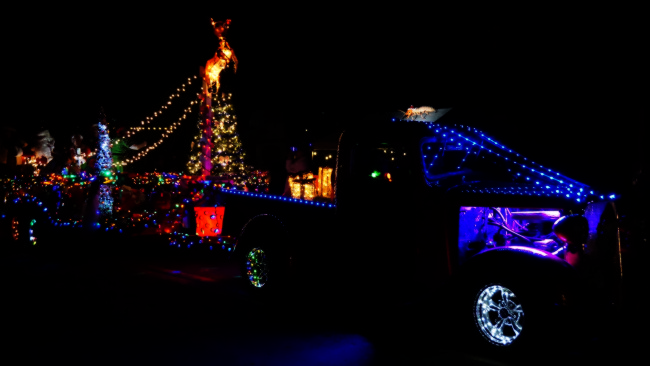
Holiday characters like the Grinch were on hand to help spread cheer during the light parade, part of Kelseyville’s annual Christmas in the Country celebration on Friday, Dec. 5, 2025. Photo by Elizabeth Larson/Lake County News. 


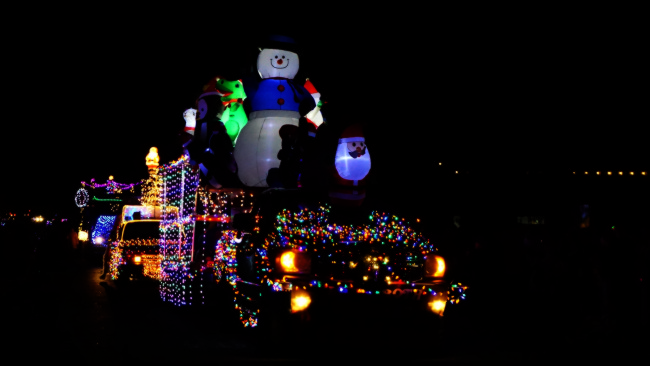
KELSEYVILLE, Calif. — Christmas officially came to Kelseyville on Friday night with the 34th annual “Christmas in the Country” celebration.

Under a huge, bright moon, thousands lined Main Street for the parade — featuring once again the bubble machine and a wide variety of participants, from equestrians to schools, businesses to religious groups..

Those who made the trip into town stopped into businesses for food, beverages or to check out their goods.

Around town, organizations hosted special events, such as Kelseyville Presbyterian Church’s chili and chowder dinner, as well as offerings at St. Peter’s Catholic Church, Kelseyville United Methodist Church and the Mountain Vista Middle School class fundraiser.

Email Elizabeth Larson at This email address is being protected from spambots. You need JavaScript enabled to view it.. Follow her on Twitter, @ERLarson, and on Bluesky, @erlarson.bsky.social. Find Lake County News on the following platforms: Facebook, @LakeCoNews; X, @LakeCoNews; Threads, @lakeconews, and on Bluesky, @lakeconews.bsky.social. 

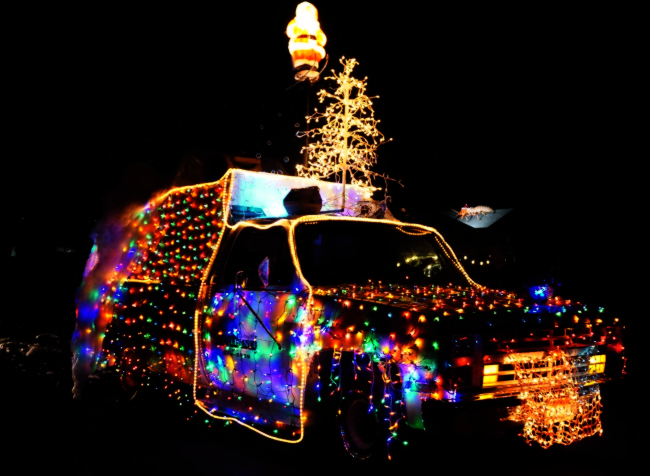
Hot rods across a wide span of time paraded down Main Street during the light parade, part of Kelseyville’s annual Christmas in the Country celebration on Friday, Dec. 5, 2025. Photo by Elizabeth Larson/Lake County News. 


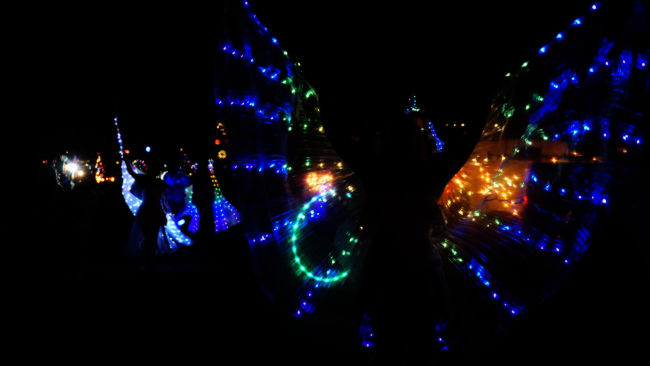
Angels danced during the light parade, part of Kelseyville’s annual Christmas in the Country celebration on Friday, Dec. 5, 2025. Photo by Elizabeth Larson/Lake County News. 

A group of floats and vehicles paraded down Main Street during the light parade, part of Kelseyville’s annual Christmas in the Country celebration on Friday, Dec. 5, 2025. Photo by Elizabeth Larson/Lake County News. 


The bubble machine helps bring up the rear during the light parade, part of Kelseyville’s annual Christmas in the Country celebration on Friday, Dec. 5, 2025. Photo by Elizabeth Larson/Lake County News. 

Vaccine committee votes to scrap universal hepatitis B shots for newborns despite outcry from children’s health experts

Details
Written by: David Higgins, University of Colorado Anschutz Medical Campus
Published: 06 December 2025

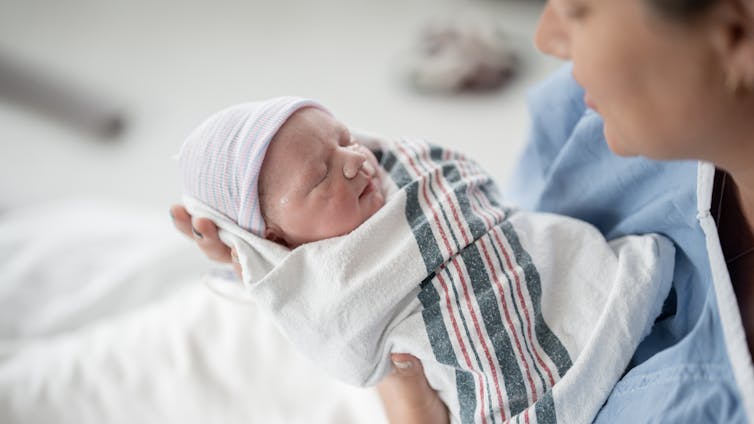
For the past 34 years, the Centers for Disease Control and Prevention has recommended that all babies receive their first hepatitis B vaccine at birth. FatCamera/E+ via Getty Images

The committee advising the Centers for Disease Control and Prevention on vaccine policy voted on Dec. 5, 2025, to stop recommending that all newborns be routinely vaccinated against the hepatitis B virus – undoing a 34-year prevention strategy that has nearly eliminated early childhood hepatitis B infections in the United States.

Before the U.S. began vaccinating all infants at birth with the hepatitis B vaccine in 1991, around 18,000 children every year contracted the virus before their 10th birthday – about half of them at birth. About 90% of that subset developed a chronic infection.

In the U.S., 1 in 4 children chronically infected with hepatitis B will die prematurely from cirrhosis or liver cancer.

Today, fewer than 1,000 American children or adolescents contract the virus every year – a 95% drop. Fewer than 20 babies each year are reported infected at birth.

I am a pediatrician and preventive medicine specialist who studies vaccine delivery and policy. Vaccinating babies for hepatitis B at birth remains one of the clearest, most evidence-based ways to keep American children free of this lifelong, deadly infection.

What spurred the change?

In September 2025, the Advisory Committee on Immunization Practices, or ACIP, an independent panel of experts that advises the CDC, debated changing the recommendation for a dose of the hepatitis B vaccine at birth, but ultimately delayed the vote.

This committee regularly reviews vaccine guidance. However, since Secretary of Health and Human Services Robert F. Kennedy Jr. disbanded the entire committee and handpicked new members, its activity has drastically departed from business as usual. The committee has long-standing procedures for evaluating evidence on the risks and benefits of vaccines, but these procedures were not followed in the September meeting and were not followed for this most recent decision.

The committee’s new recommendation keeps the hepatitis B vaccine at birth for infants whose mothers test positive for the virus. But the committee now advises that infants whose mothers test negative should consult with their health care provider. Parents and health care providers are instructed to weigh vaccine benefits, vaccine risks and infection risks using “individual-based decision-making” or “shared clinical decision-making.”

The hepatitis B vaccine has an outstanding safety record and has been administered to billions of infants at birth.

On the surface, this sounds reasonable. But while parents have always been free to discuss benefits and risks with their health care providers to make a decision on what’s best for their child, this change is not based on any new evidence, and it introduces uncertainty into a recommendation that has long been clear.

As a doctor, I am already seeing this uncertainty play out in the clinic. I recently had new parents ask to postpone the hepatitis B vaccine until adolescence because they believed federal health leaders had evidence that people only become infected through sexual activity or contaminated needle use.

After a brief conversation, they came to understand that this was inaccurate — children can be infected not only at birth but also through routine household or child care exposures, including shared toothbrushes or even a bite that breaks the skin. In the end, they chose to vaccinate, but this experience highlights how easily well-intentioned parents can be misled when guidance is not clear and consistent.

Why the CDC adopted universal hepatitis B shots

Hepatitis B is a virus that infects liver cells, causing inflammation and damage. It is spread through blood and bodily fluids and is easily transmitted from mother to baby during delivery.

The hepatitis B vaccine has been available since the early 1980s. Before 1991, public health guidance recommended giving newborns the hepatitis B vaccine only if they were at high risk of being infected – for example, if they were born to a mother infected with hepatitis B.

That targeted plan failed. Tens of thousands of infants were still infected each year.

Some newborns were exposed when their mothers weren’t screened; others were exposed after their mothers were infected late in pregnancy, after their initial screening. And like any lab test, the screening can have false negative results, be misinterpreted or not be communicated properly to the baby’s care team.

Recognizing these gaps, in 1991 the CDC recommended hepatitis B vaccination for every child starting at birth, regardless of maternal risk.

The U.S. adopted a policy of vaccinating all babies from birth because the number of people with hepatitis B infections was, and remains, relatively high, and because many mothers do not receive prenatal care, so their infections go undetected.

Meanwhile, in some European countries, like Denmark, only babies with certain risk factors receive the vaccine at birth. That’s because in those countries, hepatitis B infections are much less prevalent and pregnant mothers are more widely tested due to universal health care. Due to these differences, that approach is not effective in the United States. In fact, most World Health Organization member countries do recommend a universal birth dose.

Vaccinating at birth

The greatest danger for infants contracting hepatitis B is at birth, when contact with a mother’s blood can transmit the virus. Without preventive treatment or vaccination, 70% to 90% of infants born to infected mothers will become infected themselves, and 90% of those infections will become chronic. The infection in these children silently damages their liver, potentially leading to liver cancer and death.

Newborn lying on exam table touching doctor's stethoscope
Children are most likely to get infected by hepatitis B at birth, when contact with their mother’s blood can transmit the virus. Ekkasit Jokthong/iStock via Getty Images Plus

About 80% of parents choose to vaccinate their babies at birth. If parents choose to delay vaccination due to this new recommendation, it will leave babies unprotected during this most vulnerable window, when infection is most likely to lead to chronic infection and silently damage the liver.

A research article published on Dec. 3, 2025, estimates that if only infants born to mothers infected with hepatitis B received the vaccine, an additional 476 perinatal hepatitis B infections would occur each year.

The hepatitis B vaccines used in the U.S. have an outstanding safety record. The only confirmed risk is an allergic reaction called anaphylaxis that occurs in roughly 1 in 600,000 doses, and no child has died from such a reaction. Extensive studies show no link to other serious conditions.

How children get exposed to hepatitis B

Infants and children continue to be vulnerable to hepatitis B long after birth.

Children can become infected through household contacts or in child care settings by exposures as ordinary as shared toothbrushes or a bite that breaks the skin. Because hepatitis B can survive for a week on household surfaces, and many carriers are unaware they are infected, even babies and toddlers of uninfected mothers remained at risk.

Full protection against hepatitis B requires a three-dose vaccine series, given at specific intervals in infancy. Anything short of the full series leaves children vulnerable for life.

In addition to changing the birth dose recommendation, the committee is now advising parents to consult with their health care provider about checking children’s antibody levels after one or two doses of the vaccine to determine whether additional doses are needed. While such testing is sometimes recommended for people in high-risk groups after they get all three doses to confirm their immune system properly responded to the vaccine, it is not a substitute for completing the series.

The recommendation for all babies to receive the vaccine at birth and for infants to complete the full vaccine series is designed to protect every child, including those who slip through gaps in maternal screening or encounter the virus in everyday life. A reversion to the less effective risk-based approach threatens to erode this critical safety net.

Portions of this article originally appeared in a previous article published on Sept. 9, 2025.The Conversation

David Higgins, Assistant Professor of Pediatrics, University of Colorado Anschutz Medical Campus

This article is republished from The Conversation under a Creative Commons license. Read the original article.
Estate Planning: Keeping financial assets current

Details
Written by: DENNIS FORDHAM
Published: 06 December 2025
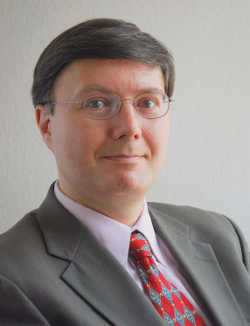
Dennis Fordham. Courtesy photo.
People often think that establishing a living trust and signing a power of attorney is all that they need to do to control their assets in the event of incapacity and eventual death. This can be a costly misunderstanding.

It is necessary to retitle assets to the living trust and to update designation of death beneficiaries to pay on death, or “POD,” bank accounts and transfer on death, or TOD, brokerage accounts or else, preferably, retitle such assets to the trust (except retirement accounts). Let’s discuss some scenarios.

Consider a settlor of a living trust who declares various brokerage accounts to be trust assets on the trust asset schedule. These accounts may have designated death beneficiaries named on old death beneficiary forms who are no longer the owner’s intended death beneficiaries.

Unless the account owner either retitles these accounts to her living trust or signs a new designation of death beneficiary form these accounts will pass according to the old death beneficiary form; not what the settlor intended when she declared these on the trust asset schedule.

Next, consider a settlor of a trust who owns an interest in real property in California or elsewhere in the US but does not retitle the ownership interest to his or her living trust. An unintended and undesirable outcome is possible.

That is, if the property is held in joint tenancy with a co-owner, usually a spouse, then the surviving joint tenant (spouse) will inherit the deceased joint tenant’s interest, depending on who dies first. Such joint tenancy scenarios are commonplace between spouses and domestic partners, and less common between parent and child.

However, when such relationships involve step children one or the other joint tenant may wish to sever the joint tenancy by transferring their interest into a separate living trust in order to ensure that their own children eventually inherit their interest in such property.

Moreover, if the ownership interest in real property is not in joint tenancy but is held individually, then such ownership risks the possibility of an unnecessary probate.

For example, consider a couple that creates a joint living trust and transfers their co-owned real properties into the living trust, but omits the husband’s interest in his sole and separate real property that the husband inherited or purchased prior to the marriage.

When the husband dies the surviving spouse will need to probate the husband’s will because the property is not the deceased husband’s primary residence; which in California now avoids probate through a petition to determine succession to a decedent’s primary residence.

Typically such a probate will result in the husband’s assets outside of the trust being transferred into the husband’s living trust, for further administration.

In such a situation, the husband would have done well to either create a separate trust for the husband’s sole and separate property that he wants to keep separate from the assets in the husband and wife joint trust because he intends to leave the asset (or its proceeds) to different beneficiaries.

Furthermore, bank and brokerage accounts excluding retirement accounts which can never be owned by a trust, are usually best held inside of a trust to be managed by the trustee if and when the account owner is incapacitated. Otherwise, the account owner is relying on his or her agent under a power of attorney (if any) to manage such non assets.

Unless the power of attorney is current, appropriately drafted, and acceptable to the financial institution this situation might lead to otherwise avoidable court proceedings but for the trust not owning these assets.

The reasons why assets are not retitled to the trust are varied, but include the following: the asset was refinanced and taken out of the trust; new assets were purchased outside of the trust; or the asset was deliberately kept or inadvertently left outside the trust. Whatever the reason, it is best to be aware of the situation and act appropriately.

The foregoing is not legal advice. Consult a qualified estate planning attorney for guidance. 

Dennis A. Fordham, Attorney, is a State Bar-Certified Specialist in estate planning, probate and trust law. His office is at 870 S. Main St., Lakeport, Calif. He can be reached at This email address is being protected from spambots. You need JavaScript enabled to view it. and 707-263-3235.  

  1. Space News: Google’s proposed data center in orbit will face issues with space debris in an already crowded orbit
  2. Project to improve pedestrian safety and traffic calming on Highway 20 planned in 2026
  3. ERTH seeks applicants for two town council vacancies; deadline to apply is Dec. 28
  • 137
  • 138
  • 139
  • 140
  • 141
  • 142
  • 143
  • 144
  • 145
  • 146
How to resolve AdBlock issue?
Refresh this page