 How to resolve AdBlock issue?
News
- Details
- Written by: Elizabeth Larson
The following cats at the shelter have been cleared for adoption.
Call Lake County Animal Care and Control at 707-263-0278 or visit the shelter online at http://www.co.lake.ca.us/Government/Directory/Animal_Care_And_Control.htm for information on visiting or adopting.
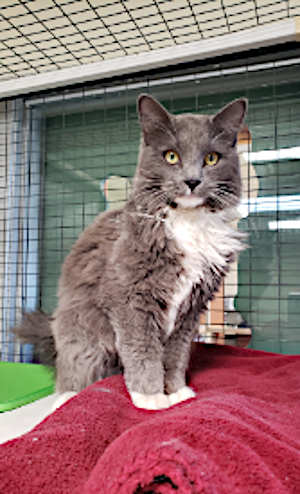
Male domestic longhair
This young male domestic longhair cat has a gray and white coat and gold eyes.
He is in cat room kennel No. 135, ID No. 14436.
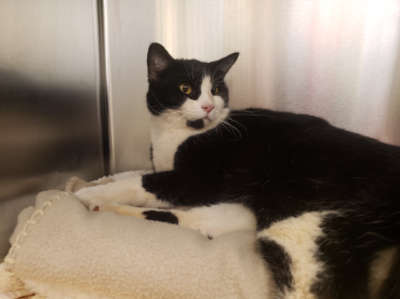
Male domestic short hair cat
This male domestic short hair cat has a black and white coat and green eyes.
He has been neutered.
He’s in cat room kennel No. 142, ID No. 14386.
Email Elizabeth Larson at
- Details
- Written by: Karen Sullivan, Kim Riley and Terre Logsdon
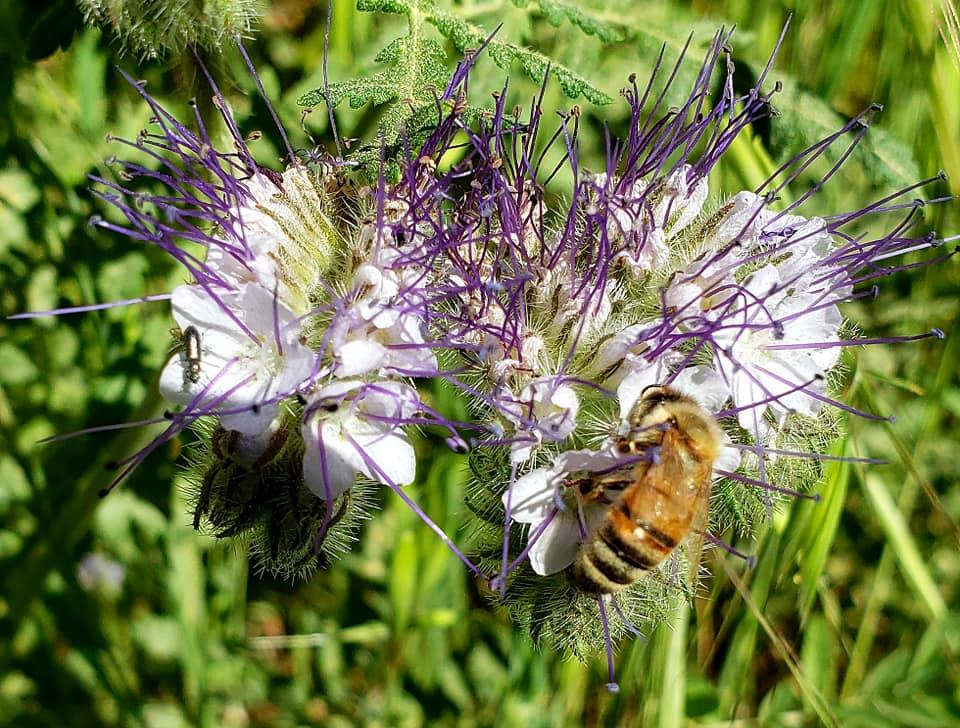
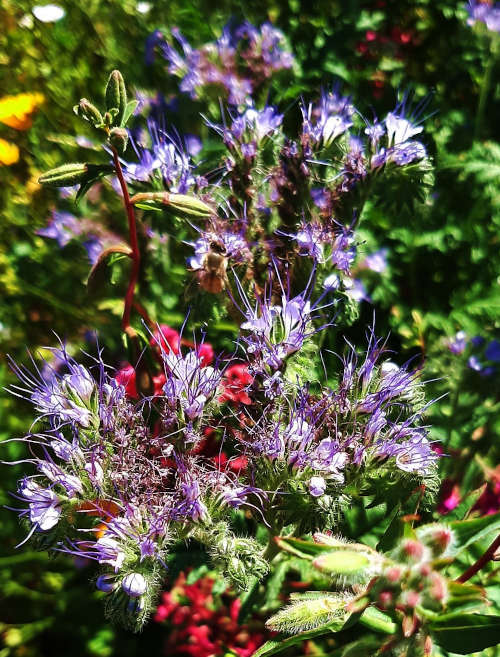
Name: Lacy Phacelia (Phacelia tanacetifolia)
Family: Boraginaceae (Borage)
Common Names: Friend-Of-The-Bees, bee feast, blue tansy, scorpionweed
LAKE COUNTY, Calif. – Early springtime, windows down, what is that tantalizing scent along the Lake County section of State Highway 20 from Glenhaven to Lucerne?
Most likely, it is Lacy Phacelia (Phacelia tanacetifolia), which is found blooming along the Northshore in profusion typically beginning in early March through April.
Phacelia tanacetifolia is an attention-grabber not only for your eyes and nose, this wildflower native to Lake County and the southwestern United States and northern Mexico, is used in many places as a hedgerow on farms, as it attracts bees and other beneficial insects.
Planted in vineyards and alongside row crops with irrigation, it will continue to grow and flower into the summer months and is highly prized for its long, coiling flower clusters of nectar-rich flowers which open in sequence, giving a long flowering period that attracts not only native and European honey bees, it is also attracts to hoverflies (family Syrphidae), which are useful as biological pest control agents because they eat aphids and other pests.
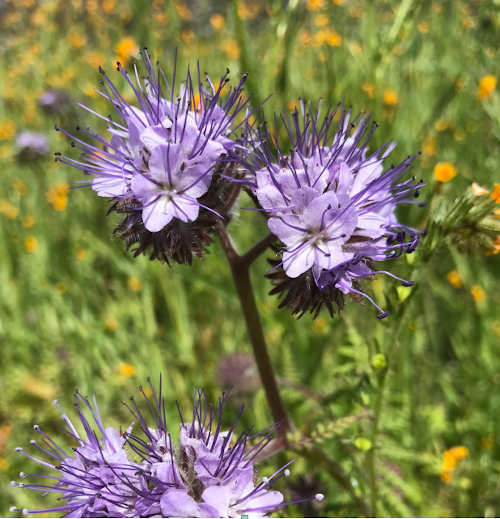
They also entertain the eyes of those driving along Highway 20 on the Northshore, interspersed with California poppies – the state flower.
This annual wildflower grows two to four feet tall, both in full sun or part shade, with fragrant flowers ranging from white to lavender to blue.
According to Judith Larner Lowry in her book, “Gardening with a Wild Heart,” “researchers in integrated pest management interplanted tansy-leaf phacelia with sugar beets. They found that sugar beet yields were significantly higher in plots grown with phacelia, possibly because adult syrphid flies, which feed on the floral nectar and pollen of phacelia,were significantly abundant. These syrphid flies were credited with reducing the aphids on the nearby sugar beets. Hoverflies as far as 200 meters from the planted phacelia were found with the characteristic blue, star-shaped phacelia pollen in their guts.”
Adding beneficial Lake County native wildflowers to your garden, vineyard, or orchard like Phacelia tanacetifolia is not only good for your crops – it is great for the native wildlife!
Nurseries where you can purchase seeds: https://calscape.org/nurseries.php?id=2875&showmap=1.
Terre Logsdon is an environmentalist, composter, and advocate for agroecology solutions to farming. An avid fan and protector of California wildflowers, plants, natural resources, and the environment, she seeks collaborative solutions to mitigate the effects of climate change. Kim Riley is retired, an avid hiker at Highland Springs, and has lived in Lake County since 1985. After 15 years of trail recovery and maintenance on the Highland Springs trails, she is now focused on native plants, including a native plant and pollinator garden on her property as well as promoting and preserving the beauty of the Highland Springs Recreation Area. Karen Sullivan has operated two nurseries to propagate and cultivate native plants and wildflowers, has lived in Kelseyville for the past 30 years, rides horses far and wide to see as many flowers as possible, and offers native plants and wildflowers for sale to the public. They are collaborating on a book, Highland Springs Recreation Area: A Field Guide, which will be published in the future. In the meanwhile, please visit https://www.facebook.com/HighlandSpringsNaturalists and https://www.facebook.com/HighlandSpringsRecreationArea.
- Details
- Written by: UNITED STATES GEOLOGICAL SURVEY
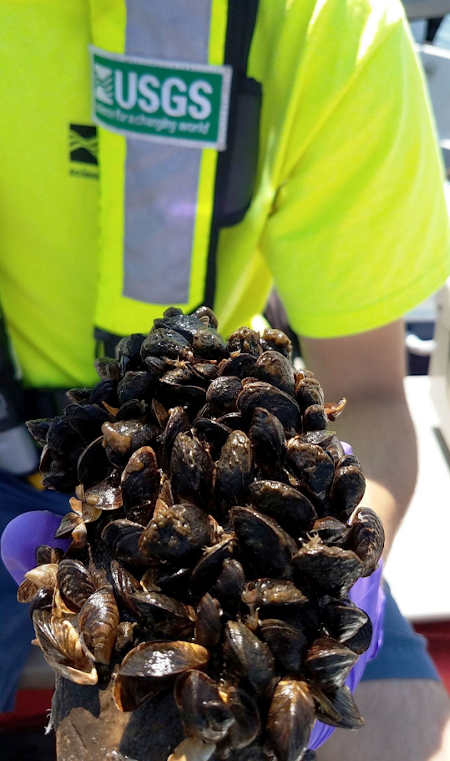
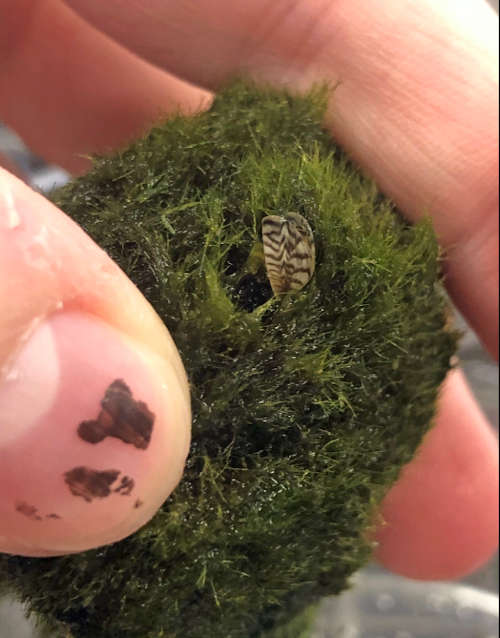
A citizen’s report of an invasive zebra mussel found in an aquarium moss package found in a pet store prompted a U.S. Geological Survey expert on invasive aquatic species to trigger nationwide alerts that have led to the discovery of the destructive shellfish in pet stores in at least 21 states from Alaska to Florida.
Amid concerns that the ornamental aquarium moss balls containing zebra mussels may have accidentally spread the pest to areas where it has not been seen before, federal agencies, states, and the pet store industry are working together to remove the moss balls from pet store shelves nationwide.
They have also drawn up instructions for people who bought the moss balls or have them in aquariums to carefully decontaminate them, destroying any zebra mussels and larvae they contain using one of these methods: freezing them for at least 24 hours, placing them in boiling water for at least one minute, placing them in diluted chlorine bleach, or submerging them in undiluted white vinegar for at least 20 minutes.
The decontamination instructions were developed by the U.S. Fish and Wildlife Service, the USGS and representatives of the pet industry.
Zebra mussels are an invasive, fingernail-sized mollusk native to freshwaters in Eurasia. They clog water intakes for power and water plants, block water control structures, and damage fishing and boating equipment, at great cost. The federal government, state agencies, fishing and boating groups and others have worked extensively to control their spread.
In 1990, in response to the first wave of zebra mussel invasions, the USGS set up its Nonindigenous Aquatic Species Database, which tracks sightings of about 1,270 non-native aquatic plants and animals nationwide, including zebra mussels. State and local wildlife managers use the database to find and eliminate or control potentially harmful species.
The coordinator of the Nonindigenous Aquatic Species Database, USGS fisheries biologist Wesley Daniel, learned about the presence of zebra mussels in moss balls on March 2 and alerted others nationwide about the issue. Moss balls are ornamental plants imported from Ukraine that are often added to aquariums.
“The issue is that somebody who purchased the moss ball and then disposed of them could end up introducing zebra mussels into an environment where they weren’t present before,” Daniel said. “We’ve been working with many agencies on boat inspections and gear inspections, but this was not a pathway we’d been aware of until now.”
On Feb. 25, an employee of a pet store in Seattle, Washington, filed a report to the database that the employee had recently recognized a zebra mussel in a moss ball. Daniel requested confirming information and a photograph and received it a few days later.
Daniel immediately notified the aquatic invasive species coordinator for Washington State and contacted invasive species managers at the USGS and USFWS. He visited a pet store in Gainesville, Florida, and found a zebra mussel in a moss ball there. At that point federal non-indigenous species experts realized the issue was extensive.
The USFWS is coordinating the response along with the USGS. The U.S. Department of Agriculture, several state wildlife agencies and an industry group, the Pet Industry Joint Advisory Council, are also taking steps to mitigate the problem. National alerts have gone out from the USFWS, the federal Aquatic Nuisance Task and regional aquatic invasive species management groups. Reports of zebra mussels in moss balls have come from Alaska, California, Colorado, Florida, Georgia, Iowa, Massachusetts, Michigan, Montana, Nebraska, Nevada, New Mexico, North Dakota, Oklahoma, Oregon, Tennessee, Vermont, Virginia, Wisconsin, Washington and Wyoming.
“I think this was a great test of the rapid-response network that we have been building,” Daniel said. “In two days, we had a coordinated state, federal and industry response.”
The USGS is also studying potential methods to help control zebra mussels that are already established in the environment, such as low-dose copper applications, carbon dioxide and microparticle delivery of toxicants.
To report a suspected sighting of a zebra mussel or another non-indigenous aquatic plant or animal, go to https://nas.er.usgs.gov/SightingReport.aspx.
- Details
- Written by: J. Alexander Navarro, University of Michigan

Picture the United States struggling to deal with a deadly pandemic.
State and local officials enact a slate of social-distancing measures, gathering bans, closure orders and mask mandates in an effort to stem the tide of cases and deaths.
The public responds with widespread compliance mixed with more than a hint of grumbling, pushback and even outright defiance. As the days turn into weeks turn into months, the strictures become harder to tolerate.
Theater and dance hall owners complain about their financial losses.
Clergy bemoan church closures while offices, factories and in some cases even saloons are allowed to remain open.
Officials argue whether children are safer in classrooms or at home.
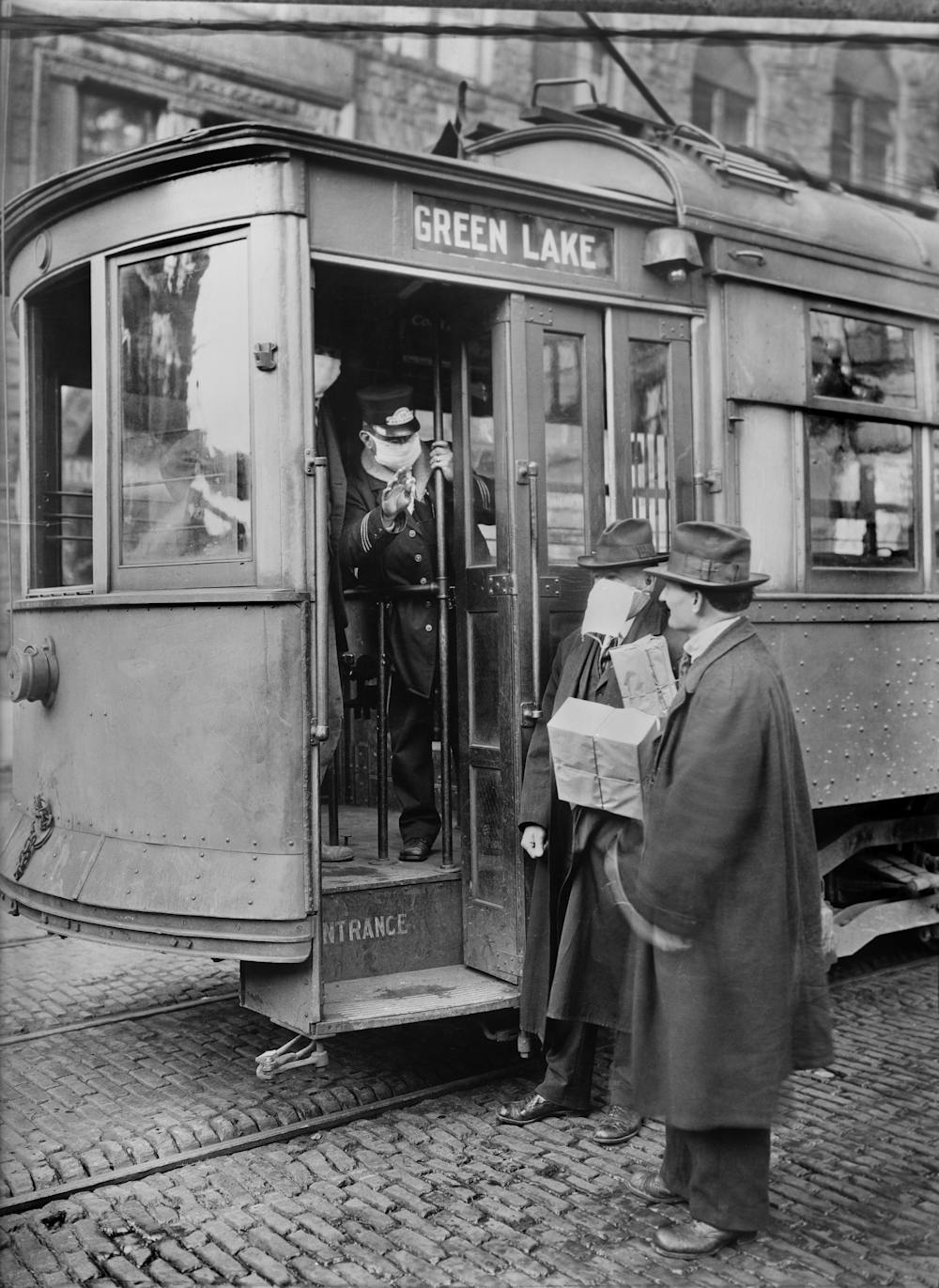
Many citizens refuse to don face masks while in public, some complaining that they’re uncomfortable and others arguing that the government has no right to infringe on their civil liberties.
As familiar as it all may sound in 2021, these are real descriptions of the U.S. during the deadly 1918 influenza pandemic. In my research as a historian of medicine, I’ve seen again and again the many ways our current pandemic has mirrored the one experienced by our forebears a century ago.
As the COVID-19 pandemic enters its second year, many people want to know when life will go back to how it was before the coronavirus. History, of course, isn’t an exact template for what the future holds. But the way Americans emerged from the earlier pandemic could suggest what post-pandemic life will be like this time around.
Sick and tired, ready for pandemic’s end
Like COVID-19, the 1918 influenza pandemic hit hard and fast, going from a handful of reported cases in a few cities to a nationwide outbreak within a few weeks. Many communities issued several rounds of various closure orders – corresponding to the ebbs and flows of their epidemics – in an attempt to keep the disease in check.
These social-distancing orders worked to reduce cases and deaths. Just as today, however, they often proved difficult to maintain. By the late autumn, just weeks after the social-distancing orders went into effect, the pandemic seemed to be coming to an end as the number of new infections declined.
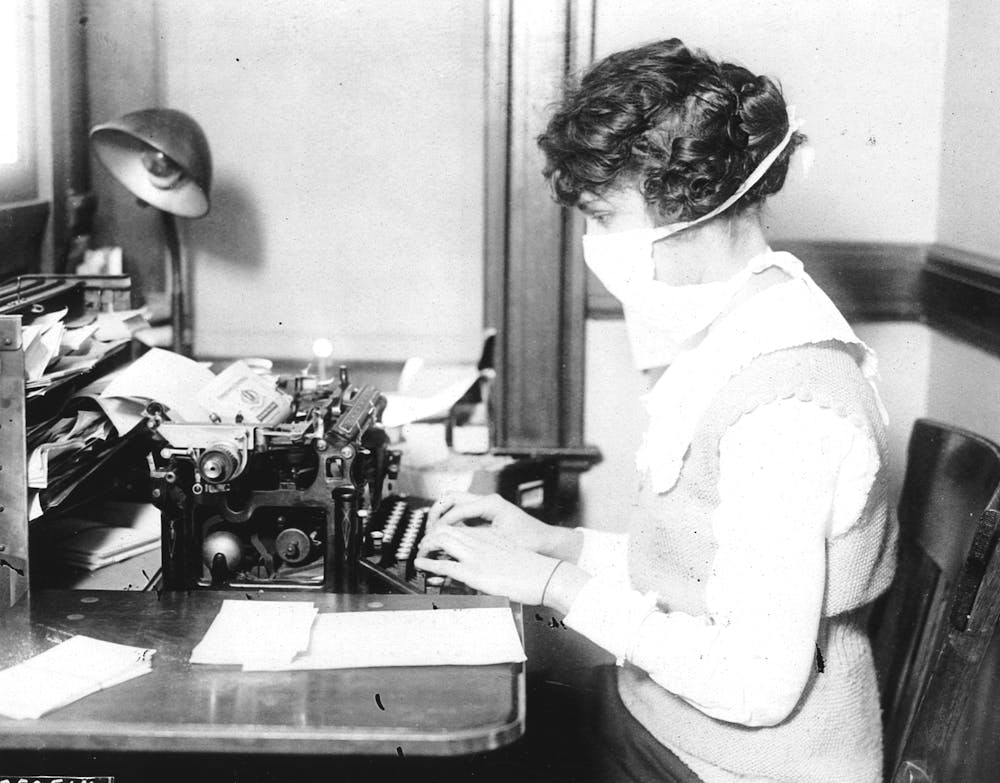
People clamored to return to their normal lives. Businesses pressed officials to be allowed to reopen. Believing the pandemic was over, state and local authorities began rescinding public health edicts. The nation turned its efforts to addressing the devastation influenza had wrought.
For the friends, families and co-workers of the hundreds of thousands of Americans who had died, post-pandemic life was filled with sadness and grief. Many of those still recovering from their bouts with the malady required support and care as they recuperated.
At a time when there was no federal or state safety net, charitable organizations sprang into action to provide resources for families who had lost their breadwinners, or to take in the countless children left orphaned by the disease.
For the vast majority of Americans, though, life after the pandemic seemed to be a headlong rush to normalcy. Starved for weeks of their nights on the town, sporting events, religious services, classroom interactions and family gatherings, many were eager to return to their old lives.
Taking their cues from officials who had – somewhat prematurely – declared an end to the pandemic, Americans overwhelmingly hurried to return to their pre-pandemic routines. They packed into movie theaters and dance halls, crowded in stores and shops, and gathered with friends and family.
Officials had warned the nation that cases and deaths likely would continue for months to come. The burden of public health, however, now rested not on policy but rather on individual responsibility.
Predictably, the pandemic wore on, stretching into a third deadly wave that lasted through the spring of 1919, with a fourth wave hitting in the winter of 1920. Some officials blamed the resurgence on careless Americans. Others downplayed the new cases or turned their attention to more routine public health matters, including other diseases, restaurant inspections and sanitation.
Despite the persistence of the pandemic, influenza quickly became old news. Once a regular feature of front pages, reportage rapidly dwindled to small, sporadic clippings buried in the backs of the nation’s newspapers. The nation carried on, inured to the toll the pandemic had taken and the deaths yet to come. People were largely unwilling to return to socially and economically disruptive public health measures.
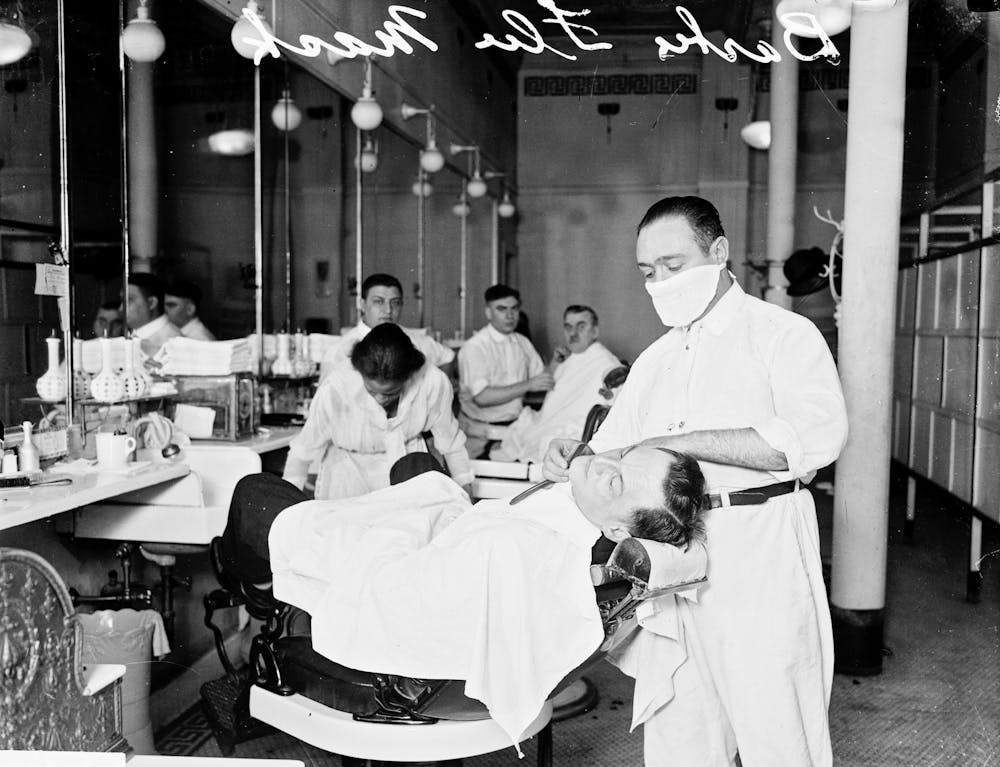
It’s hard to hang in there
Our predecessors might be forgiven for not staying the course longer. First, the nation was eager to celebrate the recent end of World War I, an event that perhaps loomed larger in the lives of Americans than even the pandemic.
Second, death from disease was a much larger part of life in the early 20th century, and scourges such as diphtheria, measles, tuberculosis, typhoid, whooping cough, scarlet fever and pneumonia each routinely killed tens of thousands of Americans every year. Moreover, neither the cause nor the epidemiology of influenza was well understood, and many experts remained unconvinced that social distancing measures had any measurable impact.
Finally, there were no effective flu vaccines to rescue the world from the ravages of the disease. In fact, the influenza virus would not be discovered for another 15 years, and a safe and effective vaccine was not available for the general population until 1945. Given the limited information they had and the tools at their disposal, Americans perhaps endured the public health restrictions for as long as they reasonably could.
A century later, and a year into the COVID-19 pandemic, it is understandable that people now are all too eager to return to their old lives. The end of this pandemic inevitably will come, as it has with every previous one humankind has experienced.
If we have anything to learn from the history of the 1918 influenza pandemic, as well as our experience thus far with COVID-19, however, it is that a premature return to pre-pandemic life risks more cases and more deaths.
And today’s Americans have significant advantages over those of a century ago. We have a much better understanding of virology and epidemiology. We know that social distancing and masking work to help save lives. Most critically, we have multiple safe and effective vaccines that are being deployed, with the pace of vaccinations increasingly weekly.
Sticking with all these coronavirus-fighting factors or easing off on them could mean the difference between a new disease surge and a quicker end to the pandemic. COVID-19 is much more transmissible than influenza, and several troubling SARS-CoV-2 variants are already spreading around the globe. The deadly third wave of influenza in 1919 shows what can happen when people prematurely relax their guard.
[Deep knowledge, daily. Sign up for The Conversation’s newsletter.]
J. Alexander Navarro, Assistant Director of the Center for the History of Medicine, University of Michigan
This article is republished from The Conversation under a Creative Commons license. Read the original article.