 How to resolve AdBlock issue?
News
- Details
- Written by: Elizabeth Larson
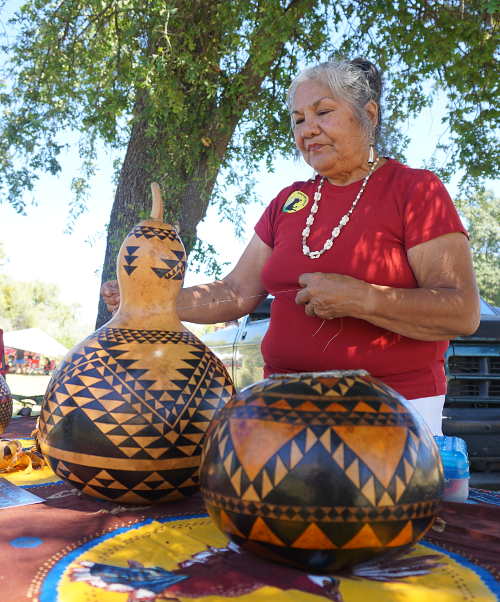
LAKE COUNTY, Calif. – This month the nation is celebrating the culture and heritage of its native peoples.
On Oct. 30, President Donald Trump issued a proclamation designating November 2020 as National Native American Heritage Month – which also is referred to as American Indian and Alaska Native Heritage Month – in the United States.
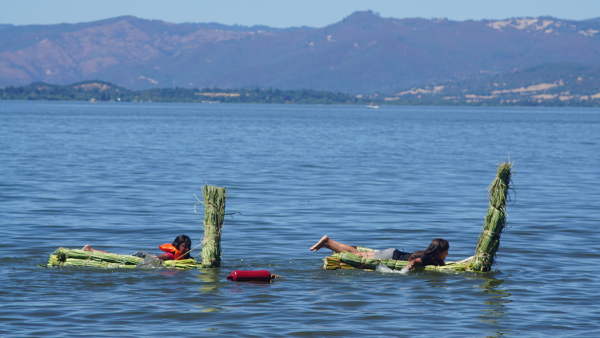
It’s a particularly important commemoration in Lake County, which is home to seven federally recognized tribes:
• Big Valley Band of Pomo Indians of the Big Valley Rancheria;
• Elem Indian Colony of Pomo Indians of the Sulphur Bank Rancheria;
• Habematolel Pomo of Upper Lake;
• Koi Nation of Northern California;
• Middletown Rancheria of Pomo Indians of California;
• Robinson Rancheria; and
• Scotts Valley Band of Pomo Indians of California.
Lake County is notable for having two Native American members of its Board of Supervisors – Chair Moke Simon and Supervisor EJ Crandell.
It’s also the place where a landmark lawsuit that opened the door for Native Americans to vote began.
In 1917, the California Supreme Court ruled that Ethan Anderson was eligible to vote. A full story about the case can be read here.
California as a whole is home to 109 federally recognized tribes, according to the US Department of the Interior.
Alaska has the most federally tribes, 229, the Bureau of Indian Affairs reported.
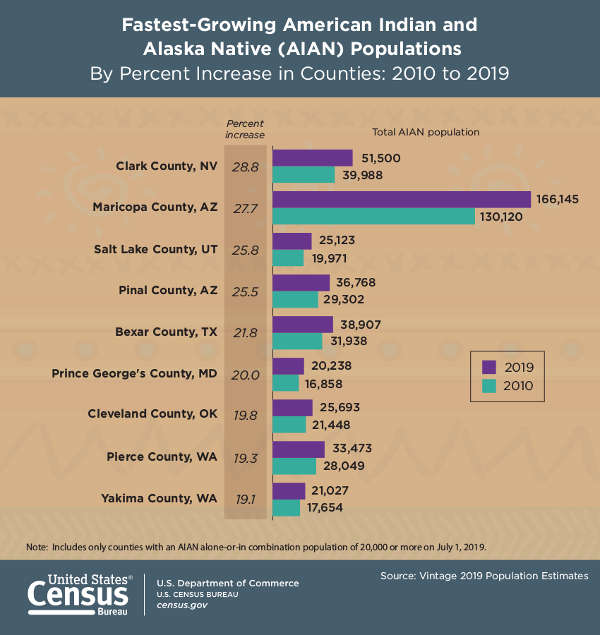
The U.S. Census Bureau’s American Community Survey for 2019 found that California has 321,112 residents who identify their ethnicity as American Indian and Alaska Native alone, with 2,540 of those individuals living in Lake County.
The US Census Bureau reported that the first American Indian Day was celebrated in May 1916 in New York.
The event was the result of an effort by Rev. Red Fox James, also known as Red Fox Skiukusha, whose tribe has not been determined, rode 4,000 miles across the United States on horseback in order to seek approval from 24 state governments to have a day to honor American Indians, the Bureau of Indian Affairs, or BIA, reported.
The BIA said Rev. James presented the endorsements of 24 governors to the White House on Dec. 14, 1915.
Four years later, he would petition the state of Washington to designate the fourth Saturday in September as an “Indian holiday,” the BIA said.
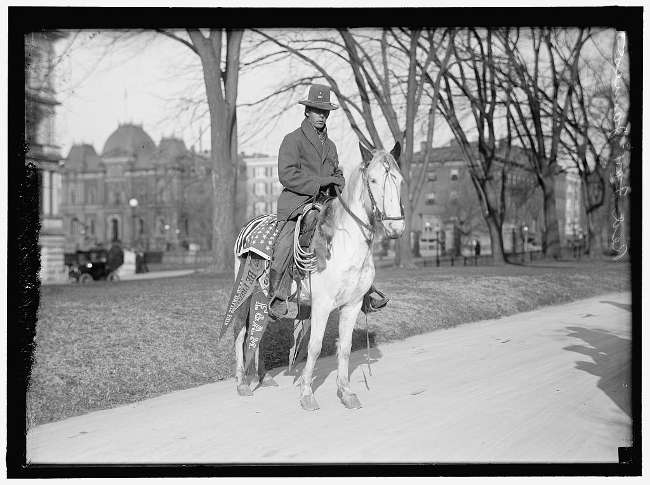
The same year that Rev. James made his ride across the United States, the Congress of the American Indian Association directed its president, Rev. Sherman Coolidge, an Arapaho minister “to call upon the nation to observe a day for American Indians,” and on Sept. 18, 1915, he issued a proclamation declaring the second Saturday of each May as “American Indian Day,” the BIA reported.
Rev. Coolidge also at that time sought U.S. citizenship for American Indians, a call Congress heard in 1924 when the BIA said it enacted the Indian Citizenship Act.
That act gave citizenship to all U.S.-born American Indians not already covered by treaty or other federal agreements that granted such status. The BIA said Alaska Natives were included in a later amendment to the act.
New York is believed to have designated the first American Indian Day in 1916, when it was commemorated in May, the BIA said.
In California, in 1968 Gov. Ronald Reagan signed a resolution designating the fourth Friday in September as American Indian Day, the BIA said.
Native American Day would become an official state holiday in California 30 years after Reagan’s action thanks to legislation enacted by the California State Assembly, the BIA said.
On the national level, federal observances began to take place after Congress in 1976 authorized President Gerald Ford to proclaim “Native American Awareness Week” in October.
The observances would become more formalized after George H.W. Bush signed a joint congressional resolution designating the month of November “National American Indian Heritage Month,” in 1990, the BIA said.
The following facts are courtesy of the U.S. Census Bureau.
Did You Know?
6.9 million
The nation's American Indian and Alaska Native population alone or in combination with other race groups in 2019.
10.1 million
The projected American Indian and Alaska Native population alone or in combination with other race groups on July 1, 2060. They would constitute 2.5 percent of the total population.
324
The number of distinct federally recognized American Indian reservations in 2019, including federal reservations and off-reservation trust land.
574
The number of federally recognized Indian tribes in the United States in 2020.
142,972
The number of single-race American Indian and Alaska Native veterans of the U.S. Armed Forces in 2019.
Email Elizabeth Larson at
- Details
- Written by: Nicole Hassoun, Binghamton University, State University of New York
Infectious diseases do not respect borders.
An estimated 3 billion people in low-income countries across Africa, Asia and Latin America are likely to lack access to a COVID-19 vaccine for years after it becomes available. In poor nations, many communities lack the health care workers needed to administer vaccines, as well as the capacity to handle vaccines properly by keeping them extremely cold.
As a bioethicist studying global access to essential medicines, I’m closely monitoring what wealthy countries, foundations and international organizations are doing about this problem.
COVAX
The COVID-19 Vaccines Global Access Facility, or COVAX, is a joint effort by 184 countries working with international organizations to make it possible for people everywhere to get affordable access to COVID-19 vaccines as they become available.
So far, COVAX has raised about US$1.8 billion toward an initial target of $2 billion to cover the cost of manufacturing and distributing COVID-19 vaccines around the world.
The goal of this initiative is to produce 2 billion doses by the end of 2021. However, many of the rich countries taking part are striking their own deals apart from COVAX to assure that they will get early access to a vaccine.
These instances of “vaccine nationalism” threaten to undermine COVAX and other attempts to equitably distribute new COVID-19 vaccines and treatments.
Several large industrialized countries – including the U.S. and Russia – have opted to stay out of the agreement altogether. They are making their own arrangements with pharmaceutical companies instead.
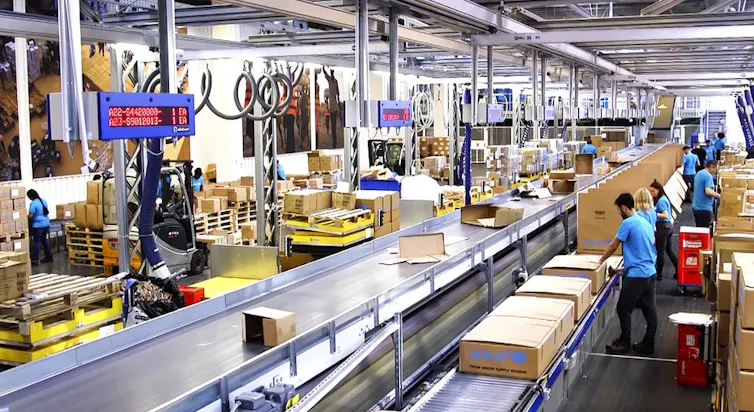
UNICEF
Distributing COVID-19 vaccines could prove as hard as or harder than coming up with the money to pay for them.
That’s because the most promising vaccines require constant and extremely cold storage. Especially in areas where access to electricity is unreliable or missing altogether, there simply are not enough health facilities with the required refrigeration capacity.
Nearly 3 billion people around the world live in places lacking the temperature-controlled storage needed for a wide-scale immunization campaign. How bad this problem turns out to be will depend on which vaccines are ultimately approved, because not every vaccine undergoing clinical trials requires storage at the same cold temperatures.
What’s more, there are not enough health workers to administer the vaccines, and it’s extremely hard for many people in poor communities to travel to health clinics.
The United Nations Children’s Fund, a U.N. agency that provides aid to children worldwide, is leading the COVAX initiative’s vaccine distribution plans. UNICEF has worked with the public-private partnership called GAVI, formerly Global Alliance for Vaccines and Immunizations, in the past to supply developing countries with the specialized refrigeration technology needed to keep vaccines ice-cold.
In addition, UNICEF aims to stockpile 520 million syringes by the end of 2020, up to 1 billion syringes by 2021 and 5 million safety disposal boxes.
International organizations and foundations
Several other international organizations are also working to make sure that people in low-income countries will have access to a COVID-19 vaccine and to treatments as well.
As of October 2020, the World Bank planned to provide US$12 billion to finance vaccine acquisition and deployment in low- and middle-income countries like India and Nigeria.
Other regional development banks are also playing an important role, since COVAX will not provide enough vaccines for everyone in the world. For instance, in sub-Saharan Africa, only 28% of health care facilities have access to reliable electricity, so the African Export-Import Bank has $3 million in grant funding to help communities procure equipment and supplies. Moreover, the bank is talking with the Africa Centres for Disease Control and Prevention about allocating $5 billion to buy COVID-19 vaccines.
And the Global Fund has allocated $665 million of the estimated $20 billion needed to vaccinate everyone in the whole world. Their COVID-19 Response Mechanism will improve supply chains for vaccine distribution and health systems in general.
Other organizations with extensive experience in vaccination campaigns are also stepping up to help.
For example, the Global Polio Eradication Initiative is providing staff trained to do polio surveillance to test wastewater for COVID-19, distribute masks and hand sanitizer, and perform contact tracing. When a vaccine becomes available, this polio group will likely help out as well.
Foundations, especially the Bill & Melinda Gates Foundation, are also playing a role.
The Gates Foundation is teaming up with GAVI and the Serum Institute of India to speed up COVID-19 vaccine manufacturing.
The vaccines will be sold for no more than $3 a dose to 92 low- and middle-income countries including Brazil, Chile, Singapore and South Africa.
In 1999, the Gates Foundation pledged $750 million to launch GAVI, and it has given $4 billion to the organization to date. At the 2020 Global Vaccine Summit, a virtual meeting hosted by the U.K., the Gates Foundation promised to spend $1.6 billion to vaccinate 300 million children against several diseases, including COVID-19 once vaccines become available.
The Gates Foundation is also participating in a joint effort with the World Health Organization and several other international organizations to pay for 100 million antigen rapid diagnostic tests being made available in low- and middle-income countries – where they are priced at $5 or less.
Likewise, many other philanthropic efforts are underway in conjunction with companies and international agencies.
[Deep knowledge, daily. Sign up for The Conversation’s newsletter.]
The Wellcome Trust, for example, in partnership with the Gates Foundation and Mastercard, has funded the COVID-19 Therapeutic Accelerator a research alliance to develop new COVID-19 treatments and tests.
In my view, these efforts are just as important as efforts to develop, manufacture, and distribute new vaccines. After all, if no safe and effective vaccine emerges, testing, tracing, personal protective equipment and treatments will remain essential for combating the pandemic and saving millions of lives around the world.
Nicole Hassoun, Professor of Philosophy, Binghamton University, State University of New York
This article is republished from The Conversation under a Creative Commons license. Read the original article.
- Details
- Written by: Elizabeth Larson
Dogs available for adoption this week include mixes of Akbash, border collie, Chihuahua, German Shepherd, husky, Labrador Retriever, pit bull, Rhodesian Ridgeback, Shar Pei and St. Bernard.
Dogs that are adopted from Lake County Animal Care and Control are either neutered or spayed, microchipped and, if old enough, given a rabies shot and county license before being released to their new owner. License fees do not apply to residents of the cities of Lakeport or Clearlake.
The following dogs at the Lake County Animal Care and Control shelter have been cleared for adoption (additional dogs on the animal control Web site not listed are still “on hold”).
Call Lake County Animal Care and Control at 707-263-0278 or visit the shelter online at http://www.co.lake.ca.us/Government/Directory/Animal_Care_And_Control.htm for information on visiting or adopting.
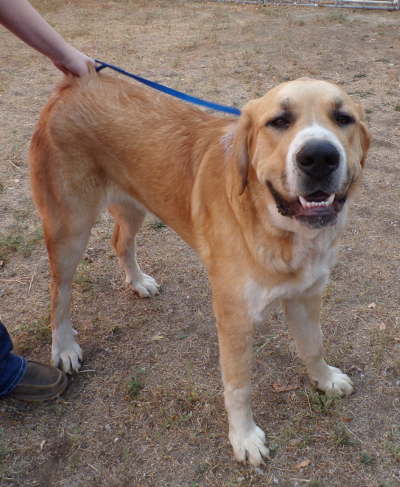
St. Bernard-Akbash mix
This male St. Bernard-Akbash mix has a multicolored coat.
He is in kennel No. 18, ID No. 14164.
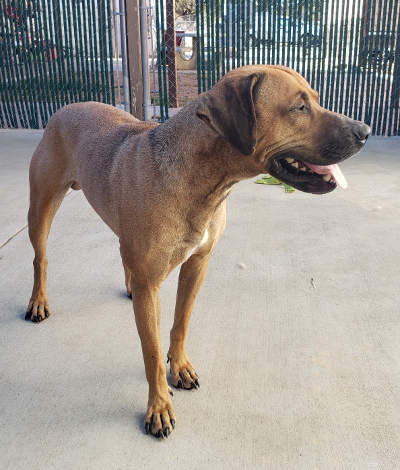
Shar Pei-Rhodesian Ridgeback
This male Shar Pei-Rhodesian Ridgeback has a short brown and black coat.
He is in kennel No. 19, ID No. 14132.
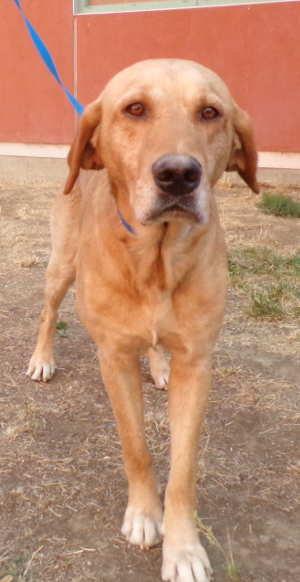
Yellow Labrador Retriever
This male yellow Labrador Retriever has a short coat.
He is in kennel No. 20, ID No. 14156.

Male Chihuahua
This male Chihuahua has a short black and brown coat.
He has been neutered.
He’s in kennel No. 21, ID No. 13638.
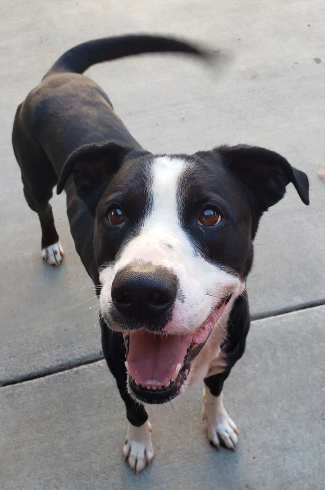
Male border collie
This male border collie has a long black and white coat.
He has been neutered.
He’s in kennel No. 22, ID No. 14150.
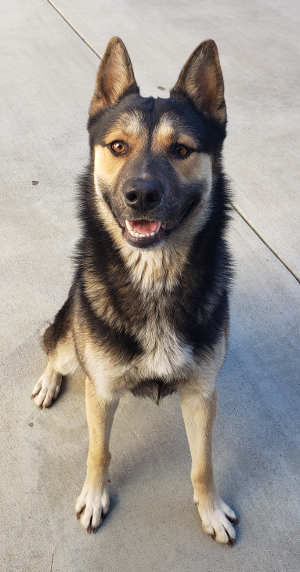
Male German Shepherd-Siberian Husky
This Male German Shepherd-Siberian Husky has a medium-length black and tan coat.
He is in kennel No. 25, ID No. 14135.
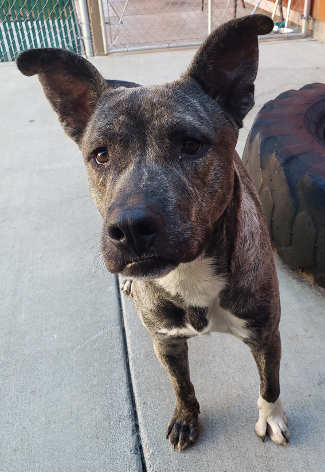
Male pit bull terrier
This male pit bull terrier has a short gray and brindle coat.
He is in kennel No. 26, ID No. 14138.

‘Baby’
“Baby” is a young male Chihuahua with a medium-length cream-colored coat.
He has been neutered.
He’s in kennel No. 27, ID No. 13590.
Email Elizabeth Larson at
- Details
- Written by: NATIONAL AERONAUTICS AND SPACE ADMINISTRATION
The universe would be a pretty boring place without stars. Without them, the universe would remain a diffuse plasma of mostly hydrogen and helium from the big bang.
As the basic building blocks of the cosmos, stellar nuclear fusion furnaces forge new heavy elements, enriching their parent galaxy. The radiant energy from stars potentially nurtures the emergence of life on the most favorably located planets, as it did on Earth.
To better understand stars and stellar evolution, the Space Telescope Science Institute (STScI) in Baltimore, Maryland, has launched an ambitious new initiative with NASA's Hubble Space Telescope, called UV Legacy Library of Young Stars as Essential Standards, or ULLYSES.
ULLYSES is Hubble's largest observing program ever in terms of the amount of time Hubble will dedicate to it. More than 300 stars will be included. Ultraviolet (UV) light from the target stars is being used to produce a library of the spectral "templates" of young, low-mass stars from eight star-forming regions in the Milky Way, as well as fully mature high-mass stars in several nearby dwarf galaxies including the Magellanic Clouds.
"One of the key goals of ULLYSES is to form a complete reference sample that can be used to create spectral libraries capturing the diversity of stars, ensuring a legacy dataset for a wide range of astrophysical topics. ULLYSES is expected to have a lasting impact on future research by astronomers around the world," said program lead Julia Roman-Duval of STScI.
STScI is now releasing the first set of ULLYSES observations to the astronomical community. These early targets are hot, massive, blue stars in several nearby dwarf galaxies.
Hubble is located above Earth's atmosphere, which filters out most UV radiation from space before it reaches ground-based telescopes. Hubble's ultraviolet sensitivity makes it the only observatory up to the task because young stars radiate a lot of their energy in the UV as they grow chaotically in fits and starts while feeding on infalling gas and dust.
The program's goal is to give astronomers a much better understanding of the birth of stars and how this relates to everything from planets to the formation and evolution of galaxies.
Astronomers want to learn how young low-mass stars affect the evolution and composition of planets forming around them.
Intense UV radiation pulls apart molecules and penetrates circumstellar disks, where planets form, influencing their chemistry and affecting how long the disks survive. This has a direct bearing on planet habitability, atmospheric escape, and chemistry.
"This unique collection is enabling diverse and exciting astrophysical research across many fields," Roman-Duval said.
This is a ground-based telescopic photo of the Small Magellanic Cloud, or SMC, a satellite galaxy of our Milky Way.
In addition, the torrential outflows of hot gas from fully mature stars that are much more massive than our Sun shape their environments in dramatic ways. By targeting massive stars in nearby galaxies with low abundances in heavy elements, similar to the primitive composition of early galaxies, astronomers can gain insights into how their outflows may have influenced early galaxy evolution billions of years ago.
The design and targets of these observations were selected in partnership with the astronomical community, allowing researchers from around the world to help develop the final program as well as have the opportunity to organize coordinated observations by other space- and ground-based telescopes at different wavelengths of light.
STScI scientific and technical staff are designing software specifically related to the development of databases and web interfaces to ensure wide access to the library by the astronomical community. Tools for high-level science products and spectroscopic analysis are being developed. All of the data are stored in STScI's Mikulski Archive for Space Telescopes.
The ULLYSES program is building a legacy for the future, creating a comprehensive database that astronomers will use for research for decades to come. The archive also complements the portions of the star-formation story that will soon be obtained with infrared-light observations from NASA's upcoming James Webb Space Telescope. Working together, both Hubble and Webb will provide a holistic view of stars and the star-formation history of the universe.
To learn more about the ULLYSES program, visit https://hubblesite.org/mission-and-telescope/hubbles-ullyses-program.