 How to resolve AdBlock issue?
News
- Details
- Written by: Elizabeth Larson
The following dogs are ready for adoption or foster.
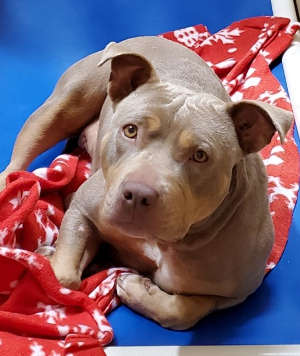
‘Bella’
“Bella” is a female American Bully mix.
She has a short beige and tan coat.
She is dog No. 3537.

‘Cinderella’
“Cinderella” is a small female terrier mix.
She has a short wiry white coat.
She is dog No. 4346.
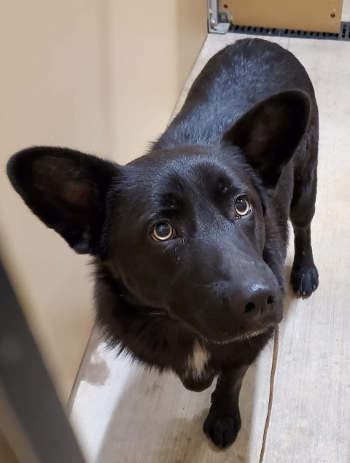
‘Inky’
“Inky” is a male German Shepherd mix.
He has a long smooth black coat.
He is dog No. 4324.

‘Jack’
“Jack” is a male Labrador Retriever mix with a short yellow coat.
He is dog No. 4155.
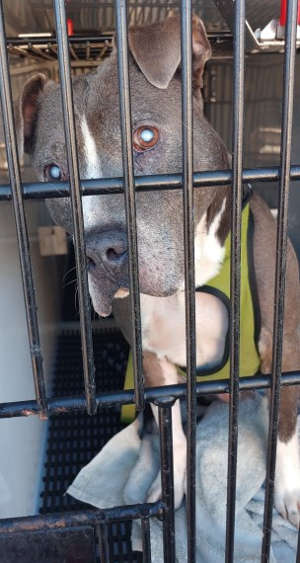
‘Smokey’
“Smokey” is a male American Staffordshire Terrier mix.
He has a short gray coat.
He is dog No. 4347.
The shelter is open by appointment only due to COVID-19.
Call the Clearlake Animal Control shelter at 707-273-9440, or email
Visit Clearlake Animal Control on Facebook or on the city’s website.
Email Elizabeth Larson at
- Details
- Written by: Elizabeth Larson
LAKE COUNTY, Calif. – The Lakeport City Council has voted to shift more than $800,000 from city reserves to cover additional costs of developing the new Lakefront Park.
The council, in a 4-0 vote, approved the proposal from city staff at its Nov. 3 meeting. Councilwoman Stacey Mattina recused herself from the discussion because she owns property nearby.
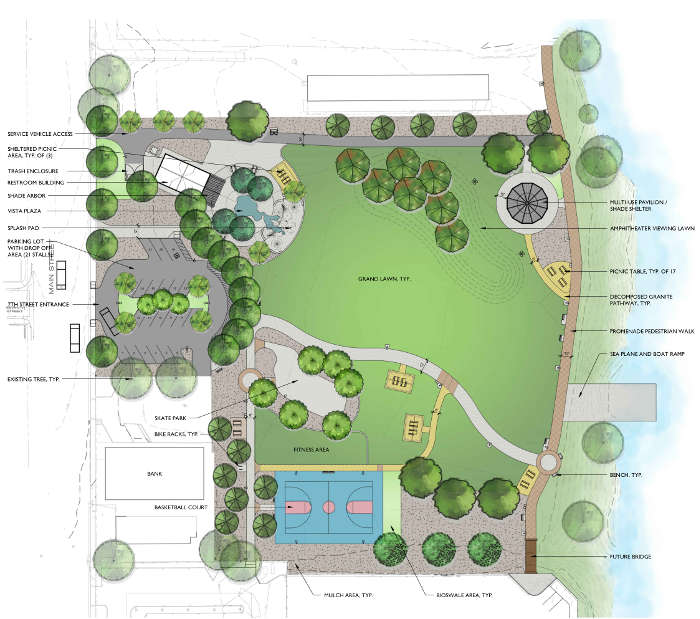
The seven-acre Lakefront Park is located at 800 and 810 N. Main St.
The city received a $5.9 million state grant in April that included funds to cover the purchase of the two properties for the park, including an acre and a half the city purchased from the Hotaling family for $50,000 and a 5.3-acre parcel purchased for $660,000 from the Lakeport Unified School District in late spring.
City Manager Kevin Ingram went to the council on Nov. 3 to ask for its direction on next steps.
The city had approved the park site plan in August. Key amenities include a lakeside promenade, basketball court, ninja gym, amphitheater, splash pad, skate park, multiuse lawn area, large sheltered picnic area, bathroom/concession building, public art, parking lot, landscaping and lighting. It also sets aside an area that would eventually be the location of a boathouse for the Clear Lake Scullers.
Ingram explained in his written report that city staff, in working with SSA Landscape Architects – the firm the city hired to work on the park’s planning, design, engineering and project management – discovered that it was going to exceed the $4.5 million in the grant to cover construction.
Ingram’s report attributed the cost overruns to factors including “extremely high construction costs and unfavorable geotechnical issues.”
Staff and SSA reevaluated the plan and came up with ways of bringing the project back within its budget, but that would mean curtailing some amenities, such as the skatepark, which was set for a 35-percent cutback, a reduction of about $124,000.
Other park amenities also were slated for cutbacks totaling just over $585,000. The only items not slated for cuts, and which were proposed for increases, included landscaping and pathways, the amphitheater, basketball court, public art and the boat ramp renovation. Ingram said the fitness park was completely removed from those scaled-back plans.
However, Ingram offered another option – using general fund reserves of up to $805,570 to restore some of the amenities.
Ingram told the council at the Nov. 3 meeting that even with proposed cuts, it will still be a great park.
“This is a one-time project. It’s a very exciting project,” he said.
While using reserves is a sticky issue, Ingram said the city has a very healthy level of reserves – about $5 million – and the park is a special project that rises to the level of consideration for use of those funds.
“Parks are economic drivers. They do help us grow our revenues,” he said, noting that they act as anchors for the city’s downtown area.
He also pointed out that the council had been prepared to purchase the property for the park with general fund money before it knew that the grant would cover it.
Councilman Kenny Parlet noted during the discussion, as he has in previous matters relating to capital projects, that putting them off only costs the city more money in the long run.
“I believe that anything we don’t do now is lost forever,” Parlet said, adding that every time they wait even six months, the cost of construction often doubles.
Parlet said he’d spoken with city Finance Director Nick Walker who told him that the city has extremely healthy reserves.
“I believe that we should do everything that we can to put this thing together in its entirety,” even if it requires tapping into reserves, Parlet said.
Parlet said the economy overall is expected to be extremely robust for the coming decade and that the park will be good for the local economy.
Ingram also told the council during the meeting that timing was an issue, that they needed to be able to get the project bid out in time to meet the state grant’s deadline to be open to the public. That was the driving factor for bringing it forward this month for discussion.
Like Ingram, Parlet noted that the city hadn’t expected to get the money to cover the property purchase.
“We knew that this was a great investment,” Parlet said. “We were going to buy that property come hell or high water.”
Councilwoman Mireya Turner moved to approve spending $805,570 in reserves to cover the increased expenses and to amend the budget, which Parlet seconded and the council approved 4-0.
At the same meeting, the council also voted to rename the city’s downtown walking trail in honor of Ann Blue, who worked tirelessly to establish it; and voted to relocate the two 20-minute designated parking spaces adjacent to City Hall from Park Street to Second Street, along with adopting revisions to the Green Zones, or limited parking areas, and two-hour parking resolutions to reflect the changes.
Email Elizabeth Larson at
- Details
- Written by: Elizabeth Larson
Registrar Maria Valadez reported that she is planning to have Lake County’s election results certified by Dec. 1, which is the deadline she has to report the results for the presidential election to the Secretary of State’s Office, with other state and local contests having a Dec. 4 deadline.
Valadez previously reported that more than 18,000 ballots remained to be processed following Election Day, by the end of which more than 11,000 had been counted.
Lake County’s unprocessed ballots are among more than 1.4 million across California yet to be counted, according to the Secretary of State’s Office.
In a message on the elections office’s website this week, Valadez emphasized that the Nov. 3 election results are not final and that her staff members “are working very diligently on completing all tasks required to certify the election.”
Valadez said there are many checks and balances when certifying the election results. “The process of certifying election results, also known as the Official Canvass, is mandated by state law to make sure the public can have confidence in the integrity of the final results.”
One of those steps is dealing with unsigned vote-by-mail ballots or vote-by-mail ballots where there are discrepancies in signatures.
Valadez’s office sent out signature verification or unsigned ballot envelope statements to voters whose ballots were found to have those issues.
Voters who received the notices are being urged to return the completed forms either by mail, fax, email or in-person by noon on Tuesday, Dec. 1.
Valadez’s office emphasized that it cannot count a voter’s vote-by-mail ballot if the completed and signed statement is not returned by that Dec. 1 deadline.
Valadez also issued an update on her website explaining why Lake County’s preliminary results displayed 70 out of 70 precincts as 100-percent reported despite ballots remaining to be counted.
“Lake County has 70 voting precincts, which are composed of 50 voting precincts and 20 mail ballot precincts. Just as we must do for every election, we are required to make certain reports to the Secretary of State’s office,” Valadez wrote.
She said election code requires officials to conduct a semifinal official canvass by tabulating vote-by-mail and precinct ballots and compiling the results. “The semifinal official canvass shall commence immediately upon the close of the polls and shall continue without adjournment until all precincts are accounted for.”
Valadez explained that, for every election, by the end of the night, after all voting precincts have reported back to her office, her office must report to the Secretary of State’s Office that ballots for all voting precincts – including mail ballot precincts – cast on election night have been counted and reported.
“Therefore our last report to the Secretary of State’s office must indicate that the 70 voting precincts have been reported at 100%.” she wrote.
She said elections law also requires her to transmit the semifinal official results to the Secretary of State’s Office upon closing of the polls, by 8 p.m. and no later than 10 p.m. Afterward, reports must be submitted on a two-hour basis until the semifinal official canvass is completed.
When reporting to the Secretary of State’s Office, Valadez said her final end-of-night report must match the number of reportable precincts – in this case, 70 – before the semifinal official canvass can be considered completed and final.
As the canvass continues, Valadez – as per longtime county protocol – will not update results until the final certified results are completed.
“We do not interrupt the careful steps that we take during the Canvass to release interim unofficial results,” she wrote. “Interim unofficial results have no bearing on the final outcome of the races and contests. Only final certified results will impact the races and contests,” she said in her online statement.
Vote-by-mail voters can still sign up to track their ballots at https://california.ballottrax.net/voter/.
For more information, contact the Registrar of Voters Office at 707-263-2372 or via email at
Email Elizabeth Larson at
- Details
- Written by: Shelley MacDermid Wadsworth, Purdue University
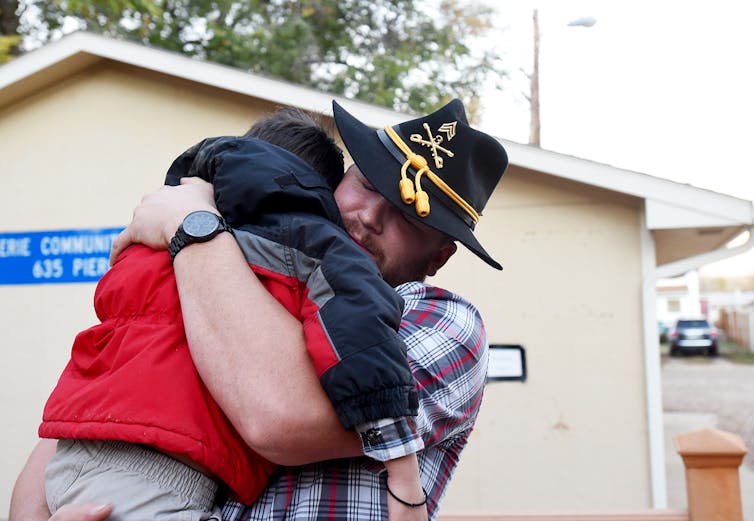
As the nation celebrates our 17 million living veterans, it is also important to know that the number of these heroes who are ending their own lives prematurely is rising.
In the general population, suicide is the 10th most common cause of death, but among veterans with PTSD, it’s fourth. Among veterans younger than 35, it’s second. Suicide rates are also rising among members of the military. Since 2017, rates for active-duty service members have been above those of civilians. The same is true for National Guard service members since 2015 and and nonactive veterans for the past decade.
I’m a researcher who studies risk and resilience in military and veteran families. I can tell you that the single most common stressor for those who attempt or complete suicide is a serious relationship difficulty with an intimate partner or someone else within the previous 90 days. And more than half of service members who attempt or complete suicide had been seen within those 90 days by a medical, mental health or social service professional. Almost one-third communicated a potential for self-harm.
It’s not only medical professionals who can help a veteran who is dealing with despair and contemplating death by suicide. You can also help.
A ‘good catch’
Some recent studies have suggested that a complex array of factors combine to lead a person to contemplate death by suicide. And many things contribute to the feelings of despair that veterans experience.
In addition to post-traumatic stress disorder, other mental health problems and medical challenges, veterans also face unemployment, bereavement and parenting issues. It is easy to understand how veterans might feel overwhelmed and desperate.
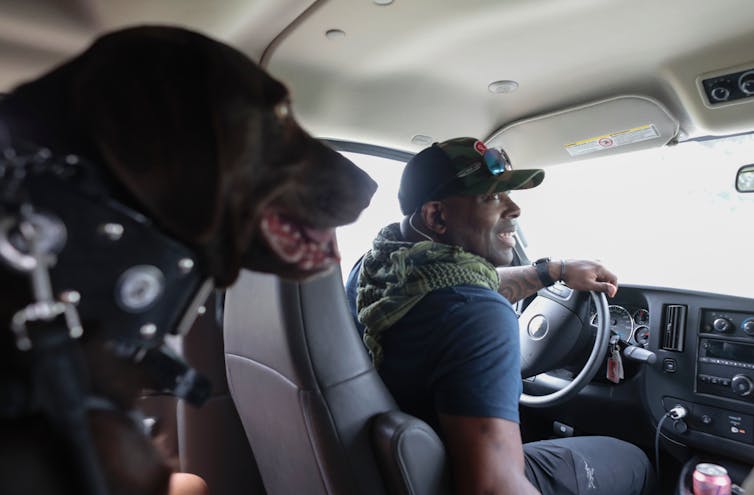
Through my work, I’ve heard firsthand the stories of service members and veterans who had decided to take their own lives but did not. Often I’ve observed that it was a “good catch” that did it: a friend or family member answered a call at an odd hour; noticed the person seemed “off” and asked careful questions; stayed with them while summoning professional help; or checked in with them so they wouldn’t feel isolated. Families, friends, neighbors and colleagues all may have opportunities to make these catches.
Peer support programs may also help. Alcoholics Anonymous and Narcotics Anonymous are effective alone or in combination with clinical treatment for substance use disorders. Results regarding mental health problems such as depression are more mixed, but a consistent finding is that peer support can help promote compliance with treatment, communication with clinicians, improved coping and self-care, and increased feelings of hope and self-efficacy. Studies suggest that peer support can also help people during transition times, particularly when they are leaving military service to return to civilian life.
Veterans themselves are taking action. In the Department of Veterans Affairs, peer facilitators are key to a new “whole health” approach. American Legion members also offer support aimed at preventing suicide. Across the country, veterans treatment courts routinely include mentors to boost the success of clients.

Peer support is out there
Not all peers have to be veterans. Sometimes the strongest connections are with those who have had different challenges and who also can therefore relate – like a family member’s addiction, or one’s own disability or mental health problem.
Many peer networks can help, including the National Alliance on Mental Illness, the American Cancer Society and the Alzheimers Association. Even though they may not focus specifically on suicide, they help reduce isolation, increase social connections, and support coping and self-care.
We can all help to prevent death by suicide. And joining a peer support program or training to make ourselves ready aren’t the only ways. Simply being more attentive as a friend, family member, neighbor or colleague can help.
It is normal for a person to feel awkward when talking to someone contemplating death by suicide. Learning is a great way to prepare. For example, “Question, Persuade, Refer (QPR)” is evidence-based training that can help anyone recognize early warning signs of suicide, learn ways to offer hope and encouragement, and connect with help.
[Deep knowledge, daily. Sign up for The Conversation’s newsletter.]
On this Veterans Day, by all means, let’s thank veterans for their service. But perhaps we could challenge ourselves to go further and do service on behalf of others. Who knows what opportunities might arise to make a good catch?
If you or anyone of your loved ones are in need of help, call the National Suicide Prevention Lifeline at 800-273-8255 or text 838255. You can also get help at the Veterans Crisis Line and the Military Crisis Line.
Shelley MacDermid Wadsworth, Distinguished Professor of Human Development and Family Studies, Purdue University
This article is republished from The Conversation under a Creative Commons license. Read the original article.