 How to resolve AdBlock issue?
News
- Details
- Written by: Elizabeth Larson
CLEARLAKE, Calif. – In an effort to save staff time and resources, the Clearlake City Council on Thursday approved an agreement with a company that will provide new agenda management services to the city.
The council unanimously approved the request for the new services from Administrative Services Director/City Clerk Melissa Swanson following a presentation by representatives of Municipal Code Corp., a company headquartered in Tallahassee, Florida, with a West Coast office in Portland, Oregon.
The discussion starts at the 35 minute mark in the meeting, shown in the video above.
Swanson told the council that it takes city staff about 35 hours per month – the equivalent of almost an entire work week – to review and produce agendas, with another four hours required to print out agendas for the two monthly council meetings.
The city currently relies on what Swanson’s written report called an “antiquated, time- and paper intensive process” that is estimated to cost $2,200 per month or $26,400 annually in staff time.
She said city council agenda packets use an average of more than 19,000 pieces of paper per year.
“To visualize this, 19,000 sheets of paper stack up to over 6 feet tall, and over my time as city clerk, that stack of papers would stretch as high as a 10-story building,” she said.
That doesn’t count the work necessary for the city’s planning commission, marketing committee or any ad hoc committees, Swanson said.
She said an agenda management system would streamline the agenda process for staff, the council, committees and the public.
While staff time and paper costs wouldn’t be completely eliminated, Swanson said they would be greatly reduced.
In July, the Administrative Services Department published a request for proposals for an agenda management system. Swanson said several proposals were submitted and staff selected three vendors for a final review by department heads and stakeholders including Mayor Russ Cremer.
She said they reviewed them on Sept. 14, using criteria including technology level, ease of use, user interface, pricing structure, functionality and integration with the city’s current technology infrastructure. After demos by the three finalists, Swanson said the committee’s decision was to recommend the council approve an agreement with Municipal Code Corp., or MuniCode.
Her written report said city staff contacted 14 other California jurisdictions that currently use MuniCode Meetings, with 10 responding to their request for information. All 10 said they would recommend MuniCode for ease of use, customer service and smooth implementation processes.
She said the cost would be $11,500, which includes the one-time cost of $1,500 for historical data importation. Implementation of the new program is included in her department’s budget.
MuniCode representative Leon Rogers, appearing via Zoom, showed the council the company’s meeting portal, a link for which would be put on the city’s website. It will have search functions for date ranges and by board and commission, with meeting information and agendas available for download.
Rogers said the software allows council members to vote through the system.
He also explained that they would train staff on how to use the program.
Following the presentation, the council unanimously approved the agreement with MuniCode.
Swanson told Lake County News that the module doesn’t come with a video portion like Granicus, the agenda management system used by the county of Lake for Board of Supervisors and Lake County Planning
She said the city will continue to use Zoom to record meetings and post them on the city’s YouTube page.
In other business, the council held a public hearing to consider updates to the city’s zoning code, design review procedures and design standards, and following extensive discussion decided to hold the matter over until its next meeting.
The council also denied appeals of abatement orders for 15615 34th Ave. and 16221 32nd Ave., which were cited for illegal outdoor marijuana cultivation.
At the request of the League of California Cities, the council approved a resolution in support of Proposition 20, the Reducing Crime and Keeping California Safe Act. The proposition, which is on the November ballot, would reclassify as “violent” some crimes currently categorized as “nonviolent” and create two additional categories of punishable crimes with increased penalties.
Email Elizabeth Larson at
- Details
- Written by: Terri Bimes, University of California, Berkeley
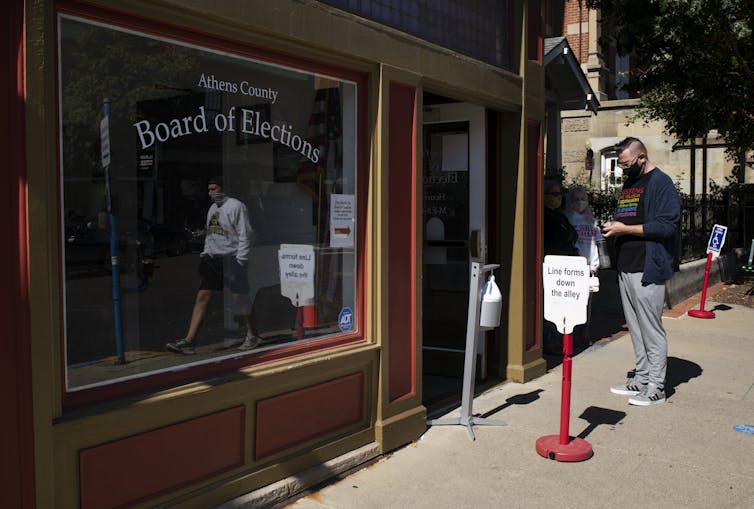
With voting in key states having begun more than six weeks before Election Day, early voting has emerged as a contentious issue. Observing that the country now has more of an election season than an election day, Attorney General Bill Barr lamented that “we’re losing the whole idea of what an election is.”
I’m a scholar of the presidency. And as many in this field know, early voting periods are not new to the 2020 election.
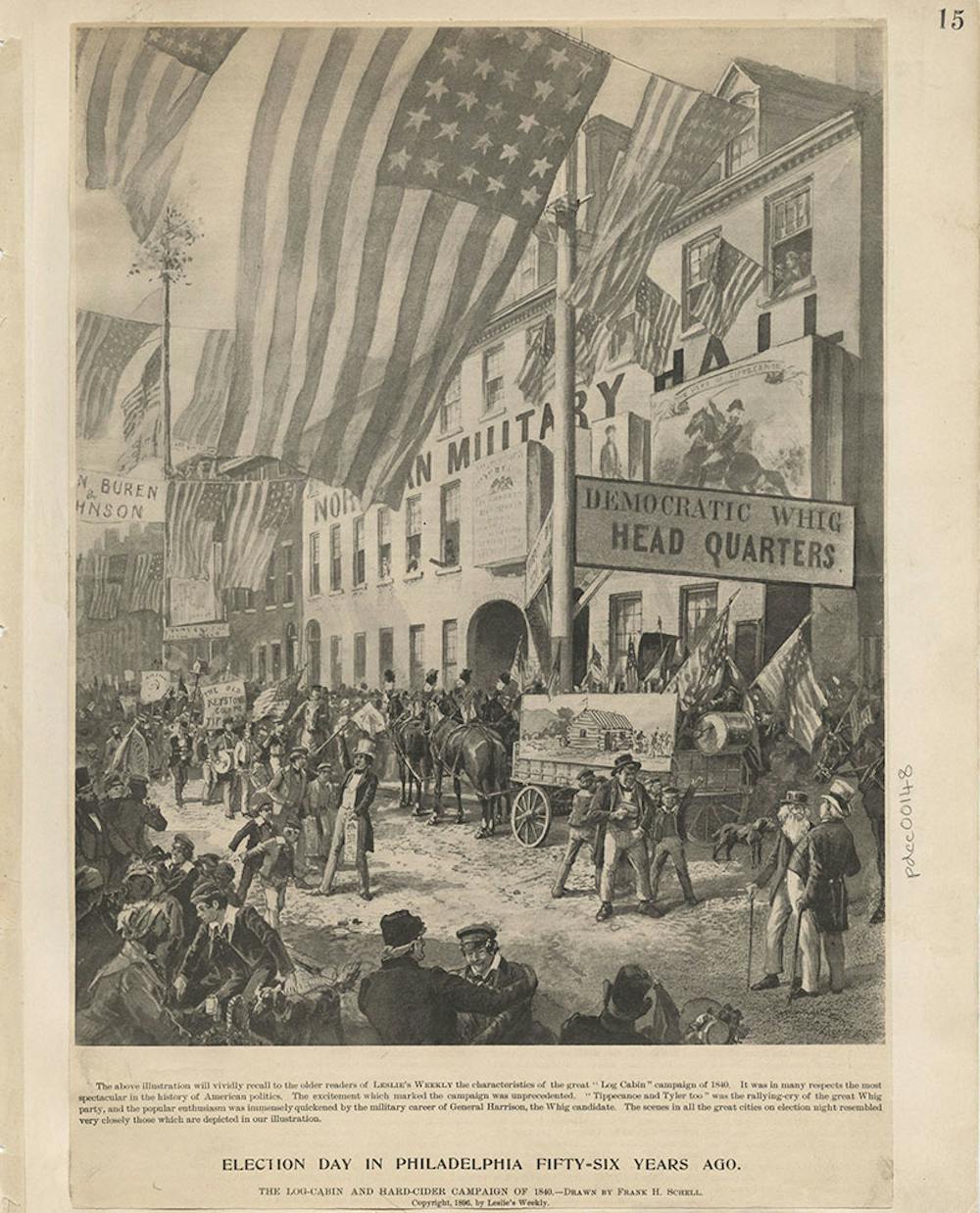
First presidential election took one month
There are many historical examples of an election period as opposed to an election day.
At the founding, there was no set national election day. The first presidential election started on Dec. 15, 1788, and ended almost a month later, on Jan. 10, 1789.
In 1792, Congress passed a law that permitted each state to choose presidential electors any time within a 34-day period before the first Wednesday in December. During this period, states determined what day to hold their presidential elections, resulting in a patchwork of election days. Most states had their election on a single day, but some had elections over the course of two days.
From 1789 to 1840, states gradually converged on early November as the time to hold their presidential elections, laying the groundwork for congressional adoption of a uniform presidential election day.
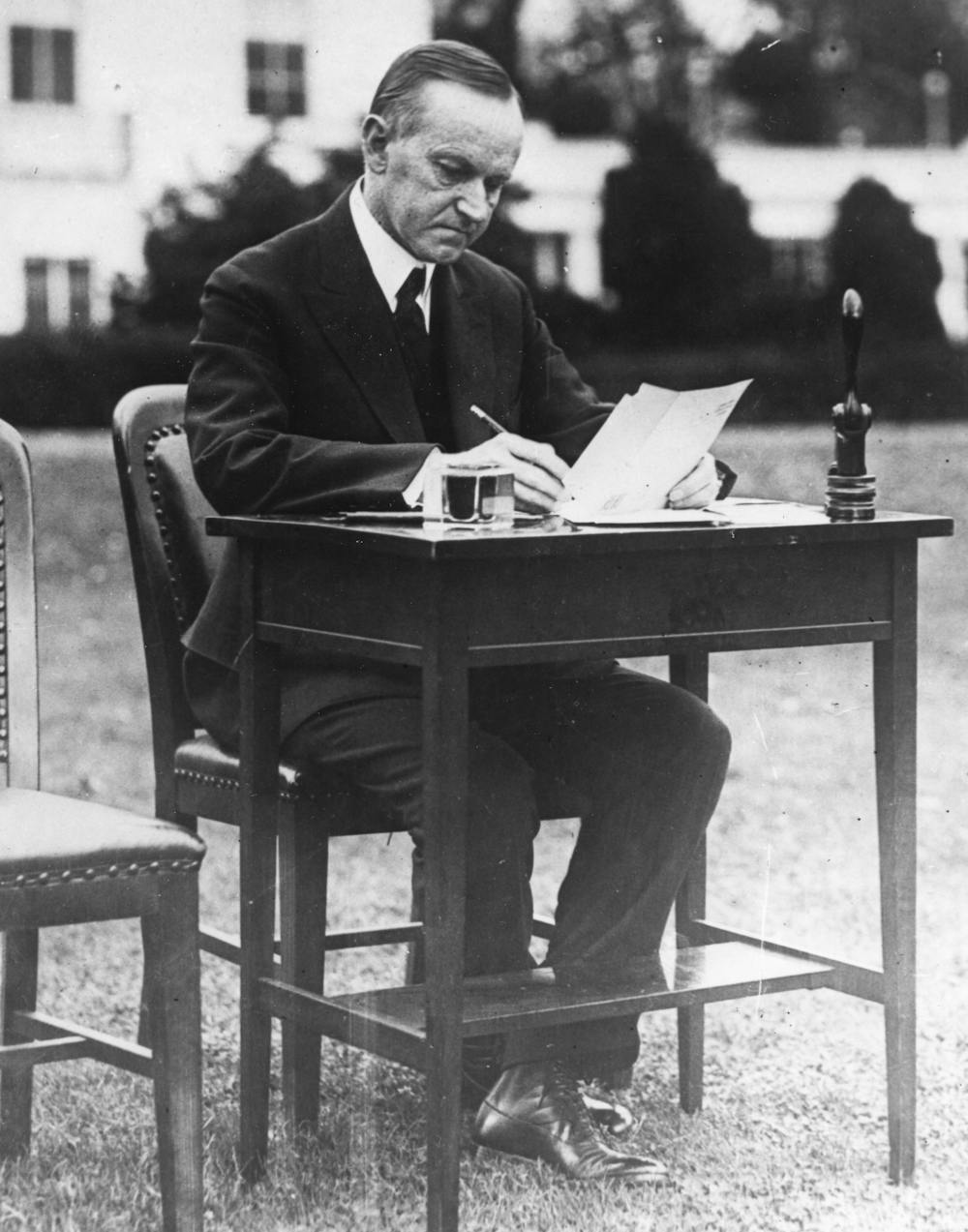
The 1840 presidential electoral season began on Friday, Oct. 30, in Ohio and Pennsylvania and ended on Thursday, Nov. 12, in North Carolina, except for South Carolina, whose state Legislature still chose its electors.
Limiting voter fraud
It wasn’t until 1845 that Congress formally adopted a national election day — the Tuesday after the first Monday in November.
With the invention of the telegraph, the rise of two-party competition across most states and record-breaking voter turnout, both parties had an interest in regulating elections and establishing a national election day.
In addition, parties were becoming more concerned about election fraud, especially the “the importation of voters from one State to another.” Most of the discussion in Congress focused on which day election day should be, with the prevailing idea that it should be about 30 days before the meeting of the electors, and on a Tuesday, according to a story in The Boston Daily Globe in February of 1915.
The legislators chose Tuesday because most states already held their elections on Monday or Tuesday, and they thought it was generally a good idea to have one day between Sunday and election day, making Tuesday the preferred day over Monday.
But even during this period there remained elements of an election season. According to Scott James, the 1848 congressional elections spanned 15 months, from August 1848 to November 1849. Leading up to the Civil War, a clear split in scheduling congressional elections emerged.
Northern states tended to adopt the first Tuesday after the first Monday in November, the same day as presidential elections, to hold congressional elections. Southern states, in contrast, scheduled congressional elections several months after presidential election day. It wasn’t until 1872 that Congress mandated that all states hold their congressional elections on the same day as the presidential election.
Moreover, a state’s early statewide electoral contests could act as a political laboratory for national elections. The saying “As Maine goes, so goes the nation” originated in the 19th century as Maine’s early statewide election returns, particularly in the governor’s race, often predicted the party of the presidential election winner. Political parties converged on Maine in September to rally their voters in hopes of influencing the November presidential election across the nation.
The establishment of an explicit early voting period rests on the precedent set during the Civil War. There were numerous ways soldiers on the battlefield could cast their vote: mailing proxy votes, ballots or voting in person at camps and hospitals close to the battlefield.
The proxy votes, ballots, and/or tally sheets from the voting sites were then mailed to the soldier’s or sailor’s home state for counting. In Ohio, the absentee military ballots that were considered qualified – from white men over 21 years old – accounted for 12% of Ohio’s votes in the 1864 presidential election.
Since then, multiple forms of early voting have been established. Early voting can happen in person or through voting by mail. In a 2001 federal appeals case challenging Oregon’s no-excuse absentee voting, the 9th U.S. Circuit Court of Appeals upheld early voting periods, ruling that the election must only be “consummated” on Election Day.
In other words, voters need to cast their ballots by Election Day, but the law does not prevent them from voting earlier.

Early voting accelerates
In 1978, California lifted the requirement that a voter provide an approved reason, such as “occupation requiring travel or federal or state military or naval service,” to vote by mail, initiating a trend of early voting by mail in several Western states.
In the 1980s, Texas offered its voters early voting in person. The number of states adopting early voting periods began to surge in the 1990s and included Florida, Nevada, Georgia, Tennessee and Iowa. After the 2000 presidential election and the controversy over “hanging chads,” many more states adopted early in-person voting periods to help with election administration.
The U.S. Election Assistance Commission reports that in 2016 more than 41% of all ballots nationwide were cast before Election Day – with in-person early voting making up 17%, and voting by mail 24%, of all turnout.
Early voting is on its way to break all records in 2020, because of the pandemic, expansion of mail-in voting and voter interest. As of Oct. 7, Michael McDonald of the U.S. Elections Project reports that over 5 million voters have already cast their ballots, compared with approximately 75,000 voters in 2016.
Does early voting increase voter turnout rates overall, or does it just split the voters who would normally vote on Election Day?
While some scholars contend that early in-person voting periods potentially can decrease voter turnout, studies that focus on vote-by-mail, a form of early voting, generally show an increase in voter turnout. New research presents evidence that the implementation of all-mail voting in Colorado increased voter turnout by 9.4 percent overall.
Early voting periods may have an effect on who turns out, as well – which may explain Attorney General Barr’s lack of enthusiasm for early voting periods. Although past studies have shown that early voting did not help one party over the other, the 2020 election may be different.
[Deep knowledge, daily. Sign up for The Conversation’s newsletter.]
As of early October 2020, Democrats have cast 55.3% of the early ballots, whereas Republicans have cast only 24.2%. Independents have cast 19.8% and voters affiliated with a minor party less than 1%.
But there is still plenty of time for more people to vote early, either by mail or in person, before Election Day.
Terri Bimes, Associate Teaching Professor of Political Science, University of California, Berkeley
This article is republished from The Conversation under a Creative Commons license. Read the original article.
- Details
- Written by: Lake County News reports
The town hall will take place beginning at 6 p.m. Monday, Oct. 19, via Zoom. It also will be live-streamed on Facebook.
During the town hall, officials will introduce the Continuum of Care and receive public input on the usage of the Emergency Solutions Grant for COVID response, or ESG-CV, funds that the group has received.
The Lake County Continuum of Care Program is designed to promote communitywide commitment to the goal of ending homelessness; provide grant funding for efforts by nonprofit providers and local governments to quickly rehouse homeless individuals and families while minimizing the trauma and dislocation caused to homeless individuals, families, and communities by homelessness; and promote access to programs to optimize self-sufficiency among individuals and families experiencing homelessness.
As part of the Coronavirus Aid, Relief, and Economic Security, or CARES, Act, Public Law 116-136, the U.S. Department of Housing and Urban Development created special Emergency Solution Grants to be used to prevent, prepare for, and respond to the coronavirus pandemic among individuals and families who are homeless or receiving homeless assistance.
The funds are also to support additional homeless assistance and homelessness prevention activities to mitigate the impacts of COVID-19.
The Lake County Continuum of Care will be receiving an allocation of ESG-CV funding to be used for these purposes.
The purpose of the Oct. 19 meeting is for the community and its citizens to learn about what the Continuum of Care does in the community, how it operates and how to participate in it.
The town hall also will provide an opportunity for the community to provide input on how the ESG-CV funds received by the Continuum of Care can be utilized in respect to the requirements of the grant.
Any member of the public may speak at the meeting and be heard on the items described in this notice or submit written comments to the Continuum of Care prior to the meeting by email to
To participate in the meeting, join from a PC, Mac, iPad, iPhone, or Android device by clicking here; the meeting ID is 281 490 2260.
Participate by audio only by using one tap mobile: +16699006833,,2814902260# US (San Jose) or by dialing in, +1 669 900 6833 US (San Jose); Meeting ID: 281 490 2260.
- Details
- Written by: Elizabeth Larson
The following dogs are ready for adoption or foster.
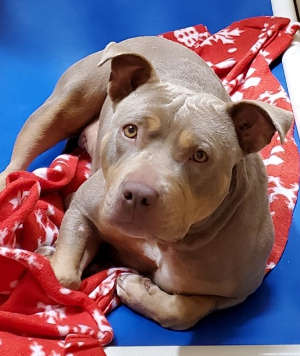
‘Bella’
“Bella” is a female American Bully mix.
She has a short beige and tan coat.
She is dog No. 3537.

‘Charlie’
“Charlie” is a male adult Chihuahua with a short tan coat.
He has been neutered.
Charlie is recovering from surgery to fix a broken leg.
He is dog No. 4277.
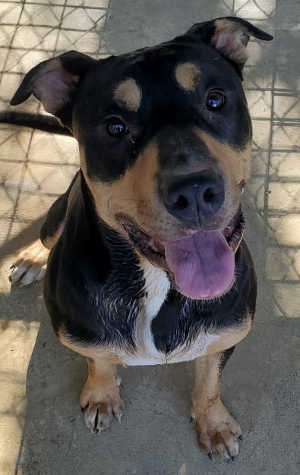
‘Chop’
“Chop” is a male Rottweiler mix with a black and tan coat.
He is dog No. 4267.

‘Chuckie’
“Chuckie’ is a small male adult German Shepherd mix.
He has a short tan and black coat.
He is dog No. 4297.

‘Ella’
“Ella” is a female Miniature Pinscher mix.
She has a short black and tan coat.
She is dog No. 4296.
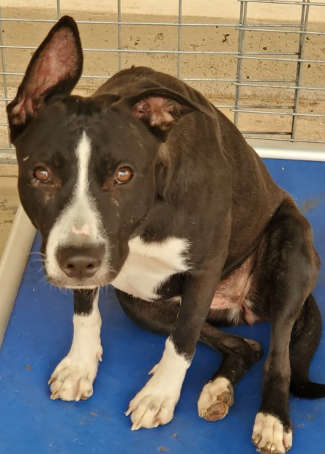
‘Gozer’
“Gozer” is a female shepherd mix with a black and white coat.
She is dog No. 4288.

‘Isis’
“Isis” is a female American Staffordshire Terrier mix with a brindle and white coat.
She has been spayed.
She is dog No. 3732.
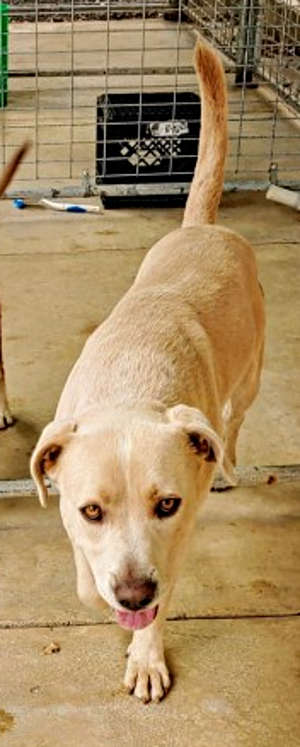
‘Jack’
“Jack” is a male Labrador Retriever mix with a short yellow coat.
He is dog No. 4155.

‘Lady’
“Lady” is a female German Shepherd mix.
She has been spayed.
She is dog No. 3683.
The shelter is open by appointment only due to COVID-19.
Call the Clearlake Animal Control shelter at 707-273-9440, or email
Visit Clearlake Animal Control on Facebook or on the city’s website.
Email Elizabeth Larson at